
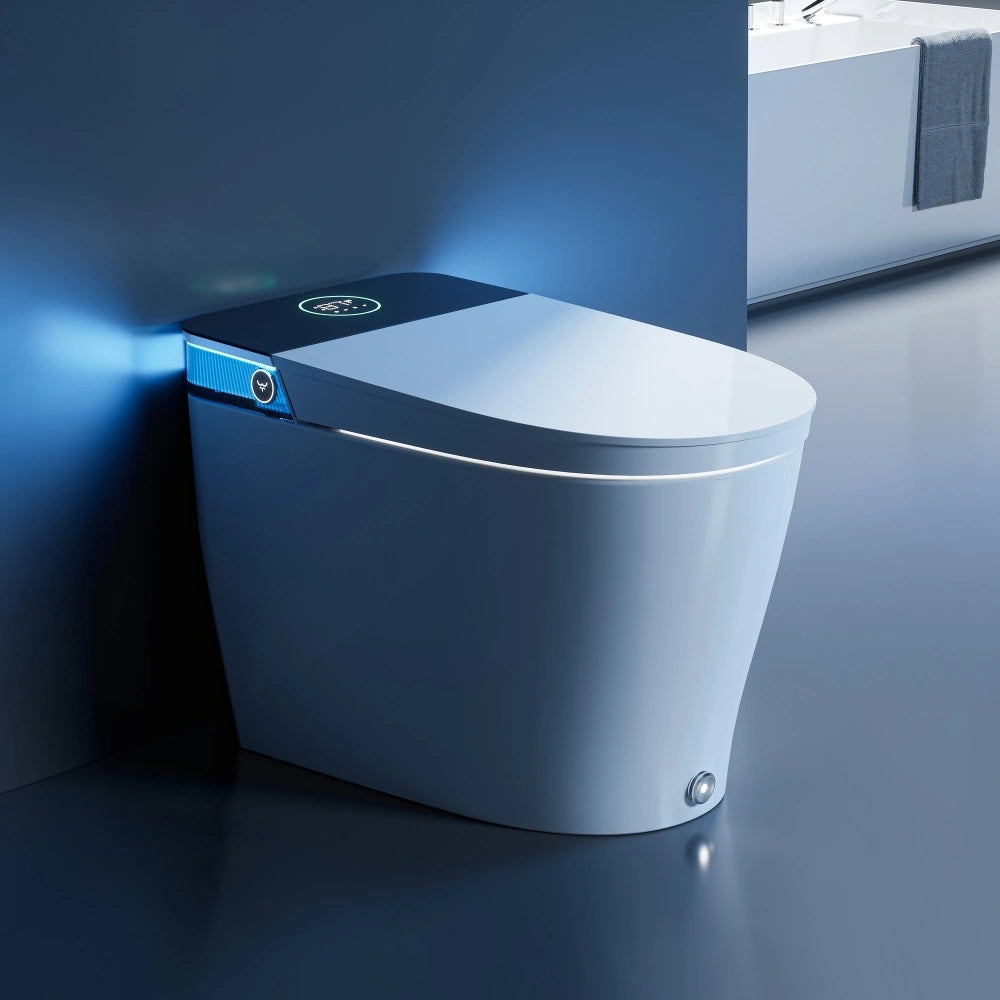
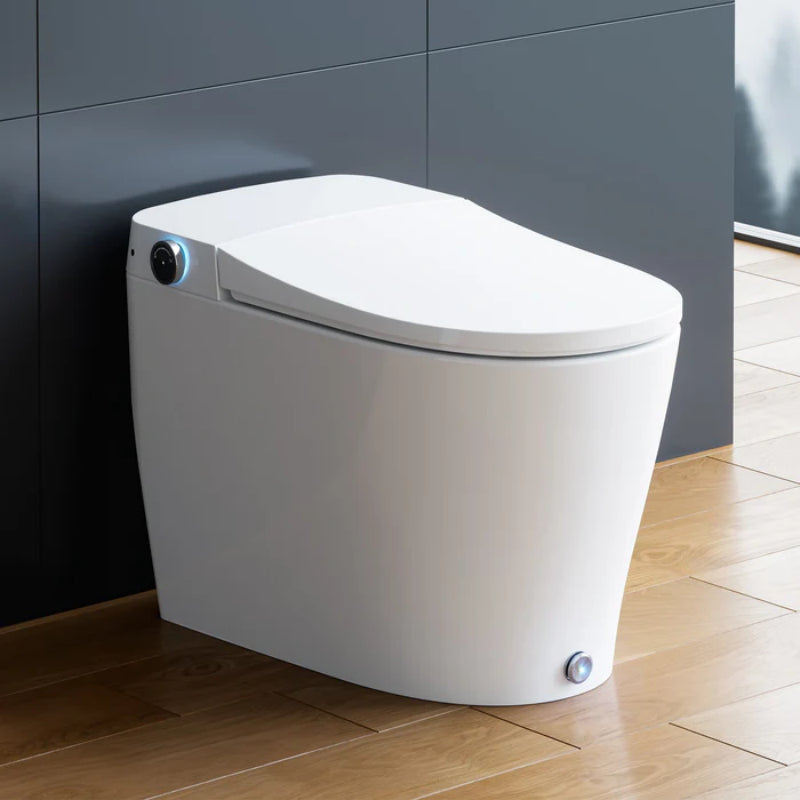
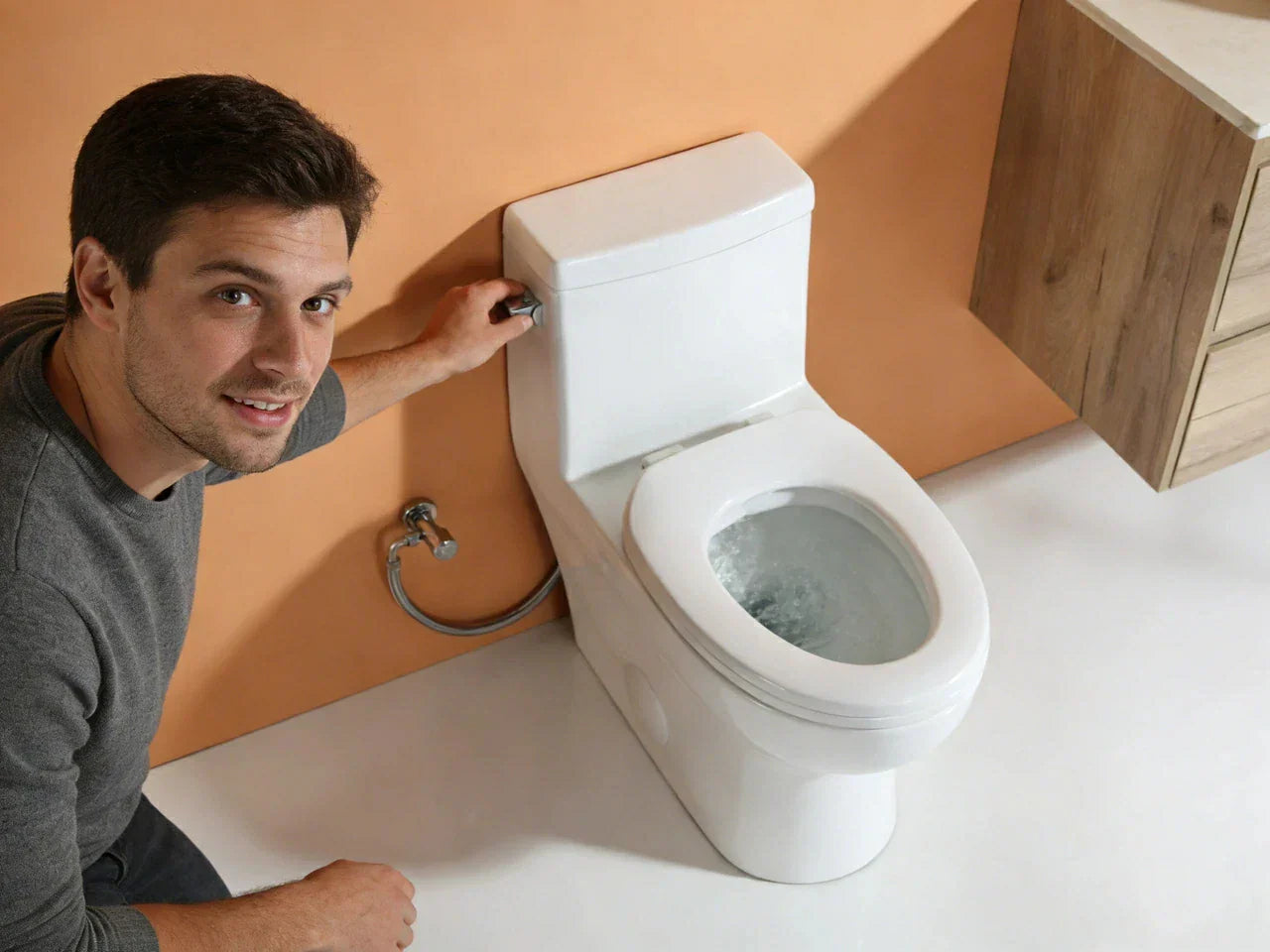
A side handle dual flush toilet is a niche that makes sense in the right home—and gets returned (or quietly hated) in the wrong one. The idea is simple: you get two flush options using a side-mounted trip lever (a lever handle on the side of the tank). One lever position gives a half flush for liquids, and the other gives a full flush for solids. Used correctly, it can cut indoor water use without forcing you to learn a top-button routine.
But the lever location and the two-flush “choice” also create real-world problems: clearance next to the tank, guests using the wrong flush, and some models leaving the bowl only “half cleaned” even when the waste clears.
This guide is built to help you make a confident first decision: side handle dual flush, top-button dual flush, or single-flush high-performance—plus when a dual flush conversion kit is smarter than buying a whole new toilet. Many homeowners now consider smart toilets when upgrading, and the guidance here applies.
Side Handle Dual Flush Toilet Decision Snapshot: Who It Fits And Who Should Skip
If you read nothing else, read this and decide where you fit.
Choose A Side-Handle Dual Flush Toilet If You Want WaterSense-Level Savings And Will Reliably Use Half And Full Flush Options
This option usually fits when:
-
You’re replacing an older toilet (often 3.5 gpf or more) and want real efficiency gains.
-
Your household will actually use the half flush for liquids (most of the time).
-
Your bathroom layout makes a side lever feel natural (like the toilets you grew up with), but you still want dual flush.
-
Your waste load is mostly “normal”: light/medium solids, not constant heavy-duty flushing.
-
You care about parts you can service: the tank lever / trip lever, chain, and flush valve seals are understandable for many homeowners.
In practice: a side flush lever is easier for some people than a push button because it’s familiar. The savings only show up if people use the right flush.

Choose A Single-Flush High-Performance Toilet When One Flush Reliability Matters More Than Maximum Efficiency
Choose this if:
-
You can’t tolerate double-flushing or frequent plunging.
-
Your home regularly produces heavy solids (large family, certain diets, or just “this house needs a strong toilet”).
-
This is your only bathroom, or a busy shared bath where “no drama” matters more than squeezing every gallon.
In real homes, the biggest regret pattern with dual-flush is expecting it to perform like the strongest single-flush toilets on every load. Some dual-flush units do fine. Some don’t—especially on bowl-cleaning.
Choose A Top-Button Or Touchless Dual-Flush Toilet When Hygiene And Cleaning Ease Matter More Than Lever Familiarity
A modern toilet with side flush looks normal from the front, but the lever and its mounting point add crevices on the side of the tank. If you want the easiest wipe-down:
-
Top-button dual-flush toilets often have fewer side creases.
-
Touchless options reduce touch points, but cost more and add electronics (another thing to maintain).
If your main goal is “easy cleaning and fewer grime edges,” a top-button design often wins.
Which Trade-Off Matters Most: Water Savings Versus No-Drama Flush Power
The key point is that toilet buying is not about features—it’s about what you’ll accept on your worst day: a rare double flush, or higher water use forever.
Dual-Flush Efficiency Wins In Homes With Mostly Light To Medium Loads And Strong Water-Saving Habits
Most households flush a lot with liquids. That’s where dual-flush can pay off.
Typical numbers you’ll see:
-
Half flush: often around 0.8–1.1 gallons per flush
-
Full flush: often around 1.28–1.6 gallons per flush
If most flushes are liquids and you consistently use the half flush, your average gallons per flush drops. That is exactly how a WaterSense side handle toilet (or any WaterSense-labeled toilet) earns its reputation: lower water use without turning the bathroom into a science project. According to the U.S. Environmental Protection Agency (EPA), WaterSense-certified toilets are independently tested to ensure high performance while reducing water consumption, making them a reliable choice for eco-conscious households.
Real-world note: savings are not automatic. If your household uses the full flush out of habit, the “dual” part becomes decoration.

Single-Flush Reliability Wins In Homes With Frequent Heavy Solids And Zero Tolerance For Double Flushing
Dual flush toilets are often designed to be efficient first, powerful second. Even if they meet performance testing, that doesn’t mean you’ll love them in your bathroom.
Where single-flush can feel better:
-
Heavy solids that need a stronger siphon action every time
-
Homes where people “panic flush” (flush early and often)
-
Anyone who refuses to hold the handle or think about which flush to use
If you want a toilet that behaves the same way every time you press the lever—single flush is still the simplest path.
Side Lever Versus Button: Familiar Muscle Memory Versus Fewer Crevices And Easier Cleaning
Side handle pros
-
Familiar motion: push down (or lift) like traditional toilets
-
Easier for some users with limited finger strength than small buttons
-
Often simpler to troubleshoot: the toilet handle, chain, and flapper/flush valve links are visible and intuitive
Side handle cons
-
Needs clearance on the side of the tank (especially if the lever swings outward)
-
Adds a side-mounted crevice to clean
-
Dual-flush levers sometimes require a more precise motion (down for one flush amount, up for another). That can confuse guests.
Button pros
-
Usually fewer side creases and easier wipe-down around the tank
-
Common on many dual-flush designs, so replacements can be straightforward if the system is standard
Button cons
-
Some buttons stick or get crusty with hard water and cleaners
-
Guests sometimes press the wrong button anyway
-
Some people dislike pushing a button with the same hand they use for other bathroom tasks (hygiene preference)
Cost And Value: New Toilet Versus Dual Flush Conversion Kit Versus Long-Term Reliability
There are three common paths:
-
Buy a complete side handle dual flush toilet (new bowl + tank)
-
Use a dual flush conversion kit in your existing toilet tank
-
Skip dual flush and buy a strong single-flush toilet (often still high efficiency)
When A Dual Flush Conversion Kit Is Smarter Than Replacing The Entire Toilet
A dual flush conversion kit can make sense when:
-
Your current toilet bowl is in good shape (no cracks, good glazing, stable base)
-
The rough-in and fit are fine, and you don’t want a weekend of floor work
-
You mainly want to cut water use, not change the look
-
You’re comfortable opening the tank and adjusting a fill valve and flush valve assembly
But here’s the honest limitation: many conversion kits change the tank’s flushing behavior, not the bowl’s geometry. Bowl design (trapway shape, rinse pattern, jet placement) matters a lot. So a conversion can save water, but it won’t magically make an older bowl clear better.
Conversion kits tend to work best when:
-
The current toilet already flushes well
-
You want to reduce the amount of water per flush without changing the whole toilet
-
You accept a bit of tuning (float levels, chain length, flush button/lever travel)
Also, note the “feel” difference: many kits use a push button, not a side lever. If your goal is specifically a side handle dual flush toilet, check kit compatibility first—some setups don’t play nicely with side-mount hardware.
When A New High-Efficiency Side Flush Toilet Pays Back Based On Usage And Water Rates
A new high efficiency side flush toilet can pay back if:
-
You’re replacing an older, high-gallon toilet
-
Your household flushes a lot (family home, busy bathroom)
-
Your water/sewer rates are high enough that efficiency is noticeable on bills
When it may not be paid back:
-
This is a guest bath that barely gets used
-
Your current toilet is already 1.28 gpf and works well
-
Your water rates are low, and you’re mainly spending for features
A practical way to think about it: the more flushes per day, the more value you get from dialing down gallons per flush. In a low-usage powder room, the comfort and reliability factors often matter more than the savings.
Budget Traps: Why The Cheapest Dual-Flush Toilets Often Cost More In Time And Frustration
Price matters, but the cheapest dual-flush toilets often cut corners in the places you feel every day:
-
weaker bowl rinse (more brush time)
-
finicky flush lever travel (you learn “the trick,” guests don’t)
-
oddball parts that are hard to replace (nonstandard tank levers, seals, or flush valve shapes)
If you go dual flush, it’s usually worth paying enough to get:
-
widely available replacement parts (seals, flush valve components, toilet tank levers)
-
a proven flush system that clears solids without drama
-
a bowl rinse pattern that doesn’t leave streaks
Think of it as “pay once, regret never”: not luxury for looks, but for fewer repairs and fewer annoying mornings.

Fit, Space, And Daily Habits That Push You Toward Or Away From A Side-Mounted Lever
A side handle dual flush toilet can be perfect in one bathroom and a headache in another. Layout matters more than people expect.
Is A Side Handle Dual Flush Toilet Worth It In A Small Bathroom With Tight Tank-Side Clearance
This is the most common “I didn’t think about that” issue.
Check the side of the tank:
-
Is there vanity right next to it?
-
Is there a wall that nearly touches the tank?
-
Is the toilet in a tight alcove?
A side mount flush handle needs room for:
-
the lever itself (often sticks out)
-
your hand
-
sometimes the lever swing, depending on design
If you have tight clearance, you may end up with:
-
scraped knuckles
-
a lever you can’t fully move (leading to weak flushes)
-
a lever that rubs a wall or cabinet and loosens over time
If space is tight, a top-button dual flush is often the simpler solution.
Shared Bathrooms Versus Primary Suites: Who Mis-Flushes And Who Benefits From Dual Flush
Dual flush requires a tiny habit change. In a primary bath used by one or two adults, habits stick fast.
In a shared bath:
-
Kids may always use the “fun” direction (up or down) without thinking
-
Guests may not notice it’s dual flush at all
-
Some people hold the handle too long (or not long enough), changing the flush amount
If you’re buying for a shared bathroom and you still want dual flush, choose a design where the two options are obvious and consistent. The goal is fewer “wrong flush” moments.
Left-Hand Versus Right-Mount Toilets When Lever Placement Conflicts With Reach Or Clearance
Side handle placement matters more than it sounds.
-
If the toilet sits close to a right-side wall, a right-side lever can be a problem.
-
If the toilet is next to a vanity on the left, a left hand lever may be blocked.
Also think about the user:
-
Some people have shoulder or wrist issues and prefer a specific side.
-
If someone uses mobility aids, reaching the “wrong side” can be more than an annoyance.
For accessibility, a lever can be easier than small buttons, but only if it’s reachable. So decide the lever side early—before you buy.
Comfort Height With Side Lever When Sit-To-Stand Ease Matters More Than Sleek Styling
Comfort height (often 16–18 inches seat height) can be a bigger quality-of-life upgrade than dual flush.
If you’re choosing between:
-
a sleek single piece side lever toilet (one piece toilet) that looks modern, and
-
a two-piece comfort-height model (two piece toilet) that’s easier to install and service,
many homeowners end up happier with comfort height and easy parts access.
One-piece toilets can be easier to wipe down, but they’re often heavier and harder to maneuver during install. Two-piece toilets (tank separate from bowl) are friendlier for a solo DIY install.
Real-World Performance Expectations From Liquid Flushes To Solid Loads
Performance is where people either love dual flush or swear never again.
Will I Need To Flush Twice Where Dual-Flush Toilets Struggle In Heavy-Load Homes
Needing a second flush is not always a “bad toilet.” It can be a mismatch between the toilet and the household.
Dual-flush struggle patterns I’ve seen:
-
Users choose the half flush out of habit, even for solids
-
The full flush clears the trap, but leaves paper behind
-
The bowl rinse isn’t strong enough, so skid marks appear even when waste exits
If your household produces frequent heavy solids, you may be happier with a strong single-flush toilet that clears everything with one consistent flush.
If your home is mostly liquid and light solids, dual flush usually feels fine—and you get water savings.
Bowl Cleaning Versus Waste Removal Why Some Dual-Flush Models Leave Partially Scoured Bowls Even When They Clear The Trap
This is a huge point: there’s “it flushes” and there’s “it cleans.”
A dual flush toilet can remove waste but still leave the bowl looking half rinsed. Reasons include:
-
rim wash holes that don’t distribute water evenly
-
a low-volume half flush that doesn’t rinse the full bowl
-
mineral buildup narrowing the rim jets over time (common in hard water)
If you hate brushing the bowl, don’t just shop on gallons-per-flush. Pay attention to bowl rinse design and user reviews that mention “clean bowl” or “needs brushing.”
High-Performance Single-Flush Alternatives When Clogs And Plungers Are Deal Breakers
If clogs are your main fear, prioritize:
-
a proven trapway size and shape
-
consistent full flush volume (often 1.28 gpf in high-efficiency single flush designs)
-
simple, standard internal parts (flapper or common flush valve seals)
High efficiency does not require dual flush. A WaterSense-labeled single flush can still save water compared to older toilets, while keeping the “same flush every time” behavior.
Ownership And Maintenance What You Will Replace Clean And Curse Over Five To Ten Years
Toilets are simple until they aren’t. A side handle dual flush toilet adds a few more moving parts than a basic flapper setup.
Side Handle And Trip Lever Wear What Breaks First And How Difficult Replacement Can Be
Common wear points in side-lever systems:
-
toilet handle / trip lever loosening (handle wiggles or sticks)
-
chain length drifting (causes weak flush or running water)
-
flush valve seal wearing (slow leak into bowl)
-
fill valve aging (slow refill, noise, or intermittent running)
Dual-flush lever designs sometimes use a nested or two-position trip lever mechanism. That’s not “bad,” but it means the handle is doing more than a basic lever, so it can be more sensitive to alignment.
How hard is it to replace parts?
-
Many side-mount tank levers are easy: shut water, drain tank, remove retaining nut, swap lever.
-
The tricky part is compatibility: some tanks use special hole sizes or lever angles.
If you want easy repairs, choose a model that uses standard-ish parts and has readily available replacement seals and levers.
Cleaning And Condensation Realities In One-Piece Versus Two-Piece Toilets With Lever Crevices And Sweaty Tank Grime Traps
Two-piece toilets have a seam between tank and bowl. That seam can collect dust and moisture. In humid climates, you might also get a “sweaty tank” (condensation), which can feed grime around bolts and gaskets.
One-piece toilets remove that seam, so wipe-down is simpler. But one-piece units are heavier and can be harder to set without scratching floors.
Side levers add a small cleaning detail:
-
You’ll wipe around the lever base
-
If the lever is chrome, nickel, or brushed nickel, it can show water spots depending on your water
If cleaning ease is your top priority, a one-piece with minimal creases often wins—just make sure it fits your space and budget.
Parts Compatibility And Brand Ecosystems Including Universal Tank Levers And Valves
Even without talking brands, there’s a real “ecosystem” issue:
-
Some toilets use very standard flappers and fill valves.
-
Some dual-flush toilets use proprietary flush valve towers, seals, and lever geometry.
Before you buy, check:
-
Can you buy a replacement flush valve seal locally?
-
Is the dual flush toilet handle a standard side mount size?
-
Are the toilet tank levers common, or special to that model?
If you hate waiting for parts, prioritize common components.

How A Side Handle Dual Flush Toilet Works And What To Expect Day To Day
A traditional toilet handle lifts a flapper (or similar valve) and dumps tank water into the bowl. Dual-flush changes how much water dumps.
Common side-handle dual flush methods:
-
Two-position trip lever: push down for one flush amount, lift up for another. The lever changes how far or how long the flush valve stays open.
-
Adjustable flush valve tower: the lever triggers a mechanism that closes sooner for half flush.
-
Float-based dual flush: controls how quickly the flush valve reseats.
Day-to-day, you’ll learn:
-
which direction is “full flush”
-
whether you need to hold the handle (some designs flush better with a brief hold)
Tip from real life: if a toilet only flushes well when you “hold the handle,” that’s a sign it’s either out of adjustment (chain slack, water level) or it’s a design you won’t enjoy long-term.
Decision Aids To Choose Quickly Without Buyer’s Remorse
Choosing the right toilet can be overwhelming with so many features and designs. This decision aid helps you quickly compare the main types—side-handle dual flush, top-button dual flush, and single-flush high-performance—so you can pick the option that fits your household habits, cleaning preferences, and maintenance comfort without buyer’s remorse.
A Choose This Choose That Matrix Comparing Side-Handle Dual Flush Top-Button Dual Flush And Single-Flush Power
| If your priority is… | Choose this type | Why |
| Water savings and lever familiarity | Side handle dual flush toilet | Easy muscle memory if you like levers; half vs full flush can cut gallons per flush |
| Easy cleaning and modern look | Top-button dual flush | Fewer side crevices; works well in tight side-clearance bathrooms |
| Strong “one flush clears everything” | Single-flush high-performance | Less thinking, fewer mis-flushes, often better on heavy solids |
| Lowest hassle in shared bathrooms | Single flush or very obvious dual flush | Guests/kids often choose wrong dual setting |
| DIY-friendly repairs with common parts | Depends on model; often single flush | Dual-flush parts can be less universal—check before buying |
Clearance Checklist For Tank-Side Space Lever Swing Supply Line Location And Seat-To-Wall Rough-In Constraints
Before you commit to a side mount flush handle, measure and confirm:
-
Rough-in distance (commonly 12", sometimes 10" or 14")
-
Tank-to-vanity/wall clearance on the lever side (room for your hand + lever movement)
-
Water supply location (does the supply line interfere with the lever mechanism inside the tank?)
-
Toilet footprint (some “modern” bases are longer; check front clearance too)
-
Seat height preference (standard vs comfort height)
-
Lid clearance (does the tank lid lift off easily for maintenance?)
-
Handle orientation (left hand vs right mount toilets; choose the side you can reach)
Short Shortlist Rules For Choosing A Luxury Side Lever Toilet Or A Basic WaterSense Model
Upgrade to a more “luxury commode side lever” level (not for status—just for daily comfort) when:
-
This is your primary bathroom and you’ll live with it every day
-
You care about easier cleaning (one-piece, better glazing, fewer seams)
-
You want quieter fill and more refined lever feel
-
You want widely available replacement parts and fewer oddball internals
A basic WaterSense side handle toilet is enough when:
-
It’s a guest bath or low-usage bathroom
-
You mainly want to reduce the amount of water per flush
-
You’re okay with a two-piece design and basic finishes (chrome, brushed nickel, etc.)
-
You don’t need premium styling, just consistent function
Putting It Together: Recommended Choices For Common Real-Home Scenarios
Scenario 1: Small household, regular use, eco-minded, not many heavy loads A side handle dual flush toilet is a good fit. You’ll likely use the half flush often, and you’ll enjoy the familiar lever.
Scenario 2: Big family, one main bathroom, heavy daily use I’d lean single flush high-performance. The cost of extra plunging and double flushing is real, and it outweighs theoretical savings.
Scenario 3: Tight bathroom with vanity close to toilet tank Skip the side lever. You’ll hate the clearance. Choose the top-button dual flush or single flush.
Scenario 4: You like your current toilet bowl, but want to save water Try a dual flush conversion kit if the tank layout supports it and you’re comfortable tuning water levels. Just don’t expect it to fix a weak bowl design.
Before You Buy Checklist To Review In The Store
-
Measure rough-in (10/12/14 inch) and confirm the toilet matches it
-
Confirm tank-side clearance for a side handle (hand room + lever swing)
-
Decide who uses the toilet most (kids/guests vs disciplined adults) and whether dual flush habits will stick
-
Check flush ratings/claims and look for strong feedback on bowl cleaning, not just waste removal
-
Confirm replacement parts availability for the dual flush lever, flush valve seal, and fill valve
-
Choose lever side (left hand vs right mount) based on walls/vanity and user reach
-
Pick height (standard vs comfort height) based on the main users’ needs
FAQs
1. How does a side handle dual flush toilet work?
A side handle dual flush toilet uses a side-mounted trip lever with two distinct positions to control water volume. One lever direction activates a reduced half flush for liquid waste, while the opposite direction triggers a full flush for solid waste. Internally, the lever changes how long or how far the flush valve stays open, which directly controls how much water is released from the tank into the bowl. This design allows water savings without switching to a top-mounted button system.
2. Is a side handle better than a top button?
A side handle feels familiar to many users because it mimics traditional toilet operation and can be easier to use for people who dislike small push buttons. However, side-mounted levers require enough clearance next to the tank and introduce additional crevices that need cleaning. Top buttons, by contrast, often fit better in tight spaces and offer simpler wipe-downs, but they may feel less intuitive for some users. The better option depends on bathroom layout, cleaning preference, and user comfort.
3. Can I convert my toilet to dual flush with a conversion kit?
In many cases, yes—provided the toilet tank layout is compatible. A dual flush conversion kit replaces or modifies the existing flush valve to allow two flush volumes, reducing water use per flush. However, conversion kits only change tank behavior; they do not improve bowl shape, trapway design, or rinse pattern. If the original bowl already struggles with waste removal, a conversion kit will not solve that issue.
4. Why is my dual flush lever sticking or not returning?
A sticking lever is usually caused by mechanical or mineral-related issues inside the tank. Common problems include an over-tightened handle nut, mineral buildup around the lever pivot, a chain that is too tight or snagged, or a flush valve mechanism rubbing against the tank wall. In most cases, cleaning mineral deposits and adjusting chain slack or handle tension will restore normal operation without replacing parts.
5. Are dual flush toilets ADA compliant?
ADA compliance depends on the overall bathroom configuration, not just the flush mechanism. A side handle dual flush toilet can be easier to operate than small buttons for some users, especially when limited grip strength is a concern. However, reach range, required operating force, toilet height, and side clearance all affect compliance. The lever must be easily reachable and unobstructed to meet accessibility needs.
References



Leave a comment
This site is protected by hCaptcha and the hCaptcha Privacy Policy and Terms of Service apply.