
A “scratch resistant kitchen sink” sounds simple: you want a sink that still looks good after years of pots, sheet pans, knives, kids, and daily cleanup.
In real kitchens, the better question is: what kind of wear will bother you most—fine surface scratches, dents, chips, stains, or a sink that always looks spotted? Different sink materials fail in different ways. If you pick the right kind for your habits, you’ll stop thinking about your sink (which is the goal).
Decision Snapshot: Should you buy a scratch resistant kitchen sink?
When deciding whether a scratch-resistant kitchen sink is right for your home, it helps to weigh your kitchen habits, renovation plans, and long-term expectations. The right choice depends on how much wear your sink will see, how much you value a “like-new” look versus a lived-in patina, and how your cabinets and countertops can support heavier or specialized sinks. This snapshot breaks down when it makes sense to invest in scratch resistance—and when it might be overkill.
Buy it if…
You have heavy use—big pots, frequent prep, baking sheets, cast iron pans, kids washing bottles, or lots of dish stacking—and you want fewer visible surface scratches over time. Scratch resistant sinks also make sense if you’re already doing a kitchen remodel, because labor and countertop work are often the real cost.
Skip it if…
You want the lowest upfront cost, you’re planning a quick DIY swap (especially from one drop-in sink to another), or your cabinet/countertop setup can’t easily handle a heavy duty kitchen sink that needs reinforcement or precise undermount work.
Best fit / Bad fit
-
Composite sinks: Best for modern kitchens, multitaskers, and users prioritizing scratch concealment; bad for chip-sensitive households or those who lift heavy cast-iron cookware.
-
Stainless steel sinks: Best for minimal-maintenance lovers, hot/cold dishwasher users, and those valuing affordability; bad for those highly bothered by visible scratches or hard-water spots.
-
Fireclay/enamel sinks: Best for classic-style kitchens, long-term durability seekers, and careful users; bad for homes with frequent heavy drops, kids, or risk-tolerant cooks.
Deal-breakers
-
Cabinet support must handle heavy fireclay/composite weight.
-
Undermount installation may be impossible with existing counter thickness.
-
High chip sensitivity makes glazed or composite risky.
-
Hard-water spots highly visible on stainless steel.
-
Frequent heavy drops may permanently damage enamel/fireclay.
Rule of thumb (the one that saves most people money and regret)
-
Choose composite (granite/quartz composite) if you want a sink that looks new longer and hides daily mess and light wear.
-
Choose premium stainless steel if you want a sink that’s forgiving and repairable, and you don’t mind that it will show a “lived-in” patina of fine scratches.
That’s the trade-off in plain terms: composites hide wear; stainless wears gracefully and is hard to truly ruin.
What “scratch resistant” really means (and what it doesn’t)
Scratch resistance can mean hiding minor marks, having a harder surface, or preventing permanent damage. Most marketed sinks only mask visible scratches, not stop them completely. A lot of shoppers search for a “non-scratch sink.” The reality is harsher: every sink material can show wear in a real kitchen. The goal is to pick a material where the wear is either hard to see, or easy to live with.
Scratch resistance vs. dent resistance vs. chip resistance: which failure would annoy you most?
These three get mixed up:
-
Scratch resistance: How easily the surface gets visible lines from metal cookware, grit, or sliding dishes.
-
Dent resistance: How well the sink holds shape when a heavy pot drops or slams down.
-
Chip resistance: Whether the surface can break away when something hits it (common in glazed materials).
Here’s the key point: the most scratch-resistant materials are often the ones that can chip, and the most dent-resistant materials might still show fine scratches. So you’re not picking “perfect,” you’re picking your preferred kind of durability.
“Non-scratch sink” reality check: why every sink material can show wear in daily kitchens
Even if you’re careful, daily life brings scratch-makers:
-
Tiny grains of sand or grit stuck to a pan bottom
-
Metal bakeware edges
-
Ceramic plates with unglazed rings
-
The occasional fork dragged across the bottom
-
Cleaning mistakes (abrasive powders, rough pads)
So when a sink claims “scratch-resistant,” read it as: it resists visible wear better than average, under normal use, not “it stays factory-perfect.”
How “scratch-resistant” materials also change noise, heat tolerance, and stain resistance
Scratch resistance often comes bundled with other changes:
-
Noise: Dense materials (composites, fireclay, cast iron) are naturally quieter than thin steel. Stainless steel can be quiet too, but only if it’s thicker and well-insulated.
-
Heat: Some materials shrug off hot pans better than others. The bigger risk in real homes isn’t just heat—it’s thermal shock (very hot pan + cold water right away).
-
Stains and spots: Some sinks hide water spots and fingerprints; others show them daily.
If you hate wiping the sink down just to make it look clean, that matters as much as scratch resistance.

Scratch resistant kitchen sink materials: which one fits your priorities?
Below are the sink materials that most often come up when people want a scratch-resistant kitchen sink.
Visual: scratch resistance + chip/dent risk comparison table (composite vs stainless vs fireclay vs cast iron)
This is a simplified “real kitchen” view. Exact performance varies by quality and finish, but the pattern holds.
| Sink material | Scratch resistance (visible) | Dent resistance | Chip risk | Stain/spot hiding | Noise | Notes that change decisions |
| Granite/quartz composite | High | High | Medium | High | Quiet | Looks new longer; use a bottom grid to reduce impact chips |
| Stainless steel (thicker, 304) | Medium | Medium–High | Very low | Medium–Low | Medium | Scratches happen but blend; brushed finish helps |
| Fireclay (glazed) | Medium | High | Medium–High | Medium | Quiet | “Scratches” may be metal marks; true glaze damage is hard to fix |
| Cast iron w/ porcelain enamel | Medium | High | Medium | Medium | Quiet | Very heavy; enamel chips are the main concern |
If your top fear is visible scratches, composite usually wins. If your top fear is chips, stainless usually wins.
Quartz composite vs granite composite sinks: best for hiding scratches, spotting, and daily mess
If your main goal is “I want it to look clean and new most days,” composite sinks are usually the easiest win.
What they are: A blend of stone (often quartz or granite particles) with a resin binder, molded into shape. Marketing terms vary, but the buying decision is similar: dense, matte, non-porous feel that hides wear.
Why people like them in real kitchens
-
They hide scratches well. The surface is usually matte and slightly textured, so light scuffs don’t catch the eye the way they do on shiny surfaces.
-
They hide water spots better than many stainless sinks.
-
They’re quieter than steel because the material is dense.
-
They often feel “warmer” to the touch than steel.
The trade-offs (the part to take seriously)
-
Chips can happen from sharp impacts. Dropping a heavy pan corner-first is the classic cause. A chip is more annoying than a scratch because you can’t “blend it in.”
-
Lighter colors can show certain stains or residue more easily (coffee, tea, oily ring marks), especially if you let them sit.
-
Quality varies. Some composites are tougher than others, and the finish consistency matters.
Who composite is best for
-
Busy families and heavy use kitchens
-
People who hate the “scratched up” look on stainless
-
Anyone who wants a non-scratch look more than a truly non-scratch reality
Avoid composite if…
-
You worry about chips from heavy pots.
-
You often handle cast-iron cookware.
-
You dislike using a protective grid every day.
-
Permanent scratches would bother you.
What I’ve seen in practice: composites tend to keep a “nice looking” sink for longer, but the owners who get upset are usually the ones who didn’t use a bottom grid and had one bad drop that left a chip. If you go composite, plan on using the protective grid.
Stainless steel kitchen sink: how 304 stainless steel + 16-gauge (or thicker) changes scratch and dent performance
Stainless steel is popular for a reason: it’s hard to truly destroy, it fits almost any kitchen design, and it’s often the easiest sink to live with long-term.
But stainless steel is also the material most likely to disappoint someone searching “scratch resistant kitchen sink,” because stainless will scratch. The question is how it looks after.
Two stainless details that matter more than the brand name
-
Steel type: Look for 304 stainless steel (common in better kitchen sinks). It’s more corrosion-resistant than lower grades.
-
Thickness (gauge): Lower gauge is thicker. Many homeowners are happiest with 16-gauge for a heavy duty kitchen sink feel. Thinner steel can feel flexy, louder, and more dent-prone.
Are stainless steel sinks truly scratch-proof? No. A stainless steel sink will get fine surface scratches from normal use. The good news is:
-
Those scratches often blend into the grain over time.
-
Many finishes (especially brushed) make scratches less obvious.
-
You can often improve the look by cleaning and reconditioning the surface.
What finish hides scratches better: matte vs shiny? A brushed or satin finish (sometimes described as matte compared to mirror-polished) usually hides scratches better because it already has a directional grain. A highly polished sink can look great on day one, but it tends to show every new mark.
Where stainless wins
-
It won’t chip like glazed sinks can.
-
It’s more forgiving if you’re hard on your sink.
-
It’s often easier to fit into existing cabinets for a remodel swap.
Where stainless loses
-
It can show water spots, especially with hard water.
-
It can sound noisy if the sink is thin or poorly insulated.
-
Dents are possible with heavy impacts, especially on thinner sinks.
Good match for
-
Cooks who are tough on their sink and want “repairable durable”
-
People who prefer a classic look and flexible kitchen styles
-
Anyone nervous about chips
Avoid stainless if…
-
You want zero visible scratches.
-
Hard-water spots will annoy you.
-
You prefer a matte or opaque finish.
-
You expect surface to look new without maintenance.

Durable fireclay sink / cast iron / porcelain enamel: when classic looks beat composites—and when chipping becomes the risk
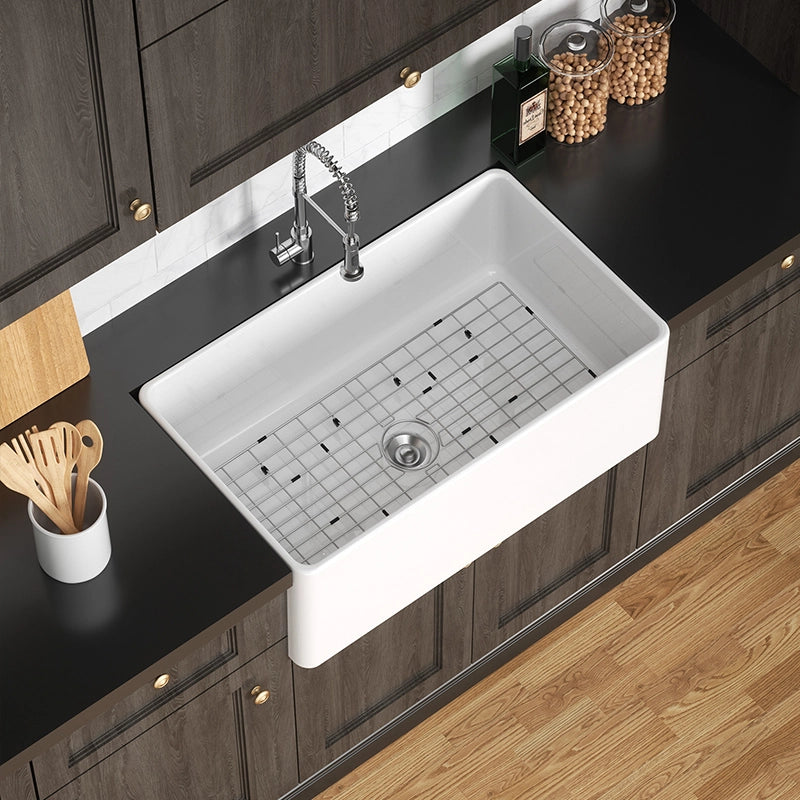
These materials are often chosen for a specific look—farmhouse/apron-front, classic white, or a statement piece in a kitchen design. They can also be genuinely durable, but in a different way than steel.
Fireclay (durable fireclay sink)
Fireclay sinks are made from molded clay fired at very high temperatures, then finished with a smooth glaze.
Pros
-
Smooth, easy to wipe clean day-to-day
-
Naturally quiet and solid
-
Classic look (especially farmhouse styles)
Cons
-
Chipping is the big risk, usually from dropped heavy items.
-
The sink is heavy, so installation can be more complicated.
-
The glaze can show metal marks (which are often not true scratches—more on that below).
Can you buff out scratches in fireclay? If the glaze is truly scratched (a groove in the glazed surface), you generally cannot buff it out like you can metal. What many people call “scratches” on fireclay are often metal transfer marks (from pans or utensils) that can sometimes be cleaned off with the right non-abrasive approach. But an actual glaze scratch or chip is usually permanent without professional repair.
Cast iron with porcelain enamel (often just called “cast iron” sinks)
These are cast iron bodies coated with a porcelain enamel surface.
Pros
-
Very solid feel; quiet
-
The enamel surface is smooth and easy to wipe
-
Good dent resistance (because the base is iron)
Cons
-
Chips are still possible if you drop something heavy.
-
If enamel chips badly, the exposed area can discolor and is harder to “unsee.”
-
Very heavy; cabinet support matters.
“Porcelain sinks” (common wording)
People often say “porcelain sink” when they mean porcelain enamel over cast iron or a fireclay sink. The key buying point is the same: it’s a hard, glossy surface that can chip.
Best for
-
Homeowners prioritizing classic looks (farmhouse, traditional)
-
People who are gentle with cookware or use sink grids consistently
-
Anyone who values easy wipe-down cleaning over “cannot ever scratch”
Avoid glazed sinks if…
-
Chips from dropped dishes will bother you.
-
Heavy items are frequently placed in the sink.
-
Permanent scratches or marks are unacceptable.
-
You need high tolerance for daily wear and tear.
Costs & constraints that change the decision (not just the sink price)
Most sink regret comes from ignoring the “boring” constraints: install method, weight, cabinet size, and countertop type.
Price bands that actually matter: budget stainless (~$400) vs mid/premium composites vs premium fireclay/cast iron
Prices vary a lot by size and features, but these ranges are common enough to guide a first decision:
-
Budget stainless steel sink: $150–$400
-
Best for: cost control, simple installs, rentals, light-to-medium use
-
Risk: thinner steel, more noise, more denting, faster “beat up” look
-
-
Midrange composite (granite/quartz): $400–$800
-
Best for: scratch-resistant look, quieter use, modern kitchens
-
Risk: chip potential, weight, quality variation
-
-
Premium fireclay / cast iron: $800–$2,000+
-
Best for: classic design, solid feel, quiet
-
Risk: heavy, install complexity, chip risk
-
The sink itself is only part of your spend.
Note: Heavy, undermount, or farmhouse sinks may cost more to install than the sink itself due to cabinet reinforcement, support brackets, or specialized labor.
Install adders: undermount templating, cabinet reinforcement for heavy duty kitchen sink builds, and plumber fees
Common “surprise costs”:
-
Undermount installation: More labor, careful sealing, and often templating. If your countertop is stone, any cutting or changes can be expensive.
-
Farmhouse sinks: Cabinet modifications, support framing, and careful alignment with the countertop reveal.
-
Heavy sinks: Composites, fireclay, and cast iron can require cabinet reinforcement. If your installer has to build support rails or a cradle, that’s time and money.
If you’re comparing sink prices online, remember: a heavier, more complex sink may cost more to install than the sink itself.
Is it worth paying more for scratch resistance if you’re already in a kitchen remodel?
Usually, yes—if you’re already paying for countertops, plumbing, and labor.
Here’s why: changing a sink later can be cheap only if it’s the same type and size and you’re not touching counters. If you choose undermount now and hate it later, swapping may involve countertop work again. So during a kitchen remodel, it’s smarter to pay for the sink you actually want to live with.

Fit & installation realities (where great sinks go wrong)
A sink can be great on paper and still be wrong for your kitchen.
What happens if your cabinets can’t support a heavy fireclay or composite sink?
A heavy sink needs support beyond the countertop edge. If the cabinet is weak, you can get:
-
Stress on seams and seals
-
Slow sagging that shows up as a gap at the counter or backsplash
-
Increased leak risk around the drain undermount area
If your installer mentions reinforcement, take it seriously. A heavy duty kitchen sink needs a heavy duty support plan.
Undermount vs top-mount: countertop material, sealing, and what’s realistic for DIY
Top-mount (drop-in) sinks
-
Rim sits on the countertop
-
Often easier to install and replace
-
More forgiving in older countertops or DIY swaps
Undermount sinks
-
Clean counter wipe-in look (no rim)
-
Popular with stone countertops
-
Requires strong support and good sealing
What’s realistic for DIY? A top-mount swap is sometimes DIY-friendly if plumbing lines up and the cutout matches. Undermount installs are less forgiving—support, adhesive, clips, and sealing need to be right to avoid leaks or sagging.
Also consider countertop material:
-
Some countertops handle undermount better than others.
-
If your countertop is already installed, changing sink size can mean cutting, which is not a casual DIY job.
Farmhouse (apron-front) sizing: cabinet width/depth, reveal planning, and why “almost fits” becomes expensive
Farmhouse sinks look simple, but they’re less flexible:
-
Cabinet width must match the sink size and apron style.
-
The sink often sits forward, which affects countertop overhang and reveal.
-
Doors, drawers, and hardware can conflict with the apron.
The common mistake: buying a farmhouse sink because it looks good online, then realizing the cabinet needs modifications you didn’t plan for.
If you’re on the fence: farmhouse is worth it when you’re designing cabinets or already remodeling. It’s usually not the easiest path for a quick sink upgrade.
Daily-use match: bowl layout, accessories, and how you actually cook
Scratch resistance matters, but daily convenience matters more. The “perfect sink” is the one that fits your habits.
Single bowl vs double bowl kitchen sink: biggest-pot clearance vs multitasking, plus drain placement
Single bowl
-
Best for washing large pots, sheet pans, oven racks
-
Easier to stack dishes (if you’re that person)
-
Often preferred in smaller kitchens because it feels less cramped
Double bowl
-
Useful if you regularly wash in one side and rinse in the other
-
Helps if you like separating prep from dirty dishes
-
Can feel tight if each bowl is small
Drain placement tip (small but real):
-
A rear or offset drain often leaves more flat space at the bottom of the sink, which helps with big pans and can improve flow around piled dishes.
-
Center drains are common and fine, but can reduce usable “floor space” in the bowl.
If you routinely wash oversized items, a single bowl kitchen layout is usually the safer choice.
Workstation kitchen sink value: ledges, cutting board, drying rack—when it speeds prep and when it eats counter space
Workstation sinks add built-in ledges so you can slide accessories like a cutting board, colander, or drying rack.
When it’s worth it:
-
You do a lot of prep and want to keep mess contained
-
You have limited counter space and need the sink to act as a work zone
-
You like the idea of a drying rack that doesn’t live on the counter
When it backfires:
-
The sink is smaller than you think once accessories are in place
-
You already have plenty of counter space and don’t want “stuff” to manage
-
You prefer a clean, open basin for soaking and big pots
A workstation kitchen sink can be great, but it also pushes you toward specific sizes. Measure carefully, especially if you’re going undermount.
Will a workstation sink feel cramped on a small counter or in a tight kitchen space?
Sometimes, yes. The sink can become a “command center” that’s always in use, which is fine—until two people need the kitchen at once.
If your kitchen space is tight:
-
Consider a single bowl that’s not overly deep (so it’s comfortable to reach into)
-
Make sure accessory storage is planned (where does the cutting board go when it’s wet?)
-
Don’t sacrifice main bowl width just to get accessories

Maintenance, risks, and long-term ownership (how to keep it looking scratch-resistant)
“Scratch resistant” is partly material choice and partly daily habits. The good news: you don’t need special products. You mainly need to avoid the handful of mistakes that quietly ruin finishes.
Easy to clean routines by material: mild soap and water basics + what cleaners to avoid
For most sinks, the safest default is:
-
Mild soap and water
-
A soft sponge or cloth
-
Rinse well and wipe dry if you hate water spots
What to avoid on almost every sink material:
-
Abrasive powders that act like sandpaper
-
Steel wool pads
-
“Cleaner + scratchy pad” combos
-
Letting harsh chemicals sit for a long time
Stainless steel
-
Follow the grain when scrubbing.
-
If you get discoloration, stop and identify the cause before going aggressive.
Composite (granite/quartz)
-
Soap and water works most days.
-
For stubborn residue, use a cleaner approved for that material type and rinse well.
-
Avoid harsh chemical soaks.
Fireclay / porcelain enamel
-
Avoid abrasive pads that can dull the glaze over time, based on EPA safer cleaning guidance.
-
Many dark “scratch-looking” lines are metal marks; cleaning them is different than fixing a scratch.
If you remember one thing: a scratch-resistant sink can still be ruined by the wrong cleaner.
Preventing scratches, chips, and dull spots: bottom grids, cutting boards, and handling heavy cookware
If you want your sink to stay good-looking, do these three things:
-
Use a bottom grid
-
This is the simplest protection against chips (fireclay/composite/enamel)
-
It reduces the scraping that causes surface scratches
-
It also protects the bottom of the sink from the “grit + pan swirl” effect
-
-
Don’t cut directly in the sink
-
Even if you think you’re careful, grit and knife tips do damage over time
-
Use a cutting board (workstation sinks make this easier)
-
-
Be mindful with heavy cookware
-
Set down cast iron and heavy pans instead of dropping them
-
Don’t bang oven racks around in a glazed sink
-
This is especially important if you chose a material for scratch resistance but it has a higher chip risk.
Quality and brand red flags: thin steel, poor coatings, porous composites, short warranties, and “too-good” deals
You asked for a confident first decision, so here are the red flags that actually matter:
For stainless steel sinks
-
Feels flexy when pressed (often thinner steel)
-
No sound-deadening pads or coating (usually louder)
-
Vague steel description (doesn’t clearly state 304 stainless steel)
-
Very shiny finish with no grain (shows scratches more)
For composite sinks
-
Inconsistent surface texture or visible imperfections
-
Very light weight for the size (can hint at lower density)
-
Unclear material makeup and weak warranty language
For fireclay / cast iron / porcelain enamel
-
Shipping damage risk (inspect immediately)
-
Overly thin glaze or uneven finish (visible waves, pinholes)
-
No clear guidance on cleaners and thermal shock
And the big one: if a deal looks too good, the “savings” often show up later as staining, chipping, rusting, or a finish that looks worn fast.

Visual: 2-minute “right sink” checklist for scratch resistance, noise, depth, and durability over 10+ years
Use this when you’re comparing sinks that look similar online:
| Quick check | What to look for | Why it matters |
| Your main annoyance | Scratches vs dents vs chips vs spots | Pick the failure you can live with |
| Material match | Composite vs stainless vs fireclay/enamel | Scratch resistance is not the same across materials |
| Finish | Brushed/satin hides wear better than mirror | Matte-style finishes reduce visible scratches |
| Steel details (if stainless) | 304 stainless steel + 16-gauge (or thicker) | Better dent resistance and less noise |
| Impact protection plan | Bottom grid included/available | Prevents chips and bottom wear |
| Install reality | Undermount/top-mount + cabinet support | Avoid surprise labor costs |
| Bowl layout | Single bowl vs double bowl based on cookware | Prevent daily frustration |
| Depth | Deep enough, but comfortable to reach | Too deep can strain your back, which aligns with ergonomic recommendations for kitchen and workspace design |
Putting it together: which sink material is the most scratch-resistant?
If you mean “most likely to look scratch-free in daily life,” granite/quartz composite usually performs best because it hides micro-scratches and scuffs.
If you mean “least likely to suffer permanent damage,” high-quality stainless steel often wins because it won’t chip, and many surface issues are cosmetic and blend over time.
So the right answer depends on what kind of “damage” you want to avoid.
If you only remember this:
-
Pick composite for scratch concealment and modern style.
-
Pick stainless for easy maintenance and budget.
-
Pick glazed/fireclay for chip-conscious, careful kitchens. Let your primary annoyance guide your material choice.
Before You Buy: quick checklist (5–8 items)
-
Confirm your cabinet width and sink size (especially farmhouse and workstation models).
-
Decide undermount vs top-mount based on your countertop material and install budget.
-
Pick your “failure mode”: hide scratches (composite) or avoid chips (stainless).
-
If stainless: verify 304 stainless steel and aim for 16-gauge for a heavier, quieter feel.
-
Plan protection: buy/use a bottom grid and avoid cutting directly in the sink.
-
Choose a finish you can live with: brushed/satin hides wear better than mirror-polished.
-
Check real maintenance: commit to mild soap and water, and avoid abrasive pads/cleaners.
-
Make sure the cabinet can support a heavy sink, or budget for reinforcement.
FAQs
1. Which sink material is the most scratch-resistant?
When it comes to a scratch resistant kitchen sink, materials like fireclay and quartz composite really shine. A durable fireclay sink is super hard and dense, which means everyday kitchen tasks—like moving pots or prepping veggies—rarely leave marks. Quartz composite sinks are also considered non-scratch sinks, performing better than softer materials such as acrylic or even some stainless steel options. That said, no sink is completely impervious to scratches, so a little care and smart use will keep your apron-front or farmhouse sink looking great for years. Think of it as part of your sink maintenance routine rather than a one-time setup.
2. Can you buff out scratches in fireclay?
The good news is that minor scratches in a durable fireclay sink can often be polished or buffed out, though it’s not something you need to do constantly. Using a gentle non-abrasive cleaner and a soft cloth works well to restore the surface’s shine. For deeper marks, a professional restoration might be needed, especially for premium fireclay or apron-front sinks. Prevention is key: using cutting boards and avoiding dropping heavy cookware will protect your heavy duty kitchen sink and save you from polishing headaches later.
3. Does a matte finish hide scratches better?
Yes! Matte finishes generally hide scratches better than glossy ones. A matte scratch resistant kitchen sink can mask small abrasions, water marks, or soap residue, making it ideal for busy kitchens or heavy-use situations. Even though the finish helps, regular wiping and following a sink care guide ensures your apron-front or farmhouse sink stays clean and low-maintenance.
4. Are stainless steel sinks truly scratch-proof?
Not exactly. Stainless steel sinks are tough and resist corrosion, but they’re not truly non-scratch sinks, especially thinner gauge models. That said, scratches on a stainless steel or heavy-duty kitchen sink are often seen as part of their character, giving kitchens a professional, lived-in look. You can minimize visible scratches by using cutting boards, avoiding dragging heavy pots, and occasionally polishing with a soft cloth and stainless steel cleaner.
5. How do I protect my sink during heavy use?
Protecting your heavy duty kitchen sink is about using a few smart habits. Add rubber mats or silicone grids at the bottom to prevent scratches from pots and pans. Never cut directly in the sink, and wipe up acidic spills quickly to prevent staining or etching. Regular cleaning with gentle, non-abrasive products keeps your scratch resistant kitchen sink looking new. A little extra care now saves you from costly repairs or scratches later, making your apron-front or farmhouse sink last for years.
References


Leave a comment
This site is protected by hCaptcha and the hCaptcha Privacy Policy and Terms of Service apply.