

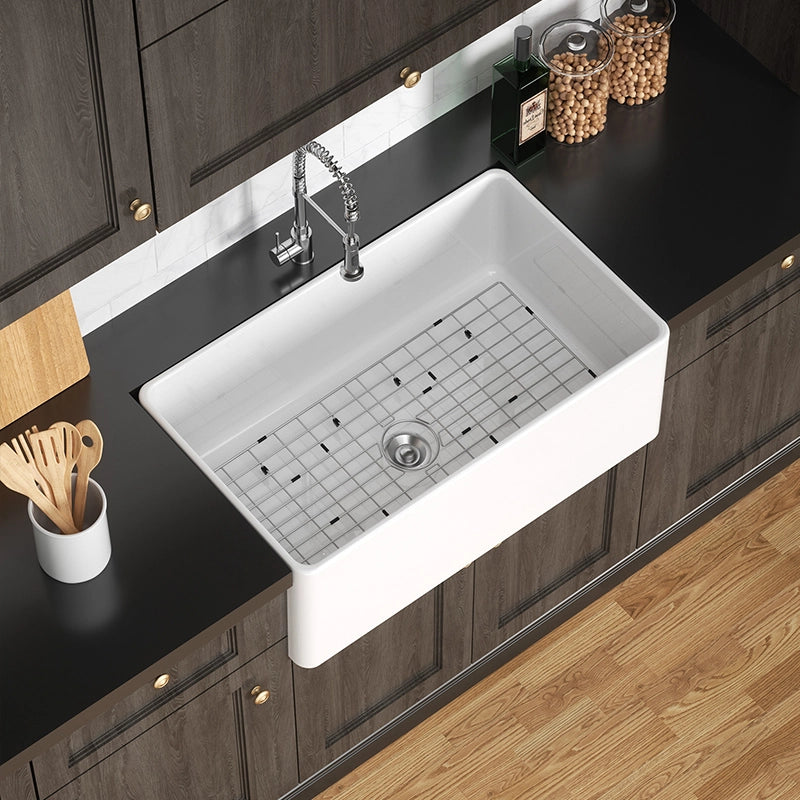

A kitchen sink with bottom grid is a simple but effective way to protect your kitchen sink from scratches while creating a raised platform for dishes and cookware. It does not prevent all scuffs and adds surfaces that trap food debris and moisture, requiring regular cleaning to stay sanitary. You drop in a stainless steel sink rack, and your new sink bottom is protected from pots, pans, and dish stacks. The catch is that you also add a new surface that can trap food bits, soap scum, and slime under the grid and around rubber feet.
The key point is this: a sink protector trades scratch protection for extra maintenance. If you’re willing to clean and rinse it regularly, you’ll enjoy the benefits. Otherwise, it can feel cumbersome, especially in smaller sinks or busy kitchens.
Decision Snapshot: who should use it vs skip it
Protective grids provide an extra layer of safety for your sink surface and help reduce noise. They work best for those who want durable sink protection while maintaining proper hygiene.
A kitchen sink with bottom grid usually makes sense if:
-
Care about wear and tear on newer sinks, particularly stainless steel or farmhouse sinks.
-
Want a raised platform so water and debris flow underneath, improving functionality.
-
Are willing to rinse and scrub the grid often, keeping your kitchen accessories sanitary.
You should probably skip it (or use only sometimes) if:
-
Prefer a low-maintenance, easy-to-clean sink without extra accessories.
-
You dislike cleaning tight corners, rubber feet, or other sink accessories.
-
Trapped food under the grid would bother you more than minor scratches.
Most common regret: Many homeowners expect “set it and forget it” protection. Hidden food buildup under the grid and around rubber feet can create daily cleaning chores they didn’t anticipate.
What are you trying to fix—scratches, gunk, or workflow?
Before moving on, pick one primary goal for your sink grid: reducing scratches, keeping dishes free of gunk, or improving workflow. Focusing on a single main goal helps set realistic expectations and ensures you choose the grid option that truly fits your habits.
If your goal is “I hate scratches”
Note: Stainless steel and softer sink finishes are most prone to visible scratches. The grid mainly protects the sink bottom, while sides and corners remain exposed. Using the grid helps reduce wear but does not fully shield the entire basin.
A sink grid helps most with scratch patterns caused by sliding cookware. It creates a buffer so the pot is riding on the grid, not grinding on the sink bottom.
What it won’t do:
-
It won’t stop all wear. Dishes still hit the sides, and grit can still get trapped between items.
-
It may still allow scuffing where the grid’s feet touch the sink surface.
-
If you already accept that a working kitchen sink gets marks, you might decide scratches are the lower-stress option.
Certain materials like stainless steel and softer composite sinks are more prone to visible scratches. Protective grids primarily shield the bottom, leaving walls and corners exposed. Note: even with a grid, micro-grit trapped on or under it can still cause scuffs—this is not a guarantee against all scratches.
If your goal is “I don’t want dishes sitting in dirty water”
A bottom grid lifts dishes and cookware slightly, so:
-
Water can flow under items.
-
Food bits can settle below the rack instead of sticking to the underside of a bowl.
-
Some people find rinsing easier because things don’t suction to the sink bottom.
The cleaner feel only happens if you lift and rinse underneath the grid regularly. Odors usually come from the underside zone, so neglecting that area defeats the purpose of the raised platform.
If your goal is “I want a better workflow”
A grid changes how the sink works as a workspace:
-
It can act like a small platform for rinsing produce or draining a pot.
-
It can keep glassware more stable (less sliding).
-
It can make the sink noisier or quieter depending on the sink and cookware. Some people like the “cushion” feeling; others dislike the clank of metal-on-metal contact points.
Ask yourself: do you want the sink to be a simple basin you can wipe in 10 seconds, or a basin plus an accessory you maintain?

Fit and daily use: will the grid help or get in the way?
Decide whether you want a full-time grid or a drop-in option used only on heavy cookware days. The drop-in method saves cleaning time but requires space for storage and air-drying. See the middle path section for guidance. A properly sized kitchen sink grid is designed to fit your sink, including rear drain with corner radius or deep single bowls, ensuring maximum usability without interfering with kitchen accessories.
Drain location and “clearance” problems
Bottom grids are cut to fit around a drain. In real kitchens, small differences matter:
-
Center drain vs rear drain: the opening must line up cleanly, or you’ll fight it every time you clean around the drain.
-
Corner radius (how rounded the sink corners are): if the grid corners don’t match, you’ll get gaps where grime collects, or the grid rocks slightly.
-
Deep single bowl sinks: you may stack cookware more aggressively. A grid can reduce usable depth by a bit and change how easily large pots sit flat.
A well-fitted bottom sink grid lets water flow freely and keeps the bottom of the sink clear.
“Fits perfectly” can still mean “annoying daily”
Even when the size is correct, people get irritated by small daily moments:
-
A tall stockpot that doesn’t sit flat because it lands on a raised wire.
-
A baking sheet that teeters instead of laying smooth.
-
Silverware that slips through openings and ends up underneath.
-
The grid shifts when you scrub a pan.
If you’re the kind of person who wants the sink to feel open and unobstructed, a rack-like accessory can feel like clutter.
Quick fit check (takes 2 minutes)
Use this short check before committing to a grid full-time:
-
Place the grid with your actual drain assembly/strainer installed, not just over an empty hole.
-
Check that the grid sits flat without rocking.
-
Make sure rubber feet contact points are stable.
-
Ensure you can easily wipe around the drain.
| Check | Why it matters |
| Drain cutout lines up with your drain | Misalignment makes cleaning and draining feel fussy every day |
| Grid sits flat without rocking | Rocking traps grime and makes washing noisy |
| Rubber feet contact points are stable | Feet collect buildup; more feet can mean more scrub spots |
| You can wipe around the drain easily | If not, you’ll avoid cleaning until it feels “gross” |

Hygiene and cleaning reality (the part many people don’t expect)
As convenient as a sink grid may seem, it creates several spots where grime can accumulate unnoticed. These damp zones quickly become breeding grounds for bacteria if not regularly cleaned. Here’s where food particles, slime, and biofilm tend to gather.
Where the gunk actually builds up
A sink grid creates multiple “traps,” especially in damp zones: under the grid where food particles settle, around rubber feet where slime forms quickly, and at wire intersections and tight corners that a sponge can’t reach. Even rinsing after dishes often leaves a wet film where odors and biofilm start.
-
Under the grid where food particles settle
-
Around rubber feet/bumpers where slime forms quickly
-
At wire intersections and tight corners where a sponge doesn’t reach well
Rinsing alone isn’t enough—lift and clean the kitchen sink grid regularly. Durable sinks, like high-quality composite sinks or premium farmhouse sink models, still benefit from proper maintenance.
If you’ve ever lifted a bath mat and found the underside slimy, the idea is similar—constant moisture plus residue.
The real cleaning routine (if you want it to stay pleasant)
If you want a bottom grid and also want it to feel sanitary, plan for a routine like this:
-
Daily or every use: lift a corner, rinse underneath, and rinse the grid itself.
-
A few times per week: scrub around feet and cross points with a brush.
-
Weekly or as needed: run the grid through the dishwasher if it fits.
Decision gate: If you won’t lift and rinse the grid regularly, skip using it—otherwise it accumulates grime faster than expected.
If reading that feels like “one more thing,” that’s a sign the grid may annoy you. If you won’t lift and rinse the grid regularly, skip using it—otherwise, it will accumulate grime faster than you expect.
Long-term annoyances people don’t plan for
Even “durable” accessories have wear points:
-
Rubber or silicone feet can discolor or feel tacky.
-
Feet/bumpers can loosen, creating scratch and rattle risks.
-
Hard water can leave scale lines where the grid touches.
None of these are disasters. They’re just the kind of small maintenance tax that makes some homeowners quit and go back to a bare sink.

When a protective sink grid is overkill
Some users don’t need a grid:
-
If you rarely use heavy pots or pans, minor scratches are less noticeable.
-
In lightly used or easy-to-clean sinks, grids add maintenance with limited benefit.
-
Small sinks or high-maintenance routines can make grids cumbersome rather than helpful.
A practical middle path: use the grid only for heavy cookware days. Keep it nearby, drop it in for heavy items, then remove, rinse, and let it dry. This avoids always trapping moisture and debris while still protecting your sink when it matters.
A practical middle path: use the grid only for heavy cookware days
You don’t have to treat it as permanent.
If your main concern is protecting the bottom from heavy pots and pans, one low-stress approach is:
-
Keep the grid stored nearby.
-
Drop it in when you’re washing heavy items.
-
Remove it right after, rinse underneath, and let it dry.
Storage + drying trade-off: This approach avoids constant moisture and trapped debris but requires space and handling to air-dry the grid.
Before You Choose (quick checklist)
-
Will you realistically lift the grid to rinse underneath several times a week?
-
Are you okay cleaning rubber feet and tight wire intersections, not just the sink surface?
-
Does the drain opening line up cleanly with your drain location and shape?
-
Do you wash large flat items that need a flat sink bottom?
-
If the grid gets stained or a bumper falls off, will that bother you more than a few sink scratches?
-
Does your warranty allow modifications or accessories like grids for your premium sink?

FAQs
1. Do sink bottom grids cause germs?
Sink grids don’t magically make your sink a germ factory, but they do create hidden damp spots where food residue can hang out, especially under the wires or around rubber feet. These spots can develop odors or a slimy biofilm if ignored, which is more of a nuisance than a serious bacterial risk. The key is regular attention: lifting the grid after each use, rinsing it, and occasionally scrubbing the tight corners keeps everything sanitary. Think of it like a mini-maintenance routine—if you let debris sit under the grid for days, it will start to smell and feel “off,” but if you rinse and dry it consistently, you prevent both odors and microbial buildup. So grids themselves aren’t dirty; it’s how you treat them that matters. For most homes, following a simple rinse-and-clean habit keeps the sink safe and fresh without extra chemicals or scrubbing stress.
2. Will a grid stop my sink from scratching?
A bottom grid is great at reducing scratches on the sink floor caused by sliding pots, pans, and dishes—it acts like a little protective barrier so metal doesn’t grind directly on stainless steel or softer composite materials. That said, it isn’t a magic shield. Scratches can still happen along the sides, corners, or the rim, and grit trapped under or on top of the grid can create tiny scuffs even when you think the surface is protected. The grid itself adds contact points, so there’s always some chance of marks forming. Essentially, a grid minimizes damage rather than eliminating it. If you’re mainly worried about visible wear on the flat bottom, it works well; if you’re aiming for a perfect, scratch-free sink, it won’t do the job alone. Combining the grid with careful washing habits and occasional polishing of the sink surface keeps it looking its best.
3. Can I put a stainless steel sink grid in the dishwasher?
Many people assume that tossing a stainless steel sink grid into the dishwasher solves all cleaning issues, but in reality, it only goes so far. If the grid fits comfortably, the dishwasher will clean most of the surfaces, but the tiny areas under the rubber feet, bumpers, and wire intersections often don’t get fully rinsed. Those spots can trap food residue or minerals, which is where odors or slime start forming. For larger grids, you may not even be able to fit them flat, meaning you end up hand-scrubbing anyway. The best approach is a combination: a quick rinse in the dishwasher helps with general cleaning, but a short hand-scrub under the feet and wires ensures the hidden areas are genuinely clean. Think of the dishwasher as a helper, not a full replacement for maintenance. Regular attention keeps the grid hygienic and odor-free.
4. Why do I need a grid at the bottom of my sink?
A sink grid isn’t strictly necessary, but it solves a few everyday frustrations. First, it protects the sink’s bottom from scratches caused by sliding pots, pans, or heavy dishware, which is especially useful for stainless steel or softer composite sinks. Second, it creates a small raised platform so water, soap, and debris can flow underneath dishes instead of pooling, making rinsing more effective and keeping dishes feeling cleaner. Third, grids can stabilize glassware and delicate items, reducing noise and clanging in the sink. However, the trade-off is that it adds another surface that needs cleaning, so a grid works best if you’re willing to lift, rinse, and occasionally scrub it. Think of it as a helper accessory: it protects, improves drainage, and organizes, but it’s only as good as the maintenance routine you follow.
5. Are sink grids dishwasher safe?
Most stainless steel sink grids are technically dishwasher safe, but “safe” doesn’t mean it cleans everything perfectly. Small areas under rubber feet or wire intersections may still trap residue, and oversized grids may not fit flat, preventing thorough cleaning. Dishwashers can handle general grime, but if you want the grid genuinely hygienic and odor-free, a quick rinse or hand-scrub afterward is still recommended. Think of the dishwasher as a partial helper—it reduces overall cleaning effort but doesn’t replace occasional manual attention. Grids made from composite or coated metals may also require a bit more caution to avoid chipping or coating wear. Overall, dishwashing works for convenience, but nothing beats a quick visual check and hand-rinse for total cleanliness.
6. Do grids prevent the sink from draining?
No, a properly sized grid won’t block drainage. The holes in the grid align with the sink drain, allowing water and small debris to flow freely underneath. Problems only arise if the grid doesn’t match the sink shape perfectly, rocks, or shifts, which can trap water in certain spots. That’s why it’s important to choose a grid made for your specific sink model and to check the fit before daily use. A well-fitted grid actually improves water flow under dishes, keeping the sink feeling cleaner and reducing stagnant water. It’s also easy to remove for deep cleaning or when you need maximum space for large pots. Think of the grid as a raised platform rather than a barrier—it’s designed to coexist with drainage, not obstruct it.
7. Can a grid prevent fireclay from cracking?
A grid can help reduce stress on delicate surfaces like fireclay by providing a buffer between heavy cookware and the sink bottom. Sliding pots or sudden impacts on a bare fireclay surface can create small cracks or chips over time, but the grid absorbs some of that impact. That said, it’s not a guarantee—very heavy objects, sharp edges, or forceful impacts can still damage fireclay. The best practice is to combine a grid with careful handling of pots and pans: avoid dropping cookware directly on the sink bottom, and make sure the grid fits snugly without rocking. Think of it as a preventative cushion rather than armor: it reduces the likelihood of cracks but can’t make the sink indestructible.
8. How do I find a grid that fits my specific sink?
Finding a grid that fits starts with knowing your sink’s exact dimensions, including width, length, depth, drain placement, and corner radius. Check whether your drain is center or rear-mounted and note the shape of the sink corners, since mismatched grids can rock, trap grime, or block access. Many manufacturers make model-specific grids, but universal grids exist that can be trimmed slightly to fit. Always verify the fit with the actual drain assembly in place, not just an empty hole, and make sure rubber feet contact points are stable. Consider whether you want a full-time grid or a drop-in option for heavy cookware days. The right grid should sit flat, not wobble, and allow easy cleaning underneath. When in doubt, consult the manufacturer’s sizing chart or measure your sink before purchase—it’s the simplest way to avoid frustration.
References




Leave a comment
This site is protected by hCaptcha and the hCaptcha Privacy Policy and Terms of Service apply.