

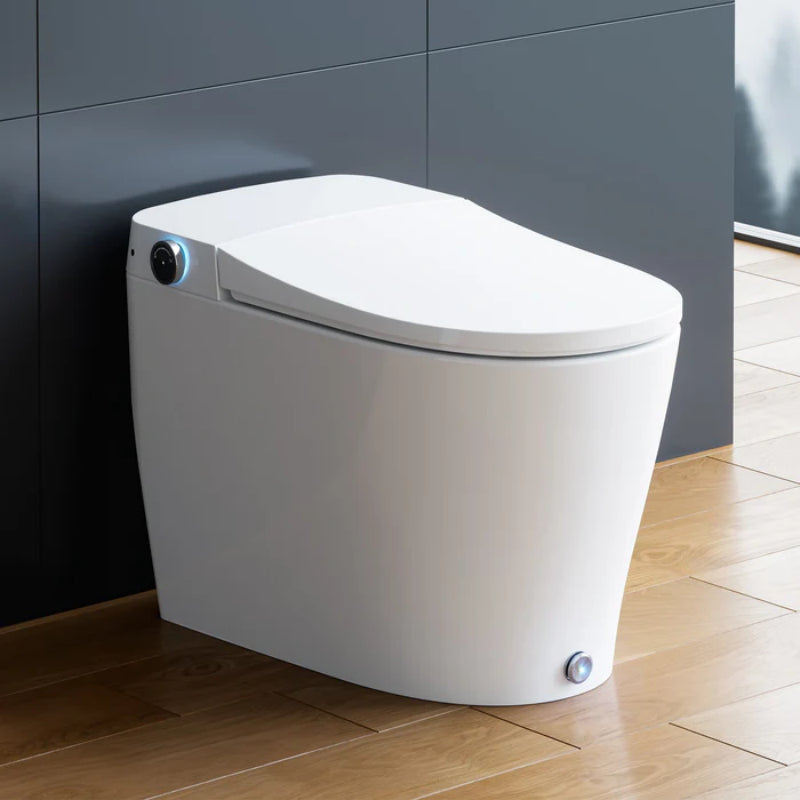
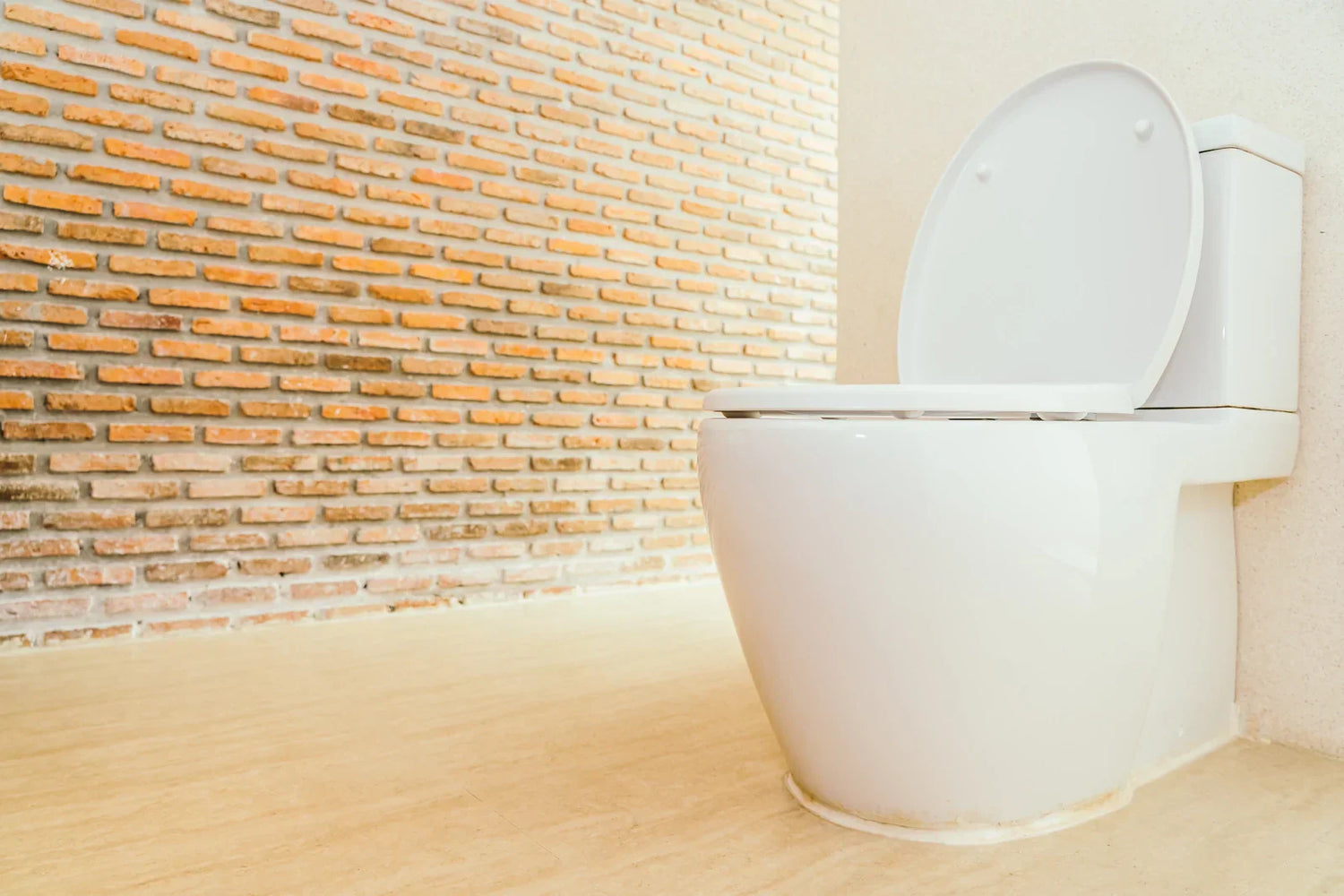
A one-piece toilet can be a clean DIY upgrade, but it’s also one of the easiest ways to end up with a slow leak you don’t notice until the subfloor softens. The difference is rarely “skill.” It’s usually fit: rough-in accuracy, flange height, floor flatness, and whether you can lower a heavy, rigid base straight onto bolts without smearing the seal.
This guide is written to help you decide whether a one-piece toilet will actually install successfully in your bathroom, what conditions make it fail, and what becomes expensive or annoying when it doesn’t.
Decision Snapshot: will a one-piece toilet work in YOUR bathroom?
If you only read one section, read this.
Before purchasing, run this pass/fail gate—check all three explicitly:
-
Measured rough-in result: Confirm your rough-in is truly standard (12") and measured correctly (explained below). Fail if your rough-in is less than 12" or too close to the wall for the model’s tank/bowl back.
-
Flange height relative to finished floor: Ensure the flange is solid, at or near finished floor level, and not cracked. Fail if the flange sits too low, is cracked, or requires an extender.
-
Ability to lower the toilet straight down without twisting: Determine whether you can safely place a 100+ lb toilet straight onto the bolts and wax ring. Fail if you must twist, angle, or cannot safely handle the weight alone; a helper is required.
A one-piece toilet is most likely to work when:
-
Your rough-in is truly standard (12") and you measured it correctly (explained below).
-
The toilet flange is solid, at the right height, and not cracked.
-
The floor is flat enough that the toilet won’t rock without stacking shims.
-
You can physically place a 100+ lb fixture accurately without “walking” it around on the wax.
A one-piece toilet is a common regret when:
-
Your rough-in is 11.5" (or anything “close enough”) and the model has a larger tank/bowl back profile.
-
The floor is uneven tile, soft vinyl, or a flange that sits below the finished floor without an extender.
-
You have a cast iron or offset drain setup that needs adaptation.
-
The bathroom is narrow or tight, so you can’t get your hands/tools where you need them.
Fast triggers for regret (seen often in real installs):
-
Bathrooms under ~30" wide between walls/obstructions.
-
Less than 15" side-to-centerline clearance.
-
No safe way to lift and lower the toilet without twisting (solo install attempts).
-
Skirted bases where you can’t see what’s happening at the bolts and flange.
If one or more of those describes your bathroom, a one-piece can still work—but you should expect extra parts, extra time, and a higher chance you’ll need to reset it.
Who this is for / not for based on home conditions (before you buy)
One-piece toilets are least forgiving in the exact homes where people try to DIY: older flooring, unknown flange condition, tight bathrooms, and older drain materials.
Not for you if…
-
Your rough-in is non-standard, including 11.5" or less.
-
Your floor is uneven, soft, or unstable.
-
You have a cast iron or offset flange that requires adaptation.
-
Your bathroom is under 30" wide (less than 15" side-to-centerline clearance each side).
What if my rough-in is 11.5 inches?
This is the most common “it almost fits” trap.
How to measure rough-in correctly:
-
Find the two closet bolts (the bolts that hold the toilet down). They sit on either side of the flange.
-
Measure from the finished wall surface (painted drywall, not baseboard) to the center of one bolt.
-
That number is your rough-in.
Measurement tolerance guidance:
-
Acceptable rough-in variance is typically ±0.25" from standard 12".
-
Before buying, perform a “spec-sheet back clearance check” to confirm that the toilet’s tank/bowl profile allows sufficient distance from the wall without forcing the fixture forward.
What happens at 11.5":
-
Some toilets still physically sit on the flange, but the tank/bowl may hit the wall or force the toilet forward.
-
If the toilet is forced forward, the bolts sit at the back of the base openings, which can cause:
-
difficulty starting nuts
-
uneven compression of the wax ring
-
a toilet that “looks fine” but rocks slightly
-
a seal that weeps after a few weeks of use
-
A one-piece toilet amplifies this because the tank and bowl are one rigid unit. With a two-piece, you sometimes gain a little practical wiggle room during set and tank alignment. With a one-piece, the shape is fixed; if it doesn’t land perfectly, you feel it immediately.
If you measure 11.5", don’t assume it’s fine. You need to check the toilet’s “back clearance” requirement and be ready for one of these outcomes:
-
You choose a different toilet footprint.
-
You accept more gap from the wall (which can affect your supply line reach).
-
You relocate the flange (often not DIY-friendly).
-
You return the toilet after a frustrating dry-fit.
Will this work in a bathroom under 30 inches wide?
A narrow bathroom is where one-piece toilets disappoint people who assumed “sleek” equals “smaller.”
What becomes annoying in practice:
-
Your knees/hips hit the vanity or wall because the bowl is wider than expected.
-
You can’t comfortably reach around to clean the far side.
-
The door swing clips your knees or hits the bowl unless the door is re-hung or swapped to outswing.
-
You can’t access shutoff valves or mounting points without scraping hands against walls.
Minimum clearance targets that keep you out of trouble:
-
15" from centerline to each side (30" total width).
-
21" clear space in front of the bowl (more feels better in daily use).
-
Enough room behind/next to the toilet to connect water supply without kinking.
If your room is under 30" wide, you can still install a toilet—but you should mock up the footprint first (a simple method is included below). The cost of being wrong is not just discomfort; it’s reinstall time, new seals, and possibly damaged flooring.
When a two-piece toilet is the safer retrofit
A two-piece is often the better choice when the bathroom conditions are unknown or tight, because you can handle the tank and bowl separately and you can see what’s happening at the flange and bolts.
A two-piece is usually safer if:
-
You don’t know the flange condition until the old toilet is removed.
-
The bathroom is tight and you need to rotate/angle the bowl to set it.
-
You expect future service (flooring changes, flange repairs, frequent clogs).
-
You have to carry the toilet up stairs alone.
This isn’t about “cheap vs expensive.” It’s about whether your bathroom tolerances are forgiving enough for a rigid, heavy base.

Key trade-offs that change real installation difficulty (one-piece vs two-piece)
Even a new one-piece requires careful attention to the floor bolts and ensuring the base sits flat. Following a step-by-step guide to installing a one-piece helps you lower the toilet gently, align the bolts, and press the wax seal securely, avoiding common mistakes that can compromise functionality or create leaks. This preparation sets the stage for a smoother comparison between one-piece and two-piece installations.
One piece vs two piece install difficulty
The main difference is how precisely the bowl must land.
With a two-piece:
-
the bowl is lighter
-
you can set it more easily
-
you can adjust the tank afterward
-
bolt access is usually straightforward
With a one-piece:
-
you’re lowering a heavier, bulkier shape
-
you usually must hit the bolts and seal perfectly on the first real set
-
if you miss and lift it back up, you often need a new wax ring (or risk leaks)
A lot of “I installed it but it leaks” stories are really “I seated it twice on the same wax” or “I had to twist it into position after it touched wax.”
Skirted and low-profile bases
Skirted bases look clean, but they hide the exact area you need to inspect during install.
Where people get burned:
-
The flange is cracked or too low, but you can’t see it once the toilet is near the floor.
-
The closet bolts are slightly off angle, but you can’t see them engage.
-
The toilet is resting on tile high spots, not on the base evenly, so it rocks later.
Low-profile bases can also “bridge” uneven tile—so it feels stable at first, but repeated sitting causes micro-movement. That movement slowly destroys the wax seal.
Heavy-lift risk and “solo-friendly” reality
A one-piece toilet can be 90–120+ lbs. The risk isn’t just your back. It’s what happens when you try to control a heavy porcelain object in a tight space.
Common failure modes from solo attempts:
-
bumping the bowl on tile and cracking the base edge
-
dropping it the last inch and crushing the wax unevenly
-
twisting to align bolts and smearing the seal
-
bending the shutoff valve or supply line because there’s no room to maneuver
If you’re determined to seat a one piece toilet alone, you need a plan (covered below). But the honest advice: if your space is tight, a second set of hands reduces leaks more than any “better” wax ring.

Hidden cost and retrofit constraints that decide whether DIY is realistic
Before considering costs and retrofit challenges, it helps to understand the process of installing a one-piece toilet. Even in a sleek and modern bathroom or small powder room, following clear instructions and knowing how to gently rock the base into place ensures a functional setup. By taking your time and following these steps, you can make the installation process more predictable and reduce the risk of damaging flooring or fixtures.
DIY toilet replacement guide budget
A toilet swap looks simple until you discover the flange is wrong, the valve won’t shut off, or the floor isn’t flat.
Typical add-ons that change the budget fast:
-
wax ring(s) (you may need more than one if you do a reset)
-
new closet bolts and washers
-
flange repair ring or replacement flange
-
flange extender kit (when the flange is too low)
-
flexible water supply line (correct length and connection type)
-
shutoff valve replacement (if it won’t fully close or is corroded)
-
shims (plastic) and a finish trim/caulk
-
disposal costs for the old toilet (some areas treat it as bulky waste)
Reality check: a “simple” install often becomes a “small plumbing day” when you uncover flange or valve problems. That’s normal—just plan for it.
Disposal and access constraints
One-piece toilets are harder to maneuver through:
-
narrow hall turns
-
stairwells
-
small doorways
-
bathrooms where you can’t set the toilet down safely while you prep the flange
Also plan the removal:
-
Old toilets still have water in the trap even after you sponge the tank and bowl.
-
Dragging a toilet can scratch tile or tear vinyl.
-
If you crack old wax or flange pieces, you can create a debris problem that prevents sealing.
If the route out includes stairs and you’re working alone, this is where DIY plans often stall.
When to consult a professional plumber
Some situations are less about skill and more about risk and unknowns. Consider a pro if you have:
-
cast iron drains with corrosion, lead/oakum joints, or brittle fittings
-
an offset flange or a flange that isn’t centered where it should be
-
a soft/rotten subfloor (toilet rocked for years)
-
a history of toilet leaks or ceiling stains below the bathroom
-
flooring work that raised the floor height without correcting flange height
A one-piece toilet does not “cover up” these issues. It often makes them harder to deal with because the base blocks access.
Fit & layout realities that cause wobble, leaks, or daily-use frustration
Before you start wrestling the toilet into place, it helps to understand that even a well-measured rough-in can become tricky if the lid doesn’t attach smoothly or the bolts aren’t aligned tightly. A one-piece toilet might look simple, but maneuvering it back and forth while checking clearances, seat height, and supply line reach is where many installers discover the need for a more efficient, thoughtful approach. Thinking through these details ahead of time—almost like a mini “how to install a one piece toilet” rehearsal—makes the bathroom remodel feel far more comfortable and less frustrating.
Rough-in and flange alignment
Two measurements matter:
-
Rough-in (wall to bolt centerline, usually 12")
-
Flange position and height relative to the finished floor
What tends to go wrong:
-
Measuring from baseboard instead of wall surface (you gain 1/2"–3/4" error).
-
Assuming the flange is centered just because the old toilet “looked centered.”
-
Bolts installed in the wrong part of the slot, so the toilet sits crooked.
Tolerance limits that still fail:
-
Even if the toilet “fits,” a one-piece base may have less clearance around the bolts.
-
If the flange is rotated so the bolt slots aren’t square to the wall, you fight bolt alignment while lowering the toilet—exactly when you should be lowering straight down.
If the bolts don’t stand straight and steady, fix that first. Don’t try to muscle the toilet onto leaning bolts.
Clearance math that matters
Use this quick check before buying and again before install:
| Check | Target | Why it matters |
| Side clearance | 15" from centerline each side | Comfort, code-like spacing, cleaning access |
| Front clearance | 21"+ clear in front | Knees, door swing, usable space |
| Door swing | No contact at full swing | Daily annoyance, chipped doors, cracked seats |
| Supply valve reach | Line connects without strain | Prevents leaks and kinked lines |
If you’re tight on any of these, the install becomes harder and the bathroom becomes less pleasant to use.
Cardboard footprint mock-up
This is the simplest way to prevent a bad fit.
-
Find the toilet’s overall depth and max width (from the spec sheet).
-
Cut cardboard to that footprint.
-
Mark the centerline of your flange on the floor with painter’s tape.
-
Place the cardboard so the centerline aligns, then:
-
open the door fully
-
stand in front of it
-
simulate sitting down (you’ll feel if it’s tight)
-
check if you can reach the shutoff valve area
-
This catches the “it technically fits but feels awful” problem before you lift anything heavy.
How to install a one piece toilet without forcing misalignment
The goal is simple: set the toilet straight down, compress the seal once, and lock it without rocking. Most leaks and cracks come from skipping that logic.

Pre-flight checklist
Before you remove the old toilet, confirm:
-
The shutoff valve turns and actually stops water. If it doesn’t, you may need to shut off the house water and replace the valve.
-
You have the correct water supply line length and connection type.
-
You have new closet bolts (old ones are often corroded or the wrong length).
-
You’ve inspected the new toilet’s mounting method (standard top nuts vs side-mount/skirted access).
-
You have shims ready (don’t “see if it rocks later”—fix rocking during install).
Once the old toilet is removed:
-
Scrape all old wax off the flange and floor.
-
Check flange condition: solid, not cracked, not loose.
-
Confirm flange height: ideally the flange rim sits on top of the finished floor (or close to it). If it’s below the finished floor, plan for an extender or a different sealing strategy.
Also check bolt length. If the toilet base is thick or skirted, short bolts can leave you with barely any threads to catch a nut.
Best wax ring for heavy toilets
For a heavy one-piece toilet, the “best” wax ring is the one that matches your flange height and keeps the toilet stable without over-stacking wax.
Use these rules of thumb:
-
Standard wax ring (no horn): Works when the flange is at the right height and the drain opening is clear. This is often the most reliable when the flange is correct.
-
Extra-thick wax ring: Useful when the flange sits a bit low (common after new tile). But extra wax is not a cure for a badly low flange.
-
Horned wax ring (with funnel): Can help guide waste into the drain, but it can also cause problems if it interferes with an offset flange or reduces opening size. Horns can also bottom out in some setups and prevent full compression.
-
Waxless seal: These can work well when installed on a solid, correctly sized flange and when the toilet is set straight down. They can be more forgiving for a reset because they’re not “one-crush only,” but they still won’t fix rocking or a loose flange.
Avoid these common mistakes:
-
Stacking two wax rings because “more must seal better.” This often leads to uneven compression and eventual leaks.
-
Reusing wax after you lifted the toilet back off. Once wax is crushed and smeared, it often won’t reseal correctly.
If your flange is more than about 1/4" below the finished floor, don’t guess. A flange extender (properly installed) plus a correct wax ring is usually more reliable than trying to “make up” height with extra wax alone.
Can I seat a one piece toilet alone?
You can, but you need to prevent the two things that ruin seals: twisting and re-setting.
What works better than brute force:
-
Do a complete dry run without wax:
-
install bolts
-
lower the toilet to confirm bolt alignment and footprint
-
mark the outline lightly with tape so you know where it lands
-
-
Remove the toilet, place the wax ring, then do the real set once.
Tips that reduce failure during solo placement:
-
Keep the toilet as level as possible while lowering.
-
Straddle the flange area if space allows, and lower straight down.
-
If the toilet touches the wax and you realize you’re off by more than a hair, lift it back up fully and replace the wax ring. Don’t “walk” it into place.
If your bathroom is tight enough that you must lower at an angle, that’s a sign a one-piece may be the wrong fixture for the space—or you need a helper.
Bolting down a skirted toilet
Skirted toilets often use side-access mounts, sometimes with L-bar brackets or hidden fasteners. This is where people crack porcelain, because you’re tightening in a blind spot and you can’t feel the base evenly.
Key steps that prevent cracks and rocking:
-
Confirm the toilet is sitting flat (or shimmed flat) before final tightening.
-
Start both fasteners loosely first.
-
Tighten evenly, alternating side to side.
-
Stop when the toilet is stable. Do not chase “one more turn” to make it feel extra tight.
Important: porcelain does not flex like metal. Over-tightening can:
-
crack the base
-
crush washers
-
pull a flange that’s already weak
-
create a stress point that cracks later
If the toilet rocks at all, fix rocking with shims, not by tightening harder. Tightening harder can actually lift one side and worsen the seal.
A practical stability check:
-
Sit on the toilet (carefully) and shift your weight.
-
If it moves, shim it until it doesn’t, then trim shims and re-check.
After bolting, many people apply a thin bead of caulk around the front/sides (often leaving a gap at the back). The point is to keep mop water out and help stability—not to “seal” a leak. If it leaks, you want to know.
Plumbing a new toilet steps: compatibility checks that prevent hidden leaks and weak flushes
This is the part that gets missed in “plumbing a new toilet steps” lists: a toilet can be installed correctly and still perform badly because the drain, venting, or supply conditions don’t match the fixture’s design.
Drain realities: cast iron and offset flanges
Older homes often have drain connections that are less forgiving:
-
cast iron with corrosion and uneven flange surfaces
-
offset flanges used to “cheat” alignment
-
flange repairs stacked over old material
Why one-piece toilets struggle here:
-
Many have a fixed outlet geometry that expects the flange to be centered and at the right height.
-
If the outlet doesn’t line up cleanly, you end up relying on wax to bridge gaps it wasn’t meant to bridge.
-
That’s where wax ring blowouts happen—often after a few months, not day one.
If you see an offset flange, heavy corrosion, or a flange that isn’t firmly anchored, that’s a strong point to pause and consult a professional plumber. A stable flange is not optional.
Water pressure and valve placement
One-piece toilets are often higher-efficiency designs. They don’t always like marginal supply conditions. According to the EPA WaterSense program, using WaterSense-labeled toilets can save families 13,000 gallons of water per year compared to older, inefficient models.
Problems you may notice:
-
slow fill that makes the toilet seem “broken”
-
incomplete tank refill that leads to weak flushes
-
a supply line that must bend sharply because the valve is too close or at a bad angle
What to do:
-
Replace an old shutoff valve that doesn’t open fully.
-
Replace old supply lines (especially stiff or kinked ones).
-
Use the correct line length so it arcs smoothly without side load on the fill valve shank.
A hidden leak risk: cross-threading or over-tightening the supply connection at the toilet. Hand-tight plus a small additional turn is usually enough. If you’re muscling it, something isn’t aligned.
First wet test before caulk or final torque
Before you “finish” the install:
-
Turn on the water and let the tank fill.
-
Perform multiple flushes.
-
Check supply connections with dry tissue or a paper towel (it shows tiny seepage fast).
-
Inspect the base for any moisture.
-
Optional: do a dye check for certainty — add a few drops of food coloring to the tank water, wait, and look for tinted water at the base or ceiling below.
Only after passing this “multiple flush + tissue check at supply + base inspection” sequence should you:
-
snug fasteners to final feel (not excessive torque)
-
trim shims
-
caulk, but only if the test shows no leaks
Caulking before confirming no leaks can trap water under the base and delay discovering the problem.
Long-term ownership: what fails first over time (and whether you’ll regret the choice)
A one-piece toilet can be trouble-free for years—if it was installed on a solid flange, on a flat floor, with zero rocking. When problems happen, they usually trace back to movement and hidden sealing issues.

What fails first over time
The most common long-term failures:
-
Wax seal failure from rocking: tiny movement breaks the seal over months.
-
Loose nuts from floor movement: especially over tile or older subfloors.
-
Flange movement: if the flange wasn’t anchored well or the subfloor is soft.
What it looks like in real life:
-
a faint odor that comes and goes
-
discoloration at grout lines near the base
-
occasional dampness after a flush
-
ceiling stains below (often the first obvious sign)
If your toilet ever rocks, treat it as urgent. A stable toilet is not just comfort—it’s leak prevention.
Hard water and long drain runs
Even with a correct installation, performance can drop because of conditions the toilet can’t control:
-
hard water can build deposits that reduce flow paths and jet performance
-
long drain runs or marginal venting can increase clog risk
-
low-flow designs can be less forgiving when the drain line has little slope or has buildup
If your home already struggles with clogs, a toilet change won’t automatically fix it. In some homes, it makes clogs more frequent, which leads to more plunging and more rocking—again stressing the seal.
Seat and hinge fit issues
One-piece toilets often have more specific seat shapes. The annoyances show up after a few months:
-
soft-close seats that don’t sit flush because the curve is unusual
-
hinge areas that trap grime and are harder to clean
-
limited access to seat bolts for tightening
If your seat loosens and you can’t easily access the mounts, the toilet can feel “cheap” even if it isn’t. Before buying, confirm the seat attachment method and whether replacements are standard.
Before You Buy checklist
-
Measure rough-in from finished wall to bolt center (not baseboard).
-
Confirm 30" width (15" from centerline each side) or mock up the footprint.
-
Inspect or plan for flange height: flange at/near finished floor or budget an extender/repair.
-
Verify the shutoff valve fully stops water; if not, plan to replace it.
-
Confirm bolt access style (standard vs skirted side mounts) and whether you have tool clearance.
-
Plan handling: if the toilet is heavy and space is tight, arrange a helper.
-
Budget for at least one reset: extra wax ring, bolts, shims, and a new supply line.
FAQs
1. Is a one-piece toilet harder to install?
Yes, a one-piece toilet usually gives most people a bit more trouble than a two-piece. Because it’s a single, rigid unit, you can’t adjust the base or separate tank while positioning it, so you have to think ahead about rough-in alignment and flange placement. You need to lower it carefully and avoid rocking back and forth, or you risk disturbing the wax seal. Following a clear manual or step-by-step guide on how to install a one piece toilet helps you work efficiently, especially when checking bolt alignment, comfortable seat height, and clearance around the bath.
2. How heavy is a one-piece toilet to lift?
One-piece toilets are noticeably heavier than two-piece models because the tank and bowl are fused. Most weigh enough that lifting alone is awkward and can strain your back if you don’t lift efficiently. The weight makes it trickier to maneuver over a bath or tight floor space, especially when lining up bolts and the wax ring. You often need to pivot it slightly, so a careful, controlled lift is essential. Using a cardboard footprint mock-up beforehand helps visualize the final position, plan for the elongate shape, and prevent surprises when lowering it onto the flange.
3. Do I need a second person for installation?
For most one-piece toilets, having a second person is highly recommended. The extra hands make it easier to manage the weight while keeping the toilet aligned with the flange and screws. They can hold it steady as you lower it, preventing rocking that might compress or shift the wax. A helper also makes it safer to check clearances for the bath, door swing, and comfortable seat height, ensuring the install goes efficiently. Even if you think you can do it alone, two sets of hands cut stress and prevent accidental damage.
4. How do you reach the bolts on a skirted toilet?
Skirted toilets often hide the mounting bolts behind side panels or inside small access holes, which can make tightening tricky. Doing a dry-fit first is key—you’ll see the tool path and whether your hand can reach each screw comfortably. If access is limited, you might need an offset wrench or a flexible screwdriver extension. Work slowly and tighten evenly, alternating sides to avoid stressing the base or disturbing the wax. Planning how to install a one piece toilet efficiently, including bolt access and careful lowering, keeps the skirt intact and prevents wobble or leaks.
5. Can I use a waxless seal for a one-piece toilet?
Waxless seals can work in some situations, but for heavy one-piece toilets, standard wax often gives a more reliable seal if the flange height is correct. Waxless options are convenient for small adjustments or retrofits but may not compress evenly under the toilet’s weight. If the toilet is lifted and repositioned, always replace the seal—wax or waxless—because reusing it is a common source of slow leaks. Following a manual that shows how to install a one piece toilet ensures you press it down efficiently, account for the elongate footprint, and maintain a comfortable seat height.
6. What tools do I need to replace a toilet?
At minimum, you’ll need a few basics: an adjustable wrench or socket for the bolts, a screwdriver for screws, a putty knife to remove the old wax, and possibly a utility knife for caulk. A tape measure helps check clearance for comfortable seat height and bath space, and a level ensures the toilet sits evenly. Some skirted models require a small offset wrench or extension for side bolts. Having everything ready before you start, and following a manual on how to install a one piece toilet, helps you work efficiently without backtracking or struggling with tight spots.
References



Leave a comment
This site is protected by hCaptcha and the hCaptcha Privacy Policy and Terms of Service apply.