



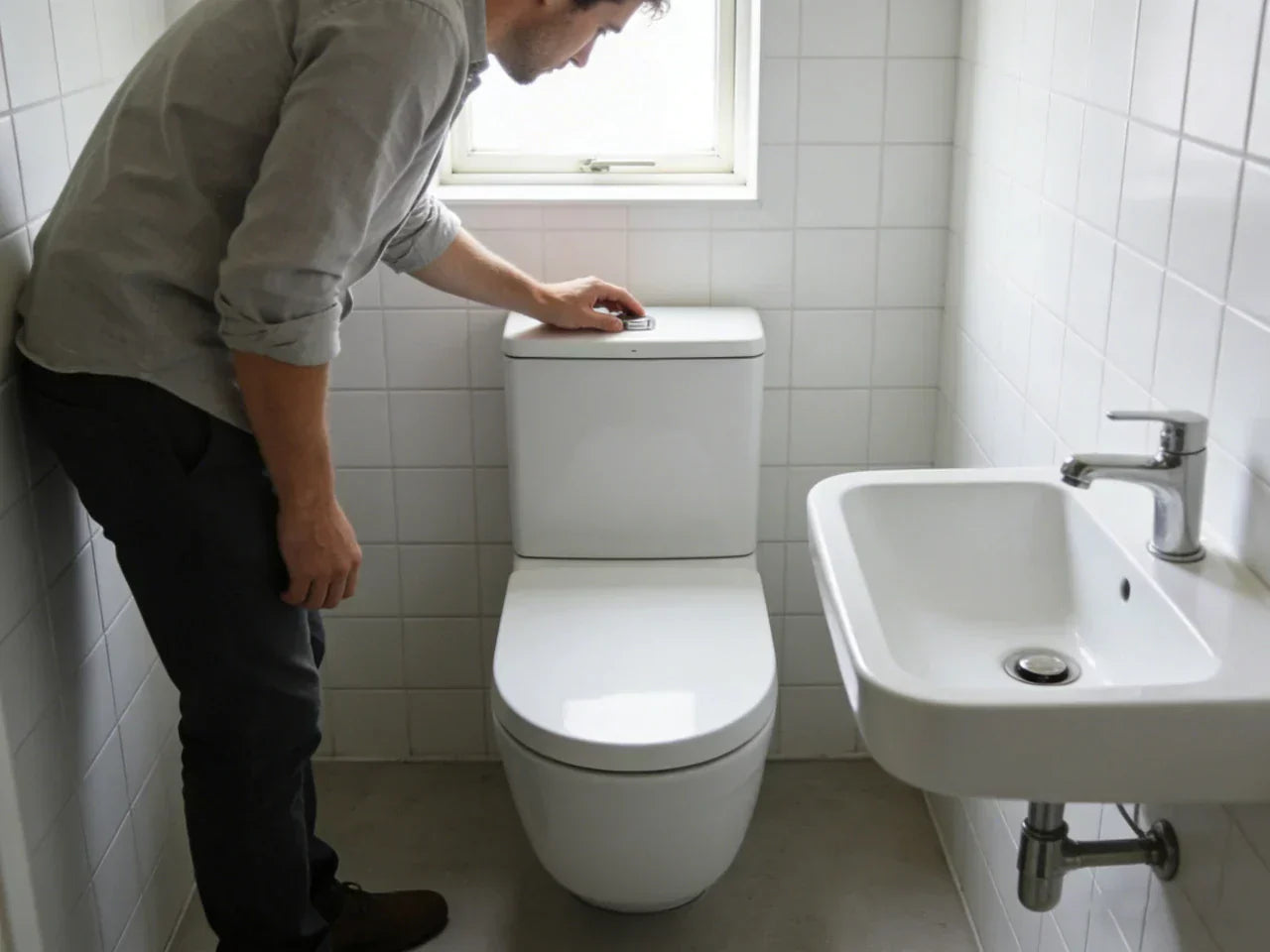
A “low profile toilet for small spaces” sounds like an easy win: shorter tank, cleaner lines, and less visual bulk in a tight bathroom. In real installs, the problems rarely come from the tank being shorter. They come from rough-in reality, front clearance, and service access once the toilet is pinned between walls, doors, and vanities.
If you want the hidden tank look or a modern low tank toilet style, you can get it—but only if your measurements and plumbing layout support it. This guide focuses on the parts that cause returns, rework, leaks, and daily annoyance.
Is this the right toilet for your home? (Decision Snapshot)
Choosing a low profile toilet for small spaces isn’t just about aesthetics. The right toilet depends on your rough-in measurement, floor condition, and the balance between tank height and bowl projection to ensure a functional installation.
Works best when you have a true 12-inch rough-in, a flat/solid floor, and you’re optimizing bowl projection and tank height without moving plumbing
A low profile toilet is most likely to “just work” when:
-
Your rough-in is actually 12 inches from the finished wall to the center of the flange/bolts (details below).
-
The floor is flat enough that the toilet won’t rock after tightening.
-
Your goal is mostly visual (lower tank height / modern low tank look) and clearance (shorter projection or round bowl), not a full plumbing redesign.
-
You can still reach the shutoff valve and supply connection without twisting your wrist into the side of the skirt.
Avoid or reconsider when rough-in ends up under 12 inches after flooring/baseboard, or when you need a back-to-wall/hidden tank look without verified waste alignment
This spec commonly goes wrong when:
-
New tile, a thicker finished wall, or even a chunky baseboard turns a “12-inch rough-in” into 11 1/2 or 11 1/4. Many toilets will not sit correctly; the tank or body hits the wall, or the bolts don’t line up cleanly.
-
You’re chasing a back-to-wall / hidden tank look but your drain outlet location and angle weren’t planned for it. The connection becomes “fiddly,” which is where leaks and callbacks come from.
-
You need every inch of side access in a tiny toilet room. A skirted toilet looks clean but can block access to bolts and supply fittings.
Quick rule of thumb: if your flange-to-finished-wall measurement is less than 12 inches by more than 1/4 inch, plan on a 10-inch rough-in model or plumbing changes—not “compact” hope
-
If you measure 11 3/4 inches (or less) from finished wall to flange center, you’re already in the danger zone.
-
If you measure 11 1/2 inches or less, assume a standard 12-inch rough-in toilet will cause trouble unless the model explicitly allows that tolerance.
-
“Compact” usually refers to bowl projection, not rough-in forgiveness. People mix those up and end up with a toilet that cannot physically sit down over the flange.
Rough-In Measurement for Toilets: A Step-by-Step Guide for Accurate Installations
Use this method, not “from the studs” or “from the baseboard face.”
- Finished Wall Plane: Measure from the finished wall, not the baseboard. The baseboard thickness should be ignored in the measurement.
-
Rough-In Measurement: The typical rough-in is 12 inches. Measure the distance from the finished wall to the center of the flange or closet bolts.
-
Flange/Bolt Center: Mark or note the center of the flange or bolt location. This is where your toilet will connect.
-
Measurement Details:
• Do Not Measure from the front edge of the flange.
• Always use the finished wall plane for accuracy in your measurement.
• If there is a baseboard, bridge over it using a straight piece of wood to get the correct measurement.
• If you're laying down new tile or vinyl, include its thickness in your measurements to ensure that the toilet fits once the floor is finished.

What trade-offs does “low profile” actually create in a small bathroom?
While a low profile toilet can reduce visual bulk, it may introduce trade-offs in shutoff valve access, bowl comfort, and serviceability—all critical considerations in a tight bathroom space. When evaluating flush performance and water efficiency of modern toilets, it’s important to reference established standards. For water-saving claims, verify that the model is certified by programs such as the U.S. Environmental Protection Agency’s (EPA) WaterSense program, which sets criteria for high-efficiency toilets.
Lower tank height vs. harder access: hidden tank look and modern low tank toilet designs can reduce reach space for shutoff valves and supply connections
In tight rooms, the shutoff valve is often stuffed beside the toilet, sometimes behind it. A low tank doesn’t automatically make that easier.
Here’s what tends to happen in practice:
-
A low tank or low profile one-piece body can sit “tighter” to the wall, so your hand has less room to reach the stop valve.
-
If the supply line comes out of the wall low and close, you may need a sharper bend in the connector. That increases the chance of a slow weep at the fitting if it’s under side load.
-
If you’re aiming to hide the tank look (or even just reduce the tank’s visual height), you may end up choosing a skirted toilet style. Skirts often block the easy side approach to the supply connection.
If shutoff access is already awkward, a low-profile body can turn “annoying but doable” into “I can’t even get pliers on it.”
Compact footprint vs. comfort: round bowl vs. compact elongated vs. elongated toilet choices and how projection changes knee/door clearance
Small bathrooms usually fail at the front—door swing, knees hitting the vanity, or not enough room to stand and close the door.
Bowl projection (how far the front of the bowl sticks out from the finished wall) matters more than tank height for this.
Common bowl shape options:
-
Round bowl: shortest projection in most toilet types. Often the easiest way to gain clearance in a small space.
-
Compact elongated: tries to keep the comfort of an elongated toilet with less projection. Some are truly shorter; some are only slightly shorter.
-
Elongated toilet: often most comfortable for many adults, but it can crowd doors and tight walkways.
What becomes annoying when you get this wrong:
-
Your knees touch the door or vanity edge.
-
You have to sit slightly sideways to close the door.
-
The seat lid hits the wall or a shelf behind, so it never opens fully.
-
Cleaning becomes harder because there’s no room to kneel in front.
A “modern” low tank toilet can still be long. Don’t assume low profile equals compact depth.
Skirted toilet style vs. serviceability: cleaner look can mean less side access to bolts, supply fittings, and leak detection in tight rooms
Skirted toilets are popular for the clean, modern look and easier exterior wiping. In a tiny toilet room, the skirt can also be the reason a simple fix becomes a bigger job:
-
Mounting bolts may be hidden behind small access caps. In a tight side clearance, getting tools in becomes slow.
-
Small leaks can hide longer because the skirt blocks your view of where water is coming from.
-
Some skirted designs require a special mounting bracket or adapter. If the floor is uneven, dialing in the fit takes longer.
None of this is a dealbreaker—but it’s a real trade: you gain a cleaner look and sometimes easier mopping, but you give up easy “see and reach” service.

What extra cost or retrofit work is common when this spec doesn’t “drop in”?
When a low profile toilet doesn’t fit as expected, common fixes include rough-in adjustments, flange modifications, and floor or baseboard work, which can increase both cost and installation time.
Rough-in mismatch costs: offset flange, flange relocation, or wall/baseboard modification when the tank hits the wall
The most common surprise is thinking you have 12 inches, but after remodel layers you don’t.
Typical outcomes:
-
The toilet sits forward, leaving an ugly gap—or it simply can’t seat onto the flange.
-
The tank/body touches the wall before the base is down, so the wax/rubber seal can’t compress correctly.
-
The bolt slots don’t line up cleanly, so the toilet is forced into place (which can crack the base over time).
Common fixes (in increasing pain level):
-
Trim or notch baseboard so the toilet can sit back (works only if baseboard is the only interference and the wall plane is still correct).
-
Use a model designed for 10-inch rough-in if you truly have 10–11 inches.
-
Install an offset flange (moves the outlet center slightly). This can work, but it’s not magic—clearance, pipe condition, and code/fit matter.
-
Relocate the flange/drain (best but most invasive).
Waste-pipe alignment surprises: back-to-wall/integrated setups needing elbows, pan connectors, adapters, and cleanup time when angles are off
The more you chase a hidden tank look or a tight back-to-wall design, the more you depend on alignment.
This becomes a problem when:
-
The floor outlet is not perfectly centered where the toilet expects it.
-
The waste connection needs an angle adjustment, but the space is too tight for rigid fittings.
-
The old flange is out of round, cracked, or set too low/high for the new outlet geometry.
What this looks like on install day: multiple test fits, swapping connectors, shaving or cleaning old pipe surfaces, and burning time on “almost lines up.”
Floor and flange repairs: cracked/recessed flanges, spacer kits, shimming, and re-sealing to prevent rocking and immediate base leaks
Low profile doesn’t change the basics: the toilet must be stable and the seal must compress evenly.
Failures that show up fast:
-
Toilet rocks slightly → seal breaks → water appears at the base after a few uses.
-
Bolts are tightened harder to stop rocking → porcelain cracks or flange breaks.
-
Flange is too low after new tile → seal never fully compresses → slow leak into subfloor.
Typical fixes:
-
Replace/repair flange (especially if it’s cracked or below the finished floor more than it should be).
-
Use flange spacers/extenders when appropriate.
-
Shim the base and then seal properly. In small spaces, skipping this step is a common regret because you don’t notice the wobble until later.
Data table: typical add-on labor items and when they’re triggered (rough-in, flange height, supply relocation, door/trim changes)
Actual pricing varies by region and access, but these are the common “surprise line items” that show up when a compact or modern low tank toilet doesn’t drop in as expected.
| Add-on item (what changes) | When it gets triggered | Why it matters in a small bathroom |
|---|---|---|
| Baseboard trim/notch | Toilet hits baseboard before reaching the wall | Toilet can’t sit fully back; seal and stability suffer |
| Offset flange install | Rough-in is short and toilet body/tank hits wall | Can save a remodel, but alignment must still be correct |
| Flange replacement/repair | Flange cracked, corroded, loose, or wrong height | Prevents rocking and base leaks; often discovered only after removal |
| Flange extender/spacer kit | New tile raised floor; flange sits low | Needed for a reliable seal without stacking “extra wax” |
| Shutoff valve relocation | Valve is behind skirt/body or too close to tank | Access becomes a long-term annoyance; also increases leak risk during servicing |
| Supply line reroute/upgrade | Supply stub-out is mispositioned for skirt/one-piece | Prevents strained connections that weep over time |
| Door trim/door swing change | Bowl projection blocks door or pinches knees | Fixing after install is expensive and frustrating |
| Floor leveling/shimming + reseal | Toilet rocks due to uneven floor | Stops repeat seal failures and callbacks |
Will a low profile toilet for small spaces fit my bathroom layout?
Tank height isn’t usually the limiting factor; bowl projection, door swing, and side clearance often determine whether a low profile toilet will function comfortably in your bathroom.
Will this work in a small bathroom with an in-swing door and tight front clearance?
An in-swing door is often the hard limit. You can’t “wish” more clearance into existence.
Check three things:
-
Door swing arc: Does the door edge hit the bowl, your knees, or your feet space?
-
Standing zone: Can someone stand inside and close the door without stepping around the bowl?
-
Seat use: Can you sit without your knees touching the door or vanity?
If the room is very tight, a round bowl often solves more than a low tank does. If you need to keep an elongated toilet for comfort, look closely at a compact elongated size—but confirm the projection number, not the marketing name.
Footprint reality check: bowl projection, seat/lid swing, and “fits on paper but blocks movement” layouts near vanity/tub
A toilet footprint isn’t just the base. In practice, these are the collision points:
-
The front rim of the bowl (knee space).
-
The seat and lid when raised (can hit shelves, cabinets, or even a thick window stool behind).
-
The tank lid clearance if you plan to put a shelf above (more on that below).
What tends to happen: homeowners measure only the base, buy a “compact” model, then find the seat/lid hits something or the door can’t close comfortably.
A useful test before buying: cut cardboard to the toilet’s listed projection and width, tape it to the floor from the finished wall, and swing the door fully.
Side clearance thresholds: when skirted sides or one-piece bodies prevent tool access under <15-inch-to-centerline constraints
Many bathrooms meet “minimum clearance” on paper but still feel impossible to work in.
Two separate issues:
-
User space (can you sit comfortably?)
-
Service space (can you tighten bolts, connect supply, and stop leaks?)
If your toilet centerline is tight to a wall or vanity, a skirted toilet can reduce the “hand slot” you need for:
-
tightening the supply fitting without cross-threading
-
reaching mounting bolts or brackets
-
cleaning behind the toilet
If you’re already under roughly a hand’s width of working room, choose a model that gives you confirmed access points (and don’t assume you can “figure it out later” once it’s wedged in place).
Pre-Installation Guide: 4 Critical Checks to Avoid Toilet Conflicts
This is a practical way to think about space.
A Top-Down Analysis for Optimal Layout in Small Bathrooms
-
Finished Wall Reference The toilet tank is positioned against the finished wall. All clearance checks should reference finished surfaces, not framing.
-
Bowl Front Projection The bowl extends forward from the tank. This front projection is critical when evaluating door swing and walking clearance.
-
Door Swing Arc Confirm the door can fully open without contacting the front of the bowl.
-
Collision Checks to Verify:
Door edge vs. bowl front: Ensure the door does not hit the bowl when opening.
Vanity drawers vs. bowl side: Check side clearance for drawers and knee space.
Seat/lid (raised) vs. rear wall or shelf: Make sure the lid can open fully without interference.
If the door arc overlaps the bowl area, you either need less projection, a door change, or a different toilet type (including wall-mounted in some cases, but that’s a different project).

Can your plumbing and rough-in support it without leaks or tank-to-wall interference?
A low profile toilet requires precise rough-in measurements and proper supply line positioning to prevent leaks and tank interference in small spaces.
What happens if my rough-in is 10–11 inches after new flooring or thicker baseboards?
This is common in remodels. New tile plus backer plus a slightly thicker finished wall can eat up enough space that your old toilet barely worked, and the new one won’t.
Outcomes to plan for:
-
A 12-inch rough-in toilet may sit too far forward (ugly gap) or may not bolt down correctly.
-
The tank/body may press into the wall, which prevents the base from fully contacting the floor. That causes rocking and seal failure.
-
If you try to “force it,” you can crack the base or damage the flange.
What usually works:
-
Choose a toilet made for 10-inch rough-in (if your real measurement supports it).
-
If you’re stuck in-between (like 11 inches), you need a model with verified tolerance—or you plan a flange solution. Don’t count on “compact” naming to save you.
Also note: baseboard interference is not the same as rough-in. You can notch baseboard, but you can’t notch the wall plane.
Supply line positioning in tight rooms: stop-valve location, hose bend radius, and “awkward” connections that strip or weep under load
In small bathrooms, the shutoff valve is often:
-
too close to the toilet body
-
placed at a weird angle
-
partly behind the skirt
This becomes a problem when the supply connector has to kink or twist. Even a tiny side-load can cause:
-
slow drips that show up days later
-
a connection that loosens when someone bumps the toilet during cleaning
-
stripped threads if someone over-tightens because they can’t see the connection squarely
Before buying, locate the valve and picture your hand reaching it after the toilet is installed. If you can’t comfortably reach it now, you won’t magically reach it later.
Flange height and levelness: how a low/high flange or uneven floor creates rocking, failed seals, and post-install leaks
A low profile toilet still uses the same seal concept: the outlet horn compresses a gasket/wax ring against the flange.
Three common small-space failures:
-
Flange too low after tile: the seal doesn’t compress enough. People stack seals, which can work, but stacking is where mistakes happen.
-
Flange too high: toilet base may not sit flat, or the seal compresses unevenly.
-
Uneven floor: the toilet rocks, even if it seems minor. That movement breaks the seal over time.
If your existing toilet has ever felt spongy, rocked, or needed recaulk, treat that as a warning. A skirted one-piece in a tight room is harder to reset later.
Venting and drain behavior in small baths: when slow/weak evacuation gets blamed on the toilet but is really a vent/line constraint
Low flow toilets can be less forgiving when the drain or vent is marginal.
Symptoms that get blamed on the toilet:
-
weak siphon sound
-
slow bowl evacuation
-
repeat clogs even with “good” toilet features
But the actual cause can be:
-
a partial blockage further down the line
-
Poor venting causes sluggish drain behavior
-
older, rough interior pipe surfaces that catch paper more easily
If the old toilet clogged often, don’t assume a new low profile model fixes it. You may need the line checked. Otherwise you’ll buy a new toilet and keep the same problem.
Installation reality in cramped spaces (where most regret happens)
One-piece low profile toilets can be heavy and difficult to maneuver in tight bathrooms, making dry-fit and planning essential for a smooth installation.
One-piece vs. two-piece in a tight room: when weight and maneuvering space makes “simple replacement” unrealistic
Low profile toilets are often one-piece because that’s part of the modern look. One-piece units can be heavy and awkward.
What becomes a problem in a tight room:
-
You can’t lift and angle the toilet over the flange without scraping walls.
-
You can’t see the bolts line up because you’re wedged between a vanity and a wall.
-
You end up setting it down multiple times, smearing the seal or misaligning it.
Two-piece models can be easier to handle because you set the bowl first, then the tank. That can matter a lot when your toilet room is narrow.
If you’re doing DIY in a small space, weight and handling should be part of the decision, not an afterthought.
Back-to-wall and hidden tank look installs: the alignment tolerance problem (floor outlet vs. 90mm/3–4 inch waste angles) and why “fiddly connectors” become mandatory
If you want a tight back-to-wall look (or anything that visually hides the tank), you’re usually reducing the “forgiveness” in the install.
Why this becomes fiddly:
-
The toilet outlet path may expect a very specific alignment to the waste pipe.
-
If the floor outlet is slightly off, you can’t “pull” the toilet into place without stressing the connection.
-
Adapters/elbows can solve it, but each added part is another potential leak point if it’s under strain or not seated fully.
If you want this style, confirm the waste outlet type (floor vs wall) and the exact rough-in and outlet location requirements. Hidden tank look is not the place to guess.
Baseboard and wall interference: when trimming is required so the toilet sits flush, and how gaps create instability and sealing issues
A common surprise: the old toilet had a deep tank with a gap behind it, so baseboards never mattered. A modern low tank toilet or skirted toilet may sit closer to the wall, so baseboard suddenly blocks it.
Two bad outcomes:
-
You leave a gap and try to caulk it. The toilet may still rock because the base isn’t fully supported.
-
You push the toilet forward to clear the baseboard, which can mess up rough-in fit and make the room tighter.
Trimming baseboard neatly is often the right fix, but it should be planned, not discovered mid-install with the seal already in place.
Checklist: pre-install dry-fit steps (cardboard footprint test, door swing test, shutoff access test, flange bolt alignment)
Do these before you commit:
-
Cardboard footprint of the listed bowl projection and width
-
Door swing test with that footprint on the floor
-
Reach test for the shutoff valve (hand and tool access)
-
Confirm flange center to finished wall measurement (not baseboard)
-
Confirm flange condition (solid, not cracked, correct height)
-
Confirm bolt slots and alignment (old bolts often corrode or spin)
A dry-fit mindset prevents most small-space regrets.
Long-term ownership: what fails first and what becomes harder to maintain?
Skirted low profile toilets in small spaces can be reliable but are harder to service if leaks develop or seals fail, making maintenance accessibility a key consideration.
Will a skirted toilet be harder to service in a tight space if the supply or seal starts leaking?
Often, yes.
What changes with a skirt:
-
Small leaks can run inside the skirt and show up late.
-
Access panels can be tiny and sharp-edged to work through.
-
Tightening a supply nut or replacing a fill valve can take longer if you can’t see straight down into the tank area.
If your toilet is in a rental, a busy household, or a bathroom that gets hard use, ease of service matters more than it seems on shopping day.
Seal and wobble recurrence: why tiny movement reopens leaks, and when grouting/shimming is the only durable fix
In small bathrooms, people bump the toilet while cleaning, kids step on the seat, and knees press against the bowl in a tight space. Tiny movement adds up.
If the toilet rocks even slightly:
-
The seal can break and you’ll see water at the base.
-
You may smell sewer gas if the seal is compromised.
-
Recaulking without fixing movement just hides the problem.
A durable fix often means:
-
shimming until solid
-
tightening properly (not over-tight)
-
sealing the base appropriately (and leaving an inspection gap where you can spot leaks, if that matches your local practice)
If you know your floor is uneven, plan for this from day one.
Flush performance constraints: low-flow sensitivity to water pressure, mineral buildup, and compact trapway clog risk in real households
Many modern toilets are low-flow. Low-flow can work well, but it’s less forgiving when:
-
water pressure is low or inconsistent (affects refill and flush consistency)
-
mineral scale builds up in rim jets or passages (common in hard water areas)
-
the design uses a tighter trapway path (some compact designs do)
In real households, the first complaints tend to be:
-
“It clogs more than the old one.”
-
“It takes two flushes sometimes.”
-
“The flush is fine but the bowl doesn’t clear well.”
If your home already has slow drains or frequent clogs, don’t treat the toilet as the only variable.
User fit over time: low height comfort vs. mobility needs, who should avoid “low” seating, and when a simpler standard toilet is the better choice
“Low profile” refers to the tank/look, not always the seat height—but some modern styles do sit lower.
Practical comfort points:
-
Taller people often prefer an elongated bowl and a more standard chair-like seat height.
-
Older adults or anyone with knee/hip issues often struggle with lower seating. A low bowl can turn into a daily complaint.
-
If you expect mobility needs in the next few years, prioritize a height that’s easier to stand from over a low tank look.
When a simpler standard toilet is the better choice:
-
You have a tight rough-in that’s already marginal.
-
You need easy access for maintenance.
-
The bathroom is used by kids/guests and you want fewer clogs and fewer “special parts” moments.
For households with accessibility needs or planning for aging in place, the seat height and clear floor space are critical. Detailed specifications for toilet rooms to ensure accessibility can be found in guidelines such as those provided by the U.S. Access Board, which outlines requirements for clearances and usability.
What is considered a low profile toilet height? (where this matters in real installs)
In the market, “low profile” usually means the tank height is shorter than a traditional tank, giving a lower horizontal line. It does not guarantee:
-
shorter bowl projection
-
lower seat height
-
easier installation
So when you shop, treat “low profile” as a style descriptor. Confirm the numbers that decide fit: rough-in, projection, overall height, and access clearances.
Can I put a shelf above a low profile toilet?
Often yes, but only if you plan for:
-
tank lid removal (you need to service inside the tank)
-
seat/lid opening clearance
-
hand clearance to operate the shutoff and supply if the shelf blocks reach behind
A shelf that looks fine can become annoying when you can’t lift the tank lid straight up or you scrape your knuckles doing basic maintenance. Leave enough space so the tank lid can be removed without gymnastics.
Are low profile toilets more expensive?
They can be, mainly because:
-
one-piece bodies and skirted designs often cost more
-
specialized mounting or concealed trapways can raise install labor
-
tight tolerance installs create more “extra work” time
The toilet price is only part of the cost. In small bathrooms, the risk is paying for a style that then triggers flange work, supply relocation, or return/reinstall time.
Before You Buy (checklist)
-
Measure rough-in from finished wall plane to flange/bolt center. If it’s under 11 3/4 inches, don’t assume a 12-inch model fits.
-
Confirm bowl projection will not block an in-swing door (cardboard test on the floor).
-
Check side access: can you reach the shutoff valve and supply connection comfortably with the toilet in place?
-
Inspect flange condition and height relative to the finished floor; plan repairs/extenders before install day.
-
Verify whether you need round bowl, compact elongated, or elongated toilet comfort—don’t guess based on “compact” naming.
-
If choosing a skirted toilet, confirm how mounting bolts and supply connections are accessed (and that you can fit a tool there).
-
Plan for wall/baseboard interference: if baseboard sticks out, decide ahead of time whether you’ll trim it.
-
If the old toilet often clogged, consider a drain/vent check so you don’t blame the new toilet for a line problem.
Before finalizing your purchase, cross-check the product specifications against recognized efficiency and performance benchmarks. Reputable manufacturers often align their products with certifications like EPA WaterSense for products, which can serve as a reliable indicator of water efficiency and flush performance.
FAQs
1. Will a low profile toilet for small spaces solve a tight rough-in problem?
A low profile toilet often doesn't resolve tight rough-in issues. While it reduces tank height and visual bulk, it doesn’t change the rough-in measurement. If your rough-in is under 12 inches, you may need a 10-inch rough-in model or plumbing adjustments. A skirted toilet may add style, but it can cause alignment or seal issues in tight spaces. Always measure your rough-in from the finished wall to the center of the flange to ensure a good fit.
2. Round bowl vs compact elongated: Which works better for small bathrooms?
In small bathrooms, a round bowl is often the best option for saving space. It has a shorter projection, helping with clearance and allowing more room to stand or close the door. If you prefer the comfort of an elongated bowl, consider a compact elongated model—but make sure its projection is truly shorter. For some tight spaces, the round bowl typically provides the most room.
3. Do skirted toilets leak more?
Not inherently. Skirted toilets don't leak more, but they can make leaks harder to detect. The sleek design hides supply lines and shutoff valves, which can complicate repairs. In a small bathroom, if you have a leak, you may not notice it immediately, and fixing it can be more challenging. It’s essential to ensure access to maintenance points like supply connections and bolts.
4. Can an offset flange solve a reduced rough-in?
Yes, an offset flange can be a solution if your rough-in measurement has shrunk due to new flooring or thicker baseboards. It can adjust the alignment slightly and make the toilet fit, but it’s not a perfect fix for every situation. If your drain pipe is significantly misaligned, you may need more extensive plumbing work to get a proper fit.
5. Can I install a shelf above a low profile toilet?
You can, but it’s important to leave enough clearance. Low profile toilets often have shorter tanks, but you’ll still need access to remove the tank lid for maintenance and repairs. Make sure the shelfdoesn't obstruct your ability to reach the shutoff valve, supply connections, or comfortably lift the seat lid. Plan for space above the toilet for easy access, especially if you need regular maintenance.
References


Leave a comment
This site is protected by hCaptcha and the hCaptcha Privacy Policy and Terms of Service apply.