
Caulk around a toilet looks simple: run a bead, smooth it, done. In practice, it only works when the toilet already fits the floor well and the base is stable. When it doesn’t, caulk becomes a cover-up that can hide a leak, trap moisture, and turn a small issue (like a rocking toilet) into floor damage you don’t notice until it smells.
This guide is about execution and specification: Will caulk around your toilet work in your bathroom, with your flooring, your clearance, and your household use? And if it won’t, what breaks, what costs more later, and what becomes a repeating annoyance.

Decision Snapshot When Caulk Around Toilet Works and When It Fails
Know When Caulk Around Toilet Is Worth It And When It Will Fail. Stable Toilets With Narrow, Consistent Gaps Benefit Most, While Rocking Toilets Or Uneven Floors Often Lead To Cracking, Peeling, And Hidden Leaks.
Best Results When Toilet Is Stable And Base-To-Floor Gap Is Consistent And Small
Go/No-Go sequence (must check in order before caulking):
-
Rocking test pass/fail – toilet must not move under normal weight; any rocking → No-Go.
-
Leak screen pass/fail – check for moisture, odor, stains; any suspicion triggers No-Go.
-
Gap map max + variation pass/fail – measure 8 points; max–min ≤ 1/4 inch acceptable; if one isolated point hits 1/4 inch it’s cosmetic, continuous long section >1/4 inch → No-Go.
-
Floor-type compatibility quick filter – swelling/movable floors may require U-shape caulk or fix first.
-
Clearance/access check – under 1/2 inch behind the toilet requires U-shape or access fix.
-
Choose U-shape vs full ring – only full ring if toilet stable, gap consistent, and you can tool the back properly.
Caulking the base of the toilet works best when:
-
The toilet does not move when you sit or shift weight.
-
The gap between the toilet base and the floor is small and consistent—think “a narrow shadow line,” not a visible void.
-
Your goal is to block routine water: mop water, bath splash, or “misses” that would otherwise seep under the toilet base and sit there.
In that situation, caulk provides a cleanable edge and reduces water and grime collecting around the base of the toilet.
Avoid or Reconsider When There Is Leak Suspicion or Floor Voids Exceed Quarter Inch
Skip caulk (for now) or plan additional fixes first if any of these are true:
-
You suspect a wax ring or seal issue (odor, staining, soft floor, dampness).
-
The toilet rocks even slightly.
-
The floor is uneven and the gap varies a lot, especially over 1/4 inch in places.
-
Your bathroom has radiant floor heat or big seasonal temperature swings that tend to open cracks at rigid joints.
-
The toilet sits on flooring that moves or swells (some vinyl, laminate edges, older subfloors).
In those cases, caulk can crack, peel, or worse—trap water where you can’t see it.
Rule Of Thumb: If You Can’t Lay A Neat Bead, Fix Fit First—Don’t Just Seal The Symptom
Here’s where people usually run into trouble: they try to use caulk to make an unstable toilet feel “finished.”
If you cannot:
-
get the caulk gun in place,
-
see the tip of the caulk tube,
-
and make a steady bead of caulk around the base,
Then the job usually ends with smeared caulk, skipped sections, and a bead that peels after a few cleanings. That’s a fit/access problem, not a caulk problem. Fix the toilet-to-floor fit first (shimming, resetting, flange height correction) before you buy more commode sealant.
Who Should Caulk Around a Toilet and Who Should Not
Caulk Around Toilet Is Ideal For Stable Toilets On Solid Flooring With Routine Water Exposure. Avoid Caulking If The Toilet Rocks, Seal Integrity Is Uncertain, Or Floor Movement Is Likely, As This Can Lead To Early Failure And Hidden Leaks.
For: stable toilet base on tile/solid flooring where mop water and splash routinely reaches the toilet base
Caulk around your toilet base is a good match when:
-
The toilet is firmly set (no rocking).
-
You have tile, sealed stone, or another hard surface that doesn’t mind occasional moisture.
-
You regularly wet-clean the floor around the toilet (mopping, disinfecting) and want to keep that water from getting underneath the toilet.
-
You’re installing a new toilet and want a clean finished edge at the base.
In many homes, the practical reason is simple: water and grime collect around the base, and a sealed edge makes cleanup easier.
Avoid Caulking for Rocking Toilets or Unknown Seal Conditions
Avoid caulking the base if:
-
The toilet rocks at all. Even tiny movements can crack the caulk and open a channel for water.
-
You have any reason to think there’s a leak under the toilet (more on the screening checks below).
-
The flooring under/around the toilet is already compromised (swollen seams, soft spots).
-
You’re not sure the flange and seal were installed correctly.
A key point is leak visibility. If the seal under the toilet fails and the toilet is fully caulked, water may stay hidden longer. That’s how a small leak turns into a subfloor repair.

Will Caulk Work in Small Bathrooms With Less Than Half Inch Clearance Behind the Toilet
Sometimes the “should you caulk around a toilet” question is really an access question.
If you have under 1/2 inch behind the toilet, typical problems are:
-
You can’t hold the caulk gun at a good angle.
-
You can’t see if the bead is continuous.
-
You can’t smooth the caulk without smearing it on the wall, tank, or floor.
If the back of the toilet is that tight, many homeowners do better with a U-shape bead (sides and front) and leaving the back open—but only if your toilet is stable and you’re comfortable inspecting periodically. If you truly need a full seal because of frequent water exposure, the better fix may be improving access (when possible) or resetting the toilet so the gap is consistent and you can tool the bead properly.

Trade-Offs When Sealing Around the Toilet Base
Caulk Around Toilet Offers A Cleaner Look And Blocks Water, But Full Seals Can Conceal Leaks. U-Shape Sealing Provides Early Warning While Letting Moisture Escape At The Back, Balancing Safety And Cleanliness.
Full seal vs. leak visibility: why some installs leave an uncaulked gap at the back of the toilet
A full ring of caulk around the entire toilet base blocks water from cleaning and splashes. The trade-off is leak detection.
Why leaving a gap at the back can help:
-
If the wax ring or seal fails, water often shows up at the back first.
-
An opening can let moisture escape where you can see it, instead of pooling under the toilet.
Why leaving a gap in the back can hurt:
-
If the main water source is mopping or splash, an unsealed back can still let water seep under the toilet.
-
Dust, hair, and grime can collect in the open section.
In practice, many people choose:
-
U-shape (front + sides) to preserve a “tell” for leaks, especially if they’ve had prior toilet leaks.
-
Full seal in kids’ bathrooms or high-splash situations, but only if they’re confident the toilet seal and flange are correct.
Cleaner Look Versus Trapped Moisture When Caulk Creates Hidden Mold or Odor Channels
Caulk is not magic waterproofing. If water gets under the toilet (from a leak or from repeated seepage through a cracked bead), it can trap moisture and create hidden mold or odor channels, as noted by the U.S. Environmental Protection Agency (EPA) guidance on mold management.
This becomes a problem when:
-
The toilet moves and breaks the seal in one spot, creating a one-way channel.
-
The bead is too thin and wears through, letting water under but not letting it dry quickly.
-
The floor has deep texture or grout valleys and the caulk bridges over voids (water sits in those voids).
The result is often not a dramatic puddle. It’s a slow odor and staining problem: moisture + trapped debris + time.
White Versus Clear Caulk Around Toilet How Color Affects Visibility of Failures
Color doesn’t change performance, but it changes what you notice.
-
White caulk: Usually looks “finished” against a white toilet base. But it can show dirt and can look rough if your bead control isn’t great. If it starts to pull away, you’ll see a shadow line quickly.
-
Clear caulk: Hides small tooling mistakes from a distance. But it can turn cloudy, hold grime at the edge, or make mold growth less obvious until it’s established. On some floors, clear also highlights trapped bubbles.
If you want early warning when the caulk fails, white often makes the failure easier to spot. If your priority is hiding small visual imperfections, clear can be more forgiving—until it discolors.
Cost and Practical Constraints That Affect Caulk Performance
Success With Caulk Around Toilet Depends On Tooling, Access, And Surface Prep. Tight Spaces, Textured Floors, Or Poor Fit Often Cause Early Failure, Making Proper Planning More Important Than The Type Of Sealant Used.
Tooling and Access Reality How Tight Spaces Affect Caulk Application
The tube is cheap. The success of caulking the toilet base depends on whether you can control the bead.
Common constraints that change the outcome:
-
Toilet close to wall or vanity: you can’t angle the caulk gun and keep steady pressure.
-
Tall base profiles: harder to keep the tip of the caulk tube riding the joint.
-
Textured tile or uneven grout: the caulk gun may “bounce” and lay an inconsistent bead.
Minimum practical access:
-
Around the front and sides, you usually want at least 1/2 inch of working clearance to place the nozzle and tool the bead.
-
Behind the toilet, even more space helps because your wrist angle is awkward and visibility is poor.
If you can’t physically tool the joint, the caulk often fails early—not because the caulk is bad, but because the bead never truly bonded to both surfaces.
Removal Cost Later Time Risk and When Recaulking Becomes Repeating Chore
Old caulk removal is where many homeowners regret the original choice.
What tends to happen in practice:
-
The old caulk tears off in strips in the easy spots, but stays stuck in thin patches near grout lines or floor texture.
-
A utility knife or caulk remover tool can slip and scratch vinyl, gouge wood, or chip grout glaze.
-
If the bead was smeared wide, you spend extra time cleaning residue.
Realistic time and cost expectations:
-
DIY removal: often 30–90 minutes if the bead is neat; 2+ hours if it’s smeared or layered.
-
If you hire it out, you’re paying for a service call and time-on-site, not the tube.
If you already know you’ll need to pull the toilet soon (bath remodel, flooring replacement, smart toilet upgrade), caulking now can be a repeating chore.
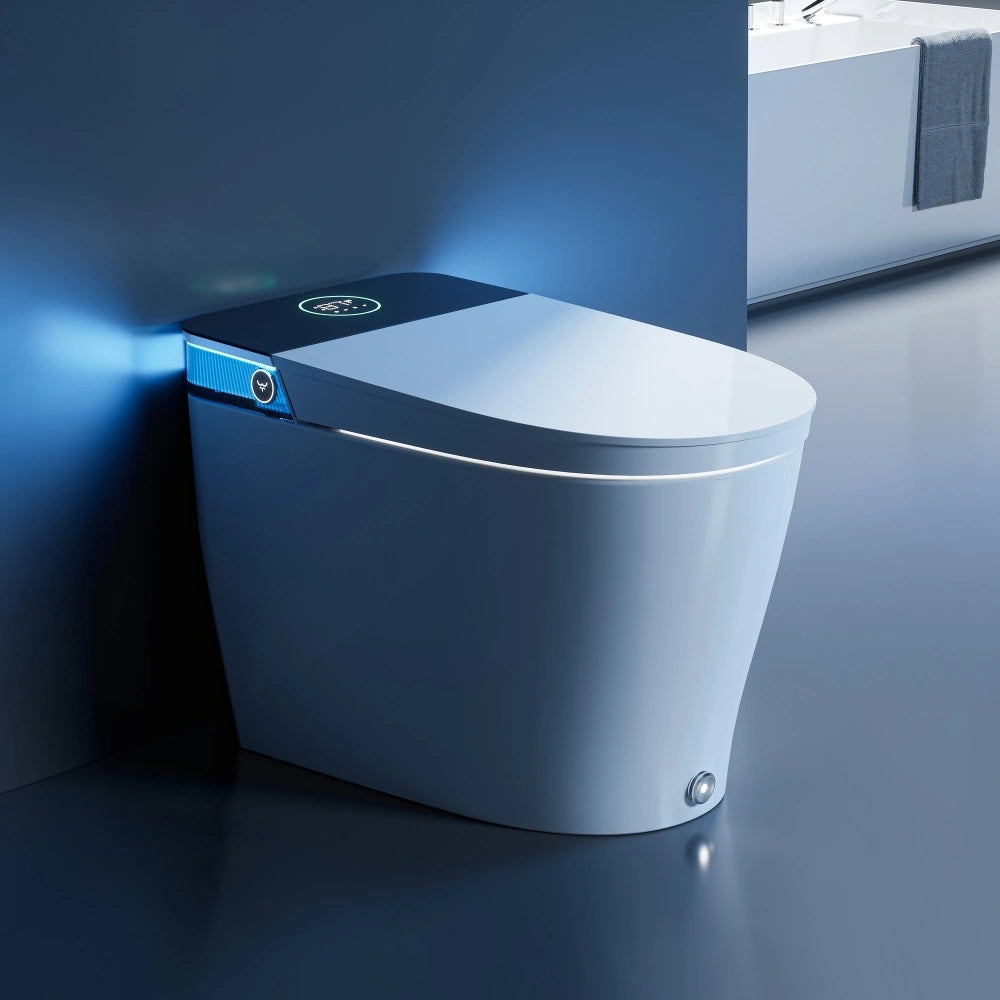
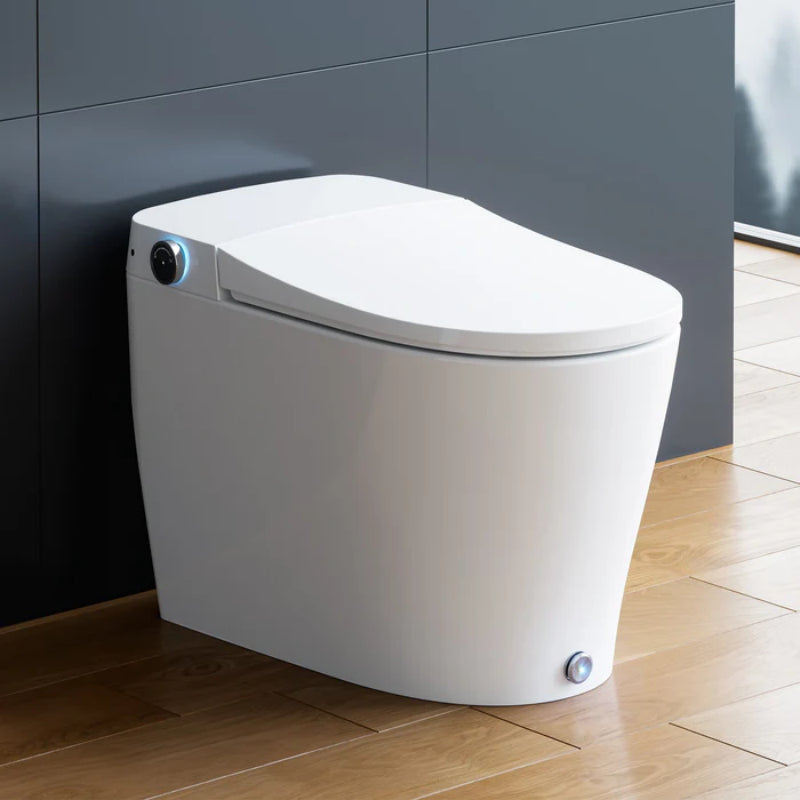
Smart Toilet Constraints Power Access Serviceability and Sealing Complications
A smart toilet often adds:
-
a power cord,
-
a washlet/bidet connection,
-
sometimes a larger skirted base,
-
sometimes a more complex mounting system.
Caulk can complicate that setup because:
-
Service access matters. If a technician needs to pull the unit, a fully caulked base adds time and mess.
-
Some smart toilets sit very close to the wall, making it harder to apply and smooth the caulk behind the toilet.
-
If you ever need to inspect for seep under the toilet, a full caulk ring can delay discovery.
If you’re installing a smart toilet, think through the service path: how you would unplug it, shut off water, and remove it. If that path is already tight, keep your caulk strategy conservative (often a U-shape) unless you’re fully confident in the seal and you accept the extra removal work later.
Fit Checks Before You Buy Commode Sealant Problems Caulk Cannot Fix
Check Toilet Stability And Base-To-Floor Gaps Before Buying Caulk Around Toilet. Early Fit Checks Prevent Wasted Sealant, Reduce Future Maintenance, And Avoid Hidden Water Damage Or Recurring Recaulking.
Caulking Around Toilet on Uneven Floor or Sloped Tile Gap Mapping and Rocking Test Thresholds
Pre-caulk fit diagnostic path: Cosmetic perimeter gap on stable toilet – small variation (<1/4" isolated point), no rocking → can caulk; routine bead tools apply. Gap due to poor seating / tilt / flange-height mismatch / offset – rocking present, continuous gap >1/4" → do shim vs reset before applying caulk. Follow Go/No-Go sequence above to confirm readiness.
Two Quick Pre-Caulk Checks
-
Rocking test
-
Sit on the toilet and shift your weight side-to-side and front-to-back.
-
Then stand and push gently at the tank area (not hard—just enough to feel movement).
Pass: no movement and no clicking. Fail: any rocking, clicking, or “soft” movement.
If it fails, do not rely on caulk. The toilet needs to be stabilized (often with shims) or reset. Caulk over a rocking toilet usually cracks and becomes a water channel.
-
Gap consistency check Walk your eyes around the base. If you see a tight joint on one side and a wide shadow gap on the other, the floor or toilet is not sitting evenly.
Rule: If the gap jumps from “almost touching” to “clearly open” within a few inches, you’ll struggle to make a continuous bead that bonds well.
Gap consistency check with variation limits:
-
Measure 8 points around the base (front center, front L/R, left 2 points, right 2 points, back L/R).
-
Calculate max–min spread:
-
≤ 1/8" → excellent, easy bead
-
1/8" and ≤ 1/4" → acceptable if toilet stable
-
1/4" at one isolated point → usually cosmetic; bead may still work
-
1/4" across continuous section → No-Go; caulk becomes unreliable
-
Pass/fail: any rocking or continuous gap over 1/4" → fix fit first (shim/reset), do not caulk.
Leak Screening Before Sealing How to Spot Seepage and Wax Ring Failure
Leak screening (retrofit caution): Even if you only suspect intermittent odor, prior rocking, prior seal replacement, or occasional dampness, treat as No-Go. Do not just “watch and wait.” Pass/fail checklist:
-
Visible moisture after flushing → No-Go
-
Persistent or intermittent sewer-like odor → No-Go
-
Staining at the base → No-Go
-
Soft flooring / loose tiles → No-Go
-
Any rocking history or previous wax-ring issues → No-Go
-
Only when all above are clear → proceed to caulk
Simple paper test:
-
Dry the floor completely.
-
Place a few strips of paper towel tight to the base (front and both sides).
-
Flush several times and wait 10–15 minutes.
-
Check for dampness.
If you see moisture after flushing, do not caulk. The right fix is finding the leak source (often a failed wax ring, flange issue, or condensation/drip path).
Base-to-Floor Gap Measurement Map With Pass Fail Tolerance

A fast way to prevent regret is to “map” the gap before you buy sealant.
How to map:
-
Use a thin ruler, feeler gauge, or even stacked index cards.
-
Measure the gap at 8 points: front center, front left/right, left side (2 points), right side (2 points), back left/right.
-
Write down the largest gap you find.
Pass/fail tolerance table (practical, not perfect):
| Condition at the toilet base | What it usually means | Caulk outcome |
| 0–1/8 inch, consistent | Good fit | Caulk bead is easy to control and lasts longer |
| Up to 1/4 inch, mostly consistent | Acceptable if toilet is solid | Works if you use a thicker bead and tool it well |
| Over 1/4 inch anywhere | Void or slope | Often cracks, shrinks, or looks messy; consider shimming/reset |
| Gap varies a lot (tight + wide sections) | Uneven floor or toilet not seated flat | Hard to lay a steady bead; likely peel points |
| Any rocking | Not seated or flange height issue | Caulk becomes a temporary patch and fails early |
If your numbers land in the “over 1/4 inch” or “varies a lot” zone, spend your time fixing fit first. Caulk is not a substitute for a stable toilet-to-floor connection.
Choosing Caulk That Matches Floor Humidity and Movement
Select Caulk Around Toilet That Handles Floor Movement, Humidity, And Cleaning Routines. Silicone Or Flexible Sealants Are Best For Bathrooms With Seasonal Changes Or Frequent Mop Exposure.
Silicone Versus Other Bathroom Caulk Flexibility Adhesion and Movement Considerations
For caulk around toilet applications, flexibility and adhesion matter more than fancy labeling.
In most bathrooms:
-
Silicone caulk handles small movement and stays flexible. That matters if the floor has minor seasonal change or if people tend to bump into the toilet during cleaning.
-
Many “bathroom caulk” products that are not silicone can be easier to tool and paint, but they can be less forgiving with constant moisture, strong cleaners, and movement at the toilet base.
What tends to fail first:
-
If the toilet is stable but your bathroom is wet and frequently cleaned, weaker adhesion shows up as edge pull-away.
-
If your floor moves (radiant heat, older subfloor), less flexible products show cracking.
If you want fewer callbacks on yourself, prioritize a sealant that stays flexible and bonds well to both porcelain and your floor surface.
High Humidity and Poor Ventilation Bathrooms Discoloration and Edge Peel Risk
High humidity changes the “maintenance reality” of caulked toilet bases.
Common triggers for discoloration and peel:
-
Daily hot showers without good ventilation.
-
Leaving damp bath mats pushed against the toilet base.
-
Frequent wipe-down with strong cleaners or abrasive pads.
-
Condensation around the toilet area (especially on cold floors).
In these bathrooms, a thin bead of caulk can turn into a maintenance item. You may need to inspect and touch up sooner than you expected, even if the toilet never leaks.
If your bathroom stays damp, the better “spec” is:
-
improve ventilation habits,
-
keep the bead thick enough to resist wear,
-
and avoid trapping wet mats or towels against the joint.
Adhesion on Vinyl Laminate and Textured Floors When Caulk Causes Swelling or Delamination
This is the part many homeowners don’t think about: some floors don’t like being sealed at the edges, because water that gets under the flooring can’t escape.
Watch-outs:
-
Laminate edges can swell if moisture gets in from any path (toilet, tub, doorway). A tight caulk seal at the toilet can keep water from drying out, making swelling worse over time.
-
Vinyl plank seams and some underlayments can trap moisture and develop odor if water gets under and can’t vent.
-
Heavily textured tile can prevent full contact between caulk and floor, so you get a “bridge” that looks sealed but isn’t. Water can still seep underneath and sit.
If you have a floating floor system or you’ve already seen swelling near the toilet, be cautious about fully sealing around the entire base. Sometimes leaving a small inspection gap at the back is the safer long-term choice—because it gives moisture a way to reveal itself.
How to Caulk a Toilet Installation That Prevents Early Failure
Proper Surface Prep, Dryness, And Bead Control Are Essential When Caulking Around Toilet. Removing Old Caulk And Ensuring A Continuous, Well-Tooled Line Prevents Peeling, Cracking, And Trapped Moisture.
Surface Prep Thresholds Remove Old Caulk Degrease and Dry Before Application
Most early failures come from prep, not the caulk tube.
Minimum prep thresholds:
-
Remove any old caulk completely. New caulk over old caulk often peels because it’s bonding to a weak layer, not to porcelain and floor.
-
Use a utility knife or caulk remover tool carefully.
-
Pull residue out of grout valleys and texture pockets.
-
-
Degrease the joint. Bathrooms collect wax, cleaner residue, and skin oils.
-
Clean the toilet base and the floor around it with a residue-cutting cleaner that won’t leave a film.
-
-
Dry matters. The joint should be dry before applying the caulk.
-
If you just mopped, showered, or cleaned heavily, give it time to dry.
-
If moisture is wicking from under the toilet, stop and investigate—don’t seal it in.
-
If your bathroom is humid, run ventilation and wait. Caulk applied to damp surfaces is one of the fastest ways to get edge peel.
Bead Control Tip Cut Size Thickness Limits and When Backer Rod Is Required
Your bead is only as good as your control.
Practical setup:
-
Cut the tip of the caulk tube small at first. You can always cut more; you can’t un-cut it.
-
Use steady pressure on the caulk gun and keep the nozzle contacting both surfaces (porcelain and floor).
-
Aim for a bead that fills the joint without spreading far onto the floor.
Bead thickness limits:
-
If you try to fill a deep void with a huge bead, the surface skins over while the inside stays soft longer, and shrinkage can pull it away from the edge.
-
Very thin beads wear through quickly during cleaning.
Backer rod (and why it can be a red flag here):
-
Backer rod is a foam filler used to support caulk over larger gaps in some building joints.
-
Around a toilet base, needing backer rod usually means the gap is too large for this to be a simple caulk job.
-
If you’re looking at gaps that make you consider filler, you’re often better off correcting the toilet installation (shim/reset) so the base sits correctly.
A neat caulk line is a result of fit. If fit is poor, the caulk line becomes a sculpture project.
Should You Caulk Around the Entire Toilet or Leave the Back Open U-Shape Versus Full Ring
This is the decision that affects both cleanliness and leak discovery.
Choose a U-shape (front and sides) when:
-
You want a “leak tell” at the back of the toilet.
-
The back is too tight to apply and smooth the caulk well.
-
Your floor system is sensitive to trapped moisture (some laminate/floating floors).
Choose a full ring when:
-
You have frequent water exposure around the base (kids’ bath, aggressive mopping, pet issues).
-
You can tool the back properly (enough clearance to see and smooth the caulk).
If you choose the full ring, the job must be cleaner: a continuous bead of caulk around the entire base, tooled well, with no skipped sections. A partial “almost full ring” often performs worse than a deliberate U-shape because it creates odd channels.
Tooling (smoothing):
-
Smooth the caulk right after applying. Use a damp finger or a smoothing tool.
-
Wipe excess caulk immediately.
-
Don’t overwork it. Over-smoothing can pull material out of the joint and leave a thin edge that peels.
Allow the caulk to dry/cure per the tube instructions before heavy cleaning or soaking the area. “Dry to the touch” is not the same as “ready for repeated water.”
Ownership What Fails First How to Inspect and When to Undo
Understanding Early Failure Modes For Caulk Around Toilet Helps Prevent Hidden Damage. Inspect For Cracking, Peeling, And Mold, And Recaulk Or Reset The Toilet As Needed To Maintain A Safe, Clean Seal.
Early Failure Modes Cracking Peeling and Shrink From Floor Heating Cycles
The most common early failures are predictable:
-
Cracking: almost always from movement (rocking toilet, floor movement, thermal cycles).
-
Peeling at one edge: often from poor prep, soap residue, or an uneven bead that didn’t bond to both surfaces.
-
Split line through the center: often shrinkage from an overly large bead or temperature cycling (radiant heat can make this show up after a season change).
-
Mold line at the edge: often from trapped moisture plus organic debris.
If the toilet is caulked and you see a crack, treat it as a water pathway. Don’t just add more caulk on top. Remove the failing section, find out why it failed, then redo it.
Wear-and-Tear Households Kid Traffic Aggressive Cleaning and Thin Bead Erosion
In busy bathrooms, the caulk line gets abused:
-
Foot traffic brushes it.
-
Mop heads rub it.
-
Kids splash and cleaners get used more often.
-
People scrub at the base where grime collects.
A thin bead can erode gradually. The annoying part is that it doesn’t fail all at once. It turns into a low spot where water can collect and seep under the toilet base.
If your household is hard on the area:
-
Inspect the caulk line periodically (especially at the front corners).
-
Keep the bead wide enough to resist wear, but not so wide that it becomes a dirt ledge.
-
If you see repeated wear-through, reconsider whether your cleaning approach (too abrasive) or toilet stability is the real issue.
Rework Decision When to Recaulk or Remove Caulk and Reset Toilet
Use this as your decision logic:
Recaulk (remove and replace the bead) when:
-
The toilet is stable.
-
The gap is within tolerance.
-
The old caulk failed due to prep or age, not movement.
-
There are no leak signs.
Remove caulk and reset the toilet when:
-
The toilet rocks at all.
-
You see moisture after flushing or persistent odor.
-
The gap is large/uneven enough that caulk becomes a filler.
-
The floor shows damage (softness, swelling, staining).
-
Bolts are loose or the toilet shifts over time.
Resetting the toilet costs more than a tube of caulk, but it can prevent:
-
rot around the flange,
-
subfloor repairs,
-
recurring smell,
-
and repeated caulk failures that become an annual chore.
If you’re on the fence, remember: caulk is cosmetic and protective only when the toilet is already installed correctly.
Before You Buy Checklist Mistake Prevention
-
Confirm the toilet does not rock at all before you plan to caulk around the base.
-
Map the base-to-floor gap; avoid caulking gaps over 1/4 inch unless you fix the fit first.
-
Do a quick leak screen (paper towel test after flushing); don’t seal if you see any moisture.
-
Check your clearance, especially behind the toilet; if it’s under 1/2 inch, plan a U-shape or fix access.
-
Decide full ring vs U-shape before you start; don’t improvise mid-bead.
-
Plan to remove any old caulk fully; don’t apply new caulk over residue.
-
Match the caulk type to your bathroom conditions (movement, humidity, cleaning habits), not just color.
FAQs
1. Should You Caulk Around a Toilet Or Leave It Open?
Caulk Around Toilet Works Best When The Toilet Is Stable And The Base-to-Floor Gap Is Small And Consistent. Many Homeowners Choose To Leave The Back Open In A U-Shape Pattern So That Any Hidden Leak Can Be Spotted Early. Applying A Full Ring Of Caulk Around Toilet Base Provides A Cleaner Look For Splash And Mop Water, But It May Conceal Leaks Or Seal Failures Longer. Always Consider Floor Type, Toilet Stability, And Clearance Before Deciding Between U-Shape Or Full Seal.
2. Can Caulk Stop A Toilet Leak?
No. Caulk Around Toilet Base Is Designed To Block Surface Water From Seeping Under The Toilet, Such As Mop Water Or Bath Splash, But It Cannot Repair A Failed Wax Ring Or Seal. If You Suspect An Active Leak, You Will Likely Need To Pull The Toilet And Inspect Or Replace The Flange And Wax Ring Before Resealing With Caulk Around Toilet.
3. Is White or Clear Caulk Around Toilet Better?
Using white or clear caulk around toilet changes both aesthetics and visibility of potential failures. White caulk usually provides a clean, finished look against a white toilet and makes any gap or edge imperfection easier to spot. Clear caulk can hide small tooling mistakes and appear less obtrusive, but it may discolor over time or make mold growth less noticeable. Choose a caulk color that balances aesthetic preference with early detection of seal failure.
4. How Often Should You Recaulk A Toilet?
There Is No Fixed Schedule For Recaulking. Inspect Your Caulk Line Regularly And Recaulk When You Notice Cracking, Peeling Edges, Wear-Through, Or Discoloration. If The Caulk Fails Frequently Within A Few Months, The Toilet May Be Moving Or The Gap Too Large, And Recaulking Alone Will Not Solve The Problem. Proper Fit And Stable Installation Are Essential Before Caulking Around Toilet.
5. Can I Caulk My Own Toilet?
Yes, You Can Caulk Around Toilet Yourself If You Carefully Remove All Old Caulk, Clean And Dry The Toilet Base And Floor, And Apply A Continuous Bead With Proper Tooling. Limited Clearance, Uneven Gaps, Or Tight Spaces Can Cause Smeared Or Peeling Caulk, So Ensuring Proper Fit And Access Is Key To A Long-Lasting Seal. Using A Steady Hand And Appropriate Caulk Type Will Maximize Success.
References



Leave a comment
This site is protected by hCaptcha and the hCaptcha Privacy Policy and Terms of Service apply.