



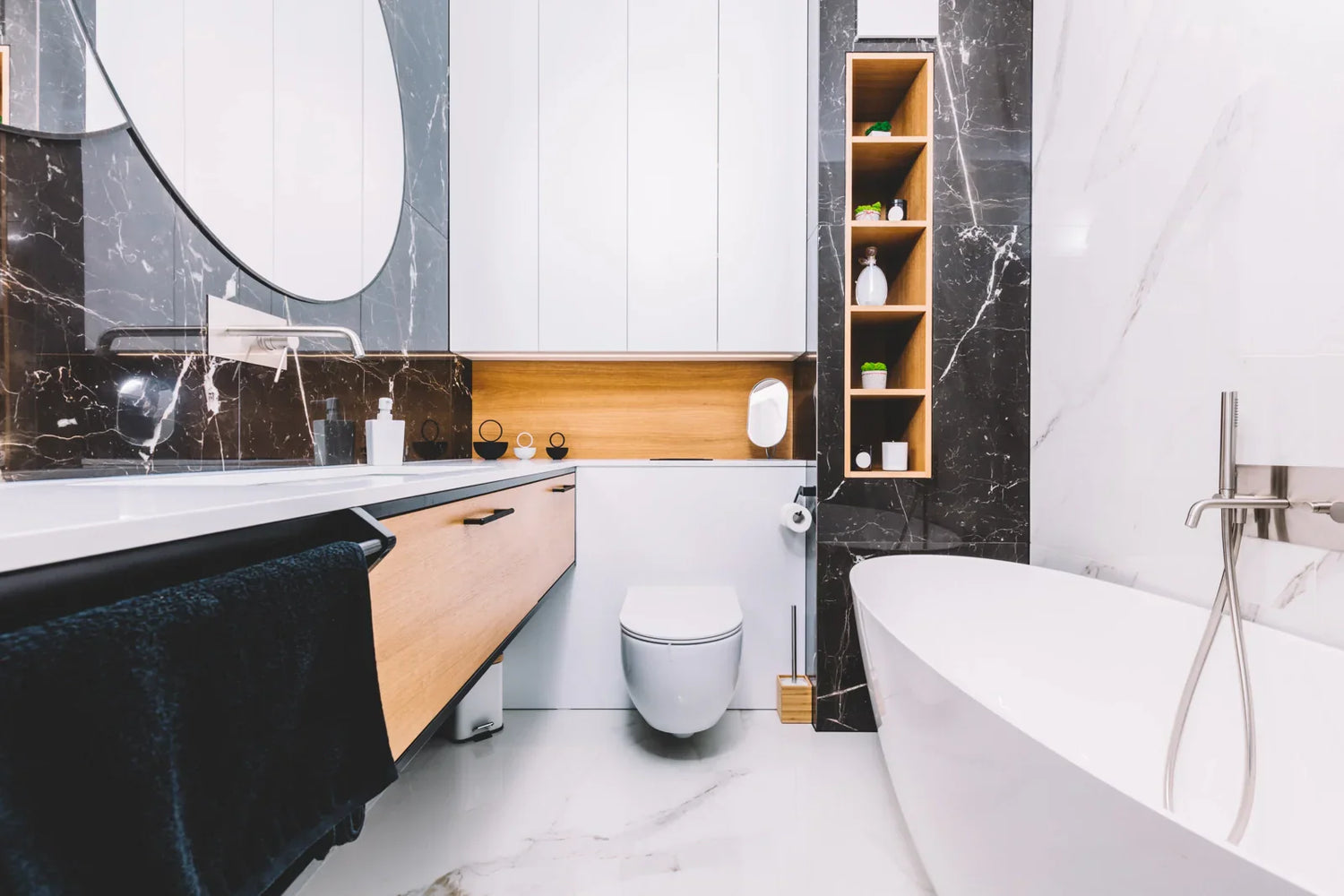
A hidden tankless smart toilet design is usually chosen for one reason: you want a clean, modern bathroom with less visual clutter and less depth than standard models, and you also want smart features like a bidet cleanse, heated seat, and hands-free operation. That’s a valid goal. But the mistake I see is homeowners buying the sleek look first—then discovering the daily reality: water pressure sensitivity, power dependency, louder flush sound, tighter seating space, and more technical installation than they expected. This guide is written to help you make a confident first decision: Is this the right type of toilet for your household—and if yes, which “hidden/tankless” style fits your bathroom and risk tolerance?
Hidden tankless smart toilet design: Decision Snapshot (quick answer)
If you’re drawn to a modern sleek tankless bidet look, this is the fork in the road where aesthetics meet real-world trade-offs. The appeal is clear: minimal profile, integrated functions, and a cleaner architectural feel. But this category only makes sense when your bathroom conditions—space, water pressure, electrical access, and user expectations—support it. Before you decide based on style alone, understand the practical risks that separate a smooth upgrade from a frustrating one.
Key risks to understand first
-
Water pressure sensitivity (performance depends on stable supply pressure)
-
Power dependency (requires a dedicated GFCI outlet; no power = no smart features)
-
Louder flush sound compared to gravity tank toilets
-
Tighter seating space in some compact wall-hung designs
-
More technical installation (in-wall carrier system, precise rough-in, electrical planning)
Choose it if:
-
You’re remodeling or already opening walls, and you care about a minimalist, architectural look
-
You want a space saving smart commode for a tight bathroom (often saving ~6–10 inches of depth)
-
It’s a primary or private bathroom where users will learn the remote/presets
-
Your home has stable water pressure and you can provide a dedicated GFCI outlet
Best for: Design-driven remodels and compact primary baths with stable utilities and tech-comfortable users.
Not for: High-traffic shared bathrooms where simplicity and forgiveness matter more than aesthetics.
Do not choose if:
-
Your home has unstable or low water pressure
-
You experience frequent power outages
-
You specifically need comfort height for knees, hips, or mobility support
-
This is a shared, kids’, or guest bathroom where ease and predictability matter most
Choose an alternative if you need comfort height, kid/elderly ease, or a “no-learning-curve” shared toilet
Choose something else if:
-
You need comfort height for knees/hips or mobility support
-
This will be the main toilet for kids, guests, or a busy household
-
You want a “walk up and it just works” toilet with no sensors surprising anyone
Rule of thumb: For high-traffic shared bathrooms, simpler controls and a more forgiving flush system matter more than the hidden look.
Choose an alternative if you’re budget- or DIY-driven: traditional toilets + bidet seat upgrades win
If your goal is mostly hygiene (bidet + heated seat), you’ll often get better value by:
-
Keeping a proven traditional toilet, and
-
Adding a bidet seat with a heated seat and nozzle wash
This avoids a lot of the technical and service risk of an integrated tankless toilet.
5-Question Yes/No Gate (in order of decision priority)
-
Is your water pressure stable and within recommended range?
-
No → Don’t choose hidden tankless smart toilet design
-
Yes → Continue
-
Can you provide a dedicated GFCI outlet and tolerate full power dependency?
-
No → Don’t choose
-
Yes → Continue
-
Do you need comfort height or mobility-focused ergonomics?
-
Yes → Don’t choose
-
No → Continue
-
Will this be a shared/kids’/guest bathroom needing zero learning curve?
-
Yes → Don’t choose
-
No → Continue
-
Are you remodeling (or willing to open walls) for in-wall installation?
-
No → Don’t choose
-
Yes → Choose hidden tankless smart toilet design
Visual: choose this / choose that (by bathroom type)
| Bathroom type | Choose hidden tankless smart toilet design when… | Choose a simpler alternative when… |
| Powder room | You want the in-wall look and short projection; light daily use | You want cheapest install, simplest maintenance |
| Primary bath | You’ll use bidet daily; you want hands-free; you can plan electrical | You need comfort height or dislike tech dependency |
| Guest bath | You want a “wow” look and can disable some auto features | You want zero learning curve for guests |
| Kids’ bath | Rarely the best fit | You want durability, easy manual flush, easy cleaning |
| Aging-in-place bath | Only if height/support needs are addressed | Comfort height + simple controls usually win |

Who is this for in real households: solo tech lovers vs high-traffic families?
A hidden tankless smart toilet design can feel perfect in one home and annoying in another. The difference is usually who uses it and how predictable their routine is.
Hands-free automatic lid/flush is amazing for private baths
In a private bathroom, hands-free features are a real quality-of-life upgrade:
-
Lid opens as you approach (sensor)
-
Seat warms to a set temperature
-
Bidet starts with a button or preset
-
Flush happens automatically when you stand
In day-to-day life, this reduces “touch points,” which many homeowners like for cleanliness.
Where it goes wrong: In a guest bath, the same sensors can confuse people. Some guests wave at the toilet like it’s a paper towel dispenser. Some kids trigger the lid repeatedly. Some adults don’t like the lid opening when they walk past in a tight room.
If this is for a shared bathroom, look for a model where you can turn off auto-open and auto-flush, or at least make them less sensitive.
When user presets and remotes help vs become conflict points
Smart toilets often store user settings:
-
water temperature
-
nozzle position (rear vs front)
-
water pressure
-
dryer settings
-
deodorizer mode
-
night light
In a one- or two-person home, presets are great. In a family home, presets can create daily friction:
-
One person likes high water pressure; another finds it uncomfortable
-
Kids press random buttons and change settings
-
Guests don’t want to touch a remote and won’t use the bidet at all
Practical advice: If this toilet will serve multiple people, prioritize:
-
clear, simple controls
-
an obvious “stop” button
-
a straightforward manual flush option
-
settings lock or child mode if available
Hygiene-first vs posture-first
Many hidden tankless designs are compact. To save space, the seat and hardware at the rear can feel bulkier than expected. That can change how you sit:
-
Some people feel slightly pitched forward
-
The usable sitting area can feel shorter
-
Tall users may feel their knees are closer to the door
If your top priority is hygiene, you may not care. If your priority is comfort (especially for longer sits), you should pay attention to seat shape and usable bowl length, not just the “smallest footprint smart toilet” headline.
Will a direct flush intelligent toilet feel too aggressive?
Most tankless smart toilets are direct flush intelligent toilets, meaning they flush by using line pressure (and sometimes a built-in pump) rather than draining a tank of stored water.
That can be:
-
fast
-
effective
-
water efficient
But it can also be:
-
louder
-
more sudden
-
occasionally splashy depending on bowl design and settings
If your bathroom shares a wall with a bedroom, or you’re noise sensitive, this matters.
The trade-offs that actually separate tankless direct-flush vs built-in tank systems
If you have pressure swings, choose built-in tank or traditional + bidet seat. Homeowners get stuck because “tankless” can mean different things. The decision isn’t just tank vs no tank. It’s about how the flush is powered and how forgiving it is.

Water pressure reality
Only choose direct flush if pressure is stable during simultaneous fixture use.
How does a tankless toilet flush without a tank?
A tankless toilet uses the home’s water supply directly. When you flush, a valve opens and water rushes into the bowl through engineered channels (often rim and jet paths). Some models add a small internal pressure system or pump to make the flush more consistent.
What matters in real homes:
-
If your water pressure is steady, a tankless flush can be strong and consistent.
-
If pressure drops when someone showers, runs a sink, or a dishwasher fills, the flush can feel weaker.
-
In some homes (certain wells, older plumbing, pressure-reducing valves set low, or buildings with variable pressure), a tankless system can be less forgiving.
A built-in tank system (even a compact one) stores a set amount of water and releases it with more consistent force, even if supply pressure wobbles.
What to do: Before committing, do a simple reality check:
-
Do you notice pressure changes when multiple fixtures run?
-
Does your shower weaken when a toilet flushes now?
-
Are you on a well system with a pressure tank that cycles noticeably?
If yes, a tanked or tank-assisted approach may reduce frustration.
Noise trade-off
Many homeowners expect tankless to be quieter because there’s no tank refill sound. The opposite can happen.
-
Direct flush can be much louder at the moment of flush (a sharper “whoosh”)
-
Tanked toilets may be quieter at flush time, but you hear a refill trickle after
If the toilet is near sleeping areas, pay attention to flush sound, not just water use.
Power dependency
Does a tankless toilet need a power outlet?
For a true smart toilet with heated seat, warm water cleansing, dryer, deodorizer, and sensors: yes, you should plan on an outlet.
The toilet part that needs power is not only the bidet. It’s also:
-
seat heating
-
water heating (tankless heating takes steady power)
-
sensors and automatic functions
-
sometimes a pump for consistent flushing
What happens in outages? This is where people get surprised.
-
Some models still allow a limited flush (battery backup or capacitor)
-
Some have a manual flush button that works only if water pressure is present and the valve design allows it
-
Some lose most functions until power returns
If outages are common, choose an alternative unless manual/backup flush is confirmed. A traditional toilet with a water tank is almost always usable during an outage. That reliability matters in some regions.
High-rise and inconsistent pressure situations
If you live in a building where pressure varies by time of day, or you’ve experienced “thin” water flow at peak hours, a tankless flush may not feel consistent.
A hidden tank design might still be possible, but you may prefer:
-
a compact built-in tank system (more forgiving)
-
or a standard toilet plus a smart bidet seat (least sensitive)
Cost and value: what you pay for (and what you don’t get back)
Buy a smart toilet for comfort, hygiene, or design—not for ROI. They rarely “pay for themselves,” and resale value rarely increases enough to justify the upgrade. The real value decision is whether you tolerate higher service and maintenance risk in exchange for aesthetics and integrated features. Smart toilets can be worth it, but not because they “pay for themselves.” Most homeowners choose them for comfort, hygiene, and design.
Price tiers that matter
You’ll typically see three realistic tiers:
-
Traditional toilet + bidet seat upgrade (best value)
-
Lowest cost
-
Fast install
-
Easy replacement if electronics fail later
-
Integrated smart toilet with a built-in tank system
-
Mid to high cost
-
Often more forgiving on water pressure
-
Still sleek, though not as “hidden” as in-wall looks
-
Hidden tankless smart toilet design (high-end + technical)
-
Highest cost
-
Pays for design, compactness, and integrated build
-
Often requires more planning for install and service
If you’re mainly chasing bidet benefits (cleanse, heated seat, dryer), tier 1 often wins. If you’re chasing the in-wall look floor mount toilet aesthetic and shortest projection, tier 3 starts to make sense.
Install costs: hidden plumbing vs simple swap
A big part of cost is not the toilet. It’s what your bathroom needs to support it:
-
moving water supply
-
changing shutoff valve location
-
adding an outlet
-
possibly opening walls to route lines cleanly
-
potential floor repair if footprints don’t match
A floor-standing replacement that uses your existing rough-in is usually simpler. A true hidden/in-wall look, especially if you’re trying to “hide” lines and valves, can become construction.
If you aren’t already remodeling, get realistic about access. Drywall and tile work can cost more than expected.
Ownership costs over time
Water efficiency is real—many modern toilets use less water per flush than older models. According to the U.S. Environmental Protection Agency’s WaterSense program(EPA), high-efficiency toilets can significantly reduce household water consumption when they meet certified performance standards. But the money saved on water is usually not what justifies a premium toilet.
Long-term costs you should plan for:
-
filters (if your model uses them)
-
descaling/cleaning solution in hard-water areas
-
nozzle or wand parts
-
remote control replacement
-
service calls if electronics fail outside warranty
If your area has hard water, factor that in now, not later.
Luxury tax or fewer headaches?
A space saving smart commode can reduce headaches in one specific way: cleaning around it.
A skirted, sleek body can mean fewer crevices than traditional toilets. But hidden designs also create their own cleaning and service issues (more on that below). Value depends on whether you prefer:
-
fewer exterior nooks (good), or
-
easier access to parts (also good)
Fit and space realities: in-wall look floor mount toilet vs wall-hung vs standard layouts
“Hidden” can mean a few different toilet types. This is where you choose the layout that fits your room and your comfort needs.
Small bathroom math: depth saved vs comfort
A hidden tankless smart toilet design often saves depth because there’s no big visible tank. In many bathrooms, that helps:
-
door swing clearance
-
knee space in front of the toilet
-
walkway space in a narrow room
But don’t only measure the toilet’s depth. Also think about:
-
where your feet land
-
whether your knees hit a vanity
-
elbow room for wiping or using the remote
-
the “usable” seat area (some compact seats feel shorter)
A smallest footprint smart toilet can still feel cramped if the seat opening and sitting area are compact.
Rough-in and drainage constraints
Most homes are built around a standard rough-in distance (commonly 12 inches, sometimes 10 or 14). Your drainage system location limits your options.
If your goal is an in-wall look floor mount toilet:
-
many models still need to align with your existing floor drain
-
skirted bodies can hide the connection, but they don’t change where the drain is
If you want a wall-hung toilet with in-wall carrier:
-
you may need a wall cavity or chase deep enough for the carrier and drain routing
-
that can conflict with exterior walls, plumbing stacks, or tight framing
Key point: A hidden look is easiest when you’re already remodeling and walls are open.
Height and accessibility fork
Decide seat height first. If comfort height or mobility support is required, eliminate models that cannot meet that height before comparing features, flushing style, or aesthetics.
-
Many compact, sleek tankless toilets sit closer to standard height.
-
Comfort-height toilets (taller) are often easier for older adults and many tall users.
-
Wall-hung toilets can sometimes be installed at a chosen height, which is great—if your wall and carrier system allow it.
If this is an aging-in-place bathroom, pick height first, then pick features.
The “smallest” footprint isn’t always best
In practice, very compact toilets often trade comfort for size:
-
less thigh support
-
more weight on the front of the seat
-
tighter spacing for larger bodies
If possible, sit on a similarly shaped toilet in a showroom. If you can’t, look for:
-
seat opening dimensions
-
bowl shape (elongated often feels less cramped than round)
-
user reviews that mention comfort, not just looks
Installation & technical risk: when “sleek upgrade” turns into construction
This is the part that decides whether you’ll love the toilet or resent it.

Remodel vs retrofit
If you are mid-remodel, hiding plumbing lines and adding power is straightforward.
If you are retrofitting a finished bathroom, the questions get sharper:
-
Can you add a GFCI outlet without ugly surface conduit?
-
Can your water supply line be moved or upgraded if needed?
-
Can you access the shutoff valve easily?
-
Will the new skirted base cover the old footprint on the floor?
Homeowners often assume a tankless toilet is a direct swap. Sometimes it is. Sometimes it isn’t.
Electrical planning for heated seat and bidet
A smart toilet needs electricity to operate its smart features. Plan for:
-
a GFCI-protected outlet in the correct location
-
cord routing that won’t be pinched or visible
-
enough clearance so the plug isn’t forced against the wall
If the outlet ends up behind the toilet where you can’t reach it, service becomes harder. If it ends up visible, you may not like the “modern sleek” look you were aiming for.
Service access trade-off
Hidden and skirted designs look cleaner, but they can reduce access:
-
bolts may be covered
-
filters may be behind panels
-
connections may be tucked under the body
Deal-breakers:
-
Unreachable shutoff valve
-
Filter located behind panels that require toilet or wall removal
-
Leaks that would require full toilet removal to diagnose or repair
Ask yourself: if something drips, can a plumber reach it quickly? Or will the toilet need to be removed?
This matters more if you have:
-
a second-floor bathroom over finished space
-
expensive flooring you don’t want disturbed
-
any history of plumbing leaks
Visual: what must stay reachable (service-access map)
Use this mental diagram before you buy:
-
Reachable from the side: shutoff valve (or an access panel)
-
Reachable without removing the toilet: filter access, basic cleaning access, manual flush
-
Reachable without moving the wall: any in-wall valves or carriers (if used) need an access plan
If the design hides everything but also hides access, you’re buying a cleaner look at the cost of harder service.
Maintenance and long-term ownership: cleanliness wins vs hidden annoyance risks
Smart toilets can improve cleanliness, but they don’t remove maintenance. They change it.
Repairability: integrated smart toilet vs add-on bidet seat
This is a big decision fork.
Integrated smart toilet
-
cleaner look
-
fewer “gaps” between seat and bowl
-
but if electronics fail, the whole unit may be out of service and parts can be proprietary
Traditional toilet + bidet seat
-
if the bidet fails, you still have a working toilet
-
replacing the seat is usually simple
-
more flexibility long term
If you plan to stay in the home 10+ years, think about:
-
parts availability
-
warranty process
-
whether you want one integrated system or modular parts
If you want a working toilet even when electronics fail, choose traditional + bidet seat.
Self-cleaning wand helps, but undersides still matter
Many smart toilets include:
-
self-cleaning nozzle rinse
-
pre-mist that helps reduce sticking
-
automatic deodorizer
-
antibacterial surfaces
These help with bowl cleanliness. But don’t ignore the exterior:
-
Some sleek bodies have undersides that are harder to reach.
-
Splash zones can build up if the bowl design or flush is aggressive.
-
Sensors can get smudged and behave oddly if not wiped.
If you hate cleaning, prioritize:
-
easy access around the base
-
fewer seams
-
simple removal of the seat (if applicable)
Hard-water reality: descaling and pressure
Hard water is a top reason smart features degrade:
-
nozzle spray holes can scale up
-
filters can clog faster
-
valves can stick
-
water heating performance can drop
And remember: tankless flush performance depends on sufficient pressure and flow. Any scaling that reduces flow can show up as weaker flush behavior.
If your area has hard water:
-
expect regular descaling
-
consider a whole-home water softener or targeted filtration if appropriate
-
read the maintenance requirements before you buy, not after
Repairability: integrated smart toilet vs add-on bidet seat
This is a big decision fork.
Integrated smart toilet
-
cleaner look
-
fewer “gaps” between seat and bowl
-
but if electronics fail, the whole unit may be out of service and parts can be proprietary
Traditional toilet + bidet seat
-
if the bidet fails, you still have a working toilet
-
replacing the seat is usually simple
-
more flexibility long term
If you plan to stay in the home 10+ years, think about:
-
parts availability
-
warranty process
-
whether you want one integrated system or modular parts
Which is easier for 5–10 years?
In most homes:
-
Traditional toilet + bidet seat is easier to live with and service.
-
A hidden tankless smart toilet design is easier to love visually, and can be great if installed correctly and maintained, but it’s less forgiving.
That’s the trade: sleek + compact + integrated vs simple + serviceable + flexible.
Choosing the right type: a simple path to your first decision
Instead of trying to compare dozens of models, decide in this order:
Bathroom role: private vs shared
If shared, favor simplicity and comfort height.
Space pressure: do you truly need the depth savings?
If the door hits knees or the walkway is tight, compact matters.
Water stability: do you have stable pressure and flow?
If not, avoid the most pressure-sensitive direct flush setups.
Power planning: can you add a proper GFCI outlet cleanly?
If not, rethink the integrated smart toilet route.
Service tolerance: are you okay with more technical maintenance?
If not, choose a simpler toilet and a smart bidet seat.
If you land on “yes” for all five, a hidden tankless smart toilet design is a reasonable choice—and you’ll likely enjoy it.
Final output:
-
If all five answers are strong “yes” → Hidden tankless smart toilet
-
If water and power are stable but you prefer more flush forgiveness → Integrated with built-in tank
-
If simplicity, outage reliability, and easy service matter most → Traditional + bidet seat
Before You Buy checklist
-
Define bathroom role (private vs shared) and confirm whether auto-open/auto-flush can be disabled or adjusted for shared bathrooms
-
Confirm true space need: measure available depth (including door swing) and verify the new footprint covers the old one
-
Check water pressure stability when shower/sink runs
-
Confirm you can add a dedicated GFCI outlet without awkward cord routing
-
Decide your service tolerance: confirm manual flush behavior during a power outage (and any battery backup)
-
Verify seat height (standard vs comfort height) before comparing features
-
Plan service access to shutoff valve, filters, and connections
-
If you have hard water, plan for descaling and filter changes

FAQs
1. How does a tankless toilet flush without a tank?
A tankless toilet uses your home’s supply to pressurize water with each flush instead of storing it like traditional models. When activated, a valve opens and directs water through internal channels in the porcelain bowl. Many of these models use assist systems to keep performance consistent. The key difference is that flush strength depends on pressure stability. These features of tankless toilets follow the modern bathroom trend of compact, highly functional design, especially in units that take up less space than standard models.
2. Does a tankless toilet need a power outlet?
If you’re choosing a tankless smart unit, yes—most require a GFCI outlet. Many of these models also include heated seats, warm wash, dryer, deodorizer, and auto flush for better hygiene. Power may also support sensors or flushing assistance. In an outage, some models offer limited backup flushing, while others temporarily lack smart functions. Since this upgrade is an investment, consulting an expert helps ensure safe wiring and long-term reliability you can trust in your bathroom's layout.
3. Is tankless better for a small powder room?
It can be a great fit in a small powder room, especially if you’re trying to save depth and create a cleaner, more modern look. Without a bulky tank, the toilet often projects less into the room, which can help with door swing and walking space. That said, powder rooms are usually guest bathrooms. Guests may prefer simple, familiar controls and a predictable flush. If the model has automatic features, make sure they can be adjusted or turned off so the toilet feels intuitive rather than surprising.
4. What is the water pressure requirement for tankless?
Tankless toilets need stable and adequate water pressure to perform well because they rely directly on your plumbing supply. While exact minimum pressure varies by model, what matters most is consistency. If you notice your shower weakens when someone runs a sink, that same drop can affect flush strength. Homes with pressure-reducing valves set low, well systems, or older plumbing may experience more variation. If pressure swings are common, a built-in tank system or a traditional toilet setup will usually feel more reliable and forgiving.
5. Are tankless toilets noisier than tank ones?
They often are—at least during the actual flush. Because water moves quickly and directly into the bowl, the sound can be sharper and more forceful compared to a traditional gravity tank flush. Tank toilets, on the other hand, may sound quieter during flushing but make a softer refill noise afterward. Whether noise is an issue depends on placement. If the bathroom is near bedrooms or used at night, that sharper flush sound may be noticeable. It’s worth considering if quiet operation is important in your home.
6. Can I replace a standard toilet with tankless?
Sometimes yes, but it’s not always a simple swap. You’ll need to confirm that the rough-in distance matches and that your drain location works with the new design. One of the biggest surprises for homeowners is the need for a power outlet nearby. You may also need to adjust the water supply line or ensure the new base covers the old footprint on the floor. In finished bathrooms, adding electrical access or hiding lines can involve extra work. Planning ahead avoids turning a simple upgrade into a construction project.
References


Leave a comment
This site is protected by hCaptcha and the hCaptcha Privacy Policy and Terms of Service apply.