
If you’re stuck between a freestanding tub and an alcove tub, the real question is not which one looks better in a showroom. It’s which one will still feel right after six months of daily use.
This is where many bathroom remodels go sideways. A tub can look perfect on a mood board, then become annoying in real life because it takes too much space, doesn’t work well with showers, costs more to install than expected, or is simply awkward to clean.
Here’s the short version: freestanding tubs usually win on soaking and style; alcove tubs usually win on function, cost, and layout efficiency. For most everyday bathrooms, that trade-off matters more than people expect.
Who should choose freestanding tub vs alcove tub?
This quick freestanding bathtub vs alcove tub snapshot helps you pick the right bathtub by space, budget, and daily needs.
Choose a freestanding tub
Choose a freestanding tub if your main goal is a deep, comfortable soak and you have enough open floor space to make it work. This type is a strong fit for a larger primary bathroom, a tub used mostly by adults, and a room where the tub is meant to be part of the design.
A freestanding tub makes sense if:
-
you take baths often, not just in theory
-
you want the tub to be a focal point
-
you do not need a shower-tub combo
-
your bathroom layout can spare walk-around space
-
your budget can handle a more complex installation
Avoid a freestanding tub if you have a tight bathroom, need easy daily showering, bathe kids often, or want the lowest-hassle option.
Choose an alcove tub
Choose an alcove tub if you want the most practical tub for real-life use. Alcove tubs are built into a three-wall recess, so they make better use of space and usually pair easily with a shower.
An alcove tub is usually the right call if:
-
your bathroom is small or average-sized
-
you want a shower-tub combo
-
kids, guests, or older adults will use it
-
you want easier cleaning and lower installation cost
-
you’re replacing an existing tub in the same location
If your bathroom has to work hard every day, an alcove tub usually gives fewer regrets.
Choose a drop-in or undermount
If you want a built-in look but don’t love the plain feel of an alcove, a drop-in or undermount tub can be a smart middle ground. You get deck space for products, a cleaner visual line than some alcove setups, and more flexibility in shape.
This option works best when you have enough room to build a platform or surround.
Choose a walk-in or low-threshold tub
If accessibility matters more than aesthetics, skip the freestanding vs alcove debate and focus on safer entry. A walk-in or low-threshold tub may be the better bathtub type for your home if mobility is a concern now or soon will be.
The trade-offs that actually separate these tubs
Showroom looks hide real trade-offs. Compare alcove vs freestanding tubs on daily use, space, and practical function.
Soaking depth vs daily ease
This is usually the biggest divider.
Freestanding tubs often give a deeper soak. Many have higher walls and a more immersive tub basin, so your shoulders and torso stay warmer and more covered. If you love to soak for 30 or 40 minutes, this matters.
Alcove tubs are usually easier to get in and out of. The rim is often lower, the shape is familiar, and the tub is often less intimidating for kids, older adults, or anyone with stiff knees. If your “bath” is really a quick rinse, leg shave, dog wash, or kid bath, that lower step-in height matters more than soaking depth.
Here’s what I’ve seen in practice: people often overestimate how much they’ll use a deep soaking tub. If you currently take two baths a year, a freestanding tub may become an expensive sculpture.
Shower use changes everything
If you mostly shower, an alcove tub almost always makes more sense.
This is where the freestanding dream often breaks down. Freestanding tubs can be paired with a shower, but it’s rarely as simple or as convenient as a standard alcove setup. You may need a ceiling-mounted or floor-mounted shower setup, a circular rod, extra waterproofing, and a lot more splash management. In many bathrooms, it looks attractive but works poorly.
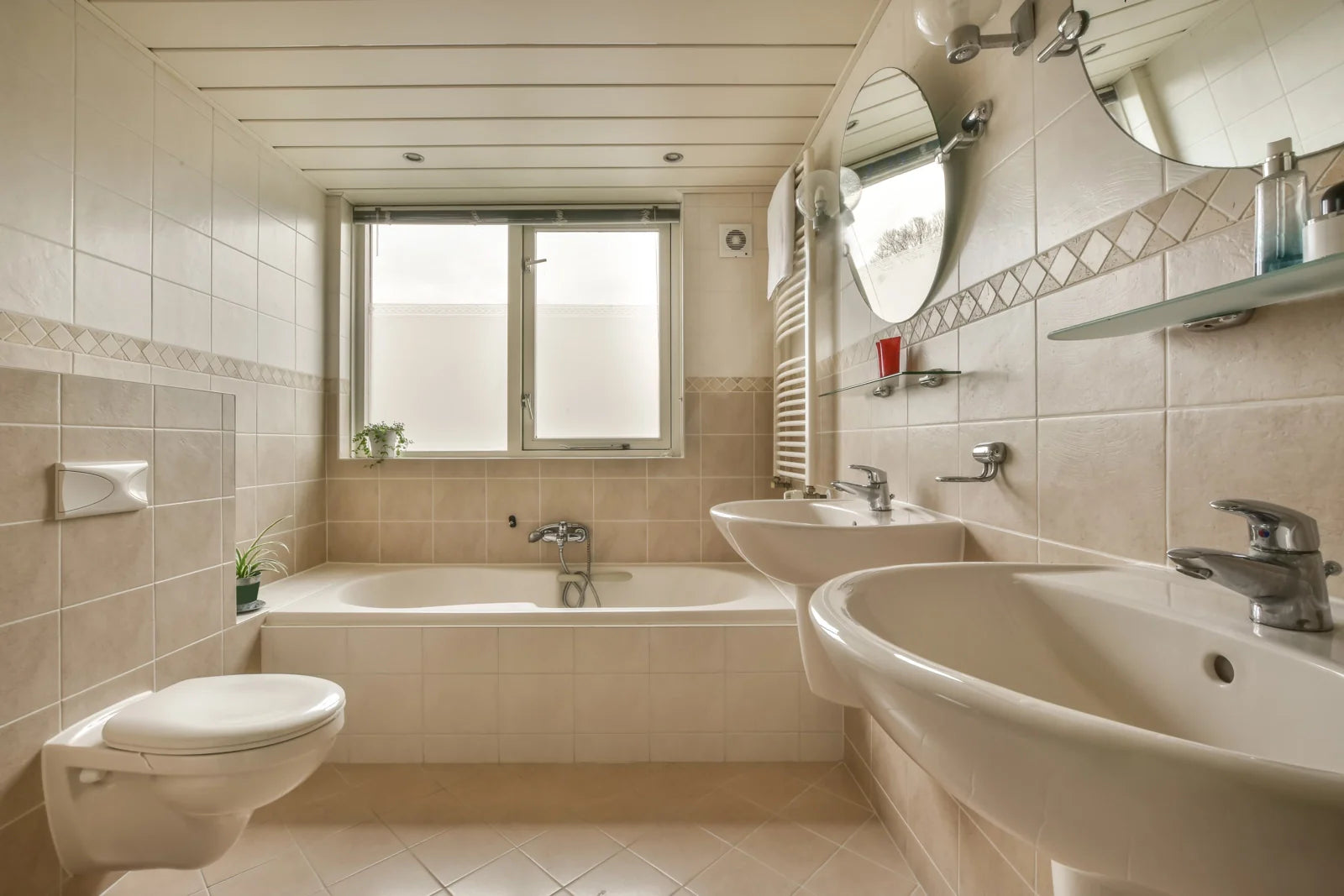
An alcove tub, by contrast, is built into an alcove in the bathroom with walls on three sides. Those walls help with water control, shower storage, and easy installation of a showerhead, valve, niche, or grab bar.
So if your household says, “We mostly shower,” take that seriously. A freestanding tub may not fit your routine, even if it fits your design plan.
Storage and ledge space
This sounds minor until day three.
With an alcove bathtub, you often get practical edge space, a tub surround, recessed niche options, and nearby walls for shelves or hooks. Soap, shampoo, razors, and toys all have somewhere to go.
Freestanding tubs often have no built-in ledge at all. That means you need a side table, stool, caddy, or floor basket. In a large bathroom, that’s fine. In a smaller master bath, it can feel cluttered fast.
If you want a clean-looking room with very few accessories out in the open, alcove tubs and freestanding tubs feel very different in daily life.
Design impact vs useful walls
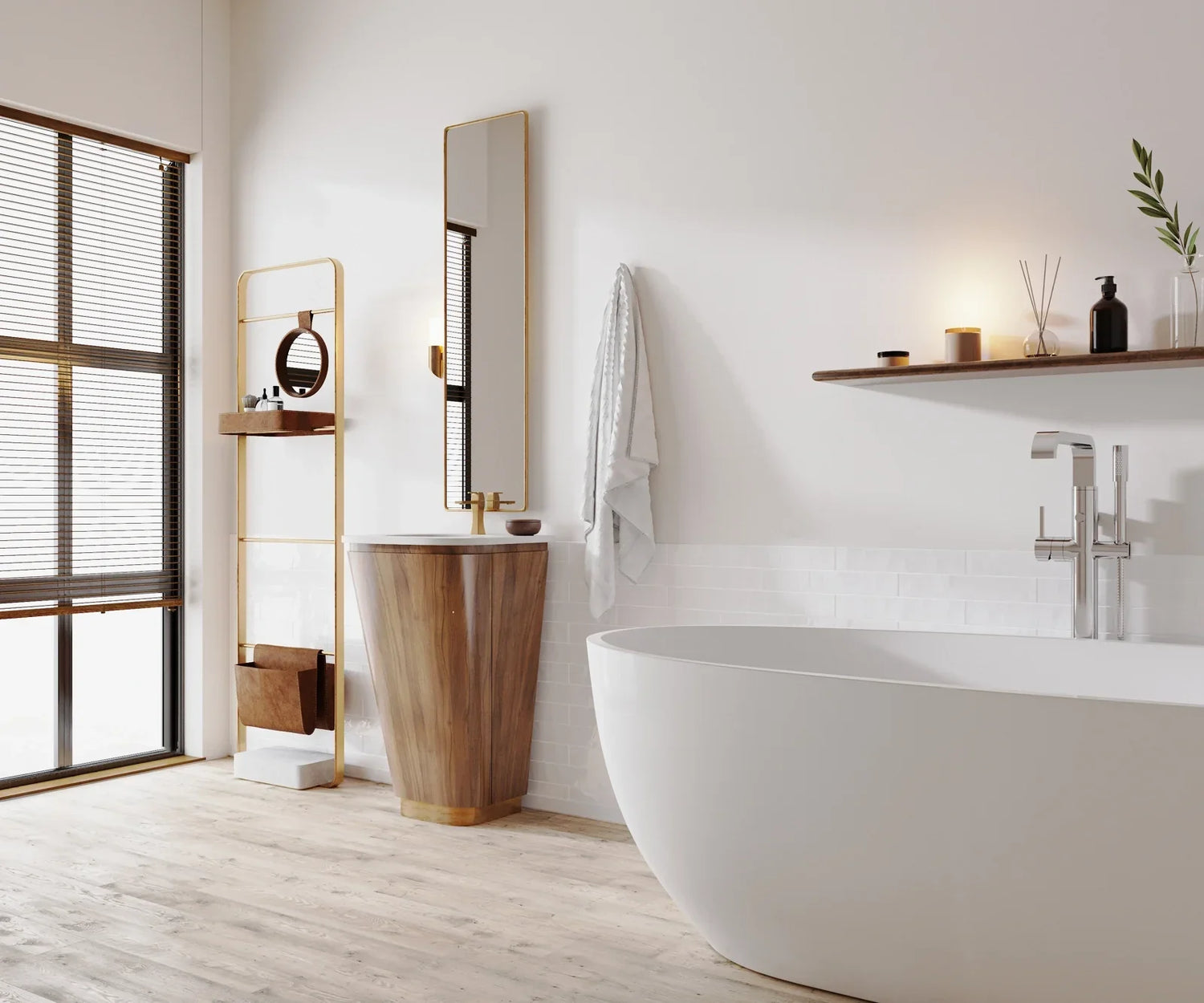
Freestanding tubs offer visual openness. They can be placed almost anywhere in your bathroom, at least in theory, and they can make the room feel more open because the eye can travel around them.
But walls do useful work. Walls hold tile, contain splashes, support storage, allow grab bars, and create a more forgiving zone for a busy household.
So yes, the advantage of freestanding design is real. But the practical value of walls is real too.

Cost, installation, and resale
Many homeowners overlook installation cost, floor support and resale value when comparing alcove and freestanding tubs.
Installation cost comparison tubs
A simple rule helps here: the more you move plumbing, the more the tub installation costs.
Alcove tubs are usually cheaper to install because they often use the existing footprint, drain location, water lines, and wall structure. If you are swapping one alcove tub for another, labor is more predictable.
Freestanding tub installation is often more expensive because the drain and faucet location may need to change. A floor-mounted filler can add complexity. If the slab or subfloor needs work, cost climbs quickly.
Typical cost pattern:
-
Alcove tub: lower tub cost, lower labor cost, easier to price
-
Freestanding tub: wider price range for the tub itself, higher labor, more unknowns
Even when the freestanding bathtub is not dramatically more expensive than an alcove bathtub, the installation often is.
Hidden cost: floor support
Can your floor handle it? Sometimes yes, sometimes not.
Freestanding tubs are often heavier than alcove tubs, especially when filled and when made from cast iron, stone resin, or other dense materials. Add water and a person, and the load gets serious fast.
This does not mean freestanding tubs are a bad idea. It means you should not buy one before confirming floor support. If your bathroom is on an upper level, this check matters even more.
Acrylic freestanding tubs tend to be easier on the structure than cast iron or stone options. Material choice affects heat retention, scratch resistance, and weight, so this is not just a style decision.
Bathtub resale value impact
Which type of tub is better for resale value? In most homes, the answer is: the one that fits the bathroom and buyer expectations.
A freestanding tub can help listing photos and can make a primary bath feel more upscale. In a roomy master bathroom, that visual impact may help buyers remember the space.
But resale value is not automatic. If the tub eats too much space, replaces the only practical shower-tub combo, or looks out of place in the room, buyers may see it as a compromise, not an upgrade.
An alcove tub usually has steadier resale logic because it serves more households. Families, guests, and many everyday buyers understand it immediately. It may not wow people in photos, but it tends to support broader function.
So does a freestanding tub increase resale value enough to matter? Sometimes. Usually more for appeal than hard dollar return. It improves the feel of the room if the layout supports it. It does not fix a poor floor plan.
Long-term operating costs
Freestanding tubs tend to hold more water. That means more hot water use, longer fill times, and potentially more demand on your water heater. If you love long soaks, that may be worth it. If not, it’s an ongoing cost for a feature you barely use.
Fixture replacement can also be trickier. A floor-mounted filler or exposed drain setup may be more specialized than standard alcove hardware.
Fit and space requirements
Understand alcove vs freestanding space requirements to pick the best bathtub for your layout and clearance.
Alcove vs freestanding space requirements
Do freestanding tubs take up more space? Yes, in most bathrooms they do.
People often compare tub dimensions only. A freestanding tub may look similar on paper to a 60 x 30 alcove tub. But that is not the full story. An alcove tub fits in the footprint because walls do the enclosing. A freestanding tub needs usable clearance around it for cleaning, access, and visual breathing room.
In real terms:
-
A standard alcove tub often works in a 60 x 30 inch zone
-
A freestanding tub may be 60 to 72 inches long, but it also needs space around the tub
-
Many designers like at least about 6 to 12 inches of clearance, sometimes more depending on the room
That is why freestanding tubs require more floor space even when the size of the tub itself does not look dramatically larger.
Small master bath reality
Is freestanding tub vs alcove tub worth it if you have a small master bath? Usually only if you are willing to give something up.
In a small master bath, a freestanding tub can work, but often at the cost of easier movement, better storage, or a larger shower. The room may look stylish in photos and feel cramped in socks.
If you are trying to choose the best bathtub for small master bath use, ask one blunt question: what matters more, soaking or smooth daily traffic? In many smaller primary baths, an alcove or a compact drop-in tub is the better fit for your bathroom.
Clearance problems people miss
Homeowners often measure wall-to-wall and stop there. That is not enough.
Check these trouble spots:
-
door swing into the tub zone
-
toilet clearance
-
vanity drawer openings
-
path from door to shower or toilet
-
towel bar and robe hook placement
-
how you’ll mop and clean around the tub
A freestanding tub might technically fit and still make the bathroom awkward.
Layout examples
Here’s a simple way to think about common layouts.
5 x 8 bathroom: This is classic alcove territory. A 60-inch alcove tub fits one short wall well. A freestanding tub in this size room usually feels forced unless the tub is very compact and the rest of the layout is carefully stripped down.
6 x 8 bathroom: You may have some flexibility here. A compact freestanding soaking tub can work in some layouts, but an alcove tub still tends to be more efficient, especially if this is a shared bathroom.
Small master bath: This is where people get tempted by freestanding tubs because they want a luxury feel. Sometimes that works. But if the tub turns the room into an obstacle course, the luxury disappears quickly.

Habit and household fit
Choose the right bathtub by matching alcove and freestanding designs to your household habits and daily use.
Families and shared bathrooms
For kids and shared bathrooms, alcove tubs usually win.
They are easier to step into, easier to supervise, easier to use with a shower, and easier to keep stocked with products and bath toys. In homes where one bathroom has to do many jobs, alcove tubs are typically the most forgiving type of bathtub.
Freestanding tubs are less friendly here. Taller sides, no ledges, more splash risk around the tub, and less support for shower routines make them a weaker choice for family-heavy use.
“We mostly shower”
This is one of the most useful sentences a homeowner can say out loud.
If that’s true in your house, don’t force a tub-only luxury feature into your main routine. A freestanding tub may still work in a second bathroom or as part of a larger primary suite with a separate shower. But in a bathroom where most people shower every day, alcove is usually the better call.
Buy for real habits, not fantasy habits
Weekly soakers can justify a freestanding tub. Occasional bathers usually cannot.
This is the single biggest mindset shift that helps people choose the right tub: buy for frequency, not aspiration. If you already make time for baths and care deeply about soaking comfort, a freestanding tub can be worth the added cost and maintenance.
If your current tub is mostly used for showers, laundry soaking, and bathing kids, then a more practical model will likely serve you better.
Couples and body fit
Comfort is not just about depth. Interior shape matters.
Freestanding tubs often look large from the outside but can have a narrower interior because of the sloped sides and thicker shell. Some are excellent for one deep soak but less comfortable for stretching out than expected.
Alcove tubs may be shallower, but some offer a wider, more open interior. For taller people or couples, compare the actual basin shape, not just outside dimensions. Sit in the tub if possible. A tub might look roomy and still feel cramped at the shoulders or knees.
Maintenance and long-term ownership
Explore maintenance of freestanding baths and pros and cons of alcove to pick the easy-care tub for your home.
Which is easier to live with?
Neither is maintenance-free. The chores are just different.
Alcove tubs are easier in one major way: there is no gap all around the tub. You do not have to clean under and behind it. For many people, that alone makes alcove ownership simpler.
Freestanding baths avoid some issues tied to long tiled surrounds, but they create others, especially dust, mopping, and water spots around the base.
Freestanding tub cleaning reality
Are freestanding tubs harder to clean? In many cases, yes.
This is especially true for clawfoot tubs and any freestanding design with visible space under the tub. Dust collects. Hair drifts under. You may need to bend awkwardly to wipe around the back curve and behind the filler. If the tub is close to a wall, the gap can become a cleaning dead zone.
This is one of those things people ignore in showrooms because the floor is spotless and empty. In a real bathroom, cleaning around a freestanding tub can be annoying.
Freestanding tubs stand alone beautifully. They also collect grime from every side.
Alcove maintenance over time
Alcove tubs are easier on the floor-cleaning side, but they have their own aging points.
You may deal with:
-
caulk lines that need refreshing
-
grout or surround wear
-
water stains on tile or wall panels
-
mildew if ventilation is poor
-
shower curtain or door upkeep
These issues tend to show up in years 3 through 10, not week 3. So the maintenance of alcove tubs is often less visible at first but still real.
Repair and replacement headaches
Freestanding plumbing can be simpler to access in some cases because it is exposed or more reachable, but replacement parts and fixture swaps may be less standard.
Alcove tubs hide more behind walls. If there is a leak at the valve or drain area, access can be harder depending on the room next door or whether an access panel exists.
The key point is this: maintenance is not only about cleaning. It is also about how painful repairs become later. Ask about access before installation, not after.

Before you commit
Follow these key checks to compare alcove vs freestanding tubs and pick your perfect bathtub with confidence.
Measure more than length
Do not stop at tub length.
Check:
-
outside tub size
-
inside basin size
-
rim height
-
step-over height
-
distance from tub edge to toilet, vanity, and door
-
actual walk-around space
A tub will fit on paper and still fail the “can I actually use this comfortably?” test.
Confirm plumbing limits
Before you choose a freestanding tub, confirm:
-
drain location
-
venting limits
-
whether the floor can accept a new drain position
-
whether a floor-mounted faucet is realistic
-
whether slab work or structural work is needed
This is where installation cost comparison tubs becomes very project-specific.
Pick the material with your eyes open
Material changes comfort and ownership.
Acrylic: lighter, warmer to the touch, often easier to install, usually less costly. Cast iron: very durable, excellent heat retention, very heavy. Composite or stone-like materials: solid feel, good heat retention, often heavy and more expensive.
If your floor or budget is tight, acrylic may be the better path. If you care most about durability and the structure can support it, heavier materials may appeal more.
Quick decision chart
Choose freestanding if:
-
you take baths often
-
you have open floor space
-
you want a focal-point tub
-
you have a separate shower
-
you accept higher cost and more cleaning around the tub
Choose alcove if:
-
you need a shower-tub combo
-
your bathroom is small or shared
-
you want lower installation cost
-
you value easier cleaning
-
you care more about daily function than display
Choose drop-in/undermount if:
-
you want a built-in look
-
you want ledges for storage
-
you have room for a deck or surround
-
you don’t want the plain look of a basic alcove
Choose walk-in/low-threshold if:
-
safe access matters most
-
mobility is limited
-
long-term aging in place is a priority
My practical take
If you want the plain answer to “Is a freestanding tub better than an alcove tub?” the answer is no. It is better for a narrower kind of buyer.
A freestanding tub is better if you truly value soaking, have room to support it, and want your bathroom design to revolve around that experience.
An alcove tub is better if your bathroom needs to work hard every day, especially for showers, kids, guests, cleaning, and budget control.
In real homes, the wrong choice usually happens when people buy a freestanding tub for the image of bath life, not the reality of bath life.
Before You Buy checklist
-
Measure the room and the clear walking space, not just the tub footprint.
-
Decide whether this bathroom is mainly for soaking or mainly for showering.
-
Check step-in height for kids, older adults, and anyone with mobility issues.
-
Confirm drain location, faucet type, and whether plumbing must move.
-
Verify floor support if choosing cast iron, stone, or a large freestanding bathtub.
-
Compare inside basin size, not only outside dimensions.
-
Think about where bath products, towels, and cleaning tools will go.
-
Be honest about how often you actually take baths.

FAQs
1. Is a freestanding tub better than an alcove tub?
When comparing alcove vs freestanding tubs, the right bathtub depends on your space, habits, and needs; freestanding bathtubs may offer luxury soaking while alcove tubs are generally more practical for daily use, helping you choose the perfect tub for your home.
2. Do freestanding tubs take up more space?
Freestanding tubs need extra clearance and can be placed anywhere in the bathroom, so they take more floor space compared to alcove tubs, which are ideal for smaller layouts even with similar outer dimensions.
3. Are freestanding tubs harder to clean?
Maintenance of freestanding baths includes cleaning around, behind, and under the unit, while alcove tubs typically have fewer hard-to-reach gaps, making them easier to maintain for regular use.
4. Which type of tub is better for resale value?
Compare alcove and freestanding impacts on resale: alcove and freestanding tubs both add value, but selection of freestanding suits large primary baths, while alcove fits broader buyer needs in shared spaces.
5. Is a freestanding tub more expensive to install?
Installation cost comparison tubs shows freestanding setups often cost more due to plumbing changes, unlike alcove tubs that use existing lines; some whirlpool tub or customized options add further expense.
References


Leave a comment
This site is protected by hCaptcha and the hCaptcha Privacy Policy and Terms of Service apply.