
Choosing an "easy to clean" kitchen sink sounds straightforward, but the reality is more complex. The right sink depends less on marketing claims and more on your actual habits, water quality, and what "easy" really means to you—and the type of kitchen sink you choose sets the foundation for all of it. Is it fast cleanup, a surface that hides marks, or minimal maintenance? This guide cuts through the confusion to show what actually reduces daily effort, what can genuinely elevate your kitchen's daily function, and where premium easy-clean features may be wasted on your kitchen.
Decision snapshot: quick answer
An easy to clean kitchen sink is worth it if your sink gets heavy daily use and you want less scrubbing, fewer stains, and faster wipe-downs. It is often not worth paying extra for if your kitchen is lightly used, you do not mind routine drying, or you tend to use harsh cleaners.
To help you decide, here are the situations where an easy-clean sink actually matters—and where it probably doesn't.
Good fit for busy kitchens
This makes sense if your sink sees constant use: family meals, lunch boxes, coffee mugs, produce washing, and frequent dish rinsing. In those homes, a smoother, lower maintenance kitchen sink can save a little effort every day, which adds up.
It is also a good fit if you care more about easy wipe-downs than about keeping a “perfect” look. Many homeowners searching for an easy to clean kitchen sink want simple daily cleanup, not a sink that never shows marks.
Skip if drying feels tedious
This is often unnecessary if you rarely cook, use the dishwasher for most items, or only use the sink lightly. In many homes, this ends up being ignored if the kitchen is low traffic and the sink only needs a quick rinse now and then.
It can also be a mismatch if you dislike hand-drying surfaces. Some sinks are easy to wash but still show water spots unless you wipe them dry.
Skip if you use harsh cleaners
This can be annoying when your normal cleaning style involves abrasive pads, bleach-heavy products, or aggressive scrubbing powders. Some low maintenance kitchen sink materials still need gentle care to stay looking clean over time.
If your setup includes a garbage disposal, keeping that area free of buildup also matters—grease and food residue that bypass the disposal can affect overall sink hygiene and lead to kitchen smells that are difficult to eliminate. It is equally important to clean a kitchen sink drain regularly to prevent buildup from developing below the surface. If you want a sink you can attack with anything under the cabinet, “easy to clean” on paper may not feel easy in real life.
What actually makes easy to clean kitchen sink?
The best way to clean a kitchen sink in daily use requires only a simple routine: mild soap, warm water, and a soft cloth for most cleanup. According to the United States Environmental Protection Agency (EPA), Safer Choice–labeled cleaning products are designed to perform effectively while using ingredients that are safer for human health and the environment, reinforcing the use of mild, non-abrasive cleaners for routine kitchen maintenance. Once you learn how to clean your sink consistently, the process reduces to daily rinsing paired with a quick wipe—not periodic deep scrubbing. The simplest starting point is to rinse the sink after every use before residue has a chance to dry.

Smooth surfaces wipe faster
What makes an easy to clean kitchen sink stand out is usually simple: fewer places for grime to cling, a surface that does not absorb stains, and a finish that does not make every splash obvious.
Smooth, non-porous surfaces keep residue on top instead of letting it soak in, so most mess can be removed quickly with liquid dish soap, warm water, and a soft cloth.
In practice, this means fewer repeat wipes and less scrubbing during everyday cleanup. The most efficient way to clean a sink is to start with a smooth, non-porous surface that does not let residue grip. The kitchen sink material you choose determines how much of that residue grips, absorbs, or wipes away on the first pass. This is why the type of sink matters as much as its finish—material and surface texture work together.
Rounded corners trap less grime
If you are wondering whether sinks with rounded corners for cleaning are actually worth it, the short answer is usually yes. Every tight corner in a sink can collect food bits, sludge, and dried residue—and sharp corners compound this problem across the entire perimeter. Rounded corners allow water and debris to move throughout the sink more freely and rinse more fully with a sponge.
The difference is not dramatic, but it is noticeable in daily use. A sink with softer corners may save only a few seconds per cleanup, yet those are the exact seconds that make a sink feel low effort instead of annoying.
If you want the best sink shape for easier kitchen sink cleaning, look for a sink basin that lets water and debris move out easily and does not create little dead zones in the corners.
Finish affects water spots
The finish matters almost as much as the material. Many people searching for the best kitchen sink finish to prevent water spots assume “easy to clean” means “always looks clean.” Those are not the same thing.
A sink can rinse easily and still show every mineral mark after the water dries. In hard water areas, researching the best sinks for preventing water spots is worth doing before committing to a finish or material. This is especially noticeable in homes with hard water. In those kitchens, the easiest kitchen sink to keep clean may still require you to dry the sink regularly if appearance matters to you.
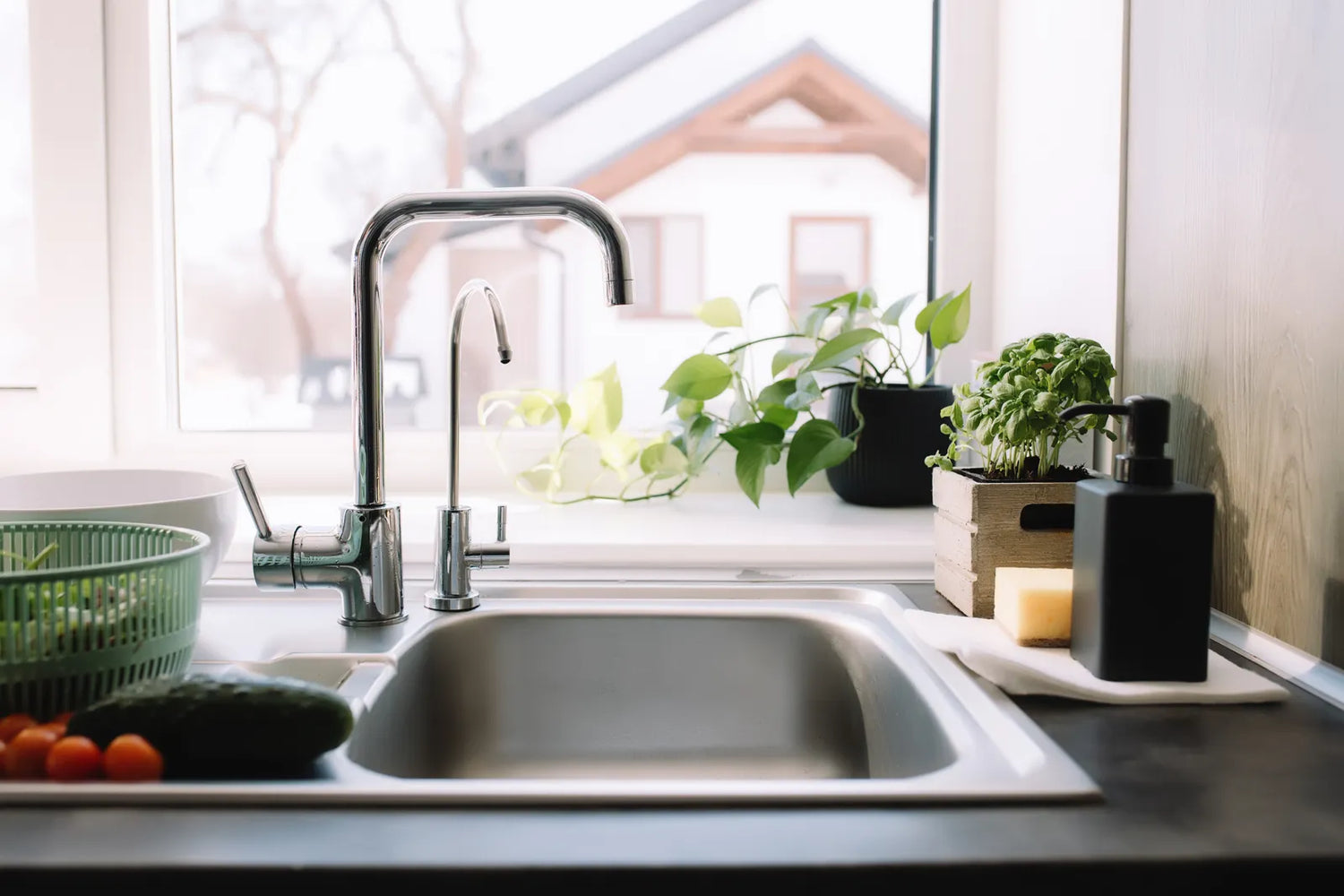
That is why “stainless steel kitchen sink that does not show water spots” is such a common concern. A sink made of stainless steel is easy to wipe and sanitize, but depending on the finish and your water, spotting may still be part of daily life. Shoppers who want an easy to clean kitchen sink often discover that managing water spots is a separate challenge from preventing stains. Stainless steel kitchen sinks are among the most popular choices precisely because their smooth surface keeps residue on top rather than letting it absorb.

Daily annoyances people miss
Many people discover these gaps between theory and reality only after purchase. Here are the most common ones.
Water marks still show
This is one of the biggest expectation gaps. A sink can be low maintenance in terms of stains and odor, yet still look messy by midday because of water marks.
Quartz-style surfaces may resist staining well but can still show light mineral haze or splash marks. Mineral deposits also accumulate around the sink faucet base, where spotting is especially visible and often overlooked during routine wipe-downs. Keeping the area around your sink—including the rim, faucet base, and backsplash—free of mineral haze requires wiping beyond the basin itself. Stainless may rinse clean fast, but a damp sink left to air dry in a hard water area will reveal droplets, streaks, or a dull film unless wiped. A fireclay sink often looks clean from a distance, but darker residue around the kitchen sink and drain or corners may still need attention.
So when homeowners ask how to choose an easy to clean kitchen sink, a better question is: do you want one that cleans easily, or one that maintains a tidy sink look even between wipe-downs? Those are often different priorities.
Will it stay easy daily?
An easy to clean kitchen sink often feels effortless when new. The better question is whether it still feels easy after months of coffee drips, greasy pans, utensil drops, and rushed cleanup. A consistent habit to clean your kitchen sink briefly after each use does more for long-term appearance than any premium surface treatment.
This can be annoying when the sink develops a “used” look that is not actually dirt but still makes you feel like it needs more cleaning. Fine scratches, dull patches, visible spotting, or subtle wear can all change the experience. The sink may still be sanitary, but it no longer looks freshly cleaned after a quick wipe.
That is where some buyers feel mild regret. Not because the sink performs badly, but because “easy to clean” did not also mean “easy to keep looking polished.”
Long-term upkeep realities
Once you own an easy to clean kitchen sink, certain maintenance patterns emerge that buyers rarely anticipate. These are the expectations that often diverge from what buyers imagine.
Gentle cleaning may be required
Some easy-clean surfaces stay easy only if you avoid abrasive pads, scrubbing powders, and strong chemical cleaners.
A light scrub with a non-abrasive sponge and mild cleaner is usually all that tougher spots need. While these surfaces may resist stains well, harsh cleaning can dull the finish or damage it over time. For stubborn spots, sprinkle baking soda lightly over the wet surface and let it sit for a minute or two—baking soda lifts residue gently without scratching most popular finishes. For mineral buildup and hard water haze, white vinegar diluted in warm water is an effective and finish-safe option for most non-stone sinks. Once that happens, the sink may hold film more easily or show wear faster.
This is important to consider before purchase. If your routine already uses mild soap and a soft cloth, this is not a limitation. If you prefer aggressive cleaning, the surface may become harder to maintain.

Scratches can change appearance
Scratches do not usually make a sink harder to clean, but they can change how clean it looks after wiping.
Over time, visible wear such as fine scratches or dull areas can make a sink appear dirty even when it is not. This creates a gap between "truly clean" and "looks clean," which affects how easy the sink feels to maintain in daily use. Food debris and grease allowed to sit in the sink overnight dry and harden, turning a quick rinse into a scrubbing task.
So while cleaning effort may stay the same, the visual result after each wipe can change with wear.
Are antimicrobial sink surfaces worth it in kitchens?
For most households, not as much as marketing may suggest.
An antimicrobial treatment does not replace normal cleaning, rinsing, or drying. Based on the Centers for Disease Control and Prevention (CDC), routine cleaning with soap or detergent is usually sufficient to remove most germs, while disinfection is only necessary in specific high-risk situations. It also does not stop food residue, grease film, or mineral deposits from building up. Those are the things that usually make a sink feel dirty in daily life.
So if you are deciding based on maintenance, antimicrobial features rarely change the cleaning routine enough to justify choosing a sink just for that reason. In many homes, this ends up being ignored if the household still has to wipe, rinse, and avoid residue like usual.
When easy-clean is overkill
kitchen needs a premium easy-clean surface. Consider these scenarios where paying extra may not deliver real benefits.
Low use may not justify it
If your kitchen is used lightly, paying more attention to easy-clean features may not change much. A sink used mainly for hand washing a few cups or rinsing fruit does not face the same buildup as one used for heavy cooking every day.
This is often unnecessary if cleanup is already easy in your home. A lot of buyers imagine future mess that never really happens.
Deep styles can add wiping
A sink can be made from an easy-care material and still be annoying because of its shape. Very deep basins can mean more bending, more interior wall area to wipe, and more visible droplets on the sides.
That does not make deep sinks bad. But if your main goal is less daily effort, maintaining a deep sink using a standard sponge or cloth takes more passes than a shallower basin.
This can be annoying when you choose based on capacity and later realize the sink takes longer to dry and wipe than expected.
Is it worth paying more?
The answer depends on whether your household will actually benefit from lower day-to-day friction.
For busy families, investing in an easy to clean kitchen sink with the right surface and shape can meaningfully reduce daily annoyance. A kitchen sink is often the highest-contact fixture in the home, so reducing friction there has a real cumulative impact. For households that cook a lot, a low maintenance sink means it's easy to keep the space sanitary and odor-free—not just about appearance. It can mean less odor retention, less residue buildup, and less scrubbing around corners.
The easiest habit is to clean your sink briefly after each heavy use rather than letting grease and residue dry and harden. Some so-called easy-clean sinks still need regular drying to look tidy. Paying more does not always remove that habit.
So when comparing low maintenance kitchen sink materials, focus less on marketing claims and more on your actual routine:
-
Do you cook heavily?
-
Do you leave dishes to air dry?
-
Do you have hard water?
-
Do you want a sink that hides mess, or one that wipes down fast?
-
Will everyone in the home clean it gently?
Those answers matter more than the label. A different sink shape or material could suit your home far better than whatever is marketed as "premium."

Before You Choose
-
Check your water quality. Hard water can make even easy-clean sinks show spots and haze.
-
Be honest about your cleaning habits. If you use abrasive cleaners, some finishes may become harder to maintain.
-
Think about appearance after use, not just stain resistance. A sink can be clean but still look marked.
-
Look closely at corner shape and basin depth. These affect daily wiping more than many buyers expect.
-
Decide whether you want fast cleanup or a surface that hides marks better. Those are not always the same.
-
Consider how often the sink is truly used. In a low-use kitchen, premium easy-clean features may not matter much.
FAQs
1. What is the easiest kitchen sink material to keep clean?
The easiest materials to keep clean are typically smooth, non-porous surfaces like stainless steel and ceramic (including fireclay). To clean a porcelain sink effectively, follow similar principles—its glazed surface resists stains well, though it requires gentle care to avoid chipping or crazing over time. A copper kitchen sink, by contrast, demands more specialized maintenance to preserve its patina and is not well-suited for households seeking a low-effort daily cleaning routine. These prevent residue from soaking in and allow quick wipe-downs with mild soap, warm water, and a soft cloth. However, “easy to clean” does not always mean “always looks clean,” since some materials may still show water spots or light marks after drying.
2. Do stainless steel sinks show water spots?
Yes, stainless steel sinks can show water spots, streaks, and mineral marks—especially in homes with hard water. They are easy to rinse and sanitize, but may not look spotless unless dried after use. The finish matters: brushed finishes tend to hide spots better than polished ones, but regular wiping or drying is often still needed for a clean appearance. The simplest way to clean your stainless steel sink daily is with dish soap and a soft cloth, always wiping in the direction of the grain. For those who prefer cleaning stainless steel sinks naturally, a mixture of white vinegar and warm water handles most mineral marks without chemicals. If you prefer a commercial stainless steel cleaner, apply it sparingly and always follow with a rinse and dry to avoid residue buildup.
3. Are Horow ceramic sinks easy to maintain?
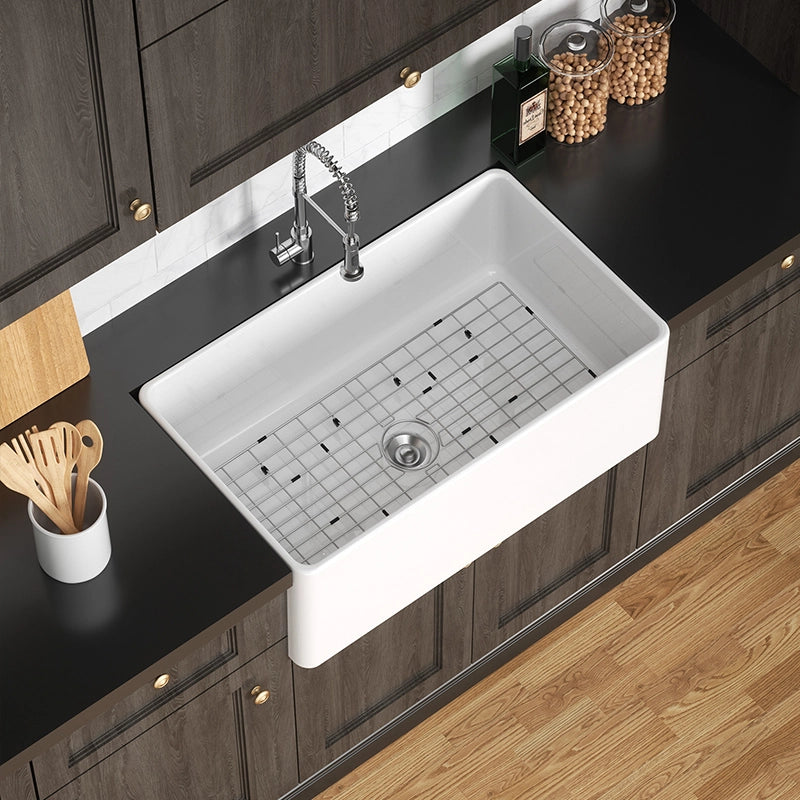
Yes—the Horow easy-clean sink features a smooth, non-porous glazed surface that resists stains and does not absorb odors, making it generally easy to maintain with routine care. Most daily mess can be cleaned with mild soap and water. However, like other ceramic sinks, they may still show residue near the drain or corners and typically require gentle cleaning to preserve the finish over time.
4. Are stainless steel or ceramic sinks easier to clean?
Both are easy to clean, but in different ways. Stainless steel is quick to rinse and practical for heavy use, though it may show water spots and scratches. Ceramic sinks resist staining and often look cleaner after wiping, but may require gentler care. The easier option depends on your priority: faster cleanup (stainless steel) or a cleaner-looking surface after use (ceramic).
References


Leave a comment
This site is protected by hCaptcha and the hCaptcha Privacy Policy and Terms of Service apply.