
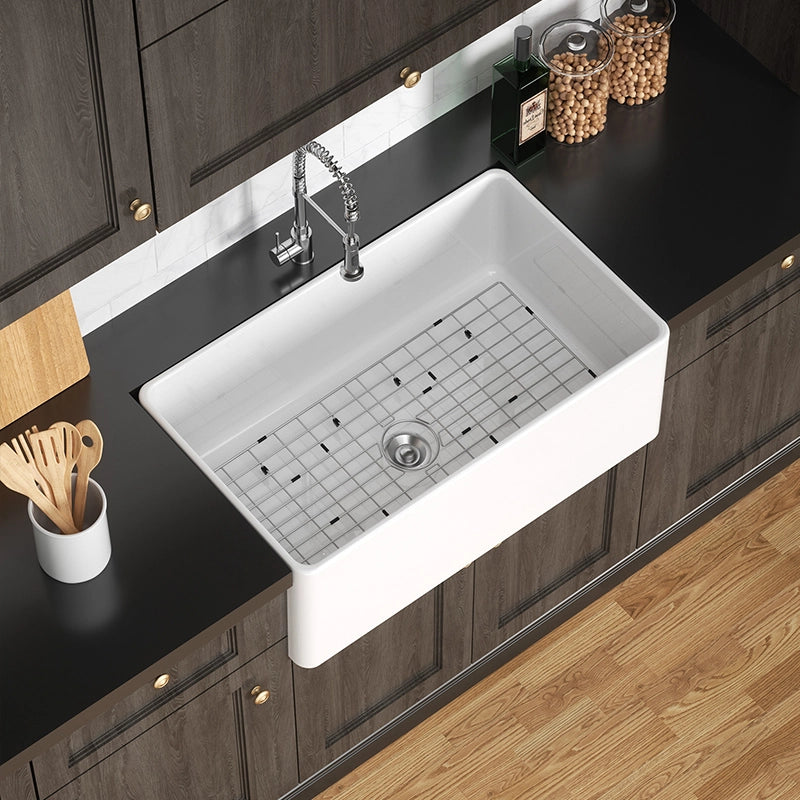

If your biggest kitchen headache is washing large pots and pans—stockpots, roasting pans, canning pots, sheet pans—then a deep kitchen sink for pots can be a smart upgrade. But depth is also one of the easiest ways to buy a sink you end up disliking every day.
Here’s what usually matters in real homes: you’re not choosing “deep vs not deep.” You’re choosing a daily working height and reach, a bowl layout, and how much space you’re willing to give up inside the cabinet. The right choice depends less on your kitchen style and more on your body comfort and cooking habits.
Decision Snapshot: deep kitchen sink for pots vs the main alternatives
Before diving into the details, use this quick snapshot to match your needs with the right sink profile. It cuts through the noise and points you toward your best option.
Choose a 9–12" deep single-bowl if…
-
You wash oversized pots/pans often and want one big soaking/stacking zone
-
You frequently cook big meals and the sink becomes a “holding area” to keep counters clear
-
You’re comfortable reaching down (often easier for taller adults)
-
You’re okay giving up some under-sink storage
This is the most common “deep kitchen sink for pots” win.
Choose a 6–8" (or accessible-style 6–6.5") sink if…
-
Reach and back comfort matter more than pot depth
-
Shorter adults, kids helping with dishes, or aging-in-place is part of your plan
-
You mostly rinse glasses/plates and only occasionally wash very large cookware
-
You need every inch of space under the sink
Choose an offset or low-divide double bowl if…
-
You want wash/rinse separation without losing all large-pot capacity
-
Two people often use the sink at once (prep + cleanup)
-
You like a “dirty side / clean side” workflow but still need one side that can handle a big pan
Choose a workstation / industrial-style large basin sink if…
-
You want accessories (cutting board, colander, drying rack) to clear counters
-
You want a big bowl, but the real goal is better workflow, not maximum depth
-
You’re willing to keep track of accessories so they don’t become drawer clutter
If you’re torn between two options, the deciding factor for most households is next.
The trade-off that decides most homes: pot capacity vs reach-and-comfort
If you're stuck between two good options, this single trade-off is likely your tiebreaker. Understanding it will prevent the most common regret.
When “extra deep sink” stops feeling premium and starts causing daily hunching
A deeper basin lowers the “work” area where your hands scrub and rinse. That’s great for containing tall pots, but it also means more bending at the waist and more shoulder reach.
What I’ve seen in practice: households buy a 10–12" extra deep sink because it looks impressive in photos, then the shortest main user starts avoiding hand-washing because it’s uncomfortable. The sink becomes a “soak bin,” and everything else gets rinsed quickly and tossed into the dishwasher just to avoid leaning in.
A good mental test:
-
If you already dislike leaning into a deep laundry tub, be cautious with 10–12" kitchen sinks.
-
If you’re fine washing a heavy stockpot in a deep tub today, a 9–10" bowl will probably feel normal.
How depth changes splashing and soaking (great for roasting pans, worse for quick glass rinses)

Does a deep sink prevent splashing?
It often helps, especially when:
-
You’re spraying the inside of a tall pot
-
You’re rinsing a greasy roasting pan
-
Water is hitting dishes from higher up
A deeper sink gives water more “drop room” before it rebounds out. That said, splashing is also driven by faucet aeration, spray pattern, and water pressure. A deep basin can still splash if:
-
The faucet is mounted too high for the bowl
-
You use a hard jet stream directly onto a flat pan
Soaking is where depth really shines. Roasting pans and sheet pans sit lower, stay wetter, and are less likely to bump into a divider.
But there’s a trade: quick rinses (cups, kid dishes, small bowls) often feel slower because your hands are working further down.
Is an extra deep sink a bad idea if you’re short or have back pain?
It can be. Not always, but it’s the most common regret pattern.
If you’re shorter, have back pain, or expect kids to help at the sink, a 10–12" deep basin can mean daily hunching. A 9" deep sink is often the “deep enough for pots but not annoying” middle ground. For perspective, the U.S. Access Board’s ADA guidelines emphasize clear knee space and manageable reach ranges in kitchen design—principles that directly inform why sink depth is a critical comfort and accessibility factor.
Two ways people reduce the ergonomics problem:
-
Choose a slightly shallower bowl (7–9") and pair it with a smart layout (single bowl or low-divide).
-
Keep the depth, but avoid other reach adders (like farmhouse/apron-front plus a thick counter plus a tall faucet).
The hidden compromise: deeper basin means less usable cabinet space below
Deep sinks don’t just take space in the bowl—they take space below the counter where you store:
-
Tall trash pull-outs
-
Recycling bins
-
Water filtration systems
-
Pull-out organizers
-
Cleaning caddies
Even a few inches can decide whether those items fit comfortably or feel jammed around the drain and trap.
If your under-sink cabinet already feels tight, treat extra depth as a real cost—not a small detail.
One big bowl or two zones? Picking the layout that matches your cooking habits
Depth gets the pans in, but layout determines how your kitchen flows when the cooking starts. Choose wrong, and even a deep sink can feel frustrating.
Deep single bowl vs double bowl: stacking lobster pots vs sharing the sink during prep

Deep single bowl (best for large pots and pans):
-
No divider blocking a roasting pan
-
Easier to soak long items
-
Better for stacking after a big dinner
-
More flexible for odd-shaped cookware
This is why many frequent cooks love a deep single bowl kitchen sink: the sink becomes a “big work tub.”
Double bowl (best for separation):
-
Wash on one side, rinse on the other
-
One side can hold a colander or drip-dry area
-
Lets two people work at once more easily
But many double bowls struggle with oversized cookware because each bowl is smaller. Even if the sink is “large,” the divider can be the problem.
Low-divide/offset double bowl as the “both people win” option for mixed households
If you like the idea of two zones but still want space for washing large pots, look at:
-
Low-divide double bowl (divider sits lower)
-
Offset double bowl (one side larger than the other)
These layouts often handle a big pan in the larger bowl while still giving you a smaller “utility bowl” for rinsing produce or keeping a prep area running.
In mixed households—one person cooks a lot, another does quick daily cleanup—this is the compromise that usually keeps everyone happy.
Can a deep single bowl replace a double bowl in a busy kitchen?
Sometimes, yes—if you build separation in other ways:
-
Use a large bottom grid so dishes don’t sit in grime
-
Use a removable colander or dish pan as a “second zone”
-
Use the dishwasher as your “rinse/hold” side
But if two people truly use the sink at the same time (one prepping vegetables, one cleaning), a single bowl can become a bottleneck unless the sink is very wide and the workflow is good.
Workstation sink vs plain large basin sink: do built-ins solve clutter or create new pinch points?
A workstation sink is basically a large basin sink with built-in ledges/rails for accessories like:
-
Cutting board
-
Colander
-
Drying rack
-
Bottom grid (almost always included)
These can be great for small kitchens because they give you a place to prep without taking counter space. But they can also create new annoyances:
-
Accessories have to be stored somewhere
-
The rails can slightly reduce usable width for very large pots
-
If you don’t like “stuff in the sink,” it may feel busy
A helpful way to decide:
-
If you already use a cutting board over a bowl, a workstation sink will feel natural.
-
If you prefer an empty, open sink at all times, go with a plain large basin.
Cost and value: where the money goes (and when it’s wasted)
A higher price tag doesn't always mean better performance for your needs. Let's break down where the real value lies—and where you can confidently save.

16 gauge stainless steel vs 18 gauge: paying for dent resistance and noise control vs paying for marketing
For a stainless steel kitchen sink, gauge matters—but not in the way listings sometimes imply.
-
16-gauge stainless steel is thicker than 18-gauge.
-
Thicker steel tends to dent less and can sound less “tinny,” especially in a deep single bowl where water hits hard.
That said, sound control depends a lot on pads/coating under the sink and how it’s installed. A well-insulated 18 gauge sink can be quieter than a poorly insulated 16 gauge sink.
A practical buying rule:
-
If you’re hard on your sink (cast iron pans, heavy stockpots), 16-gauge stainless steel is a safe choice.
-
If you want to keep costs reasonable, an 18 gauge stainless steel sink can still be perfectly fine if it has good sound padding and a bottom grid.
Stainless steel kitchen sink vs fireclay sink (farmhouse): durability feel, chip risk, and long-term looks
Stainless steel (common for deep sinks, undermount, workstation):
-
Pros: lighter, less likely to crack, easier installation, forgiving day-to-day
-
Cons: scratches, water spots, can be noisy if poorly insulated
Fireclay (common for farmhouse/apron front sinks):
-
Pros: solid feel, hides water spots, classic look, often looks “clean” even when not wiped
-
Cons: can chip if you drop something heavy, can be very heavy, and corners/edges can stain if neglected
A lot of homeowners love fireclay for the look, but for pure “deep kitchen sink for pots” function, stainless steel usually wins because it’s more forgiving with heavy cookware.
Industrial kitchen sink upgrades (thicker steel, oversized bowls): when “restaurant style” is real value vs overkill
People shopping for an “industrial kitchen sink” usually mean:
-
A large, open basin
-
Extra depth
-
Heavy-duty stainless steel
-
Simple shapes that are easy to spray out
Real value shows up if you:
-
Cook often with large pots and pans
-
Use the sink like a work area (filling, draining, washing, ice baths)
-
Want durability and don’t care about keeping it scratch-free
It’s overkill if you:
-
Mostly use the dishwasher
-
Rarely wash oversized cookware
-
Don’t want to wipe down stainless regularly
Paying for accessories: bottom grid, cutting board, and drain ledge—useful workflow or drawer clutter?
Common sink features that matter:
-
Bottom grid: protects the basin and keeps dishes slightly raised. Great for stainless steel and for deep sinks where you stack heavy cookware. Downside: it’s one more thing to lift when cleaning.
-
Cutting board / colander: helpful if you actually prep at the sink. If you don’t, they become clutter fast.
-
Drain ledge or drying rack: helpful in small kitchens, but check if it blocks a big pot from sitting flat.
My advice: pay for accessories only if you can picture using them weekly. Otherwise, choose a simpler sink and buy one removable accessory later if you miss it.
Fit and space realities that push buyers toward (or away from) deep
This is where “looks good online” meets “will it work in my kitchen?” Ignoring these measurements is the fastest route to an expensive return.
33-inch base cabinet and beyond: when “large” fits on paper but fails in real cabinets and plumbing
Many homeowners shopping for a 33 inch sink assume it will fit any 33" sink base. Not always.
Why it fails:
-
The cabinet size is often the outside dimension; inside is smaller.
-
Undermount clips, sink rails, and thick countertops need extra room.
-
Plumbing and disposal placement can conflict with deep, wide bowls.
Before you buy, measure:
-
Inside cabinet width (actual clear opening)
-
Front-to-back clearance
-
Where the drain needs to land relative to your trap and disposal
-
Any braces or corner blocks inside the cabinet
If you’re near the limit, you may need to size down or choose a different mounting style.
Will a deep undermount sink steal too much under-sink storage?
It can. A deep undermount sink often reduces usable cabinet height more than expected because:
-
The sink sits under the counter (so the top rim is higher up)
-
The bowl drops lower into the cabinet
-
Many deep bowls have thick sound pads and a deeper drain area
If you’re planning:
-
Pull-out trash
-
Water filtration
-
A large disposal
-
Slide-out shelves
…a deep undermount sink may force compromises. This doesn’t mean “don’t do it.” It means check the cabinet plan first.
Faucet reach, pull-down spray, and ergonomics: the mismatch that makes deep bowls annoying
A deep sink can feel great—or strangely awkward—depending on the faucet.
Watch for these mismatches: Short faucet reach + wide single bowl…
Weak pull-down spray: cleaning a deep basin and tall pots becomes harder. Pairing your deep sink with a high-efficiency faucet, such as those certified by the EPA’s WaterSense program, ensures you’re not compensating for poor reach with excessive water flow, addressing both ergonomics and conservation.
In practice, a deep single bowl sink works best with:
-
A pull-down faucet with a confident spray
-
Enough spouts reach to hit near the center of the basin
-
Controls that are easy to use with messy hands
Dishwasher and workflow: when one giant basin creates a bottleneck in tight kitchens
A large single bowl is great—until the kitchen is tight and someone needs to:
-
Load the dishwasher
-
Rinse produce
-
Wash hands
If the sink is the only “wet station” and it’s full of dishes soaking, everything stops.
Two ways to avoid this:
-
Choose a low-divide double bowl so one side stays clear.
-
If space allows, add a small prep sink elsewhere (even a compact one) so the main sink can stay in “pot mode.”
Installation choices that change the experience more than people expect
How your sink is installed isn't just a technical detail—it. It fundamentally changes how the sink feels to use and clean every single day.
Undermount vs drop-in/top mount: effective depth, wipe-in convenience, and edge-cleaning trade-offs
Undermount sink:
-
Pros: easy to wipe crumbs straight into the sink; cleaner counter look
-
Cons: often feels effectively deeper because your hands go below the counter; installation is more involved
Drop-in / top mount sink:
-
Pros: simpler installation and replacement; works with more countertops
-
Cons: rim catches grime; you can’t wipe straight in as easily
If you want a deep sink for pots, undermount is popular because it pairs well with a large single bowl and keeps the counter edge clean. But if you’re replacing an old sink without changing countertops, top mount may be the practical choice.
Farmhouse/apron front vs standard front: reach distance vs statement look (especially with extra depth)
Farmhouse (apron front) sinks change ergonomics in two opposite ways:
-
The front apron can reduce how far you lean over the counter edge
-
But many farmhouse sinks are also large and deep, and the overall reach down can still be a lot
If you’re considering extra deep + farmhouse, be extra honest about comfort. The look is great, but the daily reach matters more than the photo.
Workstation undermount vs traditional undermount: ledges and rails that can help or hinder tall stockpots
Workstation rails are helpful when:
-
You want a cutting board over the basin
-
You like a drying rack that drains into the sink
-
You want to rinse produce without using counter space
They can hinder when:
-
You regularly wash very wide stockpots that need every inch of top opening
-
You dislike cleaning around extra edges
-
You don’t want to store sink accessories
If your main goal is space for washing large pots, prioritize bowl opening size and shape first, then decide on workstation features.
Remodel vs replacement constraints: when your counters/cabinets force the “alternative” choice
During a kitchen remodel, you can plan cabinet size, sink base, and faucet placement to suit a deep sink. During a replacement, you’re often stuck with:
-
Existing cutout size (especially with drop-in)
-
Existing plumbing height and location
-
Drain height conflicts
-
Water line clearance issues on narrow cabinets
-
-
Cabinet limitations
If you’re replacing only the sink, the “best” deep sink on paper can be the wrong choice if it forces expensive countertop work or creates under-sink clearance problems.
Maintenance, annoyance risks, and long-term ownership differences
Deep sinks are not hard to live with, but they have predictable annoyances. It’s better to choose with eyes open.
Deep sink cleaning reality: bottom scrubbing, residue lines, and why tight corners aren’t always your friend
A deeper bowl means you scrub lower. If the sink is also very wide, the bottom corners can be a reach.
Corner shape matters:
-
Tight corners look modern but can hold grime if you don’t rinse well
-
Slightly rounded corners are easier to wipe quickly
If you want “easy to clean” more than a sharp modern look, don’t chase the tightest corner radius available.
Noise, scratching, and water spots: stainless steel deep sink expectations vs fireclay expectations
Stainless steel sink:
-
Expect visible scratches over time, especially in a single bowl used with heavy cookware
-
Water spots show more depending on your water hardness
-
Noise varies a lot: thicker steel and good undercoating help
Fireclay sink:
-
Often looks cleaner between wipe-downs
-
Can chip with heavy impacts
-
Needs gentle care around edges to avoid staining over years
If you want a sink that ages “quietly” without much visible wear, fireclay can be appealing. If you want a sink that shrugs off heavy use, stainless steel usually fits better.
Bottom grid vs no grid: protecting the basin vs making daily wipe-down harder
A bottom grid is one of the most useful add-ons for a deep single bowl, because it:
-
Protects the bottom from pot scuffs
-
Keeps dishes above dirty water
-
Reduces noise from clanking cookware
But it also:
-
Collects bits underneath
-
Adds a step when wiping the bowl
If you hate extra parts, skip the grid and accept normal wear. If you’re buying a 16-gauge stainless steel deep sink and want it to look decent longer, a grid helps.
Which is easier to live with long term: deep stainless steel single bowl or fireclay farmhouse?
For most “wash large pots” households:
-
Deep stainless steel single bowl is easier day-to-day (lighter, more forgiving, workstation options, fewer chipping worries). For households where looks and a cleaner visual matter most:
-
Fireclay farmhouse can feel nicer between cleanings, as long as you’re careful with heavy impacts.
Common mistakes to avoid when buying a deep kitchen sink for pots
-
Buying maximum depth instead of the right depth. More depth is not always better. For many homes, 9–10" is the sweet spot.
-
Ignoring who uses the sink most. The main user’s comfort should outweigh occasional holiday pot-washing.
-
Choosing a double bowl when your real pain is big cookware. Dividers are the enemy of roasting pans.
-
Not planning under-sink storage. Deep undermount sinks can crowd disposals, filters, and trash pull-outs.
-
Pairing a deep sink with the wrong faucet. Short reach or weak spray makes deep bowls annoying.
-
Overpaying for accessories you won’t store well. Workstation parts are great if you’ll actually use them weekly.
-
Assuming cabinet size labels guarantee fit. Always measure the true interior space and plumbing layout.
Before You Buy checklist (quick, worth doing)
-
Measure the inside width of your sink base cabinet (not the label size).
-
Decide your target depth: about 9–10" for frequent large pots, 6–8" for comfort-first households.
-
Pick layout based on behavior: single bowl for big cookware, low-divide/offset double for shared workflows.
-
Check under-sink plans: disposal, filtration, trash pull-out, and how much height they need.
-
Confirm mounting type you can support: undermount vs drop-in/top mount based on your counters and replacement limits.
-
Match the faucet: enough spout reach, pull-down spray quality, and not overly tall for the bowl.
-
Choose material with your habits: stainless steel for heavy-use forgiveness, fireclay for look and “clean” appearance.
FAQs
1. Is a 10-inch deep sink too deep for ergonomics?
It really comes down to who’s using it most often and for how long. For many households, that 10-inch mark is where comfort starts to get personal. If the primary user is on the shorter side or deals with back pain, a 10-inch deep kitchen sink can definitely feel like a stretch—literally. You might find yourself hunching over just to rinse a glass. That’s why a 9-inch deep sink often hits the sweet spot for washing large pots and pans; it gives you ample space for washing your biggest stockpot without making everyday tasks a chore. The key is to prioritize the daily comfort of the main user over the once-a-year holiday turkey roaster.
2. What is the deepest kitchen sink available?
You’ll typically find residential extra deep sink models ranging from about 10 to 12 inches. Some industrial kitchen sink or commercial-style options might push past that, but here’s the real talk: once you go beyond 10–12 inches, the practical downsides for a home kitchen stack up fast. We’re talking about a serious reach that can strain your back, major compromises on under-sink storage space for your trash pull-out or water filter, and potential plumbing headaches. So while you can find very deep sinks, the deepest kitchen sink that makes sense for real homes is usually in that 10- to 12-inch range, with 9-10 inches being the most practical for balancing pot capacity with daily comfort.
3. Does a deep sink prevent splashing?
A deep sink or extra deep sink does help minimize splashing, especially in specific scenarios like when you’re spraying out the inside of a tall pot or blasting grease off a roasting pan. The extra basin height gives water more “drop room” before it rebounds, so it’s less likely to jump the edge onto your counter. This is a key benefit of a large basin sink or spacious single bowl. However, it’s not a magic forcefield. Splashing is also heavily influenced by your faucet. If you have a very tall faucet or a harsh, jet-like stream, even the deepest large basin sink can still splash. For the best results, pair your deep kitchen sink with a well-matched, pull-down spray faucet.
4. Do deep sinks require special plumbing?
Not usually “special” plumbing, but they often require more planning. The main issue is that the deeper the sink, the lower the drain outlet sits. This can reduce the precious vertical clearance you have under the sink for a garbage disposal, a water filtration system, or a tall pull-out trash bin. It might mean your plumber has to adjust the trap arm or you might need shallower disposal. This is especially important to check if you’re looking at a deep undermount stainless steel sink or an industrial kitchen sink, as their bowls protrude further down. Before buying, always check the sink’s drain height and compare it to what’s already in your cabinet.
5. Can a deep sink fit under standard height counters?
Yes, from a pure installation standpoint, a deep sink can physically fit under standard height counters. Standard countertops are designed to accommodate a range of sink depths. However, the real question isn’t about fit—it’s about comfort and ergonomics. A standard height counter (usually 36 inches) with a deep undermount sink means your hands are working even lower than the counter surface. For a taller person, this might be fine. But if the main user is shorter, that lower hand position can feel uncomfortably low and lead to hunching. So, it “fits,” but it may not “feel good.” Always consider the user’s height and comfort over just the technical specifications.
6. Are farmhouse sinks automatically better for washing big pots?
No, farmhouse sink or apron front models aren’t inherently better for large pots and pans—it all depends on depth and ergonomics. Many farmhouse kitchen sinks are extra deep, which can strain short users or those with back pain, even if they offer ample space for washing large cookware. Opt for a 9–10 inch deep fireclay sink or stainless steel farmhouse model if you want style and function, and compare it to undermount workstation or industrial kitchen sink options that may offer better under-sink storage and easier installation for a kitchen remodel.
References


Leave a comment
This site is protected by hCaptcha and the hCaptcha Privacy Policy and Terms of Service apply.