
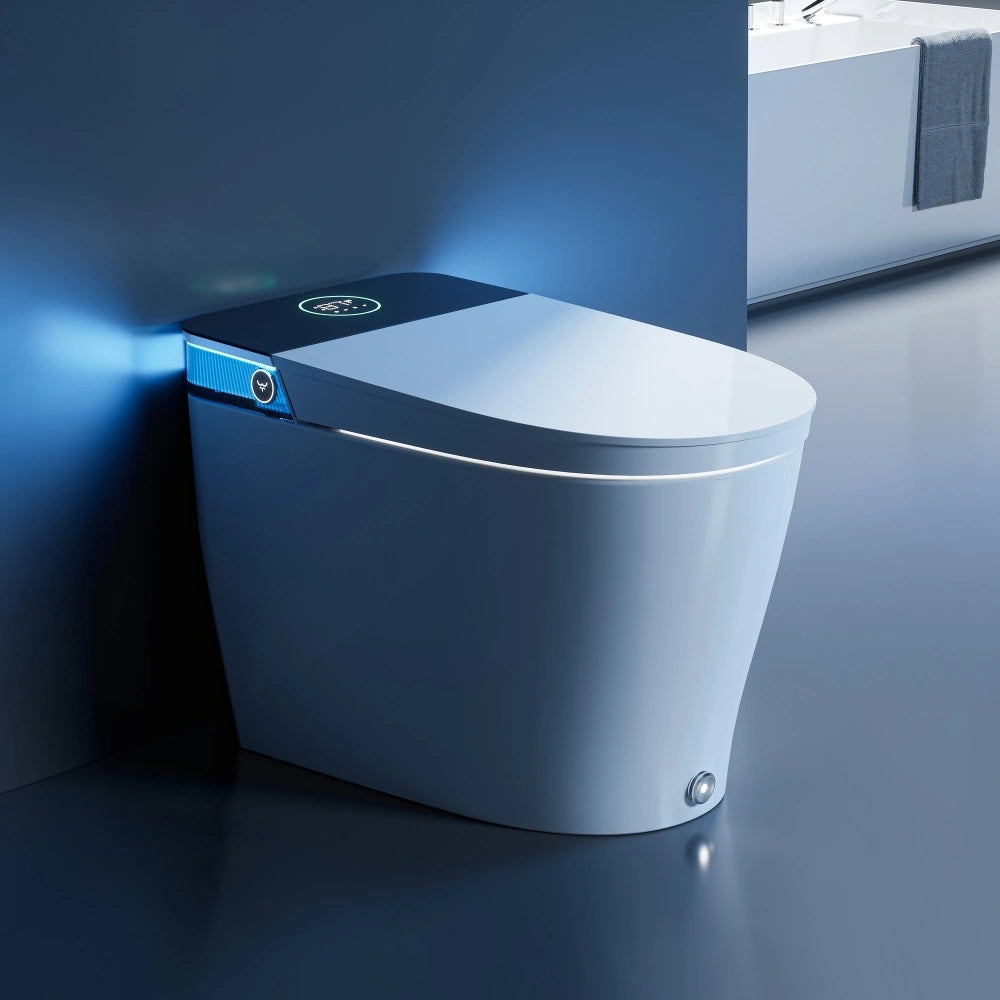
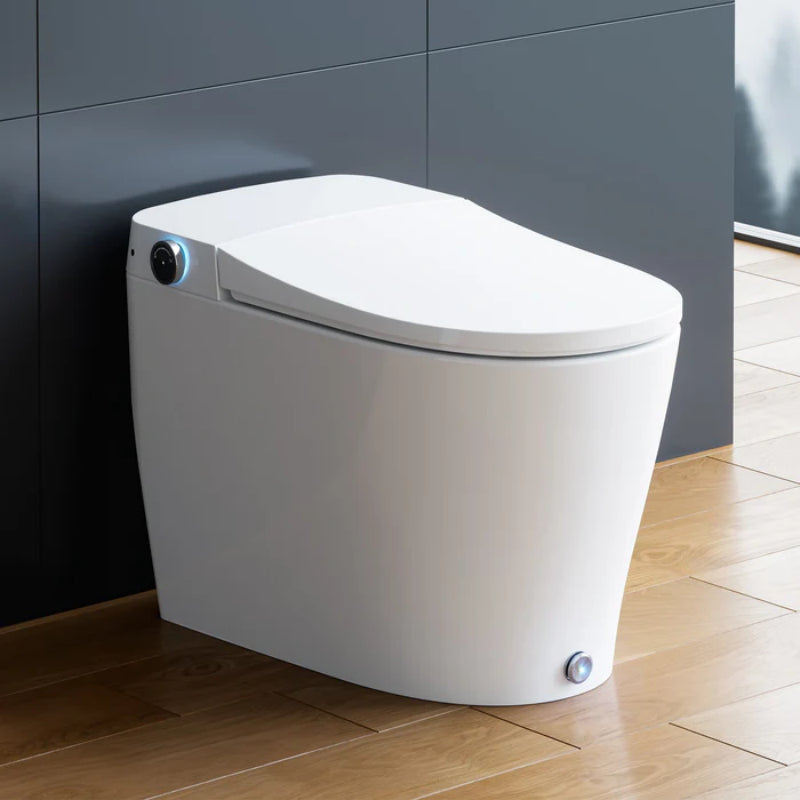
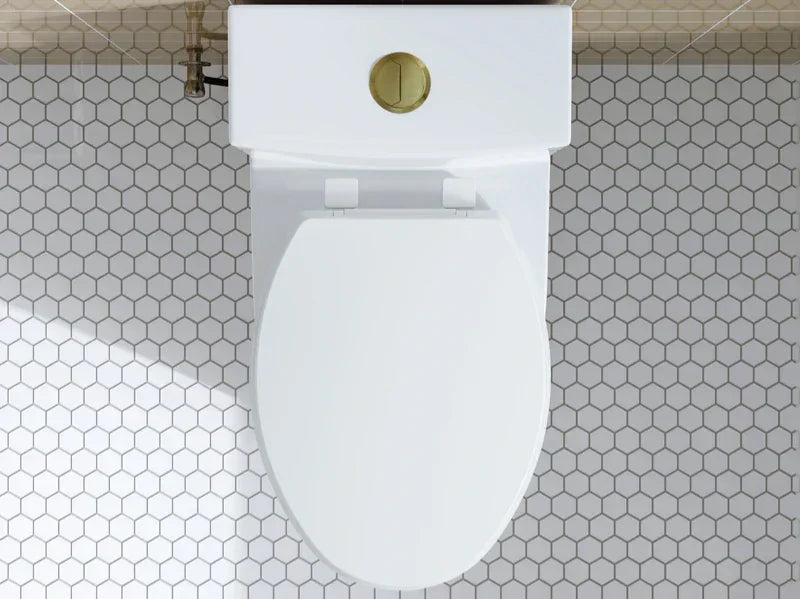
A compact elongated toilet is for the very common “small bathroom problem”: you want the comfort of an elongated bowl, but a standard elongated toilet sticks too far into the room and crowds the door, vanity, or your knees.
This guide is built to help you make a confident first choice—compact elongated vs round-front vs standard elongated vs wall-hung—without guessing, and without learning plumbing the hard way.
Decision Snapshot: choose compact elongated toilet vs the alternatives
Looking for the right toilet for your small bathroom? The compact elongated toilet, short depth toilet, or space saving toilet—find your fit with key insights on clearance, comfort, and even small elongated bidet compatibility.
Choose compact elongated toilets if…
Ideal for tight 5x7 or 5x8 bathroom layouts, a compact elongated toilet delivers the familiar elongated seating feel without the full-size depth. It keeps toilet projection under 28–29 inches (far shorter than standard elongated models at 30–32 inches), making it perfect for adults or tall users who want comfort but lack space for a full-size option. Keep in mind that its compact bowl may require slightly more cleaning attention than deeper alternatives.
Choose a round-front toilet if…
When door swing or vanity clearance is your top concern, a round-front toilet is the shortest front-to-back option to maximize space. It’s a practical choice for families with kids—many prefer its smaller seat opening for daily use—and fits seamlessly in very tight powder rooms where simplicity is key.
Choose a standard elongated toilet if…
If you have the space and don’t need to chase inches, a standard elongated toilet offers the most natural elongated experience. It features a larger bowl area and bigger water spot, translating to fewer cleaning compromises and less streaking—ideal for anyone who dislikes frequent scrubbing.
Choose a wall-hung toilet (space saving toilet) if…
As a top-tier space saving toilet, wall-hung models provide maximum floor clearance for easy mopping, perfect for extremely tight bathrooms. They boast a modern design that opens up floor space, but require more complex installation and access planning—best for those who prioritize layout and style over hassle-free future service.
Rule of thumb: If your layout is “almost works” for elongated, a compact elongated toilet is usually the sweet spot. If your layout is “barely fits a toilet,” go round-front or wall-hung.
The trade-offs that actually separate compact vs standard elongated vs round
Choosing between a compact elongated toilet, short depth toilet, or space saving toilet boils down to key trade-offs: comfort, clearance, cleaning, and bowl wash—here’s what matters for your small bathroom.
Comfort vs clearance: elongated feel with less projection (but not full-size comfort)
A compact elongated toilet balances two priorities: the elongated seat shape that offers more thigh support than round models, and the front-to-back depth savings critical for tight spaces.
Unlike a standard elongated toilet, its seat opening stays elongated (aligning with adult preferences) but the shortened bowl may feel tighter in the front, with a slightly more upright sitting position depending on design.
For most homeowners, it delivers “good enough” elongated comfort—especially compared to round-front—but those switching from full-size elongated in roomy baths may notice the difference.
Cleaning vs space: the small water spot issue (and why it matters)
Many compact and short depth toilet designs feature a smaller water spot (water surface area), which can lead to more bowl streaks, frequent brushing, and quicker visibility of skid marks.
This isn’t universal for all compact elongated toilets, but it’s a common pattern to consider.
If you hate scrubbing, don’t overlook this trade-off for the sake of saving a few inches—those happiest with compact models are often willing to accept slightly more cleaning effort for better clearance.
Splash and bowl wash coverage: what you risk when rinse doesn’t reach the front/rim well
In a compact bowl, the flush system and rim wash are more critical due to limited water circulation space.
Short bowls may struggle with rinse patterns that miss the front, rim wash gaps that create residue “dead zones,” or flushes that clear solids but leave high streaks.
This doesn’t make compact elongated toilets inferior—instead, prioritize models with thoughtful flush system design, reliable bowl coating claims, and proper clearances to avoid settling for a weak-performing option that “barely fits.”
Is a compact elongated toilet worth it in a small bathroom, or will round save more space?
For pure space savings, round-front toilets typically outperform compact elongated models, as their naturally shorter bowls save more depth.
But a compact elongated toilet shines when you only need 1–3 inches of depth reduction and refuse to sacrifice adult or guest comfort by settling for a round seat.
If you need to save significant depth (e.g., a door hits your knees), round-front or a wall-hung space saving toilet is the smarter choice to avoid compromise.

Cost & value: where the money goes (and where regret happens)
Compact elongated toilets can cost more than you expect, even when they don’t flush better than standard models. That’s because “small” often means specialized molds, special seats, and less standardization.
One-piece vs two-piece in compact depths: pay more for wipe-down, not necessarily better flush
Two-piece compact elongated toilets (with separate tank and bowl) are budget-friendly and easier to move and install in tight bathroom spaces, thanks to their lighter individual pieces. However, the gap between the tank and bowl creates extra spots for dust and grime to accumulate.
One-piece models, by contrast, form a single unit that’s simpler to wipe down and visually sleeker—ideal for small bathrooms where space feels premium. They do come with trade-offs: heavier weight makes positioning trickier, they cost more, and internal repairs can be cumbersome if access is tight.
Remember, a one-piece design doesn’t guarantee a better flush. If your main goal with a short depth toilet is fitting into a tight layout, don’t default to one-piece—choose it only if easy cleaning matters more than price or service simplicity.
Budget compact models vs proven quality: why “small” increases quality risk
Specialized designs like compact elongated toilets (with short depth, unique seat shapes, or skirted bases) carry higher quality risks, especially with budget-friendly options.
Cheap compact models often suffer from ill-fitting seats (gaps, rocking, odd overhangs), unstable tank-to-bowl connections (in two-piece styles), poor glaze that stains easily, and hard-to-source replacement parts—since they’re “close but not standard.”
Paying a bit more for a quality compact elongated toilet isn’t about luxury; it’s about avoiding daily annoyances. Investing in better craftsmanship ensures proper seat fit, consistent glazing, and more reliable performance—key for a space saving toilet you’ll use for years.
Dual-flush vs single-flush power: avoid double flushing
For a compact elongated toilet’s small bowl, a reliable flush system is non-negotiable—you want waste cleared cleanly in one go.
Dual-flush models save water, but their “light” flush setting may not handle all household needs; frequent double flushing erases water savings and adds frustration.
Single-flush systems are simpler and favored by many homeowners for consistent performance. The label doesn’t matter as much as real-world use: choose dual-flush if your household has mostly liquid waste and you prioritize water conservation, or lean into single-flush if you have heavy usage, kids who flush toys, or hate dealing with incomplete flushes.
The hidden cost of replacements: proprietary seats, odd tank lids, and parts availability when you shop online
Compact elongated toilets often use proprietary parts—unique seat shapes, special hinge spacing, or tank lids that only fit the exact model—making replacements a hassle, especially when shopping online.
Before buying, verify if the seat is a standard elongated style or a special compact design, and check if replacement seats are readily available.
Also, confirm if common internal parts (fill valves, flush valves) are standard or proprietary.
A “great deal” can turn costly if you can’t find a matching seat in a few years, forcing you to replace the entire toilet to fix a wobbly seat.
Fit, space, and usage realities that push buyers one way or the other
This is where most first-time buyers get burned: they measure the room, but they don’t measure it in the way toilets actually occupy space.
Measure like it’s a remodel: depth from wall, front clearance, and door swing
To ensure a compact elongated toilet fits your small bathroom, take three key measurements before buying.
Start with the rough-in distance (wall to bolts)—most homes are set for 12 inches, but this number isn’t always exact.
Next, calculate your total usable depth (wall to front limit), which could be dictated by the door swing arc, vanity edge, shower glass, or needed knee space in narrow aisles.
Finally, check side-to-side clearance: while codes often require 15 inches from the toilet centerline to a wall, meeting this minimum can still feel cramped in tight spaces.
Even a short depth toilet might crowd your bathroom if it has a rounder tank or thicker seat/lid that bumps the door. Some compact elongated toilets save depth in the bowl but have a tank that sits farther forward, erasing space gains. For example, a bathroom might seem roomy until you open the door and realize the edge blocks knee space—here, a compact model saving just 1–2 inches won’t help, and a round-front or wall-hung space saving toilet is better.
Rough-in realities (12" isn’t always 12"): what short depth toilet specs miss
A “12-inch rough-in” means the toilet’s drain outlet is designed to sit 12 inches from the finished wall to the closet bolts, but real-world measurements often vary.
In older homes, uneven walls, extra drywall, baseboard thickness, or layered tile can make your “12-inch” rough-in measure 11 1/2 or 12 1/4 inches.
This discrepancy matters because a tight fit can push the tank away from the wall, adding unwanted depth to your compact elongated toilet—defeating the purpose of choosing a short depth model. To avoid this, measure from the finished wall (not baseboard) to the center of the closet bolts; if the toilet is already installed, use the base cap center.
If your measurement is off, pick a model that tolerates variation or prepare for a slightly larger projection.
Height decisions: standard vs chair-height vs ADA-compliant
Toilet height impacts comfort and stability, especially with a compact elongated toilet.
Standard height models (14–15 inches to the rim, no seat) work well for shorter adults and kids, as they let feet touch the floor for better posture.
Chair-height (16–17 inches to the rim) is preferred by taller adults, seniors, and those with knee/hip issues for easier sitting and standing.
ADA-compliant toilets typically fall in the chair-height range when paired with a seat, but full compliance depends on the entire setup.
For mixed households with tall adults and small kids, a chair-height compact elongated toilet offers adult comfort but may require a step stool for kids—plan for this upfront to avoid daily hassle.
Can compact elongated fit a small bathroom with a bidet seat (small elongated bidet) without stealing knee room?
Many homeowners add a small elongated bidet seat to their compact elongated toilet only to find the bathroom feels tight again.
Bidet seats can add front length (some extend past the bowl), back bulk (pushing the seat forward), and require an outlet for electric models—all of which eat into saved space.
To avoid surprises, first check if your toilet uses a standard elongated seat or a special compact design, as bidet compatibility varies. Look at the bidet’s overall length and overhang, then measure from the wall to the toilet’s front and subtract your needed knee/standing space.
If you’re shopping for a short depth toilet due to a tight bathroom, a small elongated bidet setup is possible—but expect it to use some of the saved depth. If you only gained 1–2 inches with the compact model, that margin can disappear quickly.
When compact elongated is the wrong choice (common real-home failure patterns)
A compact elongated toilet suits tight bathrooms, but it’s not ideal for every household. Understanding these common pitfalls helps you avoid regret when choosing between it, short depth toilet and space saving toilet options.
If you hate scrubbing: smaller water area can beat the space savings
If you prioritize a low-maintenance, easy-to-clean bowl, a compact elongated toilet may not meet your expectations. This type of short depth toilet often has a smaller water spot, and its bowl wash may fail to cover every area effectively.
When your household has messy flushes or uses thicker toilet paper that demands stronger rinsing, the cleaning burden increases significantly.
If extra bowl brushing will frustrate you and you have enough space, a standard elongated toilet is the far better choice, as it avoids this common compromise of compact models.
If your home has mixed users: kids, elderly, and “quick users”
A compact elongated toilet sits in the middle of round-front and standard elongated designs, which can create mixed-user conflicts in a shared bathroom.
Children often find round-front toilets or standard-height models more comfortable and easier to use.
Elderly family members may favor chair-height options, along with a stable seat and a bowl that flushes reliably. Some guests also expect the full comfort of a standard elongated bowl, and may find compact versions feel too short. If this is your daily-use main bathroom and you’re only optimizing space instead of solving a real clearance problem, a standard elongated toilet usually keeps all users satisfied.
If stability/seat feel matters: seat overhang and “doesn’t match the bowl” annoyances
The shortened bowl of a compact elongated toilet can lead to seat fit issues that ruin daily comfort.
Some seats will have odd overhangs, fail to align with the bowl’s curve, or shift noticeably during use, creating an unpleasant experience even if the toilet itself is high-quality.
To lower this risk, you should confirm that the seat is specifically designed for the exact bowl shape of your chosen model. It’s also wise to select compact elongated toilets with easily sourced replacement seats, and opt for quick-release hinges if cleaning around the seat base is important to you.
What happens if you choose compact elongated and later regret the cleaning trade-off?
Many homeowners find their compact elongated toilet fits perfectly and resolves clearance issues, and they enjoy its elongated comfort at first.
Over time, however, they often grow frustrated with the need for more frequent bowl brushing than they initially anticipated.
If you worry about this regret will apply to you, consider alternative options.
If space permits, choose a standard elongated toilet; if floor space is your core concern, a wall-hung space saving toilet is a great pick
If maximum clearance is essential, a round-front toilet with more even front-to-back bowl washing will serve you better.
The main alternatives—and the exact moments they win
This breakdown helps you choose between compact elongated toilet, round-front, standard elongated and space saving toilet, with clear scenarios for every small bathroom layout.
Round-front toilet: when inches matter more than comfort
A round-front toilet is the best choice when a door swings directly into the toilet zone and blocks normal use.
It also works well when a vanity cuts into front clearance and you need the shortest possible projection to maintain usable space.
This style is ideal for powder rooms where users won’t sit for long periods, and for homes where kids use the toilet daily.
A round toilet saves space simply without the design quirks of a compact elongated toilet, though many adults, especially tall users, find it less comfortable than elongated options.
Standard elongated toilet: the “set-and-forget” pick when you have room
A standard elongated toilet is perfect when your bathroom has enough depth so the toilet does not crowd doors, vanities or walkways.
It provides a larger bowl and often a bigger water spot, which leads to fewer cleaning compromises and less frequent scrubbing.
This type also offers the most universal seat replacement options, making long-term maintenance simple.
If you’re remodeling and can adjust the layout slightly, it’s often worth creating space for a standard elongated toilet so you don’t need to shop for short depth or compact models at all.
Wall-hung toilet (space saving toilet): maximum clearance, but more constraints
As a top space saving toilet, wall-hung models save space in two key ways.
They can reduce the distance the toilet projects into the room, depending on the in-wall carrier system used, and they open the entire floor for easier mopping and cleaning.
A wall-hung toilet wins when you need every inch of floor space in an extremely tight bathroom.
It also excels when you want effortless floor cleaning and are already opening walls or able to plan for the carrier system during installation.
It is not the best choice if you want the simplest installation process possible.
You should avoid it if you prefer not to open walls, worry about future service access, or are unsure if your wall can support the required carrier system.
Elongated or round for a family bathroom with potty-training kids and adult guests?
In most family bathrooms, adults prefer the comfort of an elongated toilet, while potty-training kids often do better with a round-front model or a stable child seat insert.
The best compromise depends on how much space you have available.
If the bathroom is roomy enough, a standard elongated toilet paired with a kid seat insert satisfies both adults and children.
In a tight bathroom, a compact elongated toilet can work well, but you should plan for a child step stool and select a stable, well-fitting seat.
For a very tight bathroom, a round-front toilet keeps clearance straightforward and reduces the risk of adults bumping the door while helping kids.
This option removes the guesswork from space management in high-traffic family settings.

Maintenance, annoyance risks, and long-term ownership differences
Long-term upkeep varies widely among compact elongated toilet, short depth toilet, and space saving toilet models. Below are key maintenance realities to guide your durable, low-hassle choice for your small bathroom.
Rim, trapway, and bowl-coating realities: what stays cleaner over years
Rim wash design directly impacts long-term cleanliness, as some bowls deliver even rinsing while others leave a dry band near the front that collects residue.
Trapway size and shape influence clog resistance, but advertised specs don’t tell the full story; a compact elongated toilet with a well-engineered, consistent flush system often performs better than models with impressive but impractical marketing numbers.
Bowl coatings help resist staining, yet they cannot replace a strong, complete rinse pattern, and hard water will still leave mineral lines over time.
If your home has hard water, small bowls tend to show mineral rings much sooner. A compact elongated toilet with a naturally smaller water spot may develop a mineral ring that sits higher on the bowl, making it more noticeable and requiring more frequent cleaning.
Seat and bidet compatibility: quick-release, soft-close, and nonstandard replacements
In small bathrooms, minor annoyances become far more obvious, so choosing the right seat and checking bidet compatibility is essential for daily comfort.
Look for quick-release seats to simplify deep cleaning around the base and hinges, and soft-close seats if your household often drops the lid, as they reduce noise and prevent chipping.
Always confirm whether your short depth toilet uses a standard elongated seat or a custom compact seat, as this determines future replacement ease.
If you plan to install a small elongated bidet, first verify that the mounting surface is flat and long enough for proper fit. Plan ahead for water supply routing and, for electric models, ensure nearby outlet access, and expect that the bidet seat will alter the front clearance of your compact elongated toilet.
Leak and service access: one-piece vs internal repairs, and skirted base trade-offs
One-piece compact elongated toilets offer smoother, faster wipe-downs, but their integrated design can make internal component repairs more difficult due to limited access.
Two-piece toilets simplify tank replacement if cracking occurs, and their standard parts are familiar to most plumbers, lowering service hassle.
Skirted bases create a clean, modern look and are easy to wipe clean, but they can restrict bolt access during installation, adding complexity to the setup process.
This does not mean you should avoid any particular style. Instead, use it to prioritize your needs: select one-piece or skirted designs for easiest cleaning, two-piece non-skirted models for simplest service, or a model that balances both cleaning convenience and maintenance accessibility.
Which option is easiest to live with long term?
The most livable long-term choice depends on your space needs and lifestyle priorities.
A compact elongated toilet is the most convenient when you genuinely need the space savings of a short depth toilet, and you select a unit with reliable bowl wash performance and standard, easy-to-find replacement parts.
A round-front toilet offers the simplest fit and clearest clearance, making it ideal for powder rooms and bathrooms frequently used by children.
A standard elongated toilet provides the most hassle-free, set-and-forget daily use when you have enough bathroom space to accommodate its full depth.
A wall-hung space saving toilet delivers the easiest floor cleaning and most open space feel, but it is only practical if you accept the more involved installation and future service access requirements.
How much space does an elongated toilet save?
This question is often asked in reverse, because a standard elongated toilet does not save space—it actually occupies more room in your bathroom.
Switching from a standard elongated toilet to a compact elongated toilet typically saves around 1–3 inches of forward projection into the room, with exact savings varying by specific model design.
Changing from a standard elongated toilet to a round-front model usually delivers greater space savings, at about 2–4 inches of reduced projection.
Opting for a wall-hung space saving toilet can create both visual and physical space savings, though the exact projection reduction depends on the in-wall carrier system and bowl combination you choose.
Saving just 2 inches can make a meaningful difference in a small bathroom. It can mean a door swings clear without obstruction, knees no longer hit the vanity when in use, or your layout meets required front clearance for accessibility goals. In a compact bathroom, every single inch matters significantly.
What is the shortest elongated toilet available?
If you’re looking for the shortest front-to-back design that still maintains an elongated shape, many compact elongated toilets fall in the mid-to-high 20-inch range for total depth, with some short depth toilet models measuring as little as 26–27 inches.
There are two important cautions to keep in mind while shopping. First, depth specifications can differ based on measurement standards, whether manufacturers measure to the front of the bowl or the front of the seat. Second, your actual rough-in distance and wall flatness can push the toilet slightly forward, which may make a labeled “short” toilet feel longer in your actual bathroom space.
If your priority is finding a true short depth toilet, start by defining your own maximum allowable depth measurement first. Then filter available compact elongated toilet models to meet that number, leaving a small safety margin to account for real-world installation variables.
Do compact elongated toilets fit in a small apartment bathroom?
In most cases, compact elongated toilets do fit well in small apartment bathrooms, and this is actually one of their most ideal and common applications—provided you take accurate measurements before purchasing.
In small apartments, the most frequent layout conflicts involve a door that swings into the toilet zone, a shallow vanity that crowds necessary knee space, or tight side clearance next to a bathtub or shower enclosure.
A compact elongated toilet effectively resolves the knee space problem while preserving the comfortable elongated seating feel preferred by most adults.
If door swing interference is your primary space issue, a round-front toilet may be a more effective solution than a compact elongated model. Adjusting the door swing direction can also provide a better space-saving outcome in such scenarios.
Before You Buy checklist
Measure rough-in from finished wall to bolt center (don’t assume it’s exactly 12 inches).
Measure your maximum allowed depth from wall to the front limit (include door swing).
Confirm whether the toilet uses a standard elongated seat or a special compact seat.
Decide on height (standard vs chair-height/ADA-style) based on who uses the bathroom daily.
If adding a bidet seat, check bidet length/overhang and outlet access before choosing the toilet.
Prefer toilets with standard, easy-to-source internal parts (fill valve/flush valve) to avoid parts headaches.
If you hate scrubbing, prioritize strong bowl wash coverage and be cautious with very small water spots.
Double-check side clearance and comfort (not just minimums) so the room doesn’t feel cramped.

FAQs
1. Is a compact elongated toilet as comfortable as standard?
A compact elongated toilet is more comfortable than round-front models, but not identical to standard elongated ones. It retains the elongated seat shape for adult comfort, yet its shortened bowl makes the front area feel slightly tighter, a common trade-off for its short depth space-saving design as a CP fixture.
2. What is the shortest elongated toilet available?
The shortest elongated toilets are CP compact elongated toilet models built as short depth space saving solutions. Most fall in the mid-to-high 20-inch depth range, with premium short depth versions measuring just 26–27 inches, ideal for extremely small bathroom layouts.
3. Round vs compact elongated: which is better?
Round-front and compact elongated toilet choices suit different small bathroom needs. Round-front is better for maximum space savings and tight door clearances, while the CP compact elongated model is superior when you want elongated comfort without the full-size projection.
4. How much space does an elongated toilet save?
A standard elongated toilet doesn’t save space, but a CP compact elongated toilet cuts forward projection by 1–3 inches versus standard models. This short depth space saving difference is enough to fix door swing and vanity clearance issues in small bathrooms.
5. Do they fit in a small apartment bathroom?
Yes, a compact elongated toilet fits most small apartment bathrooms perfectly as a CP short depth space saving option. It resolves common cramped layout problems while keeping elongated bowl comfort, as long as you take basic rough-in and depth measurements before installation.
References


Leave a comment
This site is protected by hCaptcha and the hCaptcha Privacy Policy and Terms of Service apply.