



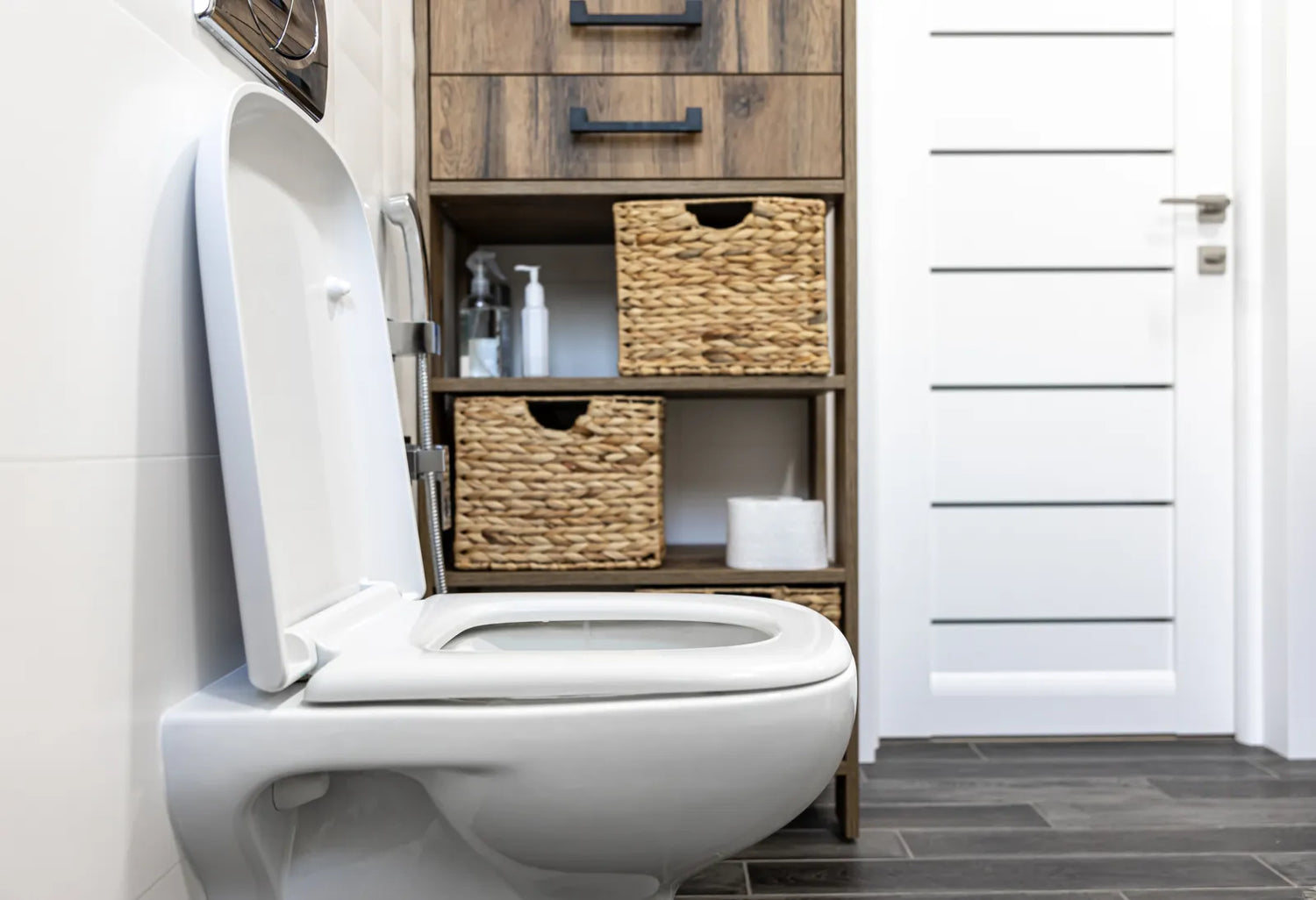
Learning how to clean a bidet toilet properly starts with understanding nozzle maintenance — the most overlooked yet most important part of the fixture. Keeping your bidet nozzle clean is essential for hygiene and spray performance, but many homeowners are surprised by what regular maintenance actually involves according to this cleaning bidet nozzle guide. This guide lays out practical guidance and realistic expectations for nozzle cleaning — from how often to do it and what tools to use, to the hidden friction points like tight toilet clearance, hard water scale, sediment buildup, and the extra steps required for electric seats. You will learn what “self-cleaning” really means, when vinegar works (and when it doesn’t), and how to decide whether the upkeep fits your routine. Read on before you assume nozzle maintenance will be effortless.
Decision Snapshot: quick answer
This bidet cleaning guide focuses on nozzle cleaning and maintenance expectations — specifically, how to clean a bidet spray for better toilet hygiene. It is worth following if you want the hygiene benefit and are willing to do light manual upkeep, especially in a bathroom with decent access and normal water quality. Unlike wiping down the toilet bowl, nozzle maintenance involves a few extra steps that are easy to overlook but matter for long-term performance. It is often not worth the hassle if your toilet is cramped, your water is very hard, or you expect “self-cleaning” to mean no cleaning at all.
Key distinction: Hard water scale (white, chalky mineral deposits) is different from sediment or debris (grit, sand, or particles). Scale typically requires vinegar descaling to dissolve. Sediment, however, may not respond to vinegar at all — it often points to a need for checking or cleaning inlet filters, supply line strainers, or other service points. If you ignore sediment and only descale, weak spray can persist.

Best for low-maintenance hygiene
This makes sense if you use the bidet often and want a cleaner nozzle with less day-to-day attention. A retracting nozzle with a cleaning routine usually works well for homes where people will actually wipe it down, check for weak spray, and descale it when needed , following simple manual bidet nozzle cleaning steps.
This usually becomes useful when the bidet is part of your daily routine. Frequent use makes hygiene maintenance more worth the effort.
Skip if access is tight
You should probably skip the idea that nozzle cleaning will be “easy” if the space around your toilet is cramped. If you have less than a couple inches of side or rear clearance, even simple cleaning can turn into awkward reaching, scraped knuckles, and skipped maintenance.
In many homes, this ends up being ignored if the nozzle is hard to reach.
Skip if hard water is severe
If your home has hard water, calcium, or sediment issues, nozzle cleaning becomes more than a quick wipe. It can mean regular vinegar descaling, checking spray holes, and dealing with weak or crooked spray after a few months.
This is often unnecessary if you want a setup that truly asks very little of you over time.
Cleaning bidet nozzle guide: who it fits
Whether a nozzle cleaning routine makes sense depends largely on your habits and home setup. Not every household will find the same balance between effort and benefit, so let's look at different scenarios.
Good for manual cleaners
If you already do routine bathroom upkeep, this is usually a reasonable fit. People who do well with routine cleaning are not perfectionists — they are just willing to do a small task every few weeks before buildup gets bad.. They are just willing to do a small task every few weeks before buildup gets bad.
That matters because even a self-rinsing nozzle still needs manual care. A quick rinse cycle does not remove all residue, mineral film, or the grime that forms around seams and tracks.
If you are comfortable with basic tasks like unplugging an electric seat, extending the nozzle for access, wiping with a soft cloth dampened with warm water, and occasionally using vinegar for cleaning bidet nozzles with hard water buildup, then the upkeep is manageable — and every step is straightforward.
Useful for germ-conscious users
Some homeowners care less about appearance and more about hygiene. For them, a cleaning bidet nozzle guide is worth following because it sets a realistic standard: rinse cycles help, but they are not the whole job.
This is where many people get the wrong idea. Self-cleaning bidet nozzle maintenance guides often sound like the nozzle takes care of itself. In real use, that only means it rinses before or after use. It does not mean bacteria film, scale, or hidden grime never forms.
If that gap would bother you, a regular cleaning routine is useful because it keeps expectations honest.
Less useful for occasional use
If the bidet is rarely used, the cleaning effort can feel a little pointless. The nozzle may stay tucked away most of the time, and the owner may forget the routine entirely.
This can be annoying when the maintenance schedule asks for more attention than the actual bidet use seems to justify. In many homes, occasional-use fixtures are the first ones people stop maintaining well.
Hidden trade-offs
Before committing to a bidet, it helps to understand the gap between marketing claims and day-to-day reality. Several key misconceptions can leave owners frustrated when performance doesn't match expectations.
Self-cleaning is not enough
As this cleaning bidet nozzle guide emphasizes, one of the biggest regrets is assuming a self-cleaning nozzle means no manual cleaning. It does not.
A built-in self-rinse cycle mainly helps with fresh surface residue. Manual cleaning, when done consistently, can be quick and easy — but only if you do not let buildup accumulate to the point where more intensive effort is required. It does very little against mineral scale, dried splatter, grime around the nozzle housing, or biofilm that builds slowly on damp surfaces. It does very little against:
-
mineral scale
-
dried splatter
-
hard water residue can accumulate over time
-
regular wiping helps prevent stubborn buildup
-
-
grime around the nozzle housing
-
biofilm that builds slowly on damp surfaces
That is why homeowners often start searching for how to clean a bidet nozzle safely only after the spray weakens or starts aiming oddly.
If you want the hygiene benefit, the trade-off is simple: self-cleaning reduces work, but does not remove the need for work. To properly clean a bidet nozzle, you need to go beyond what the rinse cycle provides and address mineral film, biofilm, and housing residue manually.
Hard water changes the experience
Hard water can make a “low maintenance” nozzle feel much less low maintenance. Mineral deposits collect around spray ports and seams, especially when water dries repeatedly on the same small parts. Based on research from NCBI, mineral content and impurities in water can contribute to buildup and affect how water interacts with surfaces over time, which is why hard water can quickly turn a low-maintenance nozzle into a recurring cleaning task.
This is when people start asking about removing mineral buildup from bidets — usually the answer is mild descaling with vinegar or another manufacturer-safe cleaner, but the key point is not the cleaner itself. The key point is that hard water turns cleaning into a recurring task, not a rare one.
Bidet nozzle cleaning for hard water and calcium deposits is one of the biggest expectation gaps. If your sinks, showerheads, or kettle collect scale fast, your nozzle probably will too , a point made clear in any cleaning bidet nozzle guide.
What happens after six months?
The first few weeks are usually easy. The nozzle looks clean, retracts smoothly, and the spray feels normal. The friction tends to show up later.
Around the six-month mark and beyond, problems can include weak spray, uneven spray direction, sluggish extension, residue near the housing, and a slight odor if cleaning has been skipped.
Biofilm builds slowly, and because the nozzle often retracts out of sight, it is easy to miss until performance changes. That is why signs your bidet nozzle needs cleaning or maintenance often show up as function problems before visible dirt.

Real-world cleaning friction
The mechanics of cleaning look straightforward on paper, but physical constraints often derail even well-intentioned maintenance routines. Several practical barriers can make a simple task feel genuinely difficult.
Can you reach the nozzle?
This matters more than most guides admit. Whether you have a bidet seat or a bidet attachment installed under an existing toilet seat, the first real-world question is the same. Before worrying about manual bidet nozzle cleaning steps, ask if your hand can actually reach the nozzle area comfortably. Before worrying about manual bidet nozzle cleaning steps, ask if your hand can actually reach the nozzle area comfortably.
Some toilets leave very little room behind or beside the seat. That makes it harder to:
-
wipe around the nozzle housing
-
inspect the spray holes
-
clean around a retractable bidet spray nozzle
-
remove the seat if deeper cleaning is needed
Beyond nozzle access, check these service points before you assume cleaning will be simple:
-
Shut-off valve — can you comfortably reach and turn the water supply off and on?
-
Behind-toilet connectors — are the water supply line, hose, and bidet inlet fitting accessible for inspection or tightening?
-
Filters or strainers — if your model has an inlet filter or debris screen, can you reach it for periodic cleaning?
A cleaning routine only works if all these points are easy enough to access and repeat — and if you can plumb the connections without struggle. Poor access to the valve or filter often turns minor maintenance into a skipped chore , contradicting what a cleaning bidet nozzle guide would recommend.
Retracting parts trap grime
Retractable nozzles stay cleaner than exposed ones, but they also create hidden places where grime can sit. The housing opening, seams, and tracks can trap moisture and residue.
This can be annoying when the visible part of the nozzle looks clean, but the area around it is not. Homeowners often clean only the tip and forget the surrounding slot where buildup starts affecting movement.
If you are learning how to clean a bidet seat nozzle with a toothbrush or cloth, use that same care around the nozzle opening, not just on the nozzle itself — a key tip from this cleaning bidet nozzle guide.
Triggering extension is awkward
One of the more annoying tasks is figuring out how to extend the bidet nozzle for cleaning (often called triggering the nozzle to protrude). Depending on your model, this may be simple — or it may require a special cleaning mode, a button sequence, or a brief manual extension while the unit is off.

This is where people get into trouble. Forcing the nozzle out, pulling too hard, or trying to clean it while it retracts can damage the mechanism.
For electric or electronic bidet seats, add these preparation steps before any cleaning:
-
Confirm reachable outlet/GFCI access — make sure the power cord and outlet are easy to reach in an emergency or during unplugging.
-
Safely unplug the seat — always disconnect power before any wet cleaning or nozzle manipulation to avoid shock or damage.
-
Avoid water near powered controls — even a small splash into the side control panel or remote sensor area can cause malfunction. Use a damp (not wet) cloth and keep liquids away from electrical parts.
That is especially important if you are trying to understand how to clean a bidet toilet seat with an electronic nozzle without causing damage to the mechanism or controls. Electric models need a little more care. You may need to unplug the seat, use the approved extension method, and avoid soaking parts or using too much liquid near controls.
Maintenance risks over time
Over months and years, small problems tend to compound if not caught early. Understanding these warning signs and what triggers them makes all the difference between smooth operation and mounting frustration.
Clogs start with weak spray
A clog often starts with weaker pressure or a spray pattern that looks split, crooked, or uneven. This usually points to buildup in the spray ports, mineral deposits, or sediment starting to block the tip.
But weak spray isn’t always scale. If descaling with vinegar doesn’t restore pressure, suspect sediment or filter issues. Add these checks:
-
Inspect the inlet filter or strainer — many bidet seats have a small mesh filter where the water supply connects. Sediment can clog it without any visible scale on the nozzle.
-
Check supply line connectors — debris from old pipes can lodge at the bidet’s water inlet fitting.
-
Flush the supply line — if sediment is present, disconnecting and briefly running water into a bucket can clear particles before they reach the nozzle.
Preventing bidet nozzle clogs usually comes down to staying ahead of this early. Light cleaning is much easier than trying to restore a badly clogged nozzle later.
If your water has visible sediment or your fixtures clog often, this issue is more likely. Rule of thumb: if vinegar doesn’t fix weak spray, your next stop is the filter, not more descaling , as detailed in this cleaning bidet nozzle guide.
Biofilm builds despite rinsing
A rinse cycle helps freshen the nozzle, but damp enclosed parts can still develop a thin film over time. According to the CDC, microorganisms can persist and grow in moist water environments and form biofilms on surfaces that are regularly exposed to water, which explains why even regularly rinsed nozzles may still develop buildup over time. Even a smart bidet equipped with UV sanitation still requires hands-on attention — a fact that surprises many owners who expect the technology to do all the work. This is one reason uv sterilization for bidet nozzles vs manual cleaning is often misunderstood.
UV technology may help reduce microbes on exposed surfaces, but it does not scrub off mineral scale, residue, or film. Manual cleaning still matters. A bidet with sterilization or heated water may feel like a luxury upgrade, but the manual maintenance expectations remain the same as a basic unit.
So if your goal is true cleanliness rather than just a comfort feature, assume some hands-on care is part of the deal.
Forcing movement can cause damage
What to avoid when cleaning a smart toilet bidet nozzle is mostly common sense, but it matters:
-
do not yank a motorized nozzle out of position
-
do not use abrasive pads
-
do not use bleach, harsh chemicals, or rough brushes unless the maker specifically allows it
-
do not spray water into electrical areas
-
do not scrape blocked spray holes with sharp objects
The best cleaners for smart toilets are usually not strong chemicals. It is a mild cleaner, soft cloth, soft toothbrush, and vinegar where safe for scale.
Damage often happens because people treat a delicate moving component like a sturdy bathroom fixture.
When it feels unnecessary
At some point, owners naturally ask whether the investment in maintenance actually justifies the benefit they receive. This question has different answers depending on your usage patterns and expectations.
Is it worth the upkeep?
For some households, yes. For others, no.
It is worth it when the bidet is used often, the bathroom is easy to work in, and the owner does not mind basic upkeep. In that situation, it is worth the invest of a few minutes, as the cleaning routine feels small compared with the comfort and hygiene benefit.
It feels unnecessary when use is rare, access is poor, and maintenance gets postponed. Then the feature becomes one more thing that needs attention — exactly the scenario this cleaning bidet nozzle guide helps you avoid.
UV still needs manual cleaning
Some people assume added sanitation features remove the need for manual cleaning. They do not.
Even if a nozzle has extra rinse or sterilizing functions, you still need to wipe, inspect, and descale it. The most reliable way to clean your bidet is simply to follow a consistent manual routine, regardless of what automated features the unit includes. If that sounds disappointing, it is better to know now than after buying into the “hands-off” idea.
Simple setups need less fuss
A lot of regret comes from choosing a feature for peace of mind, then realizing it creates a maintenance habit. If your goal is just occasional use with minimal thought, a nozzle cleaning routine may feel like more fuss than value , especially if you have to reinstall the seat after each deep clean.
The simplest way to clean the bidet nozzle is with a soft cloth and diluted vinegar on a regular schedule. How often should you clean a bidet nozzle? In normal conditions, a light wipe every week or two and a deeper check every month is reasonable. In hard water homes, you may need more frequent descaling. If that already sounds like a chore you will skip, be honest about that now.
Before You Choose
-
Check toilet clearance. If you cannot comfortably reach around the nozzle area, cleaning will likely be skipped.
-
Be realistic about your water. If you already fight mineral scale on fixtures, expect nozzle descaling to be routine. Staying ahead of mineral buildup helps ensure spray holes stay clear and the nozzle continues to perform properly.
-
Do not assume self-cleaning means maintenance-free. It only reduces some of the work.
-
Before assuming maintenance will be simple, physically confirm you can: reach and turn off the water shut-off valve, access any inlet filters or connectors for cleaning, and unplug the electric seat easily. If any of these is hard to reach or requires moving heavy fixtures, your cleaning routine will become much more difficult.
-
Confirm you can safely access power and shut-off points if the seat is electric or needs filter cleaning.
-
Ensure you are willing to inspect weak or crooked spray early, before buildup becomes a clog or retraction problem.
-
Plan on gentle cleaning only: soft cloth, soft brush, and vinegar when safe for the unit for a trouble-free experience.
These simple habits keep your bidet functioning reliably and are the most effective way to keep your bidet in top condition — maintaining a bidet in top condition requires consistency, not expertise.

FAQs
1. How often should I clean my bidet nozzle?
A light wipe every 1–2 weeks is typically enough for regular use, with a deeper inspection about once a month. If you live in a hard water area, you may need to descale more often to prevent buildup. Consistency matters more than intensity—small, regular cleaning prevents bigger issues like weak spray or clogging later. Following this schedule will ensure your bidet stays hygienic and fully functional between deeper maintenance sessions.
2. Does the bidet nozzle clean itself?
Not completely. “Self-cleaning” usually means the nozzle rinses itself before or after use, which helps remove fresh residue. However, it does not remove mineral scale, biofilm, or grime around the housing. Manual cleaning is still necessary to maintain hygiene and keep the spray functioning properly over time.
3. Why is my bidet nozzle spray weak?
Weak spray is often an early sign of buildup. Mineral deposits can clog spray holes, while sediment may block filters or inlet connections. If vinegar descaling does not fix the issue, the problem is likely debris in the filter or supply line rather than scale on the nozzle itself.
4. How do Horow nozzles stay clean?
Horow nozzles typically use retractable designs and rinse cycles to reduce exposure to dirt between uses. This helps limit surface residue, but it does not eliminate the need for manual cleaning. Regular wiping and occasional descaling are still required to prevent buildup in hidden areas like seams and nozzle openings.
5. Can germs grow on a bidet nozzle?
Yes, over time they can. Even with rinse cycles, damp and enclosed environments can allow biofilm to develop on the nozzle or surrounding housing. While not always visible, this buildup can affect hygiene and performance, which is why periodic manual cleaning is recommended to keep the nozzle hygienic and free of performance-affecting buildup.
6. How to prevent mineral buildup on bidet sprays?
The best approach is prevention through routine care. Wipe the nozzle regularly to reduce residue, and use mild vinegar descaling when safe for your unit. If your water is very hard, checking filters and keeping spray holes clear helps reduce buildup before it becomes a clog or affects spray performance.
References




Leave a comment
This site is protected by hCaptcha and the hCaptcha Privacy Policy and Terms of Service apply.