
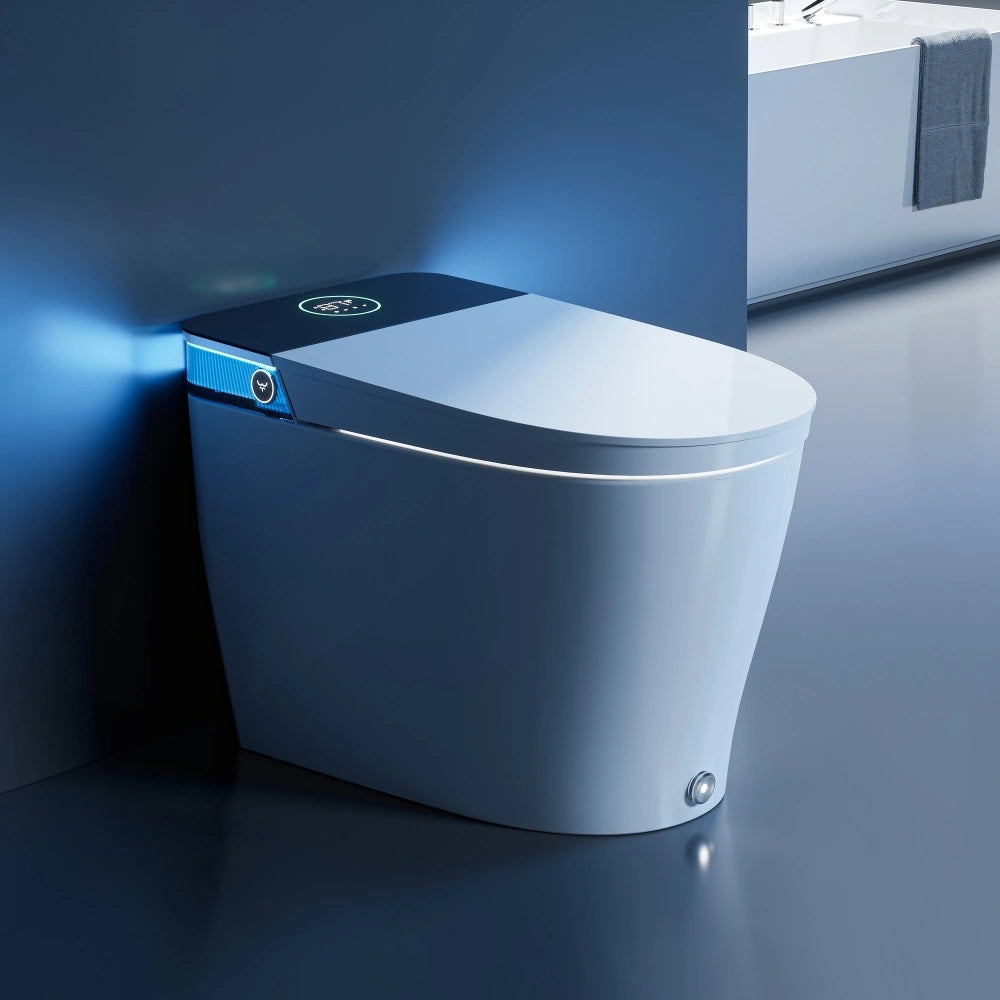
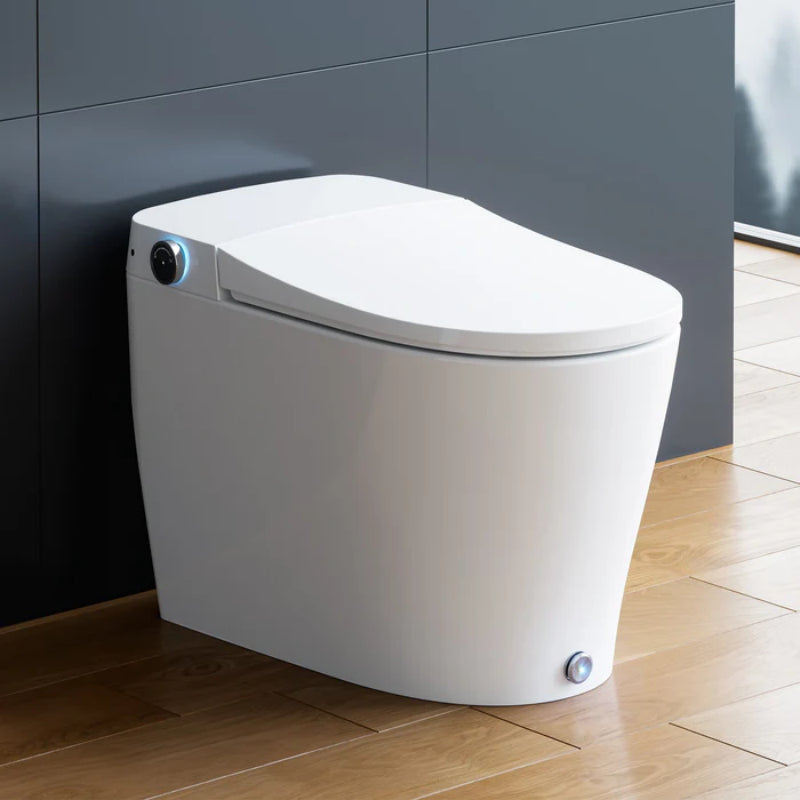
If you’re stuck between a bidet seat and an integrated smart toilet, the core choice is between a separate toilet and bidet setup or an all-in-one fixture.
In real homes, this choice usually comes down to four things: budget, installation, looks, and how permanent you want the upgrade to be.
A bidet seat offering transforms your traditional toilet by adding bidet functionality. An integrated smart toilet incorporates full bidet features, combines a toilet and bidet, and replaces the entire toilet with a one-piece unit. Both can wash well and cut down on a lot of toilet paper. But they are not equal in cost, install effort, or long-term repair risk.
Here’s the plain answer most buyers need: if you want the smart-bidet experience without remodeling, smart toilets incorporate full features vs bidet seats that retrofit easily. If you are already renovating and care a lot about a sleek one-piece look, built-in automation, and a premium finish, choosing bidet seat or an integrated model becomes clearer.
Decision Snapshot
Use this quick breakdown to explore bidet options and match your space, budget, and goals to find the right bidet for your home.
Choose a bidet seat
Choose a bidet seat if you want 80–90% of the smart-bidet experience on your existing toilet and you want to keep cost, risk, and install effort low.
This is usually the right fit if you:
-
Can you get a hot supply to the toilet without long exposed hoses or hard-to-inspect routing?
-
Will you be okay doing a quick first-spray check to avoid a surprise temp?
-
Is your household okay with knobs getting moved (multiple users), or will that cause frustration?
-
Do you have hard water or known sediment issues that may mean more maintenance?
-
Do you have a clear, reachable spot for the valve where it won’t be bumped or buried?
Avoid a bidet seat if the add-on look will bother you every day, or if your current toilet has odd compatibility issues that make fit uncertain.
Choose an integrated smart toilet
Choose an integrated smart toilet if you are remodeling and want a seamless one-piece look with more hands-free features.
This is usually the right fit if you:
-
are already replacing flooring, plumbing, or fixtures
-
want auto flush, auto lid, deodorizing, night light, and a cleaner one-piece aesthetic
-
care a lot about the visual difference between an add-on and a built-in unit
-
are comfortable paying more upfront and accepting more complex repairs later
-
plus post-warranty repair/parts/service dependence and higher downtime stakes
Avoid it if you are only chasing basic bidet functionality. In many homes, that turns into paying several times more for features you may not use much.
Choose an attachment or sprayer
Choose a bidet attachment or handheld sprayer if your main goal is simple: use less toilet paper for the lowest cost.
This works best if:
-
you do not need warm water, drying, or electronics
-
you have no outlet nearby
-
you want minimal commitment
Skip this route if comfort matters more than price.
Choose a standalone bidet
Choose a standalone bidet if you want a separate washing fixture and have both the space and plumbing freedom to add one.
For most homeowners in North America, this is the least practical route unless it’s part of a full custom bath design.
What really separates them
Beyond cost and basic function, bidet seats and integrated bidet systems differ sharply in looks, installation, performance, and daily use.
Add-on vs one-piece look
The biggest aesthetic difference: add-on vs one-piece is simple: a bidet seat looks like an add-on, while an integrated smart toilet looks like it was always meant to be there.
A bidet seat usually has a thicker rear section to house the water heater, controls, and bidet functions. You may also see a supply hose and power cord depending on the layout. On a normal two-piece toilet, this is not a deal-breaker for many people. But if you care a lot about a clean, modern bathroom, the bulk can stand out.
An integrated unit hides all of that inside the toilet body. The result is neater and more architectural. In a remodeled bath, that difference is easy to appreciate.
Here’s what I’ve seen in practice: people rarely regret a bidet seat because it looks slightly bulky if the bathroom is otherwise ordinary. But in a carefully designed master bath with floating vanities, large tile, and minimal hardware, the seat can feel like the one part that does not match.
So ask yourself a blunt question: Will the visible “add-on” look bother me more than the extra $2,000 to $6,000? If the answer is no, a seat is still the smarter value.

Install effort
Ease of install: seat vs full unit is where the seat usually wins by a mile.
A bidet seat goes on your existing toilet. In many cases, you remove your existing toilet seat, attach a mounting plate, connect a T-valve to the water supply, and plug the unit into a nearby outlet if it’s an electric bidet seat. If the toilet is compatible and the shutoff valve works, this can be a short DIY project.
Installing an integrated bidet toilet requires full toilet removal and replacement. That means:
-
removing the old toilet
-
confirming rough-in dimensions
-
checking floor footprint
-
managing supply line placement
-
making sure a power outlet is available and safely placed
-
sealing, leveling, and testing the whole new unit
If you’re wondering, “Will a bidet seat fit my current toilet?” the answer is often yes, but not always. Most bidet seats fit standard toilet types, so your toilet type is key to compatibility. Problems show up with some one-piece toilets, skirted toilets, unusual seat mounting points, or tight tank-to-seat clearances.
If you’re asking, “Is it better to get a bidet seat or a smart toilet for a rental property?” The answer is almost always the seat, attachment, or sprayer. Replacing the entire toilet in a rental is usually too permanent, too expensive, and too hard to justify.
Wash performance
Performance: bidet seat vs intelligent toilet is closer than many buyers expect.
A good electric bidet seat can deliver:
-
adjustable water pressure
-
front and rear wash
-
warm water
-
nozzle position control
-
oscillating or pulse spray
-
heated seat
-
warm air dryer
That already covers the core features a popular bidet upgrade delivers for most users.
Smart toilets offer enhanced experience with these added benefits:
-
better water heating consistency
-
stronger drying
-
more stable nozzle behavior across users
-
smoother controls
-
cleaner internal packaging
-
more refined presets
But the key point is this: integrated does not always mean dramatically better washing. It often means better total experience, not just better spray.
If your main concern is “Will I feel clean and use less toilet paper?” A quality bidet seat often gets you there.
So choose integrated bidet toilet vs a seat only if you value total experience, aesthetics, and automation; they do not provide meaningfully better cleaning for most users.
Automation and touchpoints
This is where smart toilets pull ahead more clearly.
Many integrated toilets offer auto open/close lids, auto flush, deodorizing, touchless operation, and easier nighttime use. For some households, that sounds like a luxury extra. For others, it is a real benefit.
For example:
-
older adults with mobility limits may value fewer touchpoints
-
a household focused on hygiene may like auto flush and lid sensors
-
some users simply prefer a bathroom with less button pressing and less hand contact
On the other hand, more automation can also annoy people. In shared bathrooms, guests may not know what to press. Kids may trigger features by accident. Some people just want the toilet to act like a toilet, then use the bidet when they choose.

Cost and value
Cost is one of the most decisive factors when choosing between a bidet seat and an integrated smart toilet. The two categories differ dramatically in upfront investment, installation expenses, and long-term financial impact. Understanding these differences will help you pick the option that fits your budget while delivering the best return on your upgrade.
Real price ranges
The cost of bidet seat vs full smart toilet is rarely close.
Here are realistic starting ranges homeowners tend to see:
| Type | Typical product cost | Typical install cost |
| Bidet attachment | $30–$150 | DIY or low |
| Handheld sprayer | $25–$100 | DIY or low |
| Non-electric bidet seat | $100–$300 | DIY or low |
| Electric bidet seat | $250–$1,200+ | DIY to moderate |
| Integrated smart toilet | $2,000–$10,000+ | Moderate to high |
Hidden costs matter too:
-
new GFCI outlet if none is nearby
-
plumber labor
-
electrician labor
-
toilet haul-away
-
floor repair if the old toilet footprint shows
-
adapter parts if your water supply setup is awkward
This is why “How much cheaper is a bidet seat?” is easy to answer: usually thousands less.
Who gets the best value
If you’re a renter or first-time buyer, the best value is usually a bidet seat or even a simple attachment. You can add bidet functionality to your current toilet without changing the room.
If you’re a long-term homeowner planning to stay put, a better electric bidet seat can still be the sweet spot. You get comfort features without locking yourself into a full integrated toilet unit.
If you are remodeling a primary bath and want the toilet to look like part of the design, the integrated toilet starts making more sense. In that case, part of what you’re paying for is the visual result, not just bidet performance.
One luxury toilet or several seats
This is one of the most overlooked buying decisions.
If you have multiple bathrooms, would you rather:
-
put one premium integrated unit in the primary bath, or
-
put bidet seats on two or three toilets?
For many families, wider coverage wins. A bidet only changes daily habits if people actually have access to it where they use the toilet most. One gorgeous smart toilet in the master bath does not help much if the household mostly uses the hall bath during the day.
Cheap now, costly later
Sometimes buyers try to save money and end up buying twice.
Common examples:
-
choosing a random seat without checking toilet shape
-
forgetting that an electric bidet seat needs power
-
buying a low-end attachment, then upgrading a few months later
-
forcing a seat onto an odd toilet model and dealing with poor fit
So yes, retrofitting a bidet vs buying new is often the right call. But only if you confirm compatibility first.
Fit and space realities
Bathroom layout, existing fixture dimensions, and available utilities directly shape which style works best in practice. Below are key spatial and fit considerations that help determine the more practical option between a bidet seat and an integrated smart toilet.
Small bathroom concerns
Is bidet toilet vs bidet seat worth it in a small bathroom? Yes, but small bathrooms change what matters.
A bidet seat may project slightly farther and look bulkier on a compact toilet. In a tight space, that added visual mass can be noticeable. But an integrated one-piece toilet may also have specific clearance needs, and the install can be harder if the room is cramped.
For small bathrooms, default to a bidet seat unless you’re already remodeling to address outlet, clearance, or supply constraints. A bidet seat may project slightly farther and look bulkier on a compact toilet, while an integrated one-piece toilet may have specific clearance needs and more difficult installation in a tight space. Stick with a seat unless your remodel solves those layout and utility limits.
Existing toilet limits
Sometimes your existing toilet decides for you.
Before you choose a bidet seat, check:
-
toilet shape: round or elongated
-
one-piece or two-piece design
-
tank-to-bolt clearance under the seat area
-
whether your toilet has an unusual lid or mounting system
-
whether the bowl is already old enough that replacing the whole toilet soon would make more sense
-
daily ergonomics: some bidet seats replace a standard seat and reduce usable sitting area, changing posture, which can matter for larger users or longer sits; if that’s a concern, lean integrated (or test-seat first)
If your current toilet is cheap, wobbly, hard to clean, or near the end of its life, you may want to invest in a new toilet instead of adding a bidet to a failing fixture. In that case, either replace the toilet first or consider a full integrated bidet toilet if your budget and remodel plan support it.
Outlet and water placement
Electric bidet seats and integrated smart toilets both need power. If there is no outlet near the toilet, your decision may change quickly.
You can still use:
-
non-electric bidet seats
-
bidet attachments
-
handheld sprayers
Adding an outlet is common, but it adds cost and planning. In some bathrooms, that work is easy. In others, tile, wall access, or code requirements raise the price enough that the value case gets weaker.
Water supply location matters too. Some integrated toilets are less forgiving about supply line placement than a seat added to a standard toilet.
Family and guest use
Household fit matters more than spec sheets.
A bidet seat works well when users are willing to learn a few buttons. Many seats and integrated bidet toilets offer presets, but families still vary. Some love that. Others get confused.
In guest bathrooms, simpler is often better. A basic wash function on a bidet toilet seat is easier to explain than a fully automated intelligent toilet with multiple sensors and modes.
For elderly users or anyone with limited mobility, guidance from the National Institute on Aging (NIA) shows that accessible bathroom tools can improve safety and quality of life. Some will do better with the hands-free features of a smart toilet. Others will be perfectly happy with a seat that has a clear side panel and a heated seat.

Daily performance
Daily performance encompasses the core comfort, functionality, and user experience differences between bidet seats and integrated smart toilets. The following sections break down key factors that impact day-to-day use.
Washing comfort
Using a bidet should feel simple, not fussy.
For adults, a good seat bidet usually provides plenty of adjustment. For kids, nozzle position and pressure range matter more because smaller users often need gentler settings. For older adults, easy controls matter as much as spray quality.
Integrated bidet toilets can feel more refined because the whole unit is designed together. But again, the gap is often smaller than buyers expect unless you’re comparing a premium integrated toilet with a very basic add-on seat.
Warm water and drying
Warm water is one of the biggest quality-of-life upgrades, especially in colder climates. Heated seats matter more than many first-time buyers think. Once people get used to a warm seat in winter, they tend to miss it.
The dryer is more mixed.
Some people love it because it helps reduce toilet paper consumption. Others try it a few times and decide it takes too long. So if you are choosing between models and the dryer is the feature pushing you over budget, think carefully.
A heated seat is often worth paying for. A dryer is more personal.
Toilet paper reduction
Do bidets eliminate the need for toilet paper? Usually, no.
They can reduce toilet paper usage a lot, but most users still use some paper:
-
to pat dry
-
to check cleanliness
-
for other bathroom tasks
-
for guests who do not want to use the bidet
For many homes, a 50–75% drop in toilet paper usage is realistic once people adapt. That means less toilet paper waste and less toilet paper consumption, but not zero.
So when a product claims it eliminates the need for toilet paper, treat that as an ideal case, not the average outcome.
Expectation mismatch
One of the most common disappointments is expecting a seat and an integrated unit to feel identical.
If you choose a seat, expect:
-
excellent wash value
-
some visible bulk
-
more seams and gaps around the seat area
-
strong comfort for the money
If you choose integrated, expect:
-
a cleaner look
-
more automation
-
a more polished daily experience
-
higher repair stakes if something goes wrong
Neither is “wrong.” The mistake is expecting the cheaper retrofit to look built-in, or expecting the luxury one-piece unit to deliver proportionally more cleanliness than it really does.
Maintenance and ownership
When it comes to maintaining and owning a smart bidet solution, several practical factors will shape your daily experience and long-term satisfaction. Below, we break down the key differences in repairs and warranty risk, cleaning effort, durability, and real-world use in shared spaces.
Repairs and warranty risk
The biggest ownership difference between bidet seats and integrated smart toilets is the repair-risk asymmetry.
With a bidet seat, a failure usually means:
-
you can still use the underlying toilet
-
the seat may be removable
-
replacement is less painful
With an integrated smart toilet, a failure can affect the whole toilet-and-bidet unit. That makes downtime feel bigger. The product may be sturdier and the warranty may be longer, but the repair stakes are still higher because the toilet itself is the smart device.
If you want the least stressful long-term ownership, a bidet seat often wins simply because it is easier to replace.
Cleaning effort
Cleaning reality matters more than showroom looks.
Bidet seats can create extra crevices around the hinge area or where the seat meets the toilet. That means a little more wipe-down time. It is not terrible, but it is real.
Integrated smart toilets often have smoother porcelain shapes and fewer visual gaps. That can make routine cleaning easier. If you hate cleaning around seat hardware, this is a real advantage.
That said, when an integrated toilet has a problem, access can be less straightforward because more of the bidet functionality is built into the unit.
Mineral buildup and wear
If you have hard water, nozzle scaling and mineral buildup matter. This affects both bidet seats and integrated toilets.
In general:
-
removable or accessible parts are easier to service at home
-
replaceable filters and nozzles are a plus
-
hard water makes maintenance more important than many buyers realize
This is one quiet advantage of many add-on seats: if a part wears out, replacing the seat may be simpler and cheaper than dealing with a problem inside an integrated toilet.
Shared bathroom reality
For shared bathrooms, think about tolerance, not just features.
A seat is often easier to live in the long term because:
-
it can be removed or replaced
-
it is less intimidating to upgrade gradually
-
if one person hates it, the toilet still works in a familiar way
An integrated toilet works best when the whole household is on board and the bathroom is part of a larger upgrade plan.

Common wrong choices
Many homeowners end up disappointed with their bidet choices simply because they pick the wrong type for their situation. Below are the most common missteps to avoid, along with clear guidance to help you decide what’s right for your home.
Overbuying outside a remodel
This is probably the biggest regret pattern.
A homeowner gets excited about smart toilets with bidets, buys a premium integrated unit, then discovers:
-
the installation is more involved than expected
-
the outlet placement is wrong
-
the room is too tight
-
the visual upgrade is nice, but the practical improvement over a good electric bidet seat is smaller than expected
If you are not already replacing the toilet, pause before buying integrated. Understanding the pros and cons of smart toilet upgrades shows that in many cases, adding a seat to your existing toilet is the more sensible upgrade.
Rejecting seats only for looks
The reverse happens too.
Some buyers dismiss bidet seats because they dislike the add-on aesthetic. Then they either delay the purchase for months or spend far more than needed.
If your main goal is hygiene, comfort, and less toilet paper use, do not let looks alone push you into the more expensive category.
If aesthetics are your concern, you can reduce the add-on look by:
-
choosing a seat that matches the toilet shape closely
-
hiding cords and hoses neatly
-
starting with the least visible bathroom, such as a primary bath rather than a formal powder room
-
replacing an old toilet first if the current one makes any seat look awkward
The 60-second chooser
If you want a fast answer, use this:
Choose a bidet seat if:
-
your current toilet is in good condition
-
you want strong value
-
you want easy install
-
you may move, upgrade later, or test the bidet experience first
Choose an integrated smart toilet if:
-
you are already remodeling
-
you care strongly about a one-piece aesthetic
-
you want auto features and a more seamless daily experience
-
you accept higher install and repair costs
Choose an attachment or sprayer if:
-
price is the main factor
-
you do not need heated water or a heated seat
-
there is no outlet nearby
Choose a standalone bidet if:
-
you have the room
-
you want a separate washing fixture
-
you are already changing plumbing
Quick comparison chart
| If this sounds like you | Best choice |
| I want the best value on my existing toilet | Bidet seat |
| I’m remodeling and want the cleanest look | Integrated smart toilet |
| I just want to reduce toilet paper use cheaply | Attachment or sprayer |
| I rent and need something reversible | Bidet seat or attachment |
| I want auto lid and auto flush | Integrated smart toilet |
| I’m unsure if I’ll even like using a bidet | Start with a seat |
| I have several bathrooms and limited budget | Multiple seats |
| I want a separate wash fixture and have space | Standalone bidet |
Before You Buy
Use this checklist before you order anything:
-
Measure your toilet shape: round or elongated.
-
Check the gap around seat mounting points and tank clearance.
-
Confirm whether there is a nearby outlet for an electric bidet seat or smart toilet.
-
Be honest about your budget after plumber or electrician costs.
-
Decide whether looks or value matters more in this bathroom.
-
Think about who will use it: just you, guests, kids, or older adults.
-
If your current toilet is old or poor quality, decide whether it should be replaced first.
-
Check return rules in case your toilet model is incompatible.
FAQs
1. Is it better to get a bidet seat or a smart toilet?
When comparing bidet seat vs integrated smart toilet, the bidet seat is the top choice for most households. It supports easy retrofitting a bidet vs buying new and works with your existing toilet. It delivers strong performance close to high-end models at a fraction of the cost. Smart toilets only make sense if you’re remodeling and want premium automation. Understanding the pros and cons of smart toilet upgrades helps you avoid overspending on features you won’t use.
2. Will a bidet seat fit my current toilet?
Usually, yes. Most standard toilets work well with a bidet seat in the bidet seat vs integrated smart toilet comparison. Fit issues are rare unless you have a non-standard one-piece or skirted toilet. Checking mounting space and clearance ensures you avoid installation headaches. This makes retrofitting much more accessible than replacing the entire unit. It’s one of the biggest advantages of choosing a seat over a full smart toilet.
3. How much cheaper is a bidet seat?
The cost of bidet seat vs full smart toilet is dramatically lower for the seat option. Bidet seats cost hundreds rather than thousands, with minimal or no installation fees. Full smart toilets start much higher and often require professional plumbing work. When weighing retrofitting a bidet vs buying new, the seat saves you money upfront and long-term. The total cost gap only grows when you add labor and extra modifications.
4. Does a smart toilet flush better than a regular toilet?
Not always. Flush strength isn’t tied to the bidet seat vs integrated smart toilet difference. Smart features focus on bidet functions, not flushing power. Performance: bidet seat vs intelligent toilet is similar in cleaning effectiveness. Flush quality depends on the toilet model, not whether it’s smart. You can get great flushing from a standard toilet with a bidet seat added.
5. Which option is better for a rental property?
For rentals, the bidet seat wins the bidet seat vs integrated smart toilet debate. Ease of install: seat vs full unit is far simpler and non-permanent. Retrofitting avoids damaging fixtures or needing landlord approval. It’s also cheaper and fully removable when you move out. The aesthetic difference: add-on vs one-piece is minor compared to the practical benefits for renters.
References


Leave a comment
This site is protected by hCaptcha and the hCaptcha Privacy Policy and Terms of Service apply.