



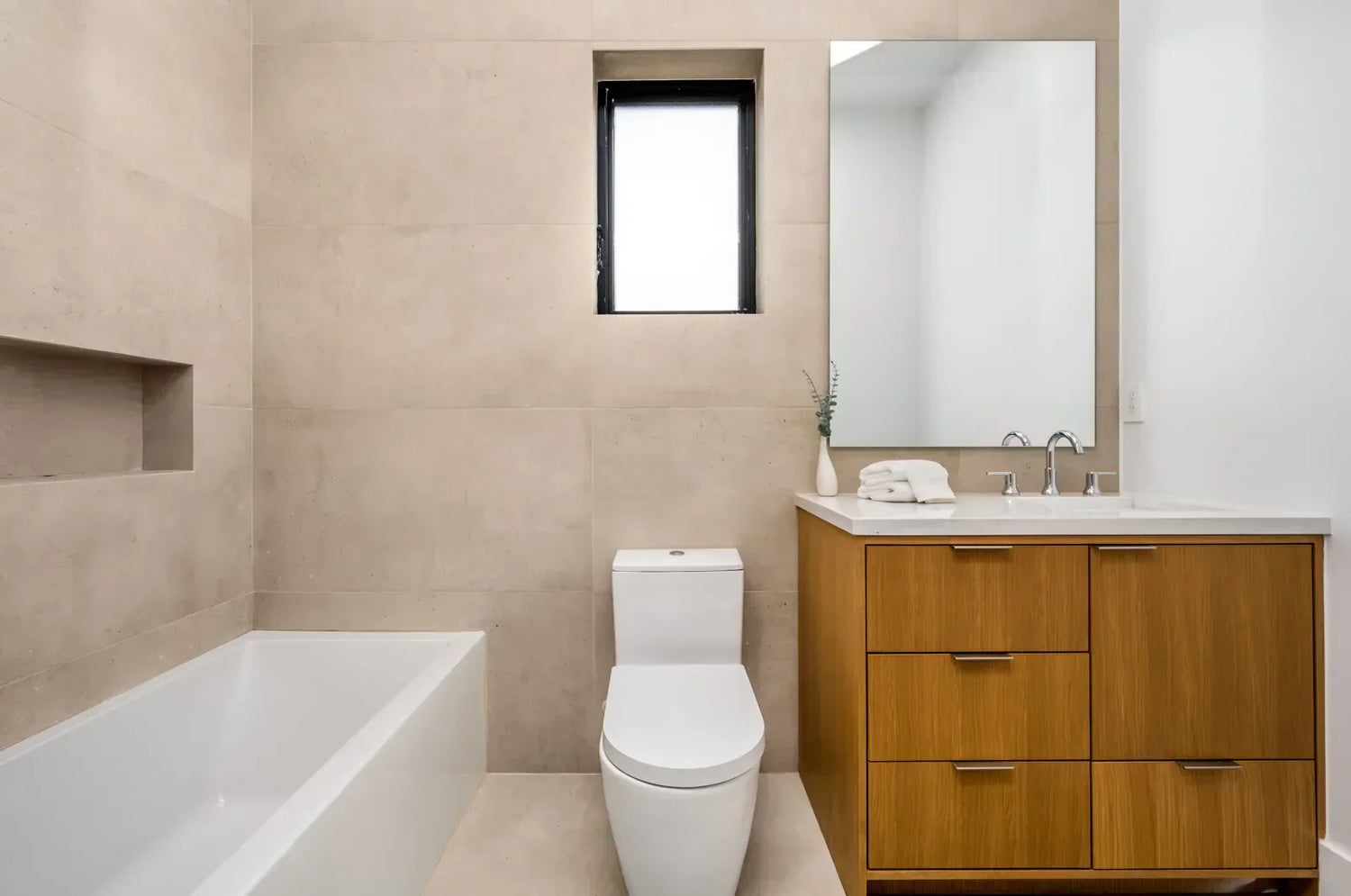
Hard water and untreated well water leave mineral scale, iron stains, and limescale that ruin cheap toilets over time, causing weak flushing, stubborn bowl rings, and constant maintenance. With so many models on the market, picking a durable, low-upkeep toilet tailored to hard water conditions can feel overwhelming. Our 2026 roundup breaks down exactly what to prioritize, which designs to avoid, and the top tested toilets that stay reliable, stain-resistant, and easy to clean year after year in high-hardness water homes.
Quick Answer
If you have hard water, mineral buildup, or well water, the best toilets are usually strong single-flush models with a smooth bowl glaze and easy-to-clean rim design. Use these If X → choose Y rules to rank your trade-offs:
-
If you have hard water, mineral buildup, or well water, the best toilets are usually strong single-flush models with a smooth bowl glaze and easy-to-clean rim design. Use these If X → choose Y rules to rank your trade-offs:
-
If you prioritize water efficiency over raw flush power → choose a high-performance 1.28 GPF gravity toilet, but only if you accept that mineral buildup over time may reduce performance.
-
If you prioritize reliability and clog resistance over quiet operation → choose a pressure-assisted toilet, and let flush strength override noise concerns.
-
If you prioritize sleek style over serviceability → choose a one-piece toilet, but be aware that repairs will be harder and more expensive in a scale-heavy home.
Overview rules for specific water conditions:
(1) Untreated well water with visible scale or iron → flush reliability overrides everything else; choose pressure-assisted or high-performance single-flush gravity, and avoid dual-flush.
(2) High-traffic family bath with clog history → clog resistance overrides noise and style; choose pressure-assisted or high-performance gravity with strong bowl rinse.
(3) Softened or light-use bath → style and water efficiency can override raw power; dual-flush or basic gravity is acceptable here.
Hard water changes what matters in a toilet. In a normal buying guide, you might see long lists of flush ratings and style choices. In a real home with mineral-heavy water, the better question is simpler: which toilet will keep flushing well, stain less, and require less scrubbing six months from now?
That is the decision this guide is built for.
Decision Snapshot
Here’s the short version most homeowners need.
Family/shared main bath
Default pick: Pressure-assisted or high-performance single-flush gravity toilet with smooth bowl glaze.
Avoid: Dual-flush models in untreated hard water; avoid ultra-quiet basic gravity if there is already a clog history.
Guest/powder room
Default pick: Basic single-flush gravity toilet with decent glaze and standard parts.
Avoid: Pressure-assisted toilets (noise is unnecessary in low-use spaces); avoid complex dual-flush with hidden passages.
Untreated well water (iron or visible scale)
Default pick: Strong single-flush toilet, either pressure-assisted or high-performance gravity, with easy-access rim jets for cleaning.
Avoid: Dual-flush designs entirely; avoid one-piece toilets with sealed, unserviceable flush mechanisms.
Best toilets for hard water vs alternatives
The best toilet for hard water is not always the fanciest one. It is the one that keeps working when the water leaves scale behind. Here’s how the main choices compare.
Gravity vs pressure-assisted
A gravity toilet uses tank water falling into the bowl to create the flush. It is quiet, common, and easier to live with for most homes. A pressure-assisted toilet stores pressurized water inside the tank and sends it out with more force.
For hard water, flush power matters because mineral deposits can narrow rim holes, coat valves, and make weak flushes worse over time. That is why pressure-assisted toilets often do better in homes with heavy use and scale problems.
But there is a trade-off: they are louder. If this is a hallway bathroom near bedrooms, the flush noise may bother you. For many homeowners, a high-performance gravity toilet is the sweet spot: better than cheap gravity models, quieter than pressure-assisted, and less likely to become a maintenance headache.
Single-flush vs dual-flush
Dual-flush toilets save water on paper. In the right home, they do save water in real life too. But hard water changes math. Replace the generalized dual-flush warning with this clear boundary set:
-
If you have softened or filtered water: Dual-flush is OK. The smaller passages will not scale up quickly. Choose dual-flush when water efficiency matters and the bathroom has adult or careful users.
-
If you have untreated well water with iron or visible scale: Avoid dual-flush entirely. The half-flush and small rim passages will collect deposits faster, leading to weak rinsing, stains, and frequent cleaning. Single-flush is the correct choice.
-
If you have moderate hardness without visible scale: Dual-flush is OK only in low-traffic, adult-use bathrooms, and only if you commit to cleaning rim jets every few months. For busy family bathrooms with moderate hardness, single-flush is still safer.
So the conclusion per water condition is:
-
Softened/filtered → OK
-
Untreated well water with iron/scale → Avoid
-
Moderate hardness without visible scale → OK only for light adult use; otherwise avoid
One-piece vs two-piece access
One-piece toilets look clean and modern. They often have fewer exterior seams, which is nice for wiping down the outside. But hard water is not only about exterior cleaning. It is also about access when parts need service.
Two-piece toilets are usually easier and cheaper to repair. In many hard water homes, that matters more than sleek looks. If minerals damage a fill valve or clog a passage, being able to access parts easily is useful.
Here is the strengthened recommendation:
-
Choose two-piece by default in hard water unless you have softened water and style is your highest priority. Serviceability should outweigh aesthetics in scale-heavy homes.
-
Wrong-choice prevention for scale-heavy homes: Do not choose a one-piece toilet just for looks if you have untreated well water, visible scale, or a history of part failures. The sleek exterior will not help you when the flush valve clogs or the fill valve needs replacement, and repair costs will be higher.
So the rule is: two-piece for hard water by default; one-piece only when water is softened and you accept higher future repair costs.
Main options compared
| Option | Upfront cost | Flush strength | Noise | Maintenance in hard water | Space | Best for |
| Basic gravity, single-flush | Low | Moderate | Quiet | Fair if glaze is good | Good in most baths | Guest baths, low-use homes |
| High-performance gravity | Medium | Strong | Quiet to moderate | Good | Good in most baths | Most hard water homes |
| Pressure-assisted | Medium to high | Very strong | Loud | Very good for clog resistance | Similar to standard | Busy families, heavy use |
| Dual-flush gravity | Low to medium | Moderate | Quiet | Mixed in untreated hard water | Good | Softened water, adult baths |
| One-piece body | Medium to high | Depends on flush system | Depends | Good outside cleaning, mixed service access | Often compact-looking | Style-focused buyers |
| Two-piece body | Low to medium | Depends on flush system | Depends | Easier to service | Standard | Value and easier repairs |

Key differences that matter
A lot of toilet specs do not matter much once the toilet is installed. These do.
Priority order for hard-water buyers (ranked from most to least important):
-
Flush power and clog resistance (overrides everything in untreated hard water)
-
Bowl glaze quality and rim access for cleaning
-
Serviceability and parts availability (two-piece preferred)
-
Noise level (only matters if bathroom is near bedrooms)
-
Style and exterior appearance (lowest priority in scale-heavy homes)
Flush power vs water savings
Homeowners often ask about best low-flow toilets for hard water without performance issues. That is a fair question, because low-flow can be excellent or frustrating depending on the design and water quality.
In hard water homes, a weak 1.28 GPF toilet can feel much worse after a year than it did on day one. Deposits slowly reduce flow through the rim or siphon path. The EPA WaterSense program sets industry efficiency benchmarks for low-flow toilet designs, balancing water conservation and functional performance for residential use. That is why the best 1.28 gpf toilets that work well with hard water need more than low water. They need:
-
a strong flush design
-
good bowl rinse
-
a smooth glaze
-
simple, serviceable internals
If your current toilet already needs two flushes, do not assume a lower-water toilet will fix that. It may save water only if it clears the bowl reliably the first time.
Here is explicit guidance on when accepting higher water use (or a stronger flush design) is worth it versus when strict efficiency is reasonable:
-
Accept a stronger flush design or slightly higher water use (e.g., 1.6 GPF) when: you have untreated hard water, the toilet is in a high-traffic family bathroom, you have a history of clogs or repeat flushes, or mineral buildup has already weakened other toilets in your home.
-
Stick with strict efficiency (1.28 GPF or dual-flush) only when: your water is softened or filtered, the bathroom gets light daily use, you have never had a clog problem, and you are willing to clean rim jets periodically.
So choose stronger flush designs when you have untreated hard water, high daily traffic, or any history of clogs or repeat flushes; choose efficiency-first designs only when water is softened or the bathroom gets very light use.
Quiet use vs clog resistance
Pressure-assisted toilets are often the best answer for homes where people ask, can hard water cause toilet clogs and weak flushing? Yes, it can. Hard water itself does not create a clog like paper does, but it can leave scale inside passages and around moving parts. That makes flushing weaker. A weaker flush means waste clears less effectively, so clog complaints go up.
Pressure-assisted toilets help because they hit the bowl with more force. In busy homes, that often matters more than noise. In a guest room near sleeping kids, the noise may be a deal-breaker.
Here’s the practical rule: if your bathroom sees heavy daily use, choose flush strength first. If it is a quiet nighttime bathroom, choose a better gravity design.
So choose clog resistance over quiet when this is a family bathroom with heavy use or past clogs; choose quiet over maximum power only for night-use bathrooms near bedrooms with softened or treated water.
Bowl glaze vs stain cleanup
If you ask what to look for in a toilet for hard water homes, start with the bowl surface. The best toilet bowl glaze for hard water stains is a very smooth, non-porous finish that resists mineral adhesion. Different makers use different names for these coatings, but the buying goal is the same: a bowl that gives calcium and iron less to grip.
This is one of the most overlooked features in hard water areas. People focus on flush ratings, then end up scrubbing rings every few days. A better glaze will not stop buildup forever, but it can slow it down enough to save real time.
This also answers a common question about what toilet features help reduce hard water residue. The best ones are not flashy:
-
smooth bowl glaze
-
strong rim wash
-
fewer hidden crevices
-
easier access under the rim
-
parts that are easy to replace
So choose the best available bowl glaze when you have visible scale or iron staining; glaze can be a lower priority only if your water is softened or the bathroom is rarely used.
Rim access vs sleek design
Some toilets hide the rim jets or use a cleaner-looking rim design. That can reduce places for gunk to collect. But some sleek shapes make it harder to inspect where the scale is forming.
In hard water homes, the best toilet is often not the one that looks the most modern in a showroom. It is the one you can actually clean without special tools or awkward angles. That is why homeowners in mineral-heavy areas often prefer practical designs over ultra-sculpted ones.
So choose rim access and cleanability over sleek design when you have untreated hard water or a history of scale buildup under the rim; choose sleek design only when water quality is already controlled.

When hard-water models win
Even with similar specs on paper, certain toilet designs prove far more resilient against limescale, iron deposits, and daily wear typical of hard water homes.
Heavy use rewards stronger flushing
In a busy family bathroom, toilets get tested hard. More users mean more flushes, more toilet paper, and more chances for scale-related weakness to show up. In that setting, a stronger flush is usually worth the extra cost.
This is where the best toilets for hard water separate themselves from average models. They are not just “more powerful” in a lab sense. They hold up better once a bit of scale starts forming.
Untreated minerals punish weak rim wash
Hard water often leaves deposits under the rim first. If the toilet already has a weak bowl rinse, those deposits can reduce water spread even more. Then the bowl stays dirty, stains form faster, and the toilet starts looking old long before it should.
This is one reason many homeowners think they have a cleaning problem when they really have a flush-distribution problem.
Better glaze cuts scrubbing time
A strong glaze does not sound exciting, but in mineral-heavy homes, it can change your cleaning routine. If you have ever had a toilet that looked clean right after scrubbing and stained again two days later, you already know why this matters.
The best budget-friendly toilets for hard water households are not always the cheapest units on the shelf. Often, the smarter budget move is paying a bit more for a better bowl finish so you scrub less and replace parts less often.
Can hard water cause weak flushing?
Yes. Over time, calcium and lime can narrow rim openings, affect the siphon path, and coat parts inside the tank. If the fill valve or flush valve starts working less smoothly, the toilet may not deliver the same volume or speed of water into the bowl. The result is a weaker flush, more streaking, and more repeat flushing.
That is why a toilet that performs well in soft water may become frustrating in hard water.
When the alternative is better
Not every home needs the strongest, most scale-resistant toilet.
Small budgets favor simpler gravity models
If your budget is tight, a simple gravity toilet can still be the right buy. Just be selective. Do not buy only on price. Look for:
-
a smooth bowl finish
-
standard replacement parts
-
a decent trapway size
-
easy rim cleaning access
A basic gravity model is often enough in a guest bath or small household, even with hard water.
Night bathrooms need quieter flushing
If this bathroom sits right outside a bedroom, flush noise matters. Pressure-assisted toilets can startle light sleepers. In that case, a quiet gravity model with a good bowl coating is often the better daily choice.
This is why there is no single best toilet for every hard water home. The best one for a family hall bath may be wrong for a night-use ensuite.
Softened water reduces the need
If your home already has a working softener or filtration system, many hard-water worries shrink. You may not need the strongest flush system available. In that case, you can focus more on comfort, price, and style because mineral buildup will be slower and less severe.
This is also where dual-flush models become more reasonable. Once the water is treated, they are less likely to become cleaning annoyances.
Do deposits damage flush parts?
Yes, they can. Hard water deposits can coat fill valves, flappers, seals, sensors, and rim channels. In basic toilets, that often means slower filling or incomplete flushing. In more complex toilets, it can mean more expensive part replacement.
That leads to another common question: does hard water damage smart toilets? It can. Smart toilets, bidet seats, automatic flush systems, and heated seats often include narrower water passages, spray nozzles, valves, and electronic components. If your water is very hard, those systems need more frequent maintenance and sometimes filtration to stay reliable.
So if you live in a heavy-scale area and want fewer problems, a simpler toilet is often the safer buy than a feature-loaded one.

Fit and cleaning trade-offs
Beyond flush power and internal build quality, physical toilet design directly impacts long-term cleaning effort, daily comfort, and how well the fixture resists hard water buildup. From bowl shape and seat height to self-cleaning features and low-flow efficiency, these practical fit and maintenance trade-offs will help you narrow down the right model for your bathroom layout and water conditions.
Elongated or round for upkeep?
The usual debate is comfort and space. But in hard water homes, there is also a cleaning angle. When comparing elongated vs round bowl toilets for hard water maintenance, elongated bowls usually give a bit more room for brush access and tend to be easier for many adults to clean thoroughly. Round bowls save space and may fit small bathrooms better.
If the bathroom is tight, choose round. If space allows and this is the main family toilet, elongated is usually the better choice.
This also answers part of how toilet bowl shape affects hard water cleaning: the easier the bowl is to reach and brush evenly, the less annoying mineral cleanup becomes.
Comfort height or compact footprint?
Comfort-height toilets are easier for many adults, older users, and anyone with knee or mobility issues. In a child bathroom, standard height can still make sense.
Height itself does not change hard water performance much. But comfort can change how happy you are with the toilet every day. If this is the main bathroom, choose the height that fits the people using it most.
Self-cleaning bowls: help or hype?
Some toilets are sold as self-cleaning or extra-cleaning. For hard water, that deserves a careful look. The best self-cleaning toilets for hard water problems can help if they combine a smoother glaze, good rinse coverage, and maybe a pre-mist or bowl treatment system.
But “self-cleaning” does not mean no cleaning. If your water leaves calcium or iron behind, no toilet fully stops that. What these features can do is slow down residue buildup and reduce how often you scrub.
So are they worth it? Sometimes. If your water is moderately hard and you keep up with basic cleaning, yes. If your water is very hard and untreated, they help less than many buyers hope.
Will 1.28 GPF be enough?
Often yes, but not always. The best 1.28 gpf toilets that work well with hard water are the ones that clear waste in one flush and rinse the bowl well. If the design is weak, the water savings disappear because people flush twice.
In a softened-water home, 1.28 GPF is often a smart choice. In an untreated hard-water home with frequent heavy use, a stronger-flushing design matters more than chasing the lowest gallon number.
Low-flow staining prevention
People also ask how to prevent staining in a low-flow toilet. The answer is part toilet choice, part maintenance:
-
choose a smoother glaze
-
make sure the rim wash is strong
-
clean the rim openings before scale hardens
-
use the full flush if the toilet offers options and the bowl needs it
-
treat hard water if possible
A low-flow toilet can work well in hard water, but only if the bowl is actually getting rinsed properly.
Special cases buyers ask about
A few questions come up often and do affect the decision.
If you are considering a toilet with an integrated bidet or a bidet seat, think about nozzle care. In hard water areas, spray nozzles can collect mineral deposits. How to clean a bidet nozzle in hard water areas? Usually with regular wiping, periodic descaling as allowed by the maker, and filtered or softened water when possible. If you know your water is very hard and you do not want maintenance, skip built-in wash features.
You may also run into questions like do some compact modern toilets have built-in water filters? In most cases, no. Some specialty units or bidet systems may use screens or strainers, but that is not the same as a true built-in water filter. Assume the toilet itself will not solve your water-quality problem.
And if you are wondering how some special glazes resist mineral scaling, the answer is simple: smoother, denser finishes give minerals fewer places to latch onto. They do not remove hardness from the water. They just make residue slower to stick and easier to clean off.
For most U.S. homeowners, the best toilets for the hard water in the US are not exotic models. They are dependable, serviceable toilets with strong one-flush performance, a high-quality bowl finish, and standard replacement parts. The simpler that formula is, the fewer regrets people tend to have.

Final Verdict
Choose a strong single-flush toilet with a smooth bowl glaze if you have hard municipal water, untreated well water, a busy household, or a history of weak flushing and clogs. Choose a basic gravity toilet if the bathroom gets light use, quiet matters, and your water is softened or only mildly hard. Choose pressure-assisted if clog resistance matters more than noise. Choose dual-flush only when your water is filtered or softened, because mineral-heavy water can turn the water-saving feature into a cleaning problem.
Before You Buy
-
Check whether your home has softened water, municipal hard water, or untreated well water.
-
Look for a smooth bowl glaze, not just a low GPF number.
-
Favor strong single-flush designs for heavy-use bathrooms.
-
Be careful with dual-flush if your water leaves iron or calcium scale.
-
Choose two-piece designs if you want easier repairs later.
-
Pick elongated bowls if you have the space and want easier cleaning.
-
Use standard, easy-to-find internal parts when possible.
-
If buying a toilet with bidet or smart features, plan for extra descaling.
FAQs
Does hard water damage smart toilets?
Yes, hard water can gradually damage smart toilets by leaving mineral deposits on narrow spray nozzles, internal valves, seals, and flush sensors over time. These built-up limescale and iron residue restrict water flow, weakening performance and making protecting internal valves from sediment essential for long-term reliability. Homes with extremely hard or untreated well water face faster wear and may need regular descaling or filtration to extend the lifespan of smart toilet components. Opting for simpler non-smart designs is often a low-maintenance alternative for scale-prone households.
How to clean a bidet nozzle in hard water areas?
You can clean a bidet nozzle in hard water areas with regular gentle wiping and periodic manufacturer-approved descaling to dissolve accumulated mineral deposits. Proper routine care is key for cleaning calcium deposits from bidets and preserving consistent spray function year-round. Using filtered or softened water significantly slows buildup and reduces how often you need to deep clean nozzles and internal water passages. If you prefer minimal upkeep in high-hardness homes, skipping integrated bidet features altogether eliminates this repetitive maintenance task.
How to prevent staining in a low-flow toilet?
Preventing hard water staining starts with selecting best toilet bowl glazes for stains that feature a smooth, non-porous finish to resist mineral adhesion. Prioritize strong full rim wash coverage and maintain rim openings regularly as a core method of preventing mineral buildup in toilets. Use the full flush setting when needed to thoroughly rinse the bowl and pair good design with simple routine upkeep. Adding water treatment further minimizes residue and keeps low-flow toilets clean and functional long-term.
Which toilets are best for the hard water in the US?
Best toilets for hard water are reliable single-flush units with durable smooth glazes, strong flush power, and easily serviceable internal parts. High-performance gravity and pressure-assisted models lead the market for busy families, untreated well water, and homes prone to clogs and weak flushing. Two-piece designs outperform one-piece options thanks to affordable repairs and better resilience against persistent mineral scale. Dual-flush styles only suit U.S. homes with softened water and low-traffic, adult-only bathrooms.
How does Horow's glaze resist mineral scaling?
Modern toilet coating technology aligns with 2026 us water quality and appliance longevity trends focused on durable stain and scale resistance for regional households. Horow’s specialized bowl glaze uses a dense, non-porous finish that limits surface grip for calcium, lime, and iron minerals in hard water. This advanced coating slows residue formation, cuts down frequent scrubbing, and maintains a cleaner bowl appearance far longer than standard glazes. It also serves as one of the most practical engineering solutions for regional us water issues affecting everyday bathroom fixtures.
References


Leave a comment
This site is protected by hCaptcha and the hCaptcha Privacy Policy and Terms of Service apply.