
Choosing the best one-piece toilet for a small bathroom starts with fit, not the word “compact.” Compare the toilet’s actual front projection, overall width, rough-in, and bowl shape against your room before comparing style or flush features. A shorter one-piece toilet can improve usable space in a tiny bathroom, powder room, or apartment bath, but only when the complete fixture matches the plumbing, door swing, and surrounding clearances. This guide explains how to make that decision and what to compare before choosing a model.
Decision Snapshot: Is a Compact One-Piece Toilet Right for Your Small Bathroom?
Choose this format when a shorter floor-mounted toilet improves usable space and the exact model matches your rough-in, available width, door swing, front clearance, and preferred bowl shape. Choose another toilet type if the room still cannot provide the required clearances, the rough-in does not match, or the installation requires a different fixture format.
Check These Before You Shop
- Confirm the rough-in from the finished wall to the center of the flange or closet bolts.
- Measure the available front-to-back space and compare it with the exact toilet projection.
- Check the overall width and base shape around the vanity, tub, wall trim, and water-supply location.
- Test the door swing and make sure the new footprint does not create a functional conflict.
- Choose the bowl shape and seat height based on the people using the bathroom and the space available.
If your bathroom has a 10-inch rough-in, compare toilets specifically designed for that installation instead of assuming that any compact toilet will fit.

What “Compact” Means in a One-Piece Toilet
Compact should describe the toilet’s actual footprint, especially its front projection and width, rather than serving as a generic product label. Two toilets described as compact can still take up noticeably different amounts of usable bathroom space.
Front Projection
Front projection is often the most important dimension in a narrow bathroom because it affects the walkway, door swing, and usable space in front of the bowl. Compare the exact product drawing with your current toilet instead of shopping from a generic “compact” label.
Overall Width and Base Shape
A toilet that looks narrow in a product photo can still have a wide skirted base. Check the complete width around vanity toe-kicks, tub aprons, wall trim, heating elements, and the water-supply connection.
Round vs Elongated Bowl
Round bowls can be useful when reducing front space is a priority, while elongated bowls may provide more sitting room. An elongated toilet is not automatically too large for a small bathroom, but the complete projection must still work with the layout.
One-Piece Design
A one-piece toilet combines the tank and bowl into one fixture, reducing visible seams and creating a streamlined exterior. The trade-off is installation: the complete fixture must be positioned as one unit, and concealed mounting areas can require more working room around the base.
How to Choose a One-Piece Toilet for a Small Bathroom
Start with the room, then match the toilet. A product that works well in one powder room can be the wrong choice in another bathroom with a different rough-in, door position, vanity depth, or bowl preference.
- Confirm the rough-in. Measure from the finished wall to the center of the flange or closet bolts and match that measurement with the exact model.
- Compare front projection. Check how far the toilet extends into the room and whether it affects the doorway, walkway, or usable space in front.
- Check the full width. Account for the bowl, skirted base, vanity, tub, wall trim, and supply connection.
- Choose the bowl shape. A round bowl can reduce the footprint, while an elongated bowl may provide more sitting room when the layout allows.
- Confirm seat height and installation access. Use the specification drawing and installation information for the exact model rather than assuming all compact toilets are alike.

HOROW One-Piece Toilets to Compare for Small Bathrooms
These three HOROW one-piece toilets address different small-bathroom layouts. Start with your rough-in and available front projection, then compare width, bowl shape, and seat height. The goal is not to choose the shortest toilet automatically, but to find the model whose complete dimensions match the room.
| Model | Front Projection | Width | Rough-In | Bowl Shape | Seat Height | Flush |
|---|---|---|---|---|---|---|
| HOROW 8733N | 25" | 13 3/8" | 12" | Round | 16 1/2" | Dual flush, 1.1 / 1.6 GPF |
| HOROW T0338W | 26 3/4" | 15" | 12" | Elongated | 17 3/8" | Dual flush, 1.1 / 1.6 GPF |
| HOROW T0338W-10 | 26 3/4" | 15" | 10" | Elongated | 17 3/8" | Dual flush, 1.1 / 1.6 GPF |
Compact 12-Inch Rough-In

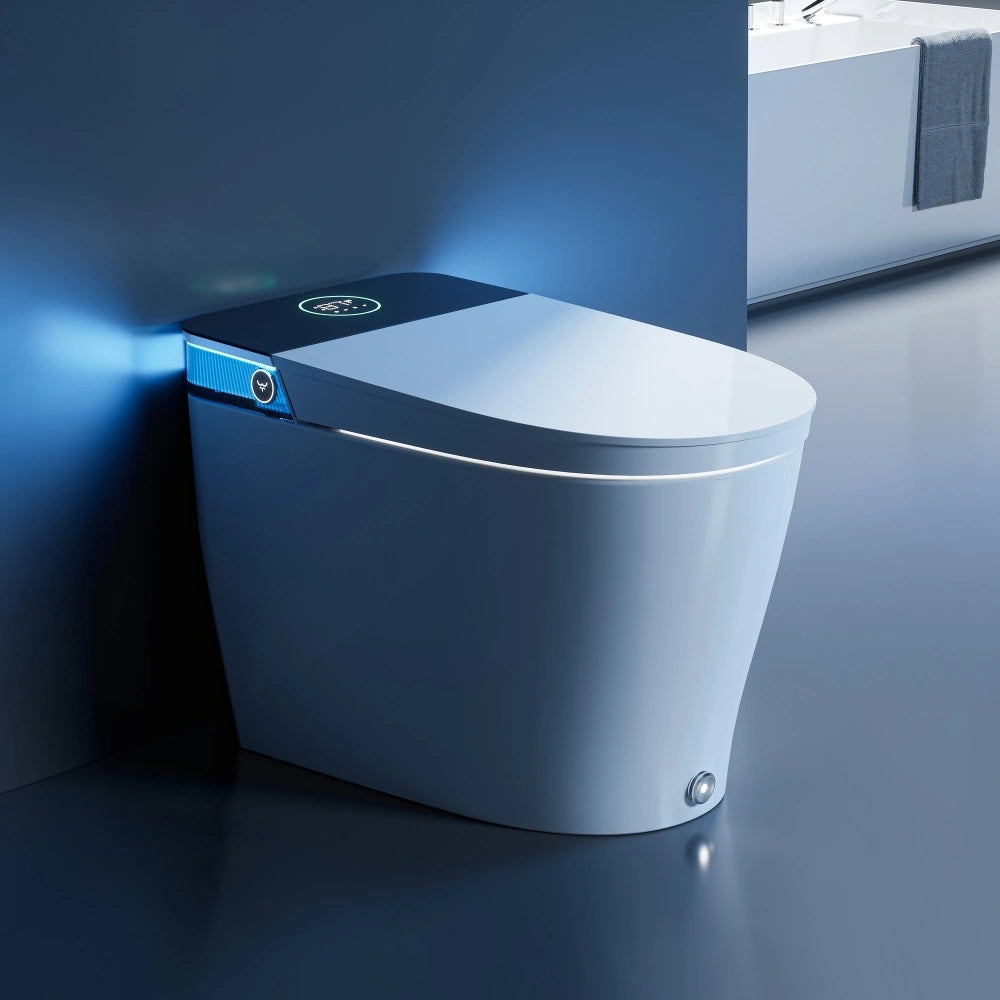
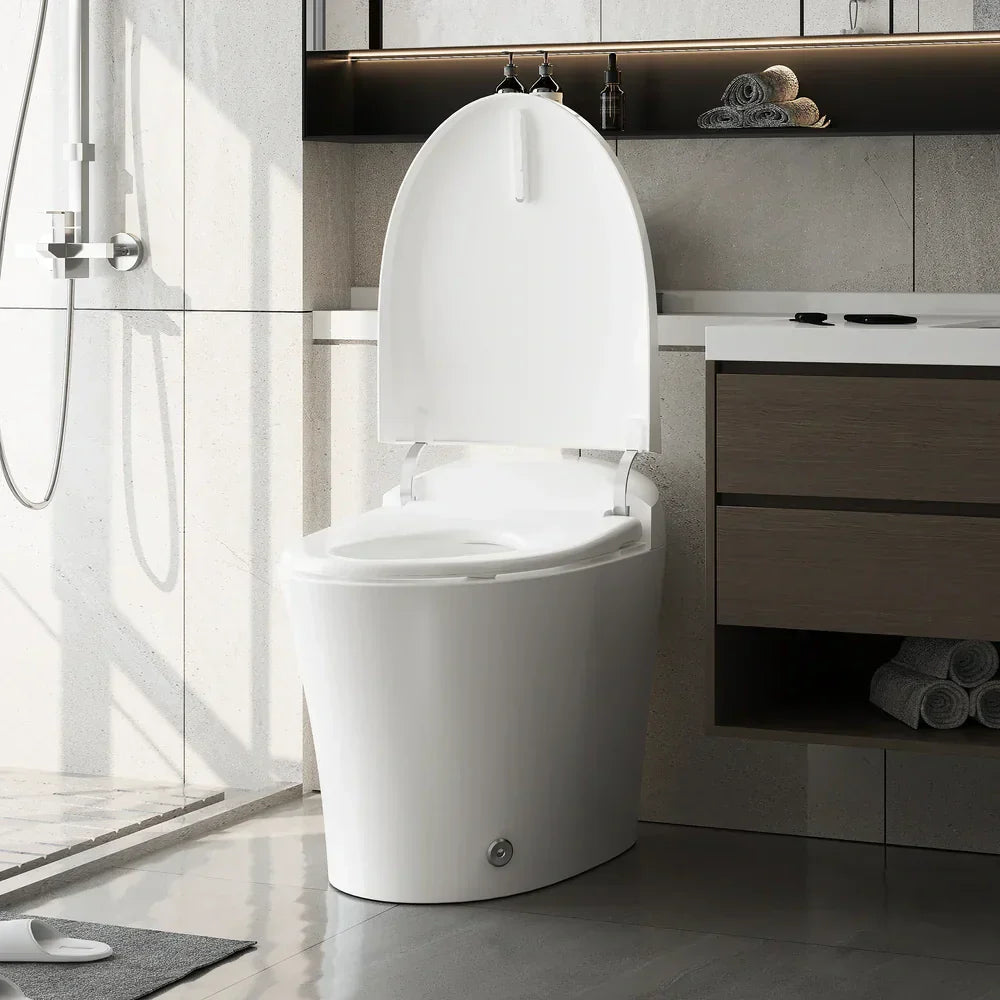
HOROW 8733N
25" D × 13 3/8" W × 28 3/8" H
12" Rough-In | Round Bowl | 16 1/2" Seat Height | 1.1 / 1.6 GPF
12" Rough-In | Round Bowl | 16 1/2" Seat Height | 1.1 / 1.6 GPF
Among these three options, the HOROW 8733N has the shortest front projection and narrowest overall width, making it worth comparing when floor space is especially tight and the bathroom has a 12-inch rough-in. Its round bowl supports the smaller footprint, while buyers who prefer an elongated bowl should compare the T0338W.
Elongated 12-Inch Rough-In

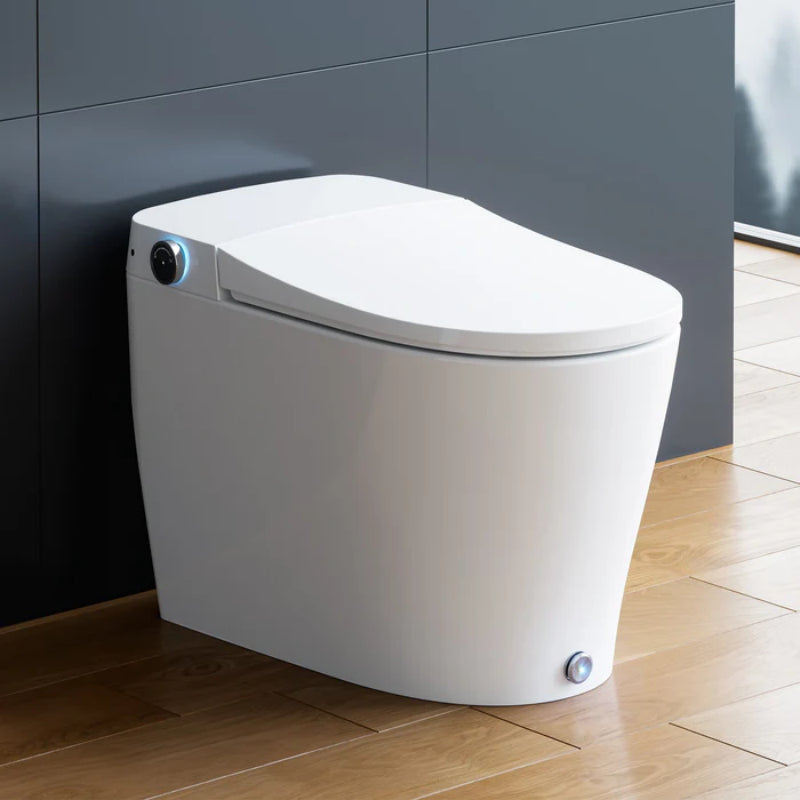
HOROW T0338W
26 3/4" D × 15" W × 26" H
12" Rough-In | Elongated Bowl | 17 3/8" Seat Height | 1.1 / 1.6 GPF
12" Rough-In | Elongated Bowl | 17 3/8" Seat Height | 1.1 / 1.6 GPF
The HOROW T0338W is a useful comparison when you want an elongated bowl in a small bathroom with a 12-inch rough-in. Its 26 3/4-inch projection and 15-inch width require more room than the 8733N, so confirm door swing, vanity clearance, and available floor space before ordering.
Elongated 10-Inch Rough-In

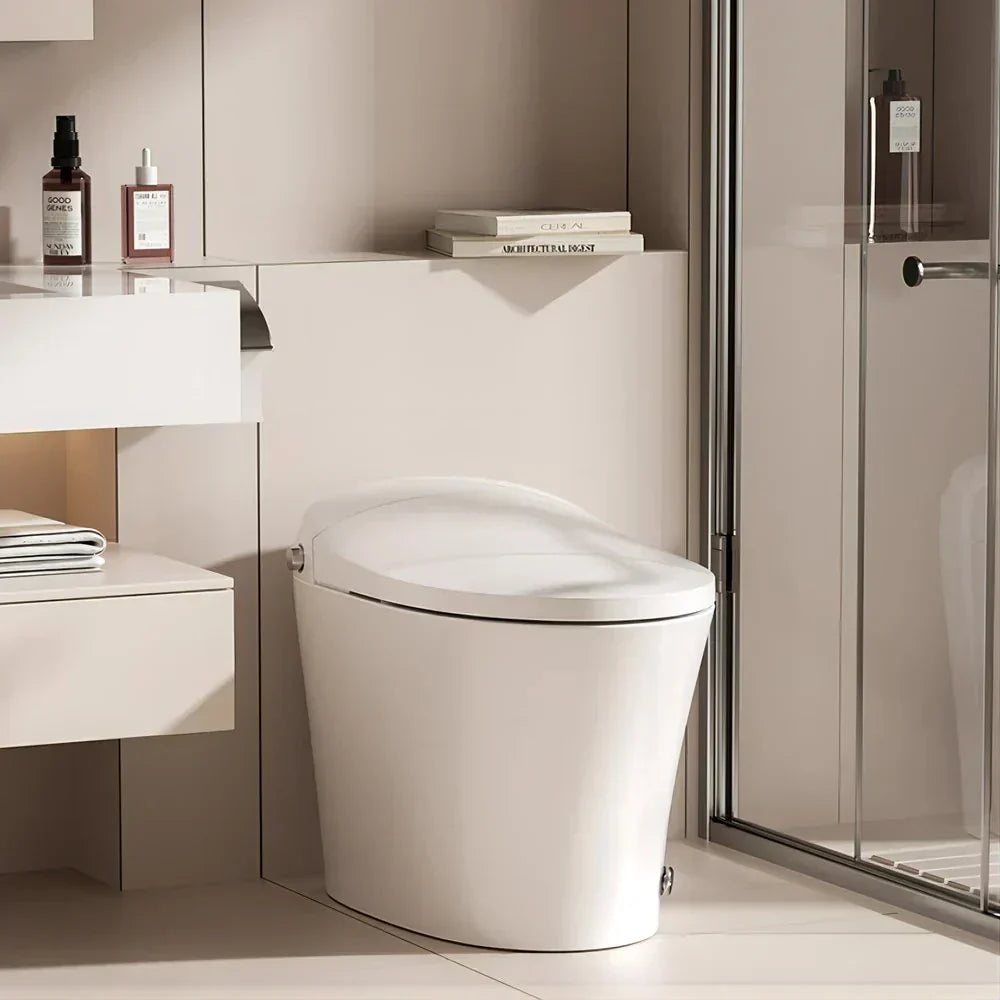
HOROW T0338W-10
26 3/4" D × 15" W × 26" H
10" Rough-In | Elongated Bowl | 17 3/8" Seat Height | 1.1 / 1.6 GPF
10" Rough-In | Elongated Bowl | 17 3/8" Seat Height | 1.1 / 1.6 GPF
The HOROW T0338W-10 is designed for bathrooms with a verified 10-inch rough-in while retaining an elongated one-piece format. Do not choose it only because the bathroom is small: the rough-in must match the existing plumbing, and its full 26 3/4-inch projection still needs to fit the room.
If none of these three configurations matches your room, compare additional sizes and bowl shapes in the HOROW Compact Toilets collection rather than forcing a model into the wrong layout.
One-Piece Toilet Trade-Offs in a Small Bathroom
Smaller Footprint vs Sitting Room
A shorter toilet can improve circulation in a small bathroom, but reducing the footprint should not be the only goal. Compare the bowl shape, seat height, and usable space around the fixture so the bathroom remains comfortable for the people who use it every day.
Clean Exterior vs Installation Access
One-piece toilets have fewer visible seams around the tank and bowl, which can simplify exterior cleaning. In a tight bathroom, however, concealed mounting points and limited working space around the base can make installation more demanding.
10-Inch Rough-In vs Compact Footprint
A 10-inch rough-in describes the drain location; it does not by itself mean that a toilet has a compact footprint. A 10-inch rough-in toilet still needs to be checked for overall projection, width, bowl shape, supply-line access, and surrounding clearances.
Installation Realities in a Small Bathroom
A compact one-piece toilet can fit a tight layout well, but the reduced working area around it can make positioning, leveling, connecting the supply line, and reaching concealed mounting hardware more difficult.
Check the Flange and Water Connection
Before setting the new toilet, confirm that the flange is secure and positioned correctly for the finished floor. Also check that the water-supply connection can be reached once the toilet is in place. A skirted base can reduce access around the rear and sides of the fixture.
Use the Exact Installation Instructions
Mounting systems vary by model. Follow the installation instructions for the exact toilet you purchase, tighten hardware carefully, and check all water connections for leaks after the supply is turned on.

Maintenance and Long-Term Ownership
A one-piece toilet can be straightforward to clean because there is no separate tank-to-bowl joint on the exterior. Long-term satisfaction still depends on the specific seat, flush hardware, replacement-part availability, and access to the components that may eventually need service.
Check the Seat and Flush Controls
Before choosing a model, look at how the seat attaches, whether replacement parts are available, and how easily the flush controls can be accessed. These details can matter more over time than a small difference in exterior styling.
Can You Add a Bidet Seat Later?
Possibly, but compatibility must be confirmed for the exact toilet and bidet seat. Check the bowl shape, mounting pattern, flat mounting area behind the seat, tank clearance, and space for the water connection before purchasing an add-on seat.
Before You Buy Checklist
- Measure the rough-in from the finished wall and match it with the exact model.
- Compare the toilet’s full front projection with your current toilet and available floor space.
- Check the complete width around the vanity, tub, trim, and water-supply connection.
- Test an inward-swinging door against the proposed toilet footprint before ordering.
- Choose round or elongated based on the actual space available and your bowl-shape preference.
- Check the exact seat height on the product specification drawing.
- Confirm installation access around the base and mounting points.
- Check seat compatibility before adding a bidet seat or replacement seat.
- Review the installation instructions and replacement-part information for the exact model.

FAQs
1. What should I measure before buying a one-piece toilet for a small bathroom?
Measure the rough-in, available front-to-back space, overall width around nearby fixtures, door swing, and water-supply location. Then compare those measurements with the exact toilet dimensions, bowl shape, seat height, and installation drawing before ordering.
2. Is a round or elongated one-piece toilet better for a small bathroom?
A round bowl can be useful when reducing front projection is a priority, while an elongated bowl may provide more sitting room. Do not choose by bowl name alone. Compare the complete dimensions of the exact model with your bathroom layout.
3. Does a 10-inch rough-in mean a toilet is compact?
No. Rough-in describes the distance between the finished wall and the toilet’s drain location, while compact describes the fixture’s overall footprint. A 10-inch rough-in toilet still needs to be checked for projection, width, bowl shape, and surrounding clearances.
4. Which HOROW one-piece toilet should I compare for a small bathroom?
Start with the dimensions and rough-in. The HOROW 8733N has a 25-inch projection, 13 3/8-inch width, round bowl, and 12-inch rough-in. The T0338W uses an elongated bowl with a 26 3/4-inch projection and 12-inch rough-in, while the T0338W-10 uses the same elongated footprint with a 10-inch rough-in. Match the exact configuration to your bathroom before choosing.
Compare HOROW Toilets for Your Space
Use the Compact Toilets collection to compare space-focused options, browse One-Piece Toilets for the wider category, or go directly to 10-Inch Rough-In Toilets if your existing plumbing requires that rough-in.


Leave a comment
This site is protected by hCaptcha and the hCaptcha Privacy Policy and Terms of Service apply.