
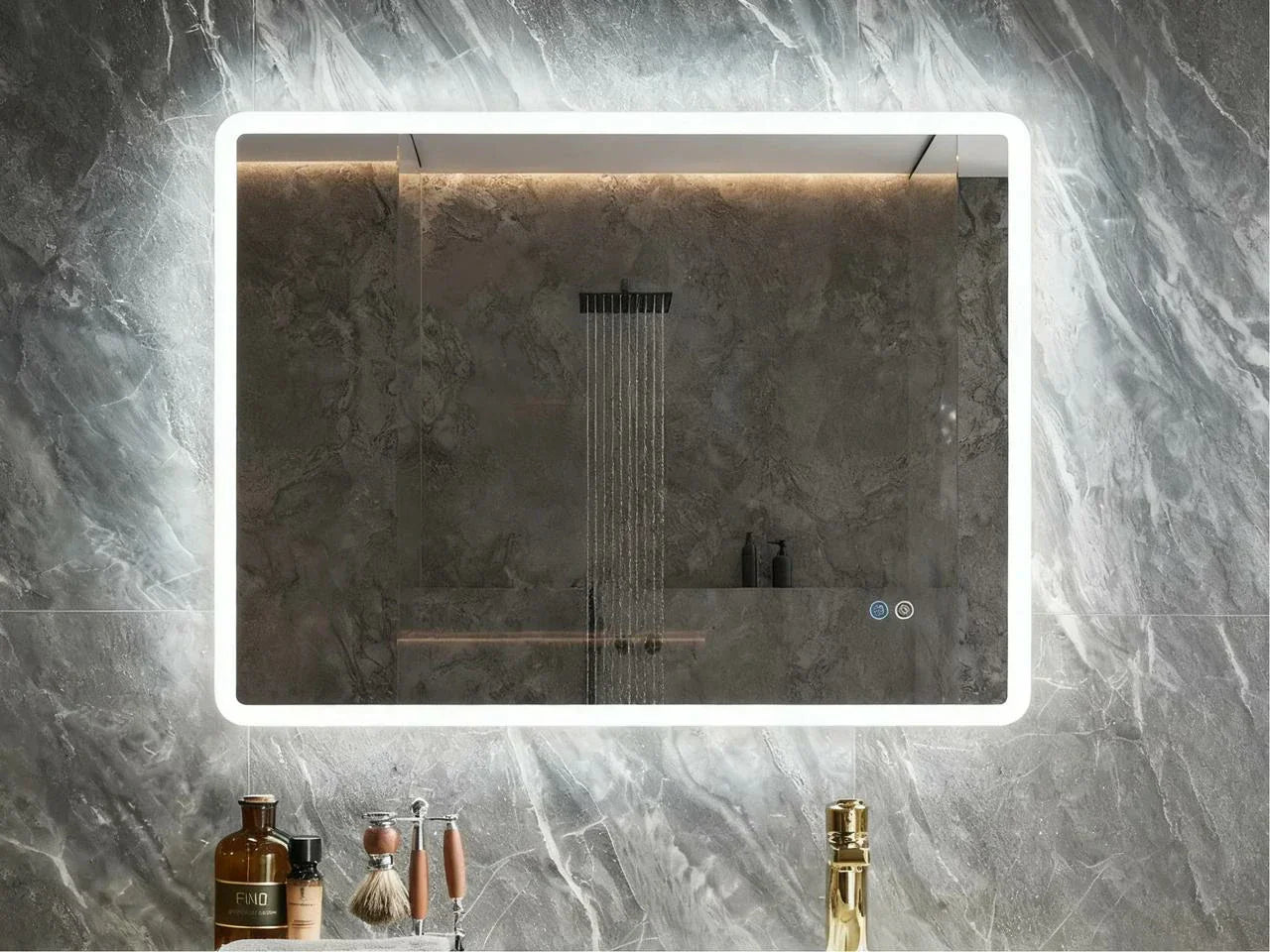
A bathroom mirror with lights can make your mornings easier, your space brighter, and your bathroom feel like a spa. But the wrong mirror can lead to glare in your eyes, shadows on your face, or wiring hassles you did not expect.
This guide walks you through how to choose a lighted bathroom mirror that actually works in daily life. You will see the key features first (brightness, anti-fog, size, safety). Then you will learn about the main types of LED bathroom mirrors, smart options, installation, care, and real bathroom makeovers. At the end, you get a clear buying checklist and short FAQs so you can compare models with confidence.
Bathroom mirror with lights: essentials & market snapshot
A well-chosen bathroom mirror with lights is more than just a stylish addition—it combines functionality, energy efficiency, and modern design. Before diving into types and features, it helps to understand the essentials of LED bathroom mirrors and how the market for these smart, illuminated mirrors has grown in recent years. This overview gives you the context needed to make an informed choice.
What is an LED bathroom mirror and how does it work?
A LED bathroom mirror is a mirror with built‑in LED lights around the edge, behind the glass, or both. Instead of adding separate wall lights, the light source is part of the mirror itself.
Inside the mirror, you will usually find:
-
A strip or panel of LED chips that produce light.
-
A power driver that turns your home’s 120–240V current into low‑voltage power the LEDs need.
-
Touch or motion controls on the front or bottom edge.
-
Sometimes an anti‑fog pad on the back of the glass.
When you tap the touch button, the driver sends power to the LEDs. Because LEDs are very efficient, they give a lot of light while using much less power than old halogen or incandescent bulbs. That is why LED bathroom mirrors are now standard in many new homes and hotel bathrooms.
Key stats & market growth
LED mirrors are not just a style trend. They are a growing part of the lighting market.
Global LED bathroom mirror market snapshot
| Year | Estimated global market size | Notes |
| 2023 | ≈ $440 million | Rapid adoption in new builds and remodels |
| 2025 | ≈ $580–600 million | Driven by smart home and anti‑fog demand |
| 2029 | ≈ $725.9 million | Around 10% yearly growth |
Smart versions are growing even faster. Smart mirror models with Bluetooth, apps, and voice control already make up several billion dollars in sales worldwide and keep gaining share each year.
So you are not choosing a niche product. You are picking a lighting and grooming tool that is now common in both homes and hotels.
Quick pros and cons at a glance
Pros of a bathroom mirror with lights
-
Even face lighting for shaving, makeup, and skincare
-
Saves wall space, great for small bathroom mirrors and tight layouts
-
Lower energy use than many old-style bathroom lights
-
Clean, modern look; hides the light source
-
Often includes anti‑fog, dimming, and color‑temperature control
Cons to watch for
-
Some cheap models are too dim or too blue
-
Hard‑wired mirrors may need an electrician
-
Anti‑fog pads add power use if left on
-
Glass can be heavy; weak walls need care
-
Defective drivers or LEDs can be hard to repair
Are LED bathroom mirrors worth it?
Many buyers ask this first: Are lighted bathroom mirrors worth it?
For most households, yes, as long as you choose a mirror with the right brightness, size, and safety rating.
Here is why they tend to be worth the money:
-
Better grooming light: LEDs placed around or behind the mirror reduce harsh shadows under your eyes and chin. This helps with makeup, shaving, and skincare. Many users say it cuts the time they spend trying to “fix” uneven makeup in daylight later.
-
Energy savings: LED lighting uses far less power than halogen or incandescent bulbs while giving the same light level. That can lower your long‑term energy bills.
-
Less clutter: A bathroom mirror with lights can replace separate over‑mirror fixtures. This is helpful in small bathrooms with little wall space.
-
Modern look and resale: A fresh, well‑lit bathroom often makes the whole home feel newer. Buyers notice this in real estate listings and showings.
-
Comfort features: Anti‑fog, night‑light modes, and dimming add daily comfort that regular mirrors do not give.
On the other hand, a very cheap mirror with weak LEDs or poor quality control will not feel worth it. Many bad online reviews come from dim light, difficult installation, or defective units. The key is to choose carefully instead of only picking the lowest price.

Key benefits & features that matter most
Choosing a bathroom mirror with lights is not just about style—it’s about performance and daily convenience. To get the best experience, you need to focus on the features that truly make a difference, from brightness and color accuracy to anti‑fog and dimming options. Understanding these key benefits helps you pick a mirror that works perfectly for your routine.
Brightness, color temperature, and CRI for true‑to‑life lighting
The most important job of a lighted bathroom mirror is simple: light your face well. To do that, you need to understand three ideas: lumens, color temperature, and CRI.
How many lumens you actually need
Lumens measure how bright a light is, while watts indicate only energy consumption. According to the U.S. Department of Energy (DOE), measuring light in lumens rather than watts provides a more accurate way to compare brightness, especially for LED fixtures like bathroom mirrors.
A simple guide:
| Bathroom / mirror size | Suggested lumens from mirror light |
| Small powder room, mirror up to 24" (60 cm) | 600–1,000 lm |
| Standard single‑sink mirror 24–36" (60–90 cm) | 1,000–1,800 lm |
| Large or double‑sink mirror 36–60"+ (90–150 cm) | 1,800–3,000 lm |
| Main light source in a windowless bathroom | Aim to the higher end of range |
If you use strong ceiling lights as well, your mirror can be a bit dimmer. But if your mirror is the main light for your face, do not go too low. Many buyers say their main regret is picking a stylish mirror that looks nice in photos but is too dim in real life.
3000K vs 4000K vs 5000K: which is best?
Color temperature, in kelvin (K), tells you whether the light feels warm (more yellow) or cool (more blue).
To keep it simple:
| Color temperature | Look and feel | Best for |
| 2700–3000K | Warm, cozy, like soft lamp light | Relaxing baths, evening use |
| 3500–4000K | Neutral white, close to daylight | Everyday grooming, general use |
| 5000K+ | Cool, bright white, almost clinical | Precise makeup, tasks, windowless rooms |
For a main bathroom, many people like 3500–4000K because it is close to daylight and flatters skin tones. If your mirror is color‑tunable, you can do 3000K at night and 4000–5000K in the morning.
Why high CRI (90+) matters for skin tones
CRI (Color Rendering Index) is a score from 0 to 100 that tells you how accurately a light shows colors. A CRI of 90+ is best for skin, hair, and makeup. With low‑CRI LEDs, red and warm tones can look dull or grey, and makeup colors are harder to match.
When you compare mirrors, look for “CRI 90+” in the specs. If a product does not mention CRI at all, it may be lower quality.
Comfort features: anti‑fog, dimming, and touch controls
Once brightness and color are set, comfort features make the mirror nice to use every single day.
Anti‑fog technology
Anti‑fog mirrors use a thin heating pad on the back of the glass. When you turn it on, it gently warms the mirror so steam from a hot shower does not condense on it.
In daily use:
-
It lets you shave or do makeup right after a shower.
-
It saves you from wiping the mirror and leaving streaks.
Some pads run only when you press a separate button. Others link to the main light and may stay on longer than needed. For energy savings and safety, a separate switch or timer is better.
Dimming and memory
Dimmable mirrors let you set different light levels for morning, daytime, and night. Many also have a memory function, so the mirror turns back on at the same level you used last time. This helps when you share a bathroom and have different needs.
Touch, capacitive, and proximity sensors
Most mirrors use:
-
A touch button on the glass.
-
A small capacitive sensor along the edge.
-
Or a proximity sensor that turns on when it detects movement.
Touch buttons are simple and reliable. Proximity or motion sensors feel fancy but can trigger at odd times if placed too close to a door or toilet. Think about your bathroom layout before choosing.
Safety, quality, and bathroom ratings
Bathrooms are wet, and water plus electricity needs care. When you choose a bathroom mirror with lights, pay attention to safety marks and build quality.
IP ratings and moisture zones
Many mirrors show an IP rating such as IP44. This tells you how well the mirror resists dust and water splashes.
-
IP44 or higher is usually recommended near sinks and in damp rooms.
-
In some regions, code requires specific ratings in “zones” around baths and showers.
Check your local electrical code or ask a licensed electrician about your exact bathroom layout.
Certifications and materials
Good signs of quality include:
-
Safety marks from national labs (for example UL, ETL, or regional equivalents).
-
Shatter‑resistant glass that holds together if broken.
-
Copper‑free or low‑lead mirror backing, which reduces corrosion and is better for indoor air.

Do lighted bathroom mirrors provide enough light on their own?
Many people hope their new mirror will replace every other light. Do lighted bathroom mirrors provide enough light on their own?
The honest answer: sometimes, but not always.
-
In a small bathroom or powder room, a bright mirror (around 1,500–2,000 lumens) can often be the main task light for your face. You may still want a ceiling light for general room light.
-
In a large or windowless bathroom, a mirror alone usually feels too dim and flat. You will want a ceiling light or recessed lights as well, so the room does not feel like a cave behind you.
Lighting pros often talk about layered lighting: one layer for the room, one for the mirror, and sometimes a third for accent. Your mirror is a key layer, but not always the only one.
Types of LED bathroom mirrors & design styles
Not all LED bathroom mirrors are created equal. The placement of lights, the shape of the glass, and the overall design can dramatically affect how the mirror illuminates your face and complements your bathroom. Before choosing a model, it’s helpful to explore the main types of LED mirrors and the design styles that fit different spaces and needs.
Backlit vs front‑lit vs edge‑lit mirrors
There are three main types of LED bathroom mirrors. The way the LEDs are placed changes the light, shadows, and style.
| Type | Where the LEDs are | Light effect on face | Style and best use cases |
| Backlit | Behind the mirror, glowing from edges | Soft, indirect, low glare | Spa‑like look, accent light, good with ceiling lights |
| Front‑lit | In front of glass, around frame or bands | Strong, even face lighting | Best for makeup and shaving, main task light |
| Edge‑lit | Inside the edge of the glass | Medium, can cause some glare | Thin, modern look, better as accent + task mix |
If you wear makeup often or need very clear shaving light, front‑lit or mixed front/back‑lit mirrors are usually best. Backlit-only models look beautiful and feel calm, but they may not give enough punch as your only face light.
Shapes, frames, and finishes
The shape and frame of your mirror change the feel of the bathroom as much as the light.
-
Rectangular mirrors fit most vanities and give the most mirror area. They are common above single and double sinks.
-
Round and oval mirrors soften straight lines and work well in powder rooms or above pedestal sinks.
-
Pill‑shaped mirrors (rounded rectangles) are a big trend because they feel modern but not harsh.
You can choose frameless mirrors for a “floating” look, where you mainly see the glow of the light. Or you can pick framed mirrors with black or silver metal edges to match faucets, handles, and shower frames. Many people now like black metal frames for a modern, graphic edge, while brushed silver feels lighter and more classic.
Think about your existing hardware. Matching the mirror frame to your faucet or shower trim usually makes the bathroom feel more tied together.
Smart bathroom mirrors and lighted vanity mirrors
Many new models blur the line between a regular mirror and a smart mirror.
Common smart features include:
-
Bluetooth speakers for music or podcasts while you get ready.
-
A built‑in clock, temperature, or weather display.
-
Advanced anti‑fog that turns on only when needed.
-
App control to adjust brightness and color or set schedules.
-
Voice control through smart assistants, so you can say “turn on mirror” with wet hands.
If you want to explore popular smart mirror options, you can see a selection here that combines modern design with advanced features. Should you get a smart mirror or a simple illuminated mirror?
-
Choose a simple mirror if you just want better light, have a tight budget, or do not like extra tech in the bathroom.
-
Choose a smart mirror if you already use smart speakers, enjoy routines (like “morning scene” lighting), or want built‑in audio without extra devices on the counter.
Keep in mind that more features mean more parts that can fail. Check the warranty length for smart parts like speakers and touch controls, not just LEDs.
Best bathroom mirror with lights: how to choose
With so many options on the market, finding the right bathroom mirror with lights can feel overwhelming. Size, brightness, color quality, and additional features all play a role in daily use. This section guides you through the key considerations, helping you select a mirror that perfectly fits your space, needs, and style.
Measure your space: sizing and placement rules
Good light is useless if the mirror does not fit. Before you shop, grab a tape measure.
Width vs vanity size
A simple rule is to pick a mirror that is about ⅔ to ¾ the width of your vanity.
-
For a 36" (90 cm) vanity, a 24–30" (60–75 cm) mirror works well.
-
For a 60" (150 cm) double vanity, many people use a 48–55" (120–140 cm) single mirror or two smaller mirrors.
The mirror does not have to match the vanity width exactly, but keeping it centered and not wider than the vanity usually looks best.
Height and user comfort
Think about the tallest and shortest people who will use the bathroom.
-
The top of the mirror often sits between 70–80" (178–203 cm) from the floor.
-
Make sure everyone can see their face without bending or stretching.
Low ceilings may limit mirror height, but you still want a decent vertical viewing area. A too‑short mirror can feel awkward to tall users.
Clearance from faucets and sconces
Leave a small space between the bottom of the mirror and the faucet to avoid water splashes on the edges. If you plan wall sconces beside the mirror, leave enough width for both lights and mirror without crowding.
Matching brightness and color to your bathroom layout
Now that you know the size, you can match the light level and color temperature to the room.
-
Small windowless bathroom: Use a brighter mirror (around 1,500–2,500 lumens) with 4000–5000K light to fight the lack of daylight. Add a ceiling light so the rest of the room does not feel dark.
-
Large bathroom with window: You can go a bit softer (1,000–1,800 lumens) and choose a tunable color temperature. Use cooler light in the early morning, warmer at night.
-
Guest or powder room: Guests mainly need to check their appearance, not put on detailed makeup. A medium‑bright mirror and warm‑neutral light (3000–4000K) work well here.
Think in layers: ceiling light for the whole room, bathroom mirror with lights for your face, and maybe a small night‑light or LED strip under the vanity.
Feature checklist by budget level
Different price levels tend to give different sets of features.
Basic mirrors (budget range)
You often get:
-
On/off switch only
-
Fixed color temperature (often cool white)
-
Little or no anti‑fog
-
May have lower CRI or weaker brightness
Many negative reviews in this range mention dim light and hard installation because of unclear instructions.
Mid‑range mirrors
This is a sweet spot for many homes:
-
Anti‑fog with a separate button
-
Dimming and color‑tunable LEDs (warm to cool)
-
Better brightness and CRI 90+
-
Often easier mounting systems and clearer guides
Most buyers in this range report good light and fewer defects, though some still mention difficult wiring in older homes.
Premium and smart mirrors
At the high end, you may see:
-
Full smart control via app and voice
-
Built‑in Bluetooth speakers, clock, and sensors
-
Very high brightness with smooth color control
-
Thinner bodies and cleaner mounting systems
Here, complaints tend to focus on failed smart parts or defective units arriving damaged, not on brightness.
What should I look for in an LED bathroom mirror?
If you want a short answer to “How to choose a LED bathroom mirror?”, use these priorities:
-
Right size for your vanity and wall. Follow the ⅔–¾ width rule and check height.
-
Enough brightness. For most homes, aim for at least 1,000–1,500 lumens for a main bathroom.
-
Good color and CRI. Look for 3000–4000K (or tunable) and CRI 90+.
-
Safety and quality. Check for an IP rating, safety marks, and shatter‑resistant, copper‑free glass.
-
Useful features. Anti‑fog and dimming are more helpful than fancy extras you will not use.
-
Installation fit. Decide if you want a plug‑in model or a hard‑wired mirror and whether you will hire an electrician.
If a mirror looks stylish but does not tell you lumens, color temperature, or safety ratings, be careful.

Installation & wiring: DIY vs professional
Installing a bathroom mirror with lights involves more than just hanging it on the wall. Electrical connections, wall support, and proper placement all affect safety and performance. This section explains what you need to know for a successful installation and helps you decide whether a DIY approach or professional electrician is the best choice.
Pre‑install checks: wiring, wall type, and load
Before you buy or install, check three things: power, wall, and circuit load.
-
Power source: Does your bathroom already have a junction box or wire where the mirror will go? If not, you may choose a plug‑in lighted bathroom mirror that plugs into a nearby outlet, or hire an electrician to run new wire for a hard‑wired mirror.
-
GFCI protection: Bathroom circuits should be protected by GFCI (Ground‑Fault Circuit Interrupter) outlets or breakers. This helps reduce shock risk in wet areas. Many national codes, such as the NEC in the United States, require this in bathrooms.
-
Wall type and anchors: Heavy, frameless mirrors need strong support. Find the studs or use anchors rated for the mirror weight if you are mounting on drywall or tile.
-
Circuit load: LEDs do not use much power, but if your bathroom circuit already runs a heater, fan, and several lights, an electrician can confirm everything is still within safe limits.
Always check your local building and electrical rules, since details differ by country and region.
Step‑by‑step installation overview
Every brand is different, so always follow the manual. But most wall‑mounted mirrors follow a similar process.
-
Plan the location. Mark the centerline above the vanity or sink. Check the height so everyone can see well.
-
Mark mounting points. Hold the mirror or template against the wall. Mark where the brackets or holes will go. Use a level to keep it straight.
-
Install mounting hardware. Drill holes in the wall. Add anchors if you are not on a stud. Screw in the mounting brackets firmly.
-
Turn off power. At the breaker panel, switch off power to the bathroom circuit. Use a voltage tester at the junction box or wire to confirm it is off.
-
Make electrical connections. For a hard‑wired mirror, connect the mirror’s wires to the house wires (usually live, neutral, and ground) with approved connectors. For a plug‑in model, you may only need to route the cord.
-
Mount the mirror. Lift the mirror onto the brackets. Make sure it snaps or screws into place as the instructions describe.
-
Test the light and features. Turn the breaker back on. Test the main light, anti‑fog, dimming, and any smart features before sealing any covers.
-
Seal if needed. If the manual calls for it, add a thin bead of silicone along the top edge or sides to keep moisture out.
If any step feels unclear, it is safer to stop and ask a professional than to guess, especially with electrical work.
Common installation problems and how to avoid them
User reviews and home forums often mention:
-
Difficult wiring in older homes. Color codes may be different, or grounds may be missing. An electrician can help match old wires to new fixtures safely.
-
Weak walls or wrong anchors. A heavy mirror pulling out of drywall is dangerous. Use stud finders and heavy‑duty anchors rated for more than the mirror weight.
-
Misaligned brackets. If the top and bottom brackets are off level, the mirror will not sit right. Take extra time with measuring and leveling at the start.
-
Short wires. Sometimes the house wires are too short to reach into the mirror cavity. Wire extensions should be done in an approved box, not twisted and taped.
Good manuals and pre‑assembled kits reduce these headaches, but taking your time helps the most.
Can I install a lighted bathroom mirror myself, or need an electrician?
This leads to a key question: Do you need an electrician to install a LED bathroom mirror?
-
For a plug‑in mirror where you simply hang it on the wall and plug it into an outlet, many handy homeowners can do it themselves, as long as the outlet is safe and well placed.
-
For a hard‑wired mirror that connects directly to house wiring, many regions require that work to follow code. If you are not experienced with electrical work, a licensed electrician is strongly recommended.
Another question people ask is: Do LED bathroom mirrors have to be plugged in?
No. You have three main power options:
-
Hard‑wired: Connected to the bathroom’s light circuit. This is the neatest look, with no visible cords.
-
Plug‑in: Comes with a plug for a nearby outlet. Easier to install but leaves a cord visible unless you hide it.
-
Battery/low‑voltage systems: Less common for full‑size mirrors, more common for small auxiliary mirrors.
Hard‑wired mirrors usually give the cleanest, most permanent result, but they do need proper wiring.
Maintenance, longevity & troubleshooting
A bathroom mirror with lights looks great only if it stays clean, functional, and bright over time. Proper care, understanding expected lifespan, and knowing how to troubleshoot common issues can keep your mirror performing at its best for years. This section covers practical tips for maintenance, longevity, and handling minor problems safely.
Cleaning and routine care for illuminated bathroom mirrors
LED mirrors are easy to keep clean, but a few habits help them last longer.
-
Use a soft microfiber cloth and a non‑abrasive glass cleaner. Spray the cloth, not the mirror, so liquid does not seep into edges or controls.
-
Avoid harsh cleaners like bleach or strong ammonia near touch buttons, frames, and edges. They can break down coatings and seals.
-
Wipe water splashes from the bottom edge so they do not sit and cause corrosion.
-
For framed mirrors, clean the metal frame with a gentle cleaner suited to the finish (for example, mild soap and water for most metals).
A short wipe‑down once a week is enough in most homes.
How long do LED bathroom mirrors last?
Many LED bathroom mirrors quote an LED life of 50,000 hours. That sounds huge, but what does it mean?
If you use the mirror light:
-
1 hour per day: about 136 years on paper
-
3 hours per day: about 45 years
-
6 hours per day: about 23 years
In real life, other parts often fail first, such as:
-
The driver (the small power supply)
-
Touch switches or smart electronics
-
Anti‑fog pads if left on for long periods
So the whole mirror may not last 40 years, but a good one should run trouble‑free for many years of normal use.
Check the warranty:
-
Some mirrors offer 1 year; others offer 3–5 years on electrical parts.
-
Longer coverage often signals better parts and support.

Troubleshooting dim, flickering, or uneven lighting
If something goes wrong:
-
Dim or uneven light: Check dimmer settings first. Then check for loose connections at the junction box or mirror terminals (with power off). Uneven strips may signal a failing LED segment or driver, which may need a replacement part from the maker.
-
Flickering: This can come from a loose wire, a bad driver, or a mismatch with a wall dimmer. Many mirrors should not be put on extra wall dimmers because they have their own dimming built‑in.
-
Anti‑fog not working: Make sure its button or switch is on. If the center clears but the edges fog, the pad may not cover the whole mirror, which is normal on some models. If nothing clears, the pad or its connection may be faulty.
-
Touch button unresponsive: Try turning the power off at the breaker for a minute to “reset” the electronics. If the issue continues, contact the maker or an electrician.
Do not open sealed drivers or cut into wiring if you are not trained. That can void warranties and risk safety.
Energy efficiency, sustainability & smart home integration
Modern bathroom mirrors with lights do more than illuminate—they can save energy, reduce environmental impact, and integrate seamlessly with smart home systems. This section explores how LED technology, eco-friendly materials, and connected features combine to make your mirror both efficient and future-ready.
Energy savings vs traditional bathroom lighting
LEDs are known for using less power than old bulbs. A bathroom mirror with lights often replaces both a mirror and a separate over‑mirror light, so it can simplify your setup while saving energy.
Approximate yearly energy use for different options (per fixture, 2 hours per day, 365 days, at $0.15 per kWh):
| Lighting type | Power (W) | Yearly kWh | Yearly cost (approx.) |
| LED mirror light (typical) | 40 W | 29.2 | $4.40 |
| Old halogen bar light (4 × 60W bulbs) | 240 W | 175.2 | $26.30 |
| Compact fluorescent bar (4 × 13W bulbs) | 52 W | 38 | $5.70 |
So an LED mirror can cut energy use a lot, especially if it replaces an older halogen fixture. If you choose one with dimming and only run it at full power when needed, you save even more.
National energy agencies, such as the U.S. Department of Energy and others, promote LED lighting because of this high efficiency and long life.
Eco‑friendly materials and low‑impact manufacturing
Many modern mirrors also focus on sustainability:
-
Copper‑free glass reduces harmful metals and tends to resist edge corrosion, so the mirror lasts longer.
-
Low‑VOC (low chemical) backing and paints help keep indoor air cleaner.
-
Some makers use recyclable aluminum frames and work to reduce packaging waste.
When you compare models, you can look for notes on eco‑friendly materials or recycling policies. A mirror that lasts many years is often better for the environment than a cheaper one that fails early.
Smart home features, connectivity, and privacy
If you choose a smart mirror, think about how it fits your home network.
-
Many mirrors can connect to smart switches or smart plugs so you can schedule on/off times or scenes.
-
Some talk directly to voice assistants. This lets you set bright “morning” light or warm “night” light by voice.
-
Motion or presence sensors can turn the light on when you enter and off after a set time.
For privacy and security:
-
Keep smart devices on a secure Wi‑Fi network with a strong password.
-
Update firmware when the maker offers updates.
-
If you do not use smart features, many mirrors can work as simple lights without connecting to Wi‑Fi.
Do lighted mirrors use a lot of electricity?
People sometimes worry: Do lighted mirrors use a lot of electricity?
No. Compared to many other household lights, LED bathroom mirrors use relatively little power, often between 20–60 watts. If you turn them off when not in use and avoid leaving anti‑fog pads on all day, their energy use stays modest.
Design trends, case studies & final checklist
Choosing the right bathroom mirror with lights goes beyond function—it’s also about style, inspiration, and making a confident purchase. In this section, we highlight current design trends, real-world makeover examples, and provide a final checklist to help you select the perfect mirror for your space.
2025 design trends in LED bathroom mirrors
In recent years, a few design trends stand out:
-
Frameless, floating mirrors with backlighting that glows from the wall. These give a clean spa feel and work well with simple tile.
-
Round and pill‑shaped mirrors over vanities, often with a thin black or silver edge, are popular in modern and Scandinavian‑style bathrooms.
-
Ultra‑thin profiles, where the body of the mirror sticks out very little from the wall, make small bathrooms feel bigger.
-
Black and silver modern bathroom mirrors that match black faucets, black shower frames, or stainless hardware are steady favorites.
-
Growth in smart features and voice‑controlled lighting, but many people still prefer simple models as long as they have good anti‑fog and dimming.
So if you ask, “What is the current trend in bathroom mirrors?”, the answer is: clean lines, soft backlighting, high‑quality LEDs, and either frameless or thin framed shapes in black or soft metal finishes.
Real‑world case studies and makeover examples
To make this more concrete, here are a few real‑world style examples based on common projects shared in videos and forums.
Small, windowless guest bath upgrade
A homeowner with a tiny, dark guest bath replaced a plain mirror and old halogen bar with a small bathroom mirror with lights:
-
They chose a 24" round, front‑lit LED mirror with anti‑fog and a plug‑in cord.
-
They added a simple ceiling light for the room.
Results:
-
Guests can now see their faces clearly, and the light does not cast harsh shadows.
-
The glow makes the room feel a bit larger and less cave‑like.
-
Power use dropped because the new LEDs use far less energy than the old halogens.
Main bathroom remodel with smart mirrors
A couple redoing their main bath installed a large, pill‑shaped smart mirror above a double vanity:
-
The mirror is hard‑wired, with front and back lighting, dimming, and a Bluetooth speaker.
-
They connected it to their smart home hub and set a “morning routine” where the mirror light and favorite news podcast come on together.
Results:
-
Morning prep feels smoother, and both people can adjust the color temperature to their liking.
-
Their only lesson learned: they were glad they paid an electrician to handle the wiring and mounting because the mirror was heavy.
Stories like these show that a good bathroom mirror with lights is more than décor. It changes how you use the room every day.

Accessibility, ADA considerations, and universal design
If you are planning a bathroom for older adults, children, or people with disabilities, mirror choice matters.
-
Mounting height: Many accessibility guides suggest that the bottom edge of the reflective surface be no more than about 40" (102 cm) above the floor, so seated users can see. Full‑length or tilt mirrors can help.
-
Reach ranges: Touch controls should be within easy reach from a seated position and not blocked by faucets or shelves.
-
Anti‑glare: Softer, diffuse lighting and high‑CRI LEDs help users with low vision see better without strain.
-
Larger formats: A bigger mirror gives more viewing area for people who cannot move close to the sink.
-
Magnification mirrors: A small side mirror with magnification and light can help for detailed grooming.
Following accessibility standards in your region, such as ADA guidance in the United States, helps your bathroom work for more people across age and ability.
Final buying checklist & resources
Before you click “buy,” run through this simple checklist.
Final buying checklist for a bathroom mirror with lights
-
Size fits my vanity (about ⅔–¾ the width) and wall height.
-
Brightness is at least 1,000–1,500 lumens for a main bathroom.
-
Color temperature is 3000–4000K, or the mirror is tunable.
-
CRI is 90+ for natural skin tones.
-
Mirror has a clear IP rating and safety certification for bathroom use.
-
Glass is shatter‑resistant and copper‑free (or similar corrosion‑resistant).
-
Includes features I care about: anti‑fog, dimming, memory, maybe Bluetooth or smart control.
-
Power type (plug‑in or hard‑wired) matches my bathroom and my comfort level with installation.
-
Warranty covers at least 2–3 years on electrical parts.
-
Seller provides clear instructions and support in case of issues.
If a mirror passes this checklist and matches your style, you are far less likely to end up with glare, shadows, or regret.
FAQs: bathroom mirror with lights
1. Are lighted bathroom mirrors worth it?
Lighted bathroom mirrors are definitely worth considering for most households. The main benefit is the way they light your face evenly, which makes tasks like shaving, applying makeup, or skincare much easier. Unlike a single ceiling light, the LEDs around or behind the mirror reduce harsh shadows under your eyes or chin, giving a more natural reflection. They also save space by replacing separate over-mirror lights and consume far less energy than traditional halogen or incandescent bulbs, helping lower electricity bills over time. Extra features like anti-fog, dimming, and color-tunable LEDs add everyday convenience. Of course, cheaper mirrors with low-quality LEDs can feel underwhelming, so it’s important to check brightness, color temperature, CRI, and safety ratings. In short, a good LED mirror is more than just a stylish addition—it’s a practical upgrade that improves daily routines and bathroom comfort.
2. Do you need an electrician to install a LED bathroom mirror?
Whether you need an electrician depends on the type of mirror and your comfort with electrical work. Plug-in mirrors are the easiest—they hang on the wall and plug into an existing outlet, so most handy homeowners can handle them safely. Hard-wired mirrors, however, connect directly to the bathroom’s electrical system, which is more complex. Many regions require licensed electricians to handle this type of installation to meet local codes, especially since bathrooms are wet areas and require GFCI protection. Even for experienced DIYers, wiring can be tricky: old houses may have unusual wire colors, short cables, or circuits already near capacity. Hiring a professional ensures the mirror is installed safely, securely, and in compliance with regulations, preventing shocks, shorts, or future headaches. In short, plug-in is DIY-friendly, hard-wired usually calls for a pro.
3. Do LED bathroom mirrors have to be plugged in?
Not all LED bathroom mirrors need to be plugged in. You generally have three options: plug-in, hard-wired, or battery/low-voltage mirrors. Plug-in models are simple—they come with a cord and plug directly into an outlet. Hard-wired mirrors connect straight to your bathroom’s electrical wiring, offering a cleaner look with no visible cords. Battery-powered or low-voltage mirrors exist, but are usually smaller auxiliary mirrors rather than main vanity mirrors. Hard-wired mirrors are more permanent and aesthetically pleasing but often require a licensed electrician for safety and code compliance. Plug-in mirrors are more flexible and easier to swap out if you change your bathroom design. Overall, whether a mirror needs to be plugged in depends on your preferred installation style, the room layout, and how comfortable you are with electrical work.
4. How to choose a LED bathroom mirror?
Choosing a LED bathroom mirror comes down to size, brightness, color quality, safety, and features. Start by measuring your vanity: a good rule of thumb is ⅔–¾ of the vanity width. For brightness, aim for at least 1,000–1,500 lumens for main task lighting, with a color temperature around 3000–4000K and CRI 90+ to show natural skin tones. Check for an IP rating and safety certifications, especially if the mirror will be near water. Anti-fog, dimming, and memory functions make everyday use more comfortable. Decide between plug-in or hard-wired installation depending on your electrical setup and willingness to hire a professional. Smart features like Bluetooth, app control, or voice assistants are nice, but not essential if you mainly want better light. The key is balancing functionality, safety, and style for a mirror that fits your bathroom and lifestyle.
5. What is the current trend in bathroom mirrors?
The latest trends in bathroom mirrors focus on clean, modern aesthetics combined with smart functionality. Frameless, floating mirrors with backlighting are very popular, giving a soft glow and spa-like feel. Round and pill-shaped mirrors are also trendy, especially with thin black or silver edges, fitting well in contemporary or Scandinavian-style bathrooms. Ultra-thin profiles make small spaces feel larger and keep a minimal look. Many people choose mirrors with high-quality LEDs, dimming, and color-tunable options, while some also incorporate smart features like voice control or Bluetooth speakers. Despite smart capabilities growing in popularity, the overall design trend emphasizes simplicity, subtle lighting, and a seamless integration with existing hardware. The mirror should feel both functional and visually light, enhancing the bathroom without overwhelming it.
References


Leave a comment
This site is protected by hCaptcha and the hCaptcha Privacy Policy and Terms of Service apply.