
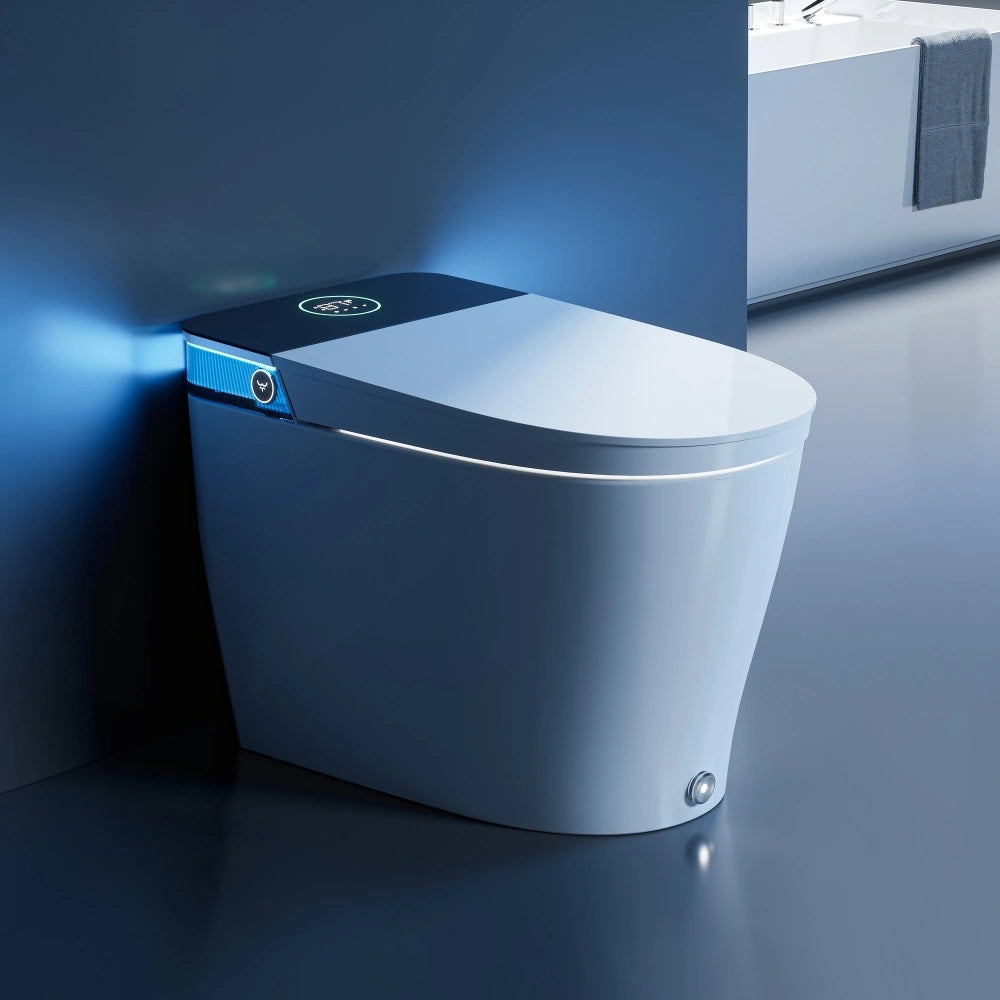
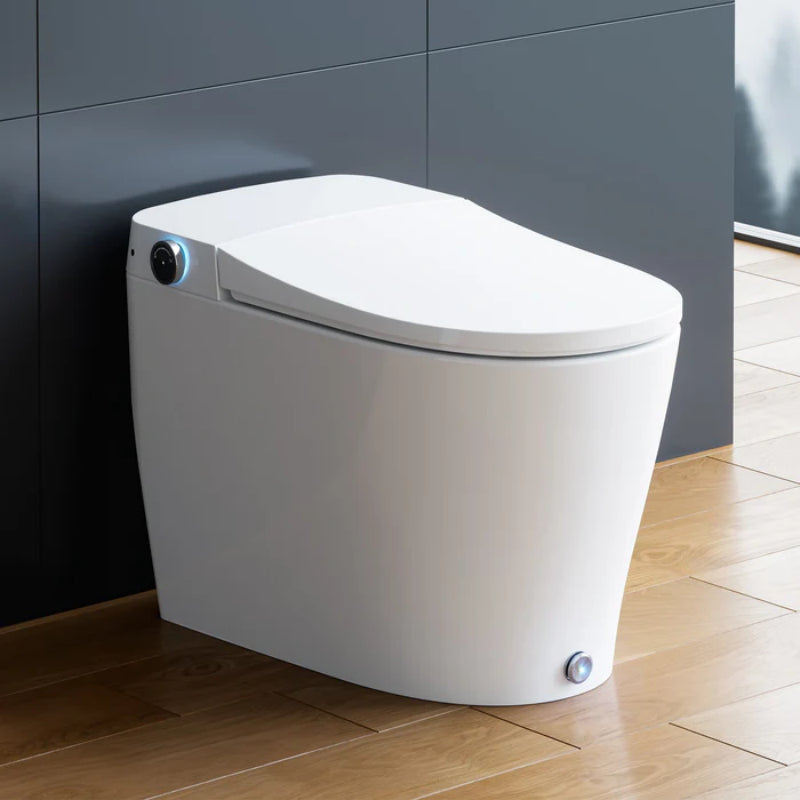

Automatic flush systems sound simple: a sensor detects you, a valve opens, the toilet flushes, and it shuts off. In real homes, the “simple” part breaks down fast—because the sensor depends on your layout, the valve depends on your water supply, and the shutoff depends on clean internal parts. This guide is not here to sell you on automatic flush. It’s here to help you figure out whether auto flush toilet troubleshooting will actually fix your problem in your bathroom—or whether you’re about to spend time and money chasing an issue that’s really caused by placement, pressure, or a failing valve assembly.
Decision Snapshot: When Auto Flush Toilet Troubleshooting will (and won’t) fix it
Rule of thumb: Troubleshooting works when the system is basically compatible with your bathroom and water supply, and you’re dealing with dirt, minor adjustment, or a wearable internal part. It fails when the bathroom layout or supply conditions make the sensor/valve unreliable by design.
Non‑negotiables before troubleshooting:
-
Minimum water pressure at the fixture: 0.14 MPa (~20 psi)
-
30-mesh inlet screen installed
-
Sensor mounting height/orientation: 40–50 cm above bowl with ~15° downward aim
Works best when the sensor detects correctly but the flush is weak
This is the “good candidate” category. You can often fix it with:
-
Flow regulator or control-stop adjustment (someone partially closed the supply)
-
Minor debris cleanup (filter screen, diaphragm area, valve seat)
-
Cleaning the motion sensor lens (soap film and dust are real problems)
-
Replacing a common wear part (diaphragm/seal) when the valve can’t move cleanly
If the unit consistently detects a person leaving, but the flush is weak or delayed, troubleshooting is usually worth it.
Fits but performs poorly:
-
Low-pressure condos or supply drops when other fixtures run
-
Reflective small bathrooms causing unavoidable false triggers
-
Varied user heights (kids vs adults) causing missed or mid-use flushes
Avoid or reconsider if it flushes randomly or continuously
Random and continuous flushes are usually not “one quick setting.” They’re often caused by:
-
Sensor seeing reflections (shiny tile, mirror, metal grab bar, bright sunlight)
-
Sensor misalignment (pointed at the fixture or a nearby wall)
-
Dirty lens causing false readings
-
A sticking valve piston/diaphragm that can’t reseat
If you cannot change the layout (tight bathroom, shiny surfaces, sensor must be off-center), you may keep getting callbacks forever: “why does my toilet flush randomly?”
Stop troubleshooting and plan replacement/manual fallback if pressure is low
Plan a different approach if:
-
Supply pressure is below ~0.14 MPa (about 20 psi) at the fixture, or it drops hard when other fixtures run
-
The supply valve can’t fully open (old stop, damaged stem, clogged stop)
-
Your home has repeated clogs or partial blockages
Auto-flush can make a partial blockage worse because it may re-flush when the bowl is already rising—and you may not have a fast “pause” option.
Visual Pre‑Check: 60‑Second Flow
Begin by ensuring shutoff safety: close the control stop and power off the unit before making any sensor adjustments. Next, check whether the sensor detects a user, indicated by a light, beep, or other signal. If it does not, verify the power source (battery or adapter) and re-test; if it still does not respond, inspect the sensor module, its aiming, and clean the lens.
If the sensor does detect a user, observe whether the toilet attempts to flush (listen for a click or solenoid activation). If no flush occurs, the issue is likely with the signal path between sensor and solenoid or a solenoid failure.
When the toilet does flush, check whether it is strong and shuts off correctly. Weak or incomplete flushes generally point to issues with water supply, the control stop, filter, diaphragm, or flush valve. Continuous or running flushes often result from a sticking piston or diaphragm, debris, a damaged seat, mis-triggers from reflective surfaces, or a solenoid stuck open.
The key principle is to treat detection, actuation, and water delivery as separate systems. This approach helps ensure the correct component is serviced or replaced, avoiding unnecessary repairs.
Who this is for / not for based on your bathroom conditions
Auto flush toilet troubleshooting is worth your time only if your bathroom can support reliable detection and the plumbing can support the valve.

For homes where the sensor can be centered and straight
Auto flush works best when the sensor can be mounted:
-
Centered over the fixture
-
Straight forward (not twisted toward a side wall)
-
Around 40–50 cm (16–20 in) above the finished floor for many common installs
-
With a clear line of sight to the user’s torso/legs as they stand
If you can’t place the sensor in a “normal” position, you’ll spend your time compensating with sensitivity settings that create new problems (misses or false flushes).
Not for bathrooms with frequent clogs or paper overuse
Here’s where people usually run into trouble: an automatic flush repeats when it shouldn’t.
If your household has:
-
Older drains that clog easily
-
Kids using too much paper
-
A history of slow clears
…then an automatic flush cycle can turn “slow bowl” into “overflow,” because the system may flush again after a person leaves—right when you’d normally stop and grab a plunger.
If you can’t quickly disable auto flush (or you forget to), this can become the annoying part you live with.
For plumbing that allows filter and service access
Troubleshooting is realistic only if you can:
-
Shut off the control stop
-
Relieve pressure
-
Open the valve cover
-
Remove and clean a filter screen
-
Access the diaphragm assembly and solenoid without breaking tile or pulling the fixture
If everything is buried behind finished walls with no access, the “simple repair” becomes a wall repair.
Buyer-doubt: Why does my toilet flush randomly even when nobody is there?
In homes, random flush is commonly caused by sensor confusion, not a “haunted toilet.” Typical triggers:
-
Sunlight moving across the sensor window
-
Reflections from shiny tile, mirrors, chrome, or a nearby glass shower
-
A sensor aimed slightly toward a side wall (it “sees” changing reflections)
-
A dirty lens that scatters infrared and creates unstable detection
If the bathroom is small and reflective, you may reduce it—but not eliminate it—without changing the layout.
Retrofit vs new-build: what changes
Retrofit installations carry risks including tile drilling cracks, loose wiring during retrofit, and wall modifications. Follow fastening guidance carefully: 0.24" holes spaced 2" apart where applicable.
Clearance minimums that make auto features unreliable
Ensure 15" centerline-to-side wall and 24" front clearance. Also verify rear space for cords/hoses and check for door or other fixture interference to maintain reliable detection.
Power reality check
A 110V outlet (GFCI protected) should be within ~3 ft of the toilet where required. Confirm cord routing is feasible in tight rear clearances, and establish stop-points if safe isolation cannot be guaranteed.
The trade-offs you accept by keeping auto-flush (even when it’s “working”)
Even a properly working automatic toilet flush system has built-in compromises. If those compromises don’t match your home, you’ll keep “fixing” problems that are really normal behavior for the tech.
Sensitivity vs. false triggers
Adjusting toilet sensor sensitivity can solve missed flushes. It can also create:
-
Mid-use flushes if someone shifts position
-
Flushes triggered by kids (smaller bodies can confuse some detection zones)
-
Flushes triggered by someone walking past the door in tight layouts
In practice, homeowners often raise sensitivity to stop “it doesn’t flush,” then get complaints: “it flushes while I’m still there.”
Detection is layout-dependent
Auto flush assumes a predictable stance and distance. In real bathrooms:
-
People stand off-center
-
Kids sit far forward or move a lot
-
Guests don’t know where to stand
-
A bidet seat can change where people position themselves
If the sensor’s emission angle and your real use don’t line up, you’ll see inconsistent activation.
Convenience vs. controllability
Manual flush gives you a moment to think: “Is the bowl rising? Should I stop?”
Automatic flush often removes that moment. If you’re dealing with partial clogs, that loss of control is not theoretical. It’s the difference between:
-
a single slow drain, and
-
multiple flush cycles that push it over the rim
Buyer-doubt: Is this still a good idea if multiple people use it?
It can be, but only if:
-
You can adjust sensitivity and delay
-
There’s a manual flush button/override
-
The sensor can be centered and aimed correctly
-
The bathroom isn’t highly reflective
If your household has big height differences (kids + tall adults), you’ll often end up compromising: set it for reliable adult detection, then teach kids to use the manual flush.
Cost and practical constraints that determine whether troubleshooting is realistic
Auto flush toilet troubleshooting is often cheap in parts, but expensive in time—especially if access is bad or you guess wrong.

Access and downtime
Before you start, confirm you can:
-
Close the control stop fully
-
Flush/relieve pressure without the valve fighting you
-
Remove the cover without stripping fasteners
-
Catch water from the valve body (have towels and a shallow pan)
If the system is hardwired and you can’t safely isolate power, that’s a stop point for many homeowners.
Tooling and parts reality
Common service items (varies by design) include:
-
Diaphragm assembly or seal kit
-
Solenoid
-
Sensor module
-
Filter screen
-
Battery compartment seals / O-rings
The catch: not every “looks similar” part is compatible. Small differences in valve body design, diaphragm thickness, or solenoid stroke can cause:
-
weak flush
-
no shutoff
-
constant running
-
water hammer noise
If you don’t have clear part matching, troubleshooting can become parts swapping.
Retrofit complication triggers
Auto flush becomes a project when you run into:
-
Drilling/fastening on tile (cracks are common if rushed)
-
Tight rear clearances for hoses/cords
-
Door swing or vanity placement that forces an off-center sensor mount
-
Grab bars or glossy wall panels in the sensor field
If you must mount the sensor “where it fits” instead of “where it should be,” expect false triggers.
Visual: cost-range table by fix type
| Fix type | Typical scope | Parts cost (USD) | Labor/time reality | When it becomes annoying |
| Clean lens + adjust settings | Wipe sensor window, set delay/sensitivity | $0–$10 | 10–30 min | Keeps coming back if reflections exist |
| Battery swap / reset | Replace batteries, reseat connectors, reset | $5–$30 | 10–20 min | Battery dies without warning; gasket leaks if pinched |
| Clean filter screen | Shut water, remove screen, rinse debris | $0–$15 | 30–60 min | Repeats if old pipes shed grit |
| Diaphragm/seal replacement | Open valve body, replace diaphragm, inspect seat | $15–$60 | 45–120 min | Wrong part causes run-on or weak flush |
| Solenoid replacement | Replace coil/solenoid, check wiring | $30–$120 | 45–120 min | If water is dirty, new solenoid sticks again |
| Sensor module replacement/re-mount | Replace sensor, re-aim, re-seal | $50–$200 | 1–3 hrs | Layout still causes false flushes |
| Supply rework (stop/pipe) | Replace control stop, improve flow, add filter | $50–$300+ | 1–4 hrs | Tile access or corrosion can blow the budget |
Numbers vary a lot by toilet type (tank vs flushometer) and access, but the pattern stays the same: dirt/adjustment is cheap, layout and supply problems are not.
Auto Flush Toilet Troubleshooting: Fit, sensor placement, and layout failure modes
If you’re seeing inconsistent behavior, start here before you touch the valve. Many “smart toilet sensor not working” complaints are actually aiming and reflection problems.
Sensor height and orientation thresholds
Common failure patterns I see in homes:
-
Too low: sensor “sees” the toilet body or the floor changes, not the user → false triggers or no flush
-
Too high: user falls outside the best detection zone → no flush unless you step back
-
Off-center: user stands to one side → inconsistent detection
-
Not straight: sensor aimed at a side wall → random flush from reflected signal
A slight twist can matter. If the sensor points at a glossy wall panel, it can read “movement” as lighting and reflections shift.
Vertical clearance constraint:
-
Ensure 359–420 mm (14–16.5 in) from tank bottom to lid top where relevant, as too little or too much vertical space can trigger “fit but flop” failures
Buyer-doubt: Will this work in a small bathroom?
Small bathrooms are where auto flush is most likely to act up because:
-
The sensor “sees” more surfaces close-up
-
Those surfaces are often reflective (tile, mirror, shower glass)
-
People pass close to the toilet on the way to the sink or door
If you can’t create a clean line of sight (and block reflections), you may reduce false triggers but not eliminate them.
Cleaning the motion sensor vs. phantom issues
Cleaning the motion sensor is not busywork. A thin film of:
-
soap spray
-
dust
-
hard-water spots
…can scatter the infrared signal enough to cause:
-
missed detection
-
delayed flush
-
random flush when lighting changes
Use a soft cloth and mild cleaner. Avoid abrasives and harsh solvents that haze plastic lenses. If the lens is scratched or permanently cloudy, cleaning won’t fix it.
Calibration isn’t automatic
-
Sensors may require manual aiming and calibration; assuming they self-adapt can cause missed detection, especially for smaller or off-center users
-
Check aim, height, and slight tilt before adjusting sensitivity or buying replacement parts
Sensor Mounting and Reflection Zones
For ideal performance, the sensor should be mounted with a slight downward angle of approximately 15° to maintain a clear line of sight to the user. Common issues include mounting the sensor too high, causing it to overshoot the user; too low, causing it to read the toilet body or floor; off-center, which can miss smaller users; and placement near reflective surfaces such as mirrors, glass, or glossy tiles, which can trigger false flushes. Even small adjustments of a few degrees can significantly improve detection before replacing any parts.
Plumbing and water supply prerequisites (reasons “sensor is working” but no flush)
This is the most common homeowner trap: the sensor detects, the indicator reacts, maybe you even hear a click—yet the toilet won’t flush or it flushes weakly. That’s usually water delivery, not detection.
Supply pressure and flow minimums
Automatic flush valves (especially flushometer-style systems) need enough pressure and flow to move the flush mechanism properly. According to EPA, high-efficiency toilets are designed to maintain effective flushing performance while using less water.
Red flags:
-
Pressure below 0.14 MPa (20 psi) at the fixture
-
Dynamic pressure under ~0.09–0.8 MPa during normal use, dropping hard when other fixtures run
-
Flow below ~4 gal/min during flush
-
Main inlet pipe diameter under 45–50 mm
-
Undersized or restricted supply piping
-
A control stop that’s only half open (often done to reduce noise)
-
Pressure that collapses when a shower, washer, or irrigation runs
What it looks like:
-
The unit “acts like it’s flushing” but the bowl only trickles
-
Flush is short, weak, or inconsistent
-
It flushes fine at night but fails at peak use (pressure drop)
If you can’t maintain stable supply, troubleshooting may only give you short-lived improvements.
How to test dynamic pressure/flow (quick homeowner method)
Check performance by observing flush while other fixtures run:
-
Turn on a shower or faucet elsewhere in the home
-
Initiate a flush
-
If flush weakens or fails during this test, supply is insufficient for reliable auto flush
Debris management and filters
A big cause of “random” behavior is grit inside the valve:
-
sand
-
pipe scale
-
tiny gravel-like debris after plumbing work
-
bits of rubber washer
A 30‑mesh solenoid inlet screen is a must-have and must be regularly serviced to prevent debris from interfering with the flush mechanism. Always inspect and clean the screen after any plumbing work, as disturbed piping can introduce new material into the system.
Without this fine screen, debris can:
-
stick the piston so it won’t close (continuous flow)
-
keep the diaphragm from sealing
-
block pilot passages so it won’t open fully
If you keep cleaning and the problem returns, the supply line may be shedding material, or recent plumbing work may have stirred debris back into the system.
Flush valve internals
If your sensor is working but the flush is weak or absent, inspect the parts that actually control water:
-
Diaphragm: can deform, swell, crack, or stiffen
-
Valve seat: can pit or get scratched by grit
-
Valve body: can crack or corrode (rare, but real)
-
Flow control/regulator: can be set too low or clogged
What tends to happen in practice: homeowners clean the lens, replace batteries, and adjust sensitivity—then nothing changes—because the real restriction is inside the flush valve or the control stop.
Buyer-doubt: My bidet toilet won’t flush auto—what changes?
A bidet seat can change the system in two ways:
-
Shared water supply: If the bidet tee shares the same stop/supply, it can reduce available flow during flush or introduce extra restriction. Some setups also create odd pressure behavior when the bidet valve is partially open or has a clogged screen.
-
User positioning: People sit differently with a bidet seat, and some seats change how far forward a person sits. That can move the user out of the sensor’s best detection zone, so the “person leaves” signal becomes inconsistent.
If your bidet toilet won’t flush auto, don’t assume the sensor failed first. Check supply restrictions and user detection geometry.
Power, signals, and electronics constraints that stop auto-flush cold
When the system is dead silent, don’t start with the valve. Start with power and the signal chain.
Battery vs. hardwired checks
Battery-powered systems:
-
Weak batteries can still light an indicator but fail under load when the solenoid tries to actuate.
-
Corrosion in the battery compartment can create intermittent failures.
-
A pinched gasket can let moisture in, causing repeat failures.
Hardwired systems:
-
Loose connections and unstable power can cause resets; connector/wiring looseness is a common retrofit failure.
-
If power flickers, the system may need a manual reset depending on design.
If you’re asking “does the sensor need new batteries?” and it’s been more than a year (or you don’t know), that’s not a bad first step—but only after you confirm the symptom matches a power issue.
Indicator light and basic logic
Indicators vary, but you can still use the same logic:
-
No light/no response: power problem (battery, connector, transformer, wiring)
-
Light changes with movement, no flush: sensor sees you, but signal isn’t opening the valve (sensor-to-solenoid wiring or connector issue)
-
Flushes when it shouldn’t: sensor is detecting “something” (reflection or lens issue) or the valve is sticking open
If the indicator behaves normally but the water behavior is wrong, move away from “sensor settings” and toward “valve mechanics.”
Sensor module vs. solenoid diagnosis
You’re trying to answer one question: Is the valve being told to open when it shouldn’t, or is it opening mechanically on its own?
Practical separation steps (general approach):
-
Confirm detection: does the sensor react when you step in/out?
-
Listen/feel: is there a distinct click when it “flushes”?
-
Distinguish symptoms:
-
Indicator reacts but no click/actuation: check sensor-to-solenoid signal, solenoid coil, and wiring/connector integrity.
-
Click occurs but weak/no flush: check control stop, supply pressure, filter, diaphragm, or blockage.
-
-
If it runs continuously: does disabling power stop the flow?
-
If yes → solenoid is being energized (false trigger or control issue)
-
If no → valve is mechanically stuck open or debris is holding it open
-
If you can’t safely isolate power or water, this is where a technician saves money by preventing damage.
Decision Guide: Is It Electronics or the Flush Valve?
Start by checking whether the toilet shows any indicator response at all. If there is no indicator light or reaction, the problem is almost always in the power path—such as dead batteries, a faulty transformer, loose wiring, or a system that needs a reset.
If the indicator reacts to movement, the sensor is detecting presence, so the next step is to listen or feel for a solenoid actuation click. When the indicator reacts but no click occurs, the issue is typically in the signal path between the sensor and the solenoid. Common causes include a failed solenoid coil, a loose connector, or damaged wiring.
If a click does occur, shift your focus to water delivery rather than electronics. A weak or nonexistent flush usually points to a partially closed control stop, low supply pressure, a clogged inlet filter, a dirty or damaged diaphragm, or an internal blockage.
If the toilet continues to run, test whether shutting off power stops the flow. If power-off stops it, the solenoid is being energized by a false trigger or control fault. If power-off does not stop it, the valve is mechanically stuck open—most often due to debris in the valve seat or diaphragm.
This process helps you avoid replacing a sensor module when the real issue is a dirty diaphragm assembly or a simple wiring problem, saving both time and money.
Long-term ownership: what fails first, what maintenance is non-optional, and when to quit
If you keep auto flush, you’re accepting a maintenance schedule. If you ignore it, the system will fail at the worst time—usually when guests are over.

Regular maintenance that prevents surprise failures
A realistic homeowner schedule (adjust for your dust and water quality):
-
Monthly: wipe the sensor lens (especially if aerosol cleaners are used nearby)
-
Every 6–12 months: check batteries (replace on a schedule if you hate surprises)
-
Every 6–12 months: rinse/inspect inlet filter screen if your water carries grit
-
After any plumbing work: clean the filter and check valve debris (construction debris is a top cause of sticking)
-
If you see “run-on” once: inspect diaphragm area soon; one episode often becomes repeat episodes
This isn’t about being picky. Automatic flush depends on small passages staying clean.
Continuous or repeated flush cycles
If your toilet:
-
flushes twice after one use,
-
flushes when nobody is there,
-
or runs on for more than a few seconds,
…treat it as an early warning, not a weird one-off.
The overflow risk path usually looks like this:
-
Partial blockage starts (slow bowl)
-
Auto flush triggers once (water rises)
-
Person leaves, sensor triggers again (water rises more)
-
Bowl overflows before anyone thinks to shut the stop
If your household has clog history and no easy manual pause, consider disabling auto flush or adding a reliable manual method.
When to replace instead of repair
Stop chasing it and consider replacement or a manual fallback when you have:
-
Recurring random flushes tied to layout you can’t change
-
A cracked diaphragm or repeated diaphragm failures (points to debris or incompatibility)
-
A damaged valve seat/body that won’t seal
-
Chronic low pressure you can’t fix
-
A bathroom where overflows are high-cost (finished floors below, shared wall with electrical, etc.)
-
No manual flush option and the household needs reliability
Sometimes the right answer is: keep the toilet, remove/disable the auto feature, and regain control.
Buyer-doubt: If I fix it once, what fails again?
In many homes, the repeat offenders are:
-
Batteries (if you don’t replace on schedule)
-
Lens contamination (especially near showers or heavy cleaner use)
-
Filter/diaphragm contamination (older pipes, well water, post-repair debris)
-
Solenoid sticking after grit passes the screen
-
Sensor false triggers when seasons change (sun angle/lighting changes can expose reflection problems)
If you’re seeing the same symptom every few months, it’s often a root condition (debris, reflections, pressure swings), not a one-time part failure.
Before You Buy checklist
Use this to avoid the common mismatches that make troubleshooting pointless:
-
Confirm you have stable supply pressure at the toilet; if it drops hard when other fixtures run, expect weak or inconsistent flush.
-
Check the control stop fully opens and fully closes. If it won’t, fix that first or nothing else will be reliable.
-
Look for reflective surfaces in front/side of the sensor (mirror, glass, glossy tile, metal bars). If you can’t change them, expect random flush risk.
-
Verify you can access and service the valve body (cover removal, diaphragm access) without damaging tile or cabinets.
-
Plan a debris strategy: if your plumbing sheds grit, make sure a filter screen exists and can be cleaned.
-
Confirm there is a manual flush fallback (button/handle/override), or a fast way to disable auto flush during clogs.
-
If a bidet shares the supply, check restrictions (small hoses, clogged screens) and confirm flush performance with the bidet valve closed/open.
-
Decide in advance when you’ll stop troubleshooting (for example: after one diaphragm + one solenoid attempt, or after one reflection/aiming change).
-
Confirm minimum bathroom clearances: 15" from centerline to side walls, 24" front clearance, and check for door swing or other fixture interference that could affect auto lids or features.
-
Verify power availability and routing: 110V outlet/GFCI proximity (~3 ft) and feasible cord routing before committing to troubleshooting or replacement parts.
-
Confirm the presence and serviceability of a 30‑mesh inlet screen and plan cleaning frequency if older pipes shed grit.
-
Confirm the sensor can be mounted at functional height and orientation (40–50 cm above floor, straight, ~15° downward aim) without being forced off-center by bathroom layout.

FAQs
1. Why won’t my toilet auto-flush anymore?
When an auto flush toilet doesn’t work but the sensor light still reacts, it usually means detection is fine and the problem is happening further downstream. One of the most common causes is a solenoid malfunction, loose wiring, or a clogged filter creating an obstruction. Low water pressure, a partially closed supply valve, or a worn diaphragm can also limit flow, so the flush never completes. A good auto flush toilet troubleshooting tip is to listen for a click when the sensor activates. No click often points to an electrical issue, while a weak or short flush suggests a water-delivery problem. Working through these checks step by step helps you resolve the real cause instead of guessing.
2. Can I turn off the auto-flush feature?
Often yes, but it depends on the design. Some systems include a manual mode, a hidden switch, or a way to bypass the sensor by disconnecting the power supply. Others allow you to rely on a button or manual handle instead. As a safety measure, if turning off power does not stop water from running, the valve is mechanically stuck open and you must shut off the control stop immediately. That simple step can prevent flooding and give instant relief. Turning off auto-flush can also be a temporary solution while you troubleshoot or wait for parts.
3. Does the sensor need new batteries?
Weak batteries are a surprisingly common reason auto flush features stop working. The indicator light may still turn on, but there isn’t enough power to send a strong signal to the solenoid. If it’s been a year or you’re unsure when they were last replaced, changing batteries is an easy first measure. Corrosion in the battery compartment can also interrupt the circuit, so clean the contacts if needed. As part of basic troubleshooting tips, always start with fresh batteries before assuming a major malfunction.
4. How do I reset my smart toilet system?
Most systems can be reset by removing power for a short time — either take out the batteries or switch off the power supply, wait about 30–60 seconds, then restore power. This clears minor software glitches and can restore normal function. If the toilet works again only briefly, the issue is probably not software but mechanical sticking, debris, or unstable power. A reset is best used as a quick test, not a permanent solution, within your auto flush toilet troubleshooting process.
5. Why does it flush when no one is there?
Random flushing is usually caused by reflections or physical contact with nearby surfaces. Mirrors, glass, glossy tile, or even passing shadows can trigger the sensor. Start by cleaning the sensor lens and re-aiming it straight and slightly downward. Removing reflective objects in front of the toilet can help. In small bathrooms, false triggers may be hard to eliminate completely. This type of preventative adjustment often resolves the issue without replacing parts.
6. Can I manually flush if the sensor fails?
Yes, many auto flush toilets still include a manual button or hidden override. Using this allows the toilet to function normally even if the sensor is offline. If there is no manual option, cutting power may place the unit into a default mechanical mode, depending on design. Knowing how to manually flush is a practical solution during troubleshooting or while waiting for repairs, and it ensures the toilet remains usable even when the auto function malfunctions.
References


Leave a comment
This site is protected by hCaptcha and the hCaptcha Privacy Policy and Terms of Service apply.