
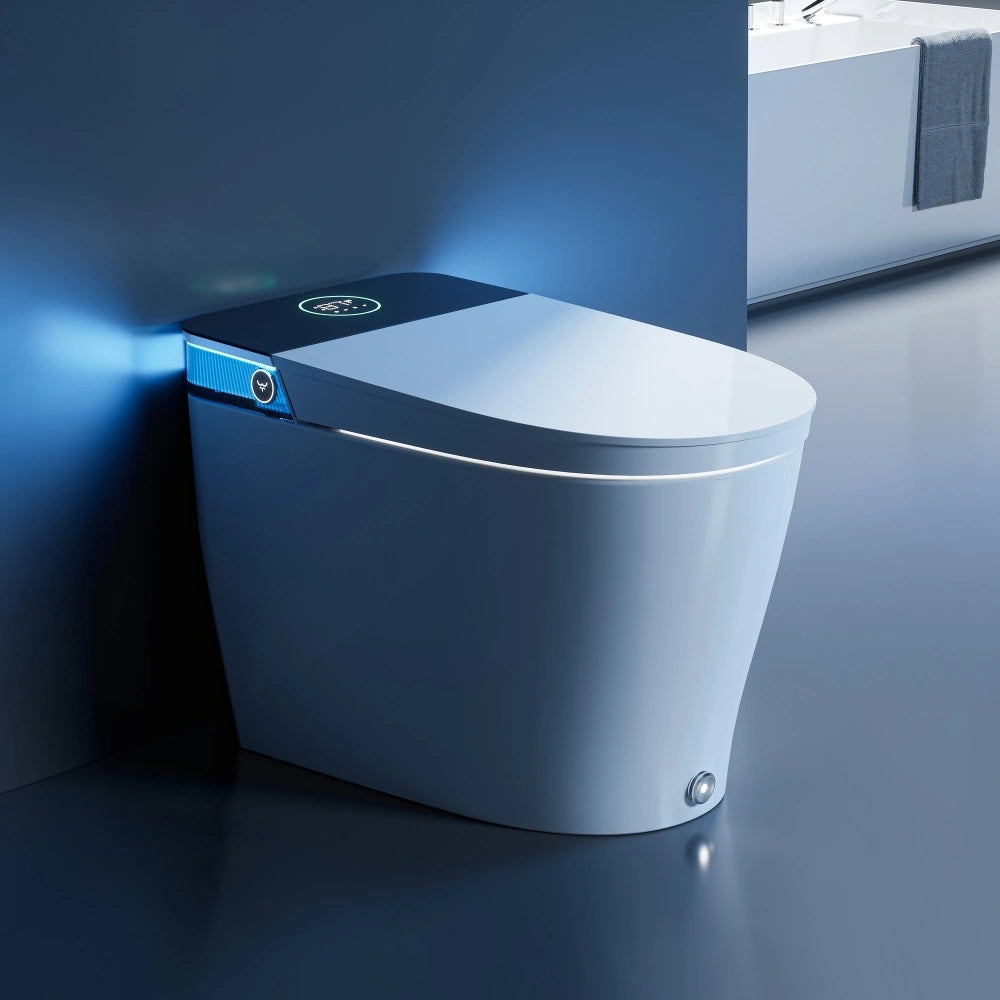
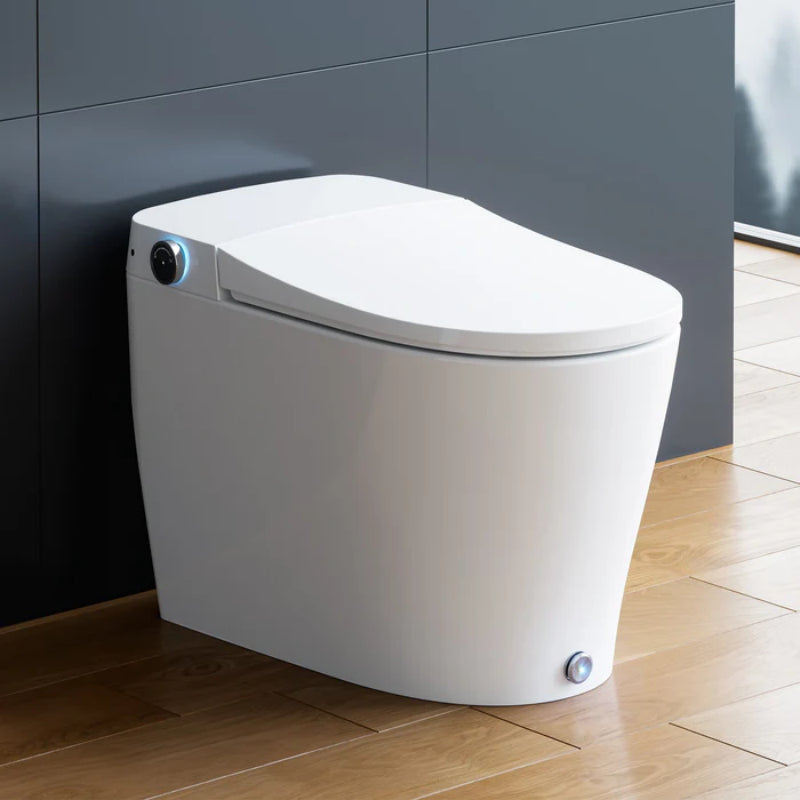
A lot of homeowners search for an ada smart toilet small bath when they want one bathroom to do many jobs at once: safer sitting and standing, bidet cleaning, bidet cleaning, heated seat comfort, and a layout that still works in a tight room. A well-designed setup reduces the need for constant help and improves ease of use for users with limited mobility across daily tasks. When smart toilets come in a range of styles and configurations, matching the right one to a specific room requires more than a product search.
This guide is not about which model is prettiest or most popular. It is about whether this type of toilet will work in your room, what tends to fail, and when a simpler setup makes more sense.
Decision snapshot for small bathrooms
Every ada smart toilet small bath search should start with layout requirements, not feature lists. If you only read one section, read this one.
An ADA compliant smart toilet for elderly users or aging-in-place planning usually works best when the bathroom already has decent floor space, a standard rough-in, and power nearby. It is often a solid fit in a hall bath, primary bath, or accessible guest bath where the goal is easier transfers and less help with cleaning.
Per ADA standards, toilets are defined by a seat height of 17 to 19 inches (430–485 mm), measured as the inches from the finished floor to the top of the toilet seat—not the bowl. The upper limit is 19 inches from the finished floor, and that ceiling matters for compliance verification. Many product listings show bowl height instead of seated height, which can be misleading. Toilets include this distinction in their spec sheets, but it is easy to overlook when comparing models online. Always confirm the installed seat height with the seat included, because that is what determines real usability for sitting and standing. According to ADA accessibility guidance, seat height verification is a core part of determining whether a toilet installation truly meets accessibility standards.
It usually goes wrong in very small bathrooms where the toilet fits but the user does not. That is the main mistake.

Works best with 60-inch front clearance
This setup works best when there is about 60 inches of clear space in front of the toilet for approach and maneuvering. Based on guidance from the U.S. Access Board, adequate maneuvering clearance is essential for wheelchair approach and assisted transfers in accessible bathroom layouts. That is the point where a compact ADA bidet toilet for handicap accessible bathrooms starts to function like an access upgrade instead of just a taller toilet squeezed into a corner.
If you have much less than that, wheelchair approach and assisted transfers become hard or impossible. Even for users who do not use a wheelchair full-time, short front clearance makes walkers, caregiver help, and turning space awkward. Treating front clearance as a fixed minimum, not an approximation, is one of the most important habits when planning an ada smart toilet small bath layout.
Avoid if no nearby GFCI outlet
A smart toilet is not really “smart” without power. If there is no GFCI-protected outlet within 1.2 meters of the toilet, the project usually needs electrical work before the toilet can be used as intended.
Here’s where people usually run into trouble: they budget for the toilet and plumbing, then find out they also need a new outlet, wall opening, patching, and sometimes a circuit check. In a small bath, there is often no good place to hide a cord, so extension-cord workarounds become both ugly and unsafe.
Reconsider if rough-in is not 12 inches
A 12 inch rough-in ADA smart toilet for tight spaces is the common retrofit target because many existing homes are built around that standard. If your rough-in is not close to 12 inches, many compact smart toilets will not sit properly over the flange.
How to measure rough-in correctly: measure from the finished wall surface (not baseboard or trim) to the center of the floor flange bolts. If trim is present, measure from the wall behind it or subtract the trim thickness.
Also note that rough-in is not perfectly forgiving. Some toilets allow small variance (for example ±10–15 mm), but others do not. Always check the manufacturer’s spec sheet for allowed tolerance before buying.
A mismatch can lead to poor sealing, unstable mounting, or a toilet that sits too far off the wall and steals precious inches from the room.
Poor fit if grab bars crowd transfer space
Poor bar placement can restrict range of motion during sitting and standing and create discomfort for users with limited shoulder reach or arm strength. In a small bath, grab bars can reduce usable side approach and arm movement even if they are technically installed correctly.
For planning, note the core basics: grab bars are typically mounted at 33–36 inches (840–915 mm) above the finished floor, and commonly require adequate side and rear bar lengths to support stable transfers.
In tight layouts, these bars can interfere with elbow movement, hand placement, and transfer paths if not coordinated with the toilet position. What looks compliant on paper can still feel cramped in real use.
This is one of the least understood issues in accessible planning. Poor coordination here can make daily use difficult even when every individual element meets code on paper.
Who should and shouldn’t choose this
For many families, the ada smart toilet small bath question is really an aging-in-place question in disguise.
Best for aging-in-place retrofits
The best ADA compliant bidet toilet for aging in place in a small home is usually one installed in a bathroom that already has decent approach space, reliable electrical access, and a user who benefits from comfort height plus wash functions.
This is where heated seats and bidet wash functions directly address the problem. A fall-risk user with knee pain or balance issues benefits far more from seat height and cleaning support than from features alone. The user may have knee pain, balance issues, or trouble twisting for hygiene. In that case, seat height and bidet cleaning can reduce strain in a real way.
This choice is especially practical when the homeowner wants to stay in the home for years and is already updating flooring, grab bars, lighting, and doorway access. Then the toilet is part of a full access plan, not a single isolated purchase.
Wrong for baths under wheelchair-clearance minimums
Can a small bathroom be ADA accessible? Sometimes partly, but not always in a true usable sense. If the room does not have enough floor area for approach, transfer, and door clearance, an ADA smart toilet will not fix that.
This is where people get disappointed. They search for an ada smart toilet small bath option, find a compact model, and assume they have solved accessibility. But bathroom space requirements for true wheelchair approach go far beyond the toilet footprint. In practice, the room can still fail the daily-use test. If a wheelchair or walker cannot line up properly, the toilet height does not matter much.
Overkill where a bidet seat solves access
An ADA smart toilet vs ADA bidet seat for a small bathroom is often the real decision, and many homes do better with the bidet seat.
In that context, the best ada bidet for tiny homes is often not a full smart toilet at all, but a bidet seat mounted to the existing fixture. If the existing toilet already has the right bowl position, enough transfer room, and the right seat height or can be changed to comfort height, adding a bidet seat can be the cleaner solution. You may avoid moving plumbing, avoid a new base that eats up floor area, and spend less on electrical and installation work.
A full smart toilet makes more sense when the old toilet is wrong in several ways at once: poor height, poor flush, outdated bowl shape, and no easy way to add bidet features cleanly.
Too tall for some shorter users
A comfort height smart toilet for small space bathrooms can help many seniors, but taller is not always better. When a comfort height smart toilet feels too tall for shorter users, you see a different set of problems: feet not resting flat, a perched feeling when lowering onto the seat, less push-off control, and reduced stable seating during transfers.
This matters in shared households. A toilet that works well for a tall adult with arthritis may feel awkward or unsafe for a shorter spouse, child, or guest. The best smart toilet height for seniors with limited mobility is often in the ADA range, but only if the main user can sit with feet planted and stand with control.
Trade-offs in tight bathroom layouts
In tight bathroom layouts, every inch affects both comfort and usability. Before choosing fixtures, it’s important to understand the practical trade-offs that can impact how the space actually functions day to day.
Comfort height reduces child and short-user stability
A comfort-height or ADA-height toilet is usually easier for standing up, but there is a tradeoff. The height can feel unstable or disconnected for users whose feet do not fully contact the floor. Short users may not get full foot contact on the floor. That reduces balance and can make the toilet feel less secure. According to fall-prevention guidance from the CDC STEADI initiative, stable foot support is an important factor in reducing fall risk for older adults during sitting and standing movements.
In real homes, this becomes annoying faster than buyers expect. They think only about the person who needs help standing. Then grandchildren visit, or a shorter partner starts using a step stool, or the main user realizes that “higher” feels less stable than expected.
Smart bases consume more floor space
A can a compact smart toilet meet ADA height requirements question often leaves out one detail: many smart toilet bases are bulkier than standard toilets, even when the bowl length looks compact on paper.
The base can flare out, the back housing can sit proud of the wall, and access panels may need side clearance. In a tiny bath, that means less visible floor, less toe room, and less space beside the bowl for cleaning or transfers.
In the worst cases, an ada smart toilet small bath install can even become non-compliant in practice when the base reduces front or side clearance below usable minimums.
Door swing can block transfer access
Door swing is one of the biggest layout killers. A toilet can meet height and rough-in needs, but if the door swings into the transfer zone, the room stops working well.
This is common in older homes. The toilet sits close enough to the door that when someone enters, the open door blocks leg space or approach angle. If a caregiver needs room, the problem gets worse. When designing an accessible guest bath or any high-traffic bathroom, door swing should be evaluated before any toilet is selected—not after it arrives.
Vanity edges can limit knee and toe space
Good bathroom design accounts for vanity toe-kick space as part of the approach path, not just a visual finishing detail. Vanities often create the “pinch point” in a small bath. The front edge or corner can intrude into the approach path and make the toilet feel more cramped than the room dimensions suggest.
Add a quick usability test: check whether there is enough toe clearance (toe-kick space) at the base of the vanity for feet, walker tips, or wheelchair positioning. If the vanity has a flat vertical face with no recess, it can block forward positioning even if side clearance looks adequate. Walker tips and other mobility aids need the same toe clearance at the vanity base that users need at the toilet itself.
This matters more than just avoiding a “corner bump.” Toe clearance directly affects how close a user can position their body for stable sitting and standing.
Retrofit costs and hidden installation work
The toilet itself is often only part of the bill. The hidden work is what changes the total cost.
Outlet relocation adds electrical labor

No nearby GFCI outlet is a common reason a smart toilet project becomes more expensive. In a small bath, adding one may involve opening finished walls, pulling wire through tight framing, and patching tile or drywall.
If the bathroom is older, an electrician may also need to verify the circuit can support the load. Heated water, seat heating, dryers, and auto features are not heavy compared to large appliances, but they still need safe, code-compliant power.
A plumber may also need to adjust supply connections at the same time if the new unit has different inlet or thread requirements, compounding the labor visit.
Old flanges often need leveling or shims
Flange repair is often part of this process, especially in older homes where the flange has cracked, shifted, or been buried under added tile layers. A toilet swap sounds simple until the old toilet comes off. Then the flange turns out to be too high, too low, tilted, or damaged. Uneven floor surfaces also show up fast once the new base is set.
Here’s what tends to happen in practice: the homeowner expected a one-hour replacement. Instead, the installer spends time leveling, shimming, checking seal compression, and making sure the toilet does not rock. Smart toilets are less forgiving because the base is heavier and more integrated.
If the floor is uneven and the base rocks, leaks may not show right away. They can start as tiny seal failures and become bigger problems later.
Nonstandard supply threads cause adapter delays
Many buyers assume standard lines will connect directly. That is not always true. Smart toilets can have specific hose, valve, or thread requirements. If the water supply connection does not match, work stops until adapters arrive.
This is not a huge cost item by itself, but it causes delay and frustration. The small bath may be out of service longer than planned, and if the old toilet is already removed, the family is stuck waiting.
Wall-hung installs need structural verification
Some homeowners look at wall-hung handicap accessible compact toilets because they appear to save floor space and simplify cleaning. In a very small bath, they can help visually and may ease floor cleaning. But they are not a simple swap.
The wall must support the carrier system and expected user loads. If the wall is not suitable, you are into framing work, structural checks, and often a deeper remodel than planned. For many small-bath retrofits, floor-mounted is the more realistic choice unless the room is already being rebuilt.
Will ada smart toilet small bath actually fit?
This is the main question, and “fit” means more than bowl length.
What happens if front clearance is short?
If front clearance is short, the toilet may still install, but use becomes compromised. Knees crowd the door or vanity. A walker cannot align well. A caregiver has no standing room. Wheelchair approach fails.
The difference between “it fits” and “it works” is huge in a small bathroom. People often realize too late that the front space is what makes the room usable, not just the gap between side walls.
Centerline spacing must stay 16–18 inches
For accessible planning, the toilet centerline usually needs to sit in a proper relationship to the side wall or nearby obstruction. If the bowl is pushed too close to one side because of a vanity, tub edge, or wall bump-out, the transfer side and bar location stop working as intended.
That matters when choosing how to choose a handicap accessible toilet for a tiny bathroom. The bowl position in the room can matter more than the toilet’s listed width. Misaligned centerline placement is one of the most common reasons an ada smart toilet small bath install feels cramped even in a room that appeared large enough during planning.
Grab bars can shift usable toilet position
How grab bars affect ADA smart toilet placement in a small bath is often missed until layout day. A grab bar can make a technically acceptable toilet position feel unusable if it intrudes into elbow room or blocks the natural hand path during sitting and standing.
Add one practical check: make sure the flush or control interface is reachable from the open side, can be operated with one hand, and is not blocked by grab bars, walls, or nearby fixtures like vanities.
Bars also change where users place their body. If the bar forces a slight twist or offset, the user may not sit centered on the toilet. Users with limited shoulder reach or reduced arm strength are especially affected when controls or bars are positioned on the wrong side. In a very small room, that can make a comfort-height toilet feel awkward rather than supportive.
Angled walls and baseboards steal inches
Small baths often have little quirks that drawings ignore: thick baseboards, out-of-square corners, radiator pipes, angled walls, trim returns, or a vanity top that projects more than the cabinet below.
These small protrusions matter. They steal the exact inches compact toilets rely on. So when measuring for an ada smart toilet small bath install, always measure from the actual finished surfaces—not the nominal room size—and account for every protrusion.
Plumbing and power limits that break performance
Smart toilets come with a specified pressure range for a reason—operating outside that window degrades both flush and wash performance.
Low water pressure weakens flushing
Many smart toilets need a minimum water pressure range to flush and wash correctly. A typical working range is about 20–80 PSI (0.1–0.5 MPa), depending on the model.
If the home pressure is below this range, flushing performance and wash functions may feel weak or inconsistent.
This is one of those failures that looks like a bad toilet but is really a house-system issue. Always verify your home pressure before buying, especially if other fixtures already feel weak.
Undersized drains increase clog risk
If the drain line is undersized, partially blocked, or poorly aligned with the outlet, a smart toilet can clog early.
As a reference point, many systems are designed around 4-inch (Φ100 mm) drain compatibility, and deviations from this—especially in older homes—can affect performance.
If the branch line is already marginal, changing to a different outlet geometry can expose the weakness fast. Always verify drain size and condition before buying, not after installation problems appear.
Debris can jam smart inlet valves
Smart toilets have valves and wash components that do not like debris. Sediment, scale, or particles in the supply line can jam inlet valves and create weak flow, fill problems, or inconsistent wash performance.
This is especially common after plumbing work if lines are not flushed well before final hookup. Homeowners then think the toilet arrived defective when the real problem is debris in the water path.
No power means lost bidet and heat
This sounds obvious, but many buyers still underplay it. If power goes out, many smart functions stop. Depending on the unit, flushing may be limited or basic-only, and bidet, dryer, heated seat, and auto features may be unavailable.
Battery backup is often less useful than people expect. In outage-prone areas, do not assume a smart toilet will keep all functions active for long.
Installation failures that show up fast
A toilet can meet ADA height but still fail as a practical install if the floor is uneven, the flange is off, or the surrounding alcove restricts access.

Uneven floors cause rocking and leaks
A rocking toilet is not just annoying. It can break the seal over time and lead to leaks. Small baths often have patched floors, older tile work, or transitions that make level placement harder.
Because smart toilets are heavier and more integrated, they do not tolerate bad floor prep well. Tightening bolts harder is not the fix. Proper leveling and support are.
Misaligned outlets prevent proper sealing
If the outlet or flange is slightly off, the toilet may appear seated but not seal correctly. This is where callbacks happen. The toilet seems fine on day one, then odor, seepage, or movement starts later.
In small bathrooms, installers also have less room to see and work around the base, so mistakes can be easier to miss during a rushed install.
Tight alcoves restrict bolt and hose access
A compact bathroom often means tight side access. That makes it harder to reach anchor points, water connections, and service areas. Some toilets look compact from the front but still need side or rear room during installation and future maintenance.
This matters because a unit can be technically installable but miserable to service. When tight access is the norm, even basic features make servicing far more time-consuming than a typical toilet swap—and sometimes require full unit removal.
Will a compact model still meet ADA height?
For buyers researching comfort height bidets for small spaces, this section is the most relevant in the guide. Can a compact smart toilet meet ADA height requirements? Yes, some can. But compact front-to-back size does not guarantee the final seat height is in the right range. Product listings may describe bowl height, not seated height, or mix dimensions in a confusing way.
The key point is to verify the finished seat height, not just the bowl. That is what determines whether it functions as a comfort-height or ADA-height setup for the intended user.
Also, if you are wondering whether some compact smart toilets are ADA compliant height, the answer depends on the exact installed seat height and use context, not just the marketing label. Some manufacturers, including Horow, market specific models as compact ADA-compliant units. An Horow ADA compliant bidet listing may still show bowl height rather than final seated height, so verifying the installed measurement remains essential. As small space accessibility solutions 2026 guidance continues to evolve, seat height verification—not label trust—is the consistent recommendation.
Long-term regret and better alternatives
In the long run, small design compromises can turn into daily frustrations. Looking ahead at maintenance, reliability, and flexibility helps avoid choices that feel limiting after just a few months of use.
Battery backup disappoints in outage-prone homes
If your area has frequent outages, do not count on battery backup to preserve the experience you paid for. It may support only limited functions, and some users are surprised by how quickly backup support is exhausted.
In that case, paying extra for a fully integrated unit may not bring much real-world value compared with a simpler toilet and seat combination.
Sealant curing time is often ignored
Another common mistake is using the toilet too soon after sealing work. If curing time is skipped, small leaks and movement can start before the installation has fully set.
This tends to happen because the bathroom is the only one in the house, so the family needs it back right away. In a small bath, where clearances are already tight, any movement at the base tends to become a bigger problem later.
ADA bidet seat may fit better
In the ada smart toilet small bath vs bidet seat comparison, many homes with tight layouts are better served by the seat option. For many homes, ADA smart toilet vs ADA bidet seat for a small bathroom should be answered in favor of the seat.
If the existing toilet has a workable location, decent transfer room, and a compatible height, an ADA bidet seat may give most of the practical benefit with fewer layout risks. It can be easier to replace later, easier to service, and less invasive to install.
This is often the better route when the room is tiny but the homeowner still wants cleaning help and senior comfort.

Maintenance access shrinks in very small baths
Even when smart toilet height for elderly comfort is the primary goal, long-term maintenance access must be part of the planning. Maintenance is rarely part of the buying excitement, but it matters. In a very small bath, every repair is harder. Accessing filters, the lid, nozzle components, and inlet valves in a confined space can require awkward positions or complete unit removal. Accessing filters, valves, hoses, and mounting points can mean awkward body positions, extra labor time, or full unit removal.
That is why accessible guest bathroom ideas with a compact ADA smart toilet should include service access, not just user access. What works on move-in day can become frustrating two years later when a part needs cleaning or replacement.
Before you buy
Before committing to an ada smart toilet small bath purchase, verify ADA compliance at the system level—clearances, seat height, and grab bar coordination together, not just the toilet spec sheet. Use this checklist before ordering anything:
-
Measure from the toilet centerline to the side wall or obstruction (16–18 inches recommended). If this fails, the layout likely will not support proper transfer or grab bar use.
-
Measure clear floor space in front of the toilet. If it is well under 60 inches, usability drops fast.
-
Confirm the rough-in is 12 inches unless the exact toilet is made for your measured rough-in.
-
Check for a nearby GFCI outlet within 1.2 meters. If none exists, price electrical work first.
-
Verify the finished seat height (17–19 inches), not just bowl height, and think about shorter users too.
-
Inspect floor level and flange condition before install day. Rocking and bad seals often start there.
-
Check home water pressure (ideally within ~20–80 PSI) and drain condition if the current toilet already flushes weakly or clogs often.
-
If the room is very tight, compare the project against an ADA-height toilet plus bidet seat before choosing a full smart toilet.
FAQs
1. What is the best ADA smart toilet for a small room?
The “best” option is usually a compact floor-mounted unit with a verified ADA seat height (17–19 inches) and a 12-inch rough-in. In very small rooms, the best choice is often not a full smart toilet at all, but an ADA-height toilet with a bidet seat. Based on U.S. Access Board guidance, layout and clearance matter more than brand.
2. How much space is needed for a handicap bidet?
A functional setup typically needs about 60 inches (1520 mm) of front clearance and proper side spacing for transfers. Less space may still allow installation but reduces usability. Based on U.S. Access Board recommendations, maneuvering space—not just fixture size—is what makes a bathroom accessible.
3. Is a comfort height toilet better for seniors?
Often yes, because it reduces strain when standing. However, it can feel unstable for shorter users if their feet do not rest flat. The CDC (fall prevention guidance) emphasizes stable footing, so height should match the primary user’s body, not just follow a standard.
4. Can a small bathroom be ADA accessible?
Partially, but not always fully. A small bathroom can include ADA features, but true accessibility depends on clearances, door swing, and transfer space. According to HUD USER, many compact layouts fall short of full compliance even if individual fixtures meet ADA specs.
5. What makes a bidet ADA compliant?
A bidet (or bidet seat) must support accessible use: proper seat height (17–19 inches), reachable controls, operable with one hand, and usable within compliant clearances. As defined by ADA.gov and U.S. Access Board, compliance is about the entire setup—height, controls, and surrounding space—not just the product itself.
Reference


Leave a comment
This site is protected by hCaptcha and the hCaptcha Privacy Policy and Terms of Service apply.