
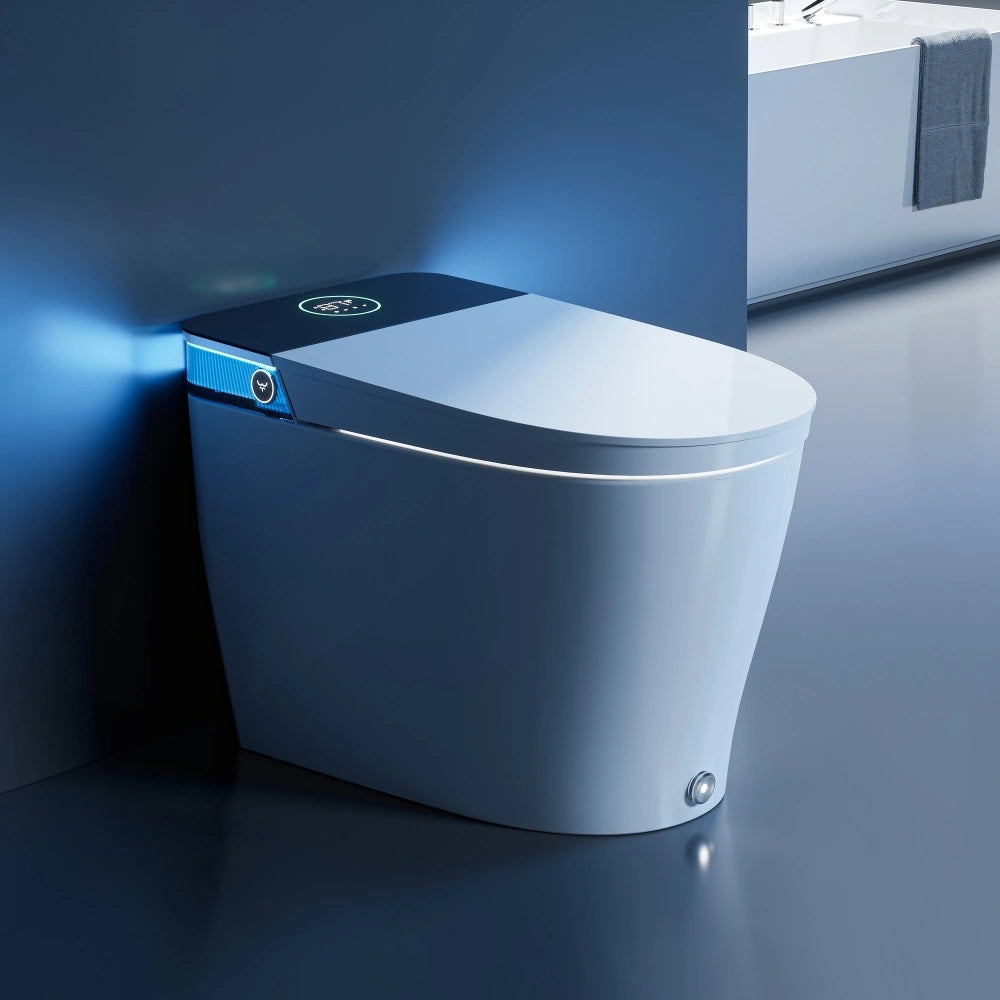
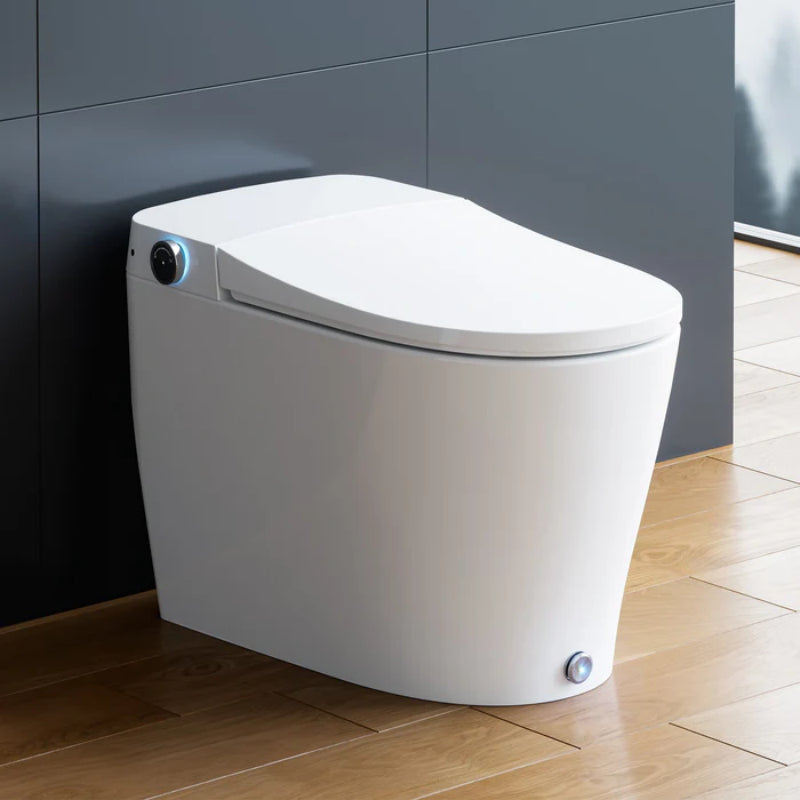
“ADA compliant” sounds like a simple box to check. In real bathrooms, ada compliant smart toilet height is one of those specs that can either make daily life easier—or create a constant low-grade problem you can’t unsee once it’s installed.
The ADA height target (the one most homeowners are chasing) is 17 to 19 inches from the finished floor to the top of the toilet seat. That range, defined in the 2010 ADA Standards for Accessible Design, can be a big help for many adults with mobility limits. But it can also backfire in multi-user homes, smaller bathrooms, or older houses with non-standard plumbing.
This guide stays execution-focused: what to measure, what typically fails, what costs more, and what gets annoying if the height and your bathroom don’t match.
Decision Snapshot: When ADA smart height works (and when it backfires)
The 17–19 inch ADA-compliant height can transform comfort and accessibility, but it works only when matched to your household and bathroom layout.
Choose 17–19" for transfers and easier standing
Choose an ADA-height smart toilet (17–19" floor-to-seat) when the primary user:
-
transfers from a wheelchair
-
uses a walker or cane and struggles with sit-to-stand
-
has knee/hip limits or recent surgery
-
is an older adult who needs a higher seat to reduce strain
In these cases, the “comfort height” range is not a luxury feature. It’s a function-and-safety spec.
Avoid if kids or shorter adults need stability
Avoid or rethink ADA-height smart toilets when your daily users include:
-
children
-
shorter adults (often under about 5'4")
-
anyone who feels unsteady if their feet can’t plant flat
A taller seat can feel like you’re “perching.” That’s when you see foot dangling, sliding forward on the seat, or a hesitant, unstable sit-down. Those are not minor comfort issues—they’re fall-risk behaviors.
Spec fits, real bathroom fails triggers
Here’s where people usually run into trouble even after picking the “right” height:
-
Rough-in isn’t 12" (wall to drain center) and the base won’t land correctly
-
Uneven floor or recessed/elevated flange makes a heavy smart toilet rock
-
The side clearance is tight (toilet centerline to wall/vanity under ~16–18")
-
No nearby GFCI outlet (cord won’t reach; extension cord is a bad idea)
-
No service access for filters, hoses, or shutoff valve
If any of those are true, the height spec alone won’t deliver accessibility. It can even make the bathroom harder to use.

Who this is for / not for in real households (not just “ADA compliant”)
ADA-compliant height works very well for some users and can feel awkward or unsafe for others. Below is a clear, real-world breakdown of who benefits most from this height, who may struggle, and when a comfort-height intelligent toilet is unnecessary for your household.
Best-fit users: transfers, limited flexion, recovery, aging
ADA-height toilets exist for a reason. In practice, they help most when the user needs to reduce the range of motion at the hips and knees.
Best-fit scenarios:
-
Wheelchair transfer users who need a seat height closer to chair height for a safer lateral move
-
People with limited knee flexion who can’t bend deeply without pain
-
Post-surgery users (hip/knee) who have temporary movement limits
-
Older adults who can sit but struggle to stand without using momentum
Smart features can also help, but only if they match the person’s abilities:
-
a bidet that reduces twisting and reaching
-
an auto-flush that reduces touch points (helpful for tremor, arthritis)
-
a dryer that reduces wiping needs (helpful for shoulder limits)
The key point is that height spec helps most when it reduces strain and the user can still stabilize with their feet and hands.
Poor-fit users: kids, petite adults, and “feet must be flat”
Households get into trouble when the bathroom is shared.
Common poor-fit scenarios:
-
A parent installs ADA height for aging in place, but the main daily users are average-height adults and kids.
-
A shorter adult uses the toilet multiple times a day and feels unstable because their heels don’t sit down.
-
A teen sits with feet dangling and slides forward, especially on slicker seat materials.
If you already know someone in the home prefers a lower chair, a taller toilet can feel wrong every day. People adapt by:
-
balancing on toes (fatiguing and shaky)
-
scooting forward (less stable, messier use)
-
using a stool (adds clutter and trip risk in small bathrooms)
When comfort height intelligent toilets are overkill
Sometimes the goal isn’t the bowl height at all—you just want bidet hygiene.
If the users are generally mobile and the main goal is cleaning help, a simpler path can work better:
-
keep the existing standard-height toilet
-
add a bidet seat or attachment that fits the user’s reach and control needs
This can avoid hard problems (rough-in mismatch, flange issues, heavy base installation, electrical retrofit). ADA height is not automatically “more accessible” for every body and every household.
The trade-offs created by 17–19" seat height in daily use
While a 17–19" ADA height offers clear accessibility benefits, it also creates real-world trade-offs in comfort, safety, and daily usability.
Total installed height trap
Homeowners often buy based on a listed “toilet height” and miss what the ADA rule actually measures.
ADA toilet height is measured from the finished floor to the top of the seat. That sounds simple until you hit real product design:
-
Some toilets list bowl height (without seat).
-
Some list rim height (not the same as seat top).
-
Many smart toilets have thicker integrated seats/lids that can add about ~1 inch compared to a basic seat.
This is where it backfires: you think you’re buying a 19" ADA-height toilet, then the real floor-to-seat height ends up over 19" after the seat design is accounted for. That can matter for:
-
true ADA compliance goals (for those trying to match the guideline closely)
-
wheelchair transfers (too tall can increase sliding risk)
-
shorter users (makes the “perch” problem worse)
Execution tip: before buying, confirm “floor to top of seat” in the specification, not just “comfort height” language.
Transfer mechanics: higher isn’t always better
For wheelchair users, matching heights can help—but “as high as possible” is not always safer.
A seat that is too high can cause:
-
less control during the final part of the transfer
-
a feeling of sliding downhill onto the wheelchair or vice versa
-
more dependence on arm strength, grab bars, and timing
In practice, people do best when:
-
the toilet seat height is close to the wheelchair seat height
-
there is enough side clearance for the chair angle
-
grab bars are positioned correctly for the person’s transfer style
If you’re selecting height for transfers, measure the actual wheelchair seat height (loaded, with the person in it if possible). The “right” toilet height is the one that makes that lateral move controlled—not the one with the biggest number.
Reach and posture issues
A taller bowl changes body angles. That can make some tasks harder for users with limited shoulder or trunk mobility.
What tends to happen:
-
On a higher seat, some users sit more upright and have less forward lean available.
-
If a user relies on leaning to reach controls or to wipe, they may struggle more on a taller toilet.
-
If the bidet controls are on the side and the bathroom is tight, reaching can become awkward.
Disability-friendly bidet features are not just “warm water.” The features that matter are:
-
reachable controls (without twisting)
-
repeatable nozzle position (so the user doesn’t scoot around)
-
simple stop/pause (so the user can regain balance)
-
manual flush option if power is out
If a user has balance or trunk control issues, the “smart” part must reduce twisting and reaching—not add it.
Will ada compliant smart toilet height fit my bathroom layout (beyond the number)?
Beyond just the seat height number, your bathroom’s physical layout determines whether an ADA compliant smart toilet actually works safely and accessibly.
Front-Clearance Minimum (Required Pre-Check):
For ADA-compliant accessible use, you need a minimum clear floor space of 24 inches directly in front of the toilet bowl. This unobstructed space allows for forward approach, stable seating, caregiver assistance, and use of mobility aids without crowding or obstruction. This is a non-negotiable layout check before you finalize placement.
Side clearance threshold
People fixate on height and ignore the space next to the toilet. For accessibility, side clearance is often the real limiter.
If the toilet is squeezed between a vanity and a wall, you can end up with a situation where:
-
the seat height is “ADA”
-
but transfers are impossible because there’s no room to position a wheelchair or assist from the side
A practical rule many installers see play out:
-
If the toilet centerline to the nearest side obstruction (wall, vanity, tub) is under about 16–18 inches, side transfers become very difficult and sometimes impossible.
Even for non-wheelchair users, tight side clearance creates daily annoyances:
-
hard-to-reach shutoff valve
-
hard-to-clean gap
-
bruised knuckles reaching for controls or toilet paper
If you’re trying to build toward accessible bathroom design 2026 standards in spirit (more aging-in-place, more universal design), prioritize usable side space as much as the seat height.
Turning + approach space
In small bathrooms, an ADA-height smart toilet can fit physically and still fail functionally.
Problems show up when:
-
the door swing collides with the toilet or the user’s legs
-
grab bars can’t be placed where the user actually needs leverage
-
a mobility aid can’t be staged without blocking the path
Two dimensions come up again and again in accessible layouts:
-
about 60 inches for a turning circle (for many wheelchair users)
-
about 56 inches depth to approach and use the toilet area without crowding
Many homes can’t hit these perfectly. The decision point is whether your layout still allows:
-
a stable approach
-
a stable stand/sit
-
safe assistance space if a caregiver helps
If you can’t preserve reasonable approach space, a taller toilet can increase fall risk because it changes how the user sits and stands in a cramped area.
Small bathroom control issues
In tight stalls or small home bathrooms (often under ~60" wide in the toilet zone), smart toilets create a specific failure: controls that become unreachable.
This happens when:
-
a side control panel is tight against vanity
-
the remote has no consistent mount location
-
the user has to twist to see/read buttons
-
a caregiver can’t access controls from a safe position
Height alone doesn’t create accessibility. If the user can’t reach flush, bidet, or stop functions quickly, “smart” becomes stress.
Execution tip: stand where the user will stand, sit where they will sit, and do a dry-run reach test. If you can’t reach it without twisting hard, it’s not disability-friendly in that bathroom.

Installation reality check: rough-in, flange, floor, and alignment failures
Even the perfect ADA compliant smart toilet height won’t guarantee a smooth installation. Below we break down the most common rough‑in, flange, floor, and alignment issues that can derail your project before it starts.
What if my rough-in isn’t 12 inches?
Many smart toilets assume a standard rough-in. When the rough-in is not standard, you can run into the kind of install failure that costs real money: the toilet simply won’t sit where it must.
If your rough-in is off (common in older homes or remodels), you may see:
-
the tankless back of the toilet hitting the wall before bolts align
-
the base sitting too far forward, making the bathroom feel tighter
-
a compromised wax ring seal because the toilet can’t seat correctly
This is not just a cosmetic problem. Misalignment can lead to:
-
slow leaks that show up as ceiling stains below
-
rocking that breaks the seal over time
-
repeated re-seating attempts and damaged flooring
Rough-In Tolerance Framing:
If your measurement falls below 11.5 inches or above 12.5 inches, this becomes a stop-and-check condition: you must verify the exact toilet model’s allowed rough-in range directly from the spec sheet. Outside this window, the base may not align, the tank may hit the wall, or the wax ring seal will be compromised.
Measure your rough-in before buying:
-
Find the two closet bolts at the base of the toilet.
-
Measure from the finished wall (not baseboard) to the center of the bolts.
-
If it’s not about 12", treat the install as a “verify before purchase” situation.
Flange height and floor flatness
Smart toilets are often heavier and more rigid at the base than older two-piece toilets. That makes them less forgiving of bad floors.
Two common older-home conditions cause trouble:
-
recessed flange (too low after tile or floor layering)
-
elevated flange (sits proud of the finished floor)
Add an uneven floor and you get the classic callback:
-
toilet rocks slightly
-
homeowner tries to shim it
-
seal is stressed
-
odor or leak shows up later
If the toilet rocks even a little, don’t accept it as “normal.” Rocking is what slowly destroys seals. The right fix may require:
-
flange correction
-
proper leveling support
-
sometimes flooring repairs in the footprint area
DIY installs often underestimate this because a basic toilet can “sort of” tolerate it. Many smart toilets cannot.
Bolt pattern and base conflicts
Mounting Compatibility Check (Pre‑Install Verification):
Standard closet-bolt spacing for most toilets is 6.5 inches apart center-to-center. Many skirted, seamless, or integrated smart toilet bases use fixed mounting plates that only accommodate this standard spacing.
If your existing bolts are offset, wider, narrower, or damaged, you may need repositioning, flange repair, or adapter plates before the base will sit correctly. Confirm mounting plate compatibility before final purchase.
Even if the drain location is correct, the physical base footprint can create surprises:
-
old flooring may have a visible outline that doesn’t match the new base
-
anchor holes may not line up with the new mounting system
-
skirted bases can hide bolts, making alignment less forgiving
This turns into extra labor when:
-
the toilet must be removed and reset multiple times
-
the installer needs specialty anchors or adapters
-
you discover the shutoff valve is positioned where the base now blocks it
If you’re replacing an older toilet, plan for the possibility that the floor under the old footprint won’t match. That’s not a reason to avoid a smart toilet, but it is a reason to budget time and money for finish work.

Utilities that make or break smart features (power + water constraints)
Even the best ADA compliant smart toilet relies on reliable power and water to work safely and consistently. Before you buy or install, you need to confirm your bathroom can support its electrical and plumbing needs.
No outlet where you need it
Most smart toilets need power for:
-
bidet water heating
-
seat heating
-
dryer
-
auto-open/close
-
deodorizer, UV, or self-clean functions (if included)
In real bathrooms, the most common issue is simple: there is no reachable GFCI outlet.
What tends to happen:
-
The cord won’t reach the existing outlet.
-
The homeowner considers an extension cord (which becomes a permanent eyesore and a safety problem in a wet room).
-
The “quick install” turns into adding a new GFCI outlet, fishing wire, opening tile or drywall, and patching.
If the bathroom is compact and tiled, electrical retrofits can cost more than expected because:
-
access is limited
-
matching tile is hard
-
there may be no easy path from a circuit source
Execution check:
-
Locate an existing GFCI-protected outlet.
-
Practical Cord-Reach Expectation: Most smart toilets come with a 3–6 foot power cord. For safe, clean installation, your GFCI outlet should be within 4 feet of the toilet’s power port to avoid stretching, pinching, or crossing high-traffic floor areas.
-
Measure the cord path realistically (not “as the crow flies” through open air).
-
Confirm you can route the cord without crossing walking paths or getting pinched.
Before installation, verify the smart toilet’s total wattage and current draw against your bathroom’s existing circuit capacity. Most bathrooms share lighting and receptacle circuits, and smart toilets draw continuous power for heating, drying, and electronic functions.
If the combined load exceeds safe limits, you may need a dedicated 15A or 20A branch circuit to avoid tripped breakers, intermittent power loss, or unsafe operation. Never assume your existing circuit is sufficient without checking both the toilet specs and the circuit rating.
Also plan for resets: if the outlet trips, the toilet may lose some functions until reset. Make sure the GFCI is accessible to the user or caregiver.
Low water pressure and performance
A smart toilet can “fit” perfectly and still disappoint because of water conditions.
Low water pressure can reduce:
-
bidet spray strength
-
consistent temperature mixing
-
some flush performance (depending on design)
Many homes have pressure reducers, partially closed valves, or old supply lines that reduce flow. A smart toilet with disability-friendly bidet features is only helpful if it delivers consistent spray without forcing the user to reposition repeatedly.
Pre-checks that prevent regret:
-
confirm your home water pressure is within the toilet’s required range
-
check whether the toilet needs a minimum flow rate, not just pressure
-
inspect the shutoff valve for partial blockage or mineral buildup
If your water supply is marginal, you may end up chasing “why is the wash weak?” problems that aren’t the toilet’s fault.
Shutoff valve and supply line readiness
A smart toilet adds complexity: more hoses, filters, and connections. That makes one small weak point matter more.
The most common service headache: an old shutoff valve that doesn’t fully close.
That turns routine maintenance into risk:
-
you can’t isolate the toilet without shutting down the house
-
a filter change becomes a rushed job
-
small leaks go unnoticed until they damage flooring
Before installing, test the shutoff:
-
Turn it off.
-
Flush to empty the tankless line or bowl fill.
-
Confirm water truly stops. If it doesn’t, replace the valve before installing the smart toilet.
This is one of those unglamorous fixes that prevents the expensive kind of leak.
Long-term ownership: maintenance access, failure points, and regret reducers
Owning an ADA compliant smart toilet long term means planning beyond initial installation. Ongoing maintenance, common failure points, and real-world durability will shape how reliable and accessible your bathroom remains over years.
Service clearance and cleaning reality
Smart toilets need periodic access for:
-
inlet filters
-
hoses and connections
-
nozzle cleaning or replacement
-
descaling (in hard water areas)
-
battery changes (for remotes, if used)
Tight installs are where maintenance becomes miserable. If your toilet is wedged beside a vanity, the owner experience becomes:
-
you can’t reach the shutoff easily
-
you can’t check for slow drips
-
you avoid maintenance because it’s a pain
-
then a small problem becomes a flooring problem
If you’re designing for accessibility, think beyond the user. Think about the person who will service it—maybe you, maybe a caregiver, maybe a plumber. If nobody can reach connections without removing the toilet, you’ve created a future cost.
Cleaning also changes with height:
-
taller toilets can leave less room to get hands/tools around the base if the space is tight
-
skirted bases look neat but can hide leak evidence until it’s worse
What fails first over time?
Most long-term complaints aren’t about the seat height. They’re about the weak links around a complex fixture.
Common early failures or annoyances:
-
slow leaks at supply connections after a few months (often from imperfect alignment or stressed hoses)
-
intermittent power issues (loose plug, tripping GFCI, moisture exposure at the outlet)
-
wobble caused by marginal floor flatness or a flange that wasn’t corrected
-
sensor misbehavior (false lid openings, unexpected flushes) that becomes a daily irritation
Height matters here because a too-tall seat can make users “drop” onto the seat or brace harder on the toilet, increasing movement. Movement plus a marginal seal is how you get leaks.
Accessibility durability: grab bars and door conflicts
A common retrofit mistake: adding an ADA-height toilet and then discovering the grab bars and door swing don’t work with the final placement.
Real-world conflicts include:
-
the door hits the user’s knees when they’re standing up
-
grab bars are installed but land behind the user’s natural hand position
-
a bar blocks access to controls or toilet paper
-
the bar is correct height (often around 33–36 inches off the floor) but wrong distance from the toilet for that user’s reach
If you’re working toward an accessible bathroom design 2026 mindset—more universal, less “one user only”—mock up the final toilet position before drilling grab bars. Tape outlines on the wall and do a real sit/stand test.
The goal is not “bars exist.” The goal is that the user can:
-
reach the bar before sitting
-
keep one hand on support while adjusting clothing
-
stand without twisting
If the height change forces a new stand-up motion, bar position may need to change too.

Before You Buy checklist
-
Measure floor-to-seat target: Confirm the listed height is finished floor to top of seat, not bowl height.
-
Measure rough-in: Wall (not baseboard) to bolt center; verify it matches what the toilet requires.
-
Check side clearance: If toilet centerline to vanity/wall is under ~16–18", transfers and reach can fail.
-
Confirm power: A reachable GFCI outlet exists within cord reach without extension cords.
-
Test the shutoff valve: Make sure it fully closes; replace it before install if it doesn’t.
-
Inspect flange and floor: Look for a recessed/elevated flange and floor unevenness that could cause rocking.
-
Plan service access: Ensure you can reach filters, hoses, and shutoff after install without removing the toilet.
FAQs
1. What height is an ADA-compliant toilet?
The official height requirements for ADA toilets are between 17 and 19 inches, measured from the finished floor to the top of the toilet seat. This range defines ada compliant smart toilet height and is built to support safer sitting and standing for seniors, those with mobility limits, and post-surgery users. Unlike basic comfort-height models, this measurement always includes the actual seat, not just the bowl or rim. Many comfort height intelligent toilets include thicker integrated seats that can add nearly an inch to the final installed height. For proper alignment with accessible bathroom design 2026 standards, always confirm the full floor-to-seat measurement before buying. Relying only on “comfort height” labels without verifying real dimensions can lead to non-compliant results.
2. Are all smart toilets ADA compliant?
Not all smart toilets meet the standard for ada compliant smart toilet height, even when marketed as comfort height. Some fall below the 17-inch minimum, while others exceed 19 inches once the seat is added. True ADA compliance involves more than just seat height—it also includes clearances, reach, and layout that support accessible bathroom design 2026 goals. A toilet may list a valid seat height but still fail in real use due to poor side clearance or unreachable controls. Comfort height intelligent toilets must fit both the spec sheet and your actual bathroom space to be fully accessible.
3. Why can a 19-inch toilet feel worse for shorter people?
A 19-inch ada compliant smart toilet height can feel uncomfortable for shorter users because their feet cannot rest fully flat on the floor. Without stable foot contact, users end up perching unsteadily instead of sitting securely. This issue is common even with well-designed comfort height intelligent toilets in shared households. Shorter adults and children often struggle with balance, leading to toe-balancing, sliding forward, or increased fall risk. While this height follows height requirements for ADA toilets, it may not suit every family member. Always consider all household users before choosing a taller comfort-height model.
4. What bidet features matter most for disabilities?
The most valuable disability-friendly bidet features support ease of use, stability, and reduced physical strain for seniors and users with limited mobility. These functions work best when paired with ada compliant smart toilet height to create a fully supportive setup. Prioritize easy-to-reach controls that don’t require twisting, leaning, or overstretching. A clear, simple stop or pause function helps users maintain balance and stay in control. Senior friendly smart bidets also offer consistent spray position and adjustable pressure for predictable daily use. When paired properly with accessible bathroom design 2026, these features make independent, safe use much easier.
5. Does ADA “certify” toilets?
The ADA does not certify individual toilets, but it sets clear height requirements for ADA toilets that define ada compliant smart toilet height. Manufacturers may design products to meet these 17–19 inch seat height standards, but full compliance depends on installation and layout. Factors like front clearance, side space, and power access all affect whether a unit fits accessible bathroom design 2026 guidelines. Even comfort height intelligent toilets labeled as ADA-ready can become non-compliant if poorly installed. Always evaluate the complete setup—not just the product label—to ensure true accessibility.
References



Leave a comment
This site is protected by hCaptcha and the hCaptcha Privacy Policy and Terms of Service apply.