
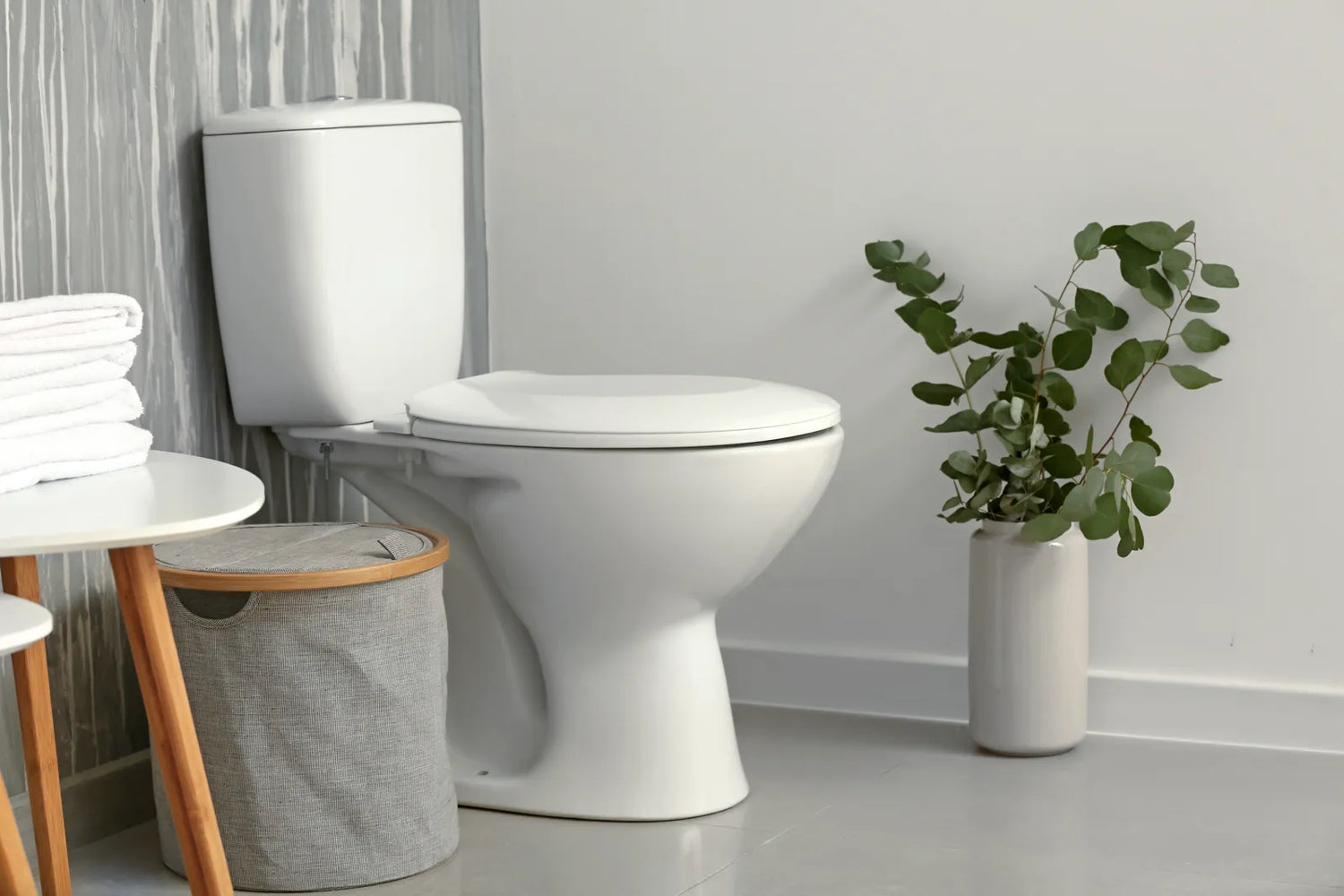
A lot of people think toilet replacement is simple: remove old toilet, buy a new one, drop it in. That is exactly how people end up with a tank pressed into the wall, a bowl that rocks, or a new toilet that technically installs but leaves a big gap behind it that looks wrong forever. Learning measuring your toilet rough-in for beginners is the first step to avoiding common toilet ordering mistakes when upgrading your bathroom fixture.
A 12 inch rough in toilet follows the standard us toilet dimensions guide and is the standard rough-in size in many US homes. But “standard” does not mean “safe to assume.” It only works when the real measurements in your bathroom match what the toilet expects. That means the flange location, the finished wall surface, the side clearance, the front space, and the floor condition all need to cooperate.
This guide is here to help you answer one thing: will a 12 inch rough in toilet fit my existing bathroom without creating a problem later? Not in theory. In your actual room, with your trim, tile, flange, shutoff valve, and floor.
Quick Answer
A 12 inch rough in toilet works if the distance from the finished wall to the center of the toilet flange or closet bolts is truly about 12 inches, and you also have enough side and front clearance for the toilet body and seat to function normally. It does not work well if your rough-in is closer to 10 or 11 inches, if trim or wall bumps steal rear clearance, or if your flange height, floor level, or supply line location create installation conflicts. If the measurement is wrong, the usual results are wall contact, rocking, leaks, ugly gaps, or paying extra to swap to a different rough-in after the fact.
Is a 12 inch rough in toilet right here?
For many homes, yes. For many replacements, no. The difference is usually not the toilet. It is the room.
Decision Snapshot
Use this quick reference checklist to tell at a glance whether a 12 inch rough in toilet is a safe fit for your bathroom setup.
Decision snapshot: when it works
A 12 inch rough in toilet usually works when:
-
Your measurement from the finished wall to flange center is about 12 inches
-
Your old toilet was also a 12 inch rough-in model and fit correctly
-
You have enough side and front space for code and daily use
-
The flange is not badly recessed below the finished floor
-
The floor is flat enough that the toilet can sit solidly
This is the easiest replacement path in a typical US bathroom. It is also the rough-in size with the broadest model availability.
Decision snapshot: when to avoid it
You should pause before ordering a 12 inch rough in toilet if:
-
Your rough-in is under 12 inches, especially near 11 inches or less
-
The tank area has thick baseboards, tile ledges, paneling, or wall trim
-
Your bathroom is so tight that projection from the wall matters more than rough-in alone
-
Your flange needs repair or sits too low below the finished floor
-
Your current toilet already sits far from the wall, suggesting a 14-inch rough-in
If the room is marginal, this becomes a fit problem, not just a toilet choice.
Conditions that cause fit regret
This is where most people get it wrong:
-
They measure from the baseboard, not the wall
-
They assume “close enough” at 11 inches
-
They ignore rear wall trim and tank shape
-
They focus on rough-in only and forget side or front clearance
-
They install over an uneven floor and blame the toilet when it rocks
Decision line: If your setup is even a little unusual, a 12 inch rough in toilet is only safe after measurement, not before.
Who should skip this rough-in size?
A 12-inch toilet is common, but some bathrooms should not use it unless other work is planned.
Homes measuring under 12 inches
If your rough-in is under 12 inches from the finished wall to flange center, a standard 12-inch toilet may not seat properly.
At 10 inches, the answer is simple: buying a 12-inch toilet is usually the wrong move.
At 11 inches, people get tempted. They see product listings that look compact, or they hear that some tanks have “wiggle room.” That is risky. Some toilets have a little tolerance for actual design, but many do not. If the tank lid, tank body, or rear skirt contacts the wall before the bowl fully aligns, the toilet will not install right.
This is not just a cosmetic issue. Wall contact can stop the toilet from seating fully over the flange, which means unstable installation and seal trouble.
Bathrooms with fixed wall obstructions
Even if the rough-in is technically 12 inches, the toilet can still fail to fit if the back wall is not truly flat.
Common trouble spots:
-
Thick baseboards
-
Wainscoting caps
-
Tile build-up
-
Pipe covers
-
Outlet boxes
-
Cabinet side panels near the tank
A toilet spec assumes a normal finished wall, not random obstructions. A 12-inch rough-in toilet compatibility with existing plumbing may still be fine while compatibility with your actual wall is not.
Remodels needing flange relocation
If your bathroom rough-in is not close to 12 inches and you are set on a specific 12-inch toilet shape, the “solution” is often moving the flange.
That can be reasonable in a full remodel when the floor is already open. It is often not reasonable in a simple toilet swap.
Moving a flange can mean:
-
Opening finished floor
-
Cutting and resetting drain connection
-
Reworking flange height
-
Patching flooring
-
Sometimes adjusting nearby supply location
For a normal replacement, switching to the correct rough-in size is usually cheaper than re-roughing plumbing, while custom rough-in solutions for old us homes work best for outdated layouts with nonstandard measurements.
Tight layouts needing shorter projections
A toilet can match rough-in and still feel too large in the room.
This matters in small bathrooms where:
-
The vanity is close
-
The tub edge crowds the bowl
-
The door swing is tight
-
The front clearance is barely legal
A 12 inch rough in toilet does not guarantee a short toilet body. Some project farther into the room than others. So if you are asking, how much space is needed for a 12 inch rough in toilet, the answer is not just “12 inches from the wall.” You also need front and side usability.
What trade-offs come with 12 inches?
The biggest misunderstanding is that 12 inches is the “safe” choice in all homes. It is standard, but not universal.
Standard size, not universal fit
The standard toilet rough in dimensions for US homes are usually 12 inches, and comparing 10 inch vs 12 inch rough-in options helps you pick wisely, with 10-inch and 14-inch rough-ins used in some older or constrained layouts.
That means:
-
12 inches is the most common
-
It often gives the most product options
-
It is not the right answer when your existing drain is not at 12 inches
Decision line: Standard helps with availability. It does not fix a wrong measurement.
Extra gap on 14-inch layouts
A common retrofit surprise happens in older homes with a 14-inch rough-in. A 12-inch toilet will often install there, but it leaves a visible gap behind the tank.
Mechanically, that may be fine. Emotionally, many owners hate it.
What that gap causes:
-
Looks unfinished
-
Shows more floor dirt
-
Makes the toilet seem misplaced
-
Can make cleaning awkward
-
Feels especially wrong in small bathrooms
So in the 12 inch rough in toilet vs 14 inch rough in toilet question, the issue is usually not “will it install?” but “will you be happy with the look and reach?”
Limited rescue options near 11 inches
The danger zone is around 11 inches.
At 14 inches, a 12-inch model is usually still installed with space behind it.
At 10 inches, you know you need a 10-inch model.
At 11 inches, people start guessing. That is where a lot of bad orders happen.
There is no universal rule that says every 12-inch toilet will fit at 11 inches. Some may clear. Some will not. If you cannot verify the actual installed dimension from the manufacturer, treat 11 inches as a non-fit until proven otherwise.
Code minimum can still feel cramped
You can pass minimum clearance and still hate the room.
Typical minimums often used in the US include:
-
15 inches from toilet centerline to each side obstruction
-
21 inches minimum clear space in front under one common code
-
24 inches minimum clear space in front under another common code
That means a bathroom can be legal but still annoying.
A toilet tucked between a tub and vanity at code minimum often feels tight at the knees, elbows, and seat edge. This matters if you are choosing between a longer bowl body and a more compact one.
Will a 12 inch rough in toilet fit?
Here is the core question, and the answer depends on measuring the right point the right way.
Measure from wall to flange center
If you want to know how to measure for a 12 inch rough in toilet, measure from the finished wall behind the toilet to the center of the floor flange. If the toilet is still installed, measure to the center of the closet bolts, because those bolts align with the flange center.
Do not measure:
-
From the baseboard face
-
From drywall studs
-
From trim edges
-
From the back of the tank
This is the right method for how to measure toilet rough in from wall to flange center in an existing bathroom.
If the toilet is removed:
When wax residue, floor build-up, or corrosion obscure the drain opening and make flange center hard to identify, locate the center using the midpoint between the two closet bolt slots or exact centers of the bolt holes. If the flange edge covers part of the opening, use bolt slot alignment as the true center reference instead of guessing the drain middle.
Find the center of the drain opening or flange.
Measure straight back to the finished wall.
Use the wall surface that will remain after installation.
If baseboard is present, measure to the wall and then account for whether the toilet body or tank hits the baseboard.
If the toilet is still installed:
Measure from the finished wall to the center of one closet bolt.
That is your rough-in.
Check both sides if you suspect the toilet was set off-center.
Use this clear numeric tolerance rule to define fit:
Safe fit: 11 3/4" to 12 1/4" – standard 12 inch rough in toilet will fit reliably
Verify with spec sheet: 11 1/2" to 11 3/4" – must check manufacturer dimension before buying
Treat as non-fit: Below 11 1/2" – do not install a standard 12 inch rough in toilet

Finished wall errors ruin fit
This is where many rough-in measurements go bad.
“Finished wall” means the final visible wall surface behind the toilet. In most homes, that is:
-
Drywall
-
Drywall plus tile
-
Paneling
-
Other permanent finish
If you measure from studs during construction, you must add finish thickness to convert stud-to-flange distance to accurate finished-wall-to-flange rough-in. Always plan toilet rough-in from the final finished wall surface, not bare framing studs. If you measure an existing tiled wall from the wrong plane, you can be off enough to cause a problem.
A quarter inch or half inch matters near the limit.
If your rough-in comes out at 11 1/4 inches or 11 1/2 inches after correct measurement, do not assume a 12-inch rough in toilet will work. Verify actual product fit or move to a different rough-in solution.
Baseboards and tile change clearance
People often hear “don’t measure from the baseboard,” which is true. But baseboards still matter because the toilet tank or bowl can hit them.
That means both things are true:
-
The rough-in is measured from the finished wall
-
The physical toilet still has to clear trim that sticks out from that wall
So when deciding what to measure before buying a 12 inch rough in toilet, check:
-
Rough-in to wall
-
Baseboard thickness
-
Tile cap thickness
-
Tank shape and rear overhang
-
Any shutoff valve or pipe cover behind bowl area
A toilet that fits on paper can still fail in the last inch because trim was ignored.

Will this work in a small bathroom?
Maybe, but rough-in is only one part of small-bath fit.
For a small bathroom, confirm:
-
Side clearance from bowl centerline
-
Front clearance to wall, vanity, tub, or door
-
Toilet projection from wall
-
Lid opening room
-
Seat usability with door closed
A room can technically take a 12 inch rough in toilet and still feel wrong if the toilet extends too far into the walking path.
Fit and clearance summary
Before buying, confirm all of these:
-
Rough-in: about 12 inches from finished wall to flange center
-
Side clearance: at least 15 inches from toilet centerline to each side wall or fixture
-
Front clearance: at least 21 to 24 inches clear in front, depending on local code
-
Rear wall shape: no trim or protrusions that block tank or bowl
-
Flange height: not badly recessed below finished floor
-
Floor support: flat enough to prevent rocking
-
Supply location: shutoff and line do not interfere with bowl or skirt
If one of these fails, rough-in alone will not save the installation.
What if your rough-in is not 12?
This is where the real buying decision starts.
10-inch spaces need different bowls
In a 12 inch rough in toilet vs 10 inch rough in toilet comparison, the main issue is not preference. It is geometry.
If your home has a 10-inch rough-in, use a 10-inch rough-in toilet or a model specifically designed to adapt to that dimension. A standard 12-inch toilet in a 10-inch space usually hits the wall or cannot sit correctly over the flange.
That answers the common question: can you replace a 10 inch rough in with a 12 inch rough in toilet? In most real bathrooms, not without moving the flange or using a different engineered solution.
14-inch spaces leave visible gaps
If your rough-in is 14 inches, a 12-inch toilet often works mechanically. The usual downside is the larger gap behind the tank.
That may be acceptable if:
-
You want more toilet options
-
You do not care about the rear gap
-
The old toilet also sat away from the wall
-
You plan to live with a cosmetic mismatch
It may not be acceptable if:
-
The room is highly visible
-
You want a tight built-in look
-
You hate exposed floor and cleaning around it
What happens at 11 inches?
At 11 inches, you are in the danger area.
This is where people search how to know if you need a 12 inch rough in toilet and get bad advice. If your actual rough-in is 11 inches, the answer is usually: you do not have a true 12-inch rough-in.
Some toilets may fit because of tank design or extra space behind the bowl. Some will not. Unless the manufacturer gives a confirmed installed dimension that works at 11 inches, do not gamble.
What happens if you do gamble?
-
Tank may touch wall
-
Bowl may not fully seat
-
Installer may force alignment
-
Wax seal may fail early
-
Return and labor costs go up fast
Can 10-inch homes use 12-inch models?
Usually no, not as a simple swap.
If you have a 10-inch rough-in and want a 12-inch toilet for style or availability, the real options are:
-
Move the flange during remodel
-
Use a toilet made for 10-inch rough-in
-
Use a compatible conversion system if one is specifically made for that toilet line
For most homeowners, moving the flange just to use a 12-inch toilet is hard to justify unless the floor is already open.
What must match besides rough-in?
A lot more than people expect.
Side clearance must meet minimums
The usual minimum is 15 inches from the toilet centerline to each side wall or fixture.
That means a space that is exactly 30 inches wide is only minimum legal, and often feels tight. If one side has a vanity with a drawer front or overhang, daily use gets worse even if the tape measure says it passes.
This matters in narrow bathrooms where the old toilet seemed “fine” only because everyone got used to it.
Front clearance changes by code
Front clearance is often at least 21 inches in some areas and 24 inches in others.
Even if your local code allows the smaller number, more front space is usually better in real life. Small bathrooms become frustrating when the toilet front is too close to a vanity, tub, or closed door.
If you are replacing an old toilet in the same location, code may not force a full redesign, but comfort still matters.
Supply line location can interfere
Toilet rough-in and water supply are not the same thing, but they interact.
Common problems:
-
Shutoff valve sits where a skirted bowl needs space
-
Supply stub-out is too high and contacts the bowl
-
Connector line kinks in a tight rear cavity
-
Valve is buried behind toilet body after installation
This is especially important with compact, skirted, or more enclosed toilet designs. A 12 inch rough in toilet compatibility with existing plumbing includes both waste location and water access, not just the drain.
Existing flange height can disqualify fit
A toilet can be the correct rough-in and still fail because the flange is too low, too damaged, or set wrong relative to the finished floor.
Bad flange conditions include:
-
Recessed too far below finished floor
-
Broken bolt slots
-
Corroded metal ring
-
Loose flange
-
Flange sitting on an uneven patch
This is where installation callbacks come from. The toilet gets set, seems okay, then starts rocking or leaking.
Decision line: If the flange is wrong, the toilet is not ready to install, no matter what the rough-in is.
What installation problems cause failure?
These are the issues that turn a simple replacement into a leak or return.
Recessed flanges lead to leaks
When the flange sits too low below the finished floor, the seal becomes less reliable. People often try to fix this by overcompressing wax or stacking parts in a sloppy way.
That can work short term and fail later.
A low flange often needs a proper correction before toilet installation. If not, expect one of these:
-
Weak seal
-
Sewer gas smell
-
Slow seep
-
Water damage around base
Uneven floors cause rocking
An uneven floor is one of the most common reasons a toilet rocks after installation.
What happens next is predictable:
-
Toilet shifts during use
-
Wax seal gets stressed
-
Bolts loosen or base moves
-
Leak appears later, not right away
This is why experienced installers do not ignore rocking. If the toilet does not sit flat, the problem must be corrected before final caulk and use.

Wall contact blocks full seating
If the tank or rear body touches the wall or trim before the toilet is fully seated over the flange, the toilet may look installed while actually sitting under stress or slightly out of position.
This becomes a problem when:
-
Tank corners press into trim
-
Bowl cannot align naturally on bolts
-
Installer tightens down to “pull” it into place
That is not a clean fit. That is forced fit.
What happens if you buy wrong size?
If you buy the wrong toilet rough-in size, the result is usually one of four outcomes:
-
It will not fit at all
-
It fits but leaves a larger gap than expected
-
It installs under stress and leaks later
-
You pay return, labor, and replacement costs
The expensive part is not always the toilet. It is:
-
Delivery charges
-
Installer trip charge
-
New wax ring and hardware
-
Time lost
-
Floor or flange repairs after failed attempt
What ownership issues show up later?
Some bad toilet decisions do not fail on day one. They become annoying over time.
Rocking breaks wax seals over time
A toilet that rocks even slightly is not “basically fine.” Movement is the enemy of the seal.
Months later, you may notice:
-
Dampness at base
-
Staining around toilet
-
Odor
-
Soft flooring around flange area
By then, the repair may cost more because the leak has had time to spread.
Hidden gaps collect dirt and moisture
When a 12-inch toilet is placed on a 14-inch rough-in, the rear gap is not a plumbing failure. It is a cleaning and appearance issue.
That gap catches:
-
Dust
-
Hair
-
Mop water
-
Condensation residue
-
General bathroom grime
People often underestimate how much that gap bothers them until they live with it.
Specialty swaps cost more later
If your bathroom is really a 10-inch or 14-inch rough-in and you install around that reality, future replacements may cost more or offer fewer choices than standard 12-inch replacements.
That does not mean you should force a 12-inch toilet where it does not belong. It means you should go in knowing that nonstandard rough-ins can limit later options.
This is part of evaluating best replacement options for an old 12 inch rough in toilet too: if your old toilet was truly 12-inch, staying with 12-inch usually keeps replacement simple. If your old toilet only looked close to the wall but was actually on a 10-inch or 14-inch setup, repeating the old mistake or assumption creates trouble.
Best fallback options for odd rough-ins
If your measurement is not a clean 12 inches, your fallback options depend on how far off you are.
-
Near 10 inches: use a 10-inch rough-in toilet
-
Near 14 inches: a 14-inch rough-in toilet gives the best wall fit, though a 12-inch model may still work with a gap
-
Around 11 inches: verify exact product fit or use a rough-in-specific option; do not guess
-
Full remodel: moving the flange may make sense only when the floor is already open
For truly odd measurements, custom toilet options for nonstandard rough in sizes do exist, but they are usually more limited and may cost more.
How to validate before buying
This is the step-by-step check that prevents most ordering mistakes.
Step 1: Confirm rough-in
Measure from the finished wall to the center of the flange or closet bolts.
If the number is:
-
12 inches: a 12-inch toilet is likely correct
-
10 inches: buy 10-inch
-
14 inches: decide if gap behind 12-inch is acceptable
-
11 to 11 1/2 inches: verify exact fit before buying
Step 2: Check the wall surface
Look behind the toilet area for:
-
Thick baseboard
-
Tile cap
-
Trim blocks
-
Pipe covers
-
Anything proud of the wall
These can steal the last bit of clearance.
Step 3: Check side and front room
Measure:
-
Centerline to each side obstruction
-
Front of bowl area to door, vanity, tub, or wall
Do not stop at code minimum if the room is already cramped.
Step 4: Inspect flange condition
Concrete pass/fail installation-ready criteria:
Standard install-ready (proceed with buying/installing): Flange securely anchored to floor, bolt slots fully intact, no major rust/corrosion, no cracks/breakage, minor surface discoloration acceptable.
Stop and repair first (do not install): Loose/wobbly flange, cracked/broken ring or bolt slots, heavy corrosion/rust damage, severely recessed below finished floor, active leakage or sewer odor present.
Look for:
Broken ring
Low flangeCorrosion
Loose mounting
Signs of old leakage
If the flange fails the above criteria, complete repairs before purchasing and installing a new toilet.
Step 5: Confirm supply position
Make sure the shutoff valve and supply line can be reached and will not interfere with the new bowl shape.
Step 6: Check floor flatness
Dry-fit logic matters here. Use this go/no-go rocking threshold and decision path:
Minor unevenness: Slight wobble correctable with thin shims only — safe to proceed with installation
Moderate unevenness: Noticeable rocking that shims cannot fully fix — repair floor leveling or flange height before buying
Severe unevenness: Persistent major rocking, unstable base contact — stop work and call a plumber for floor or structural adjustment
If the old toilet rocked, do not assume the new one will magically fix it.
Step 7: Match projection to room size
Especially in small bathrooms, compare overall toilet length, not just rough-in.
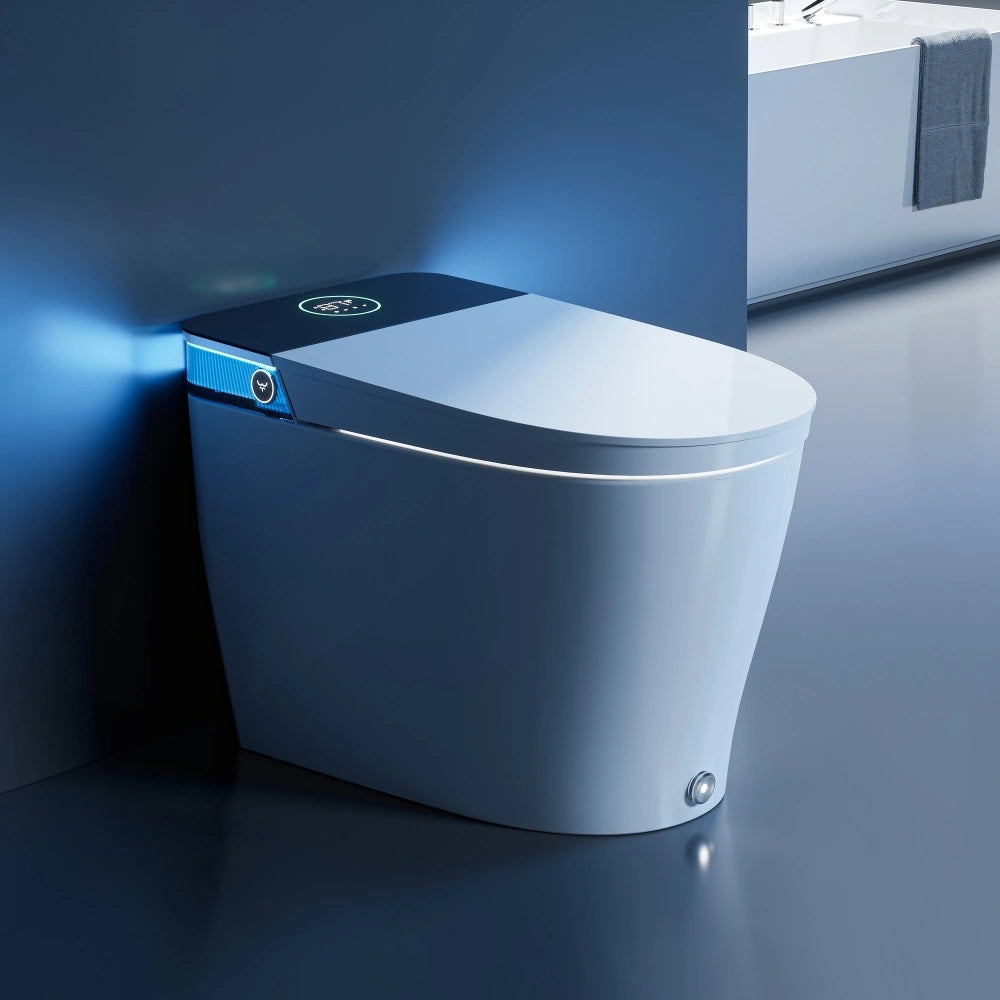
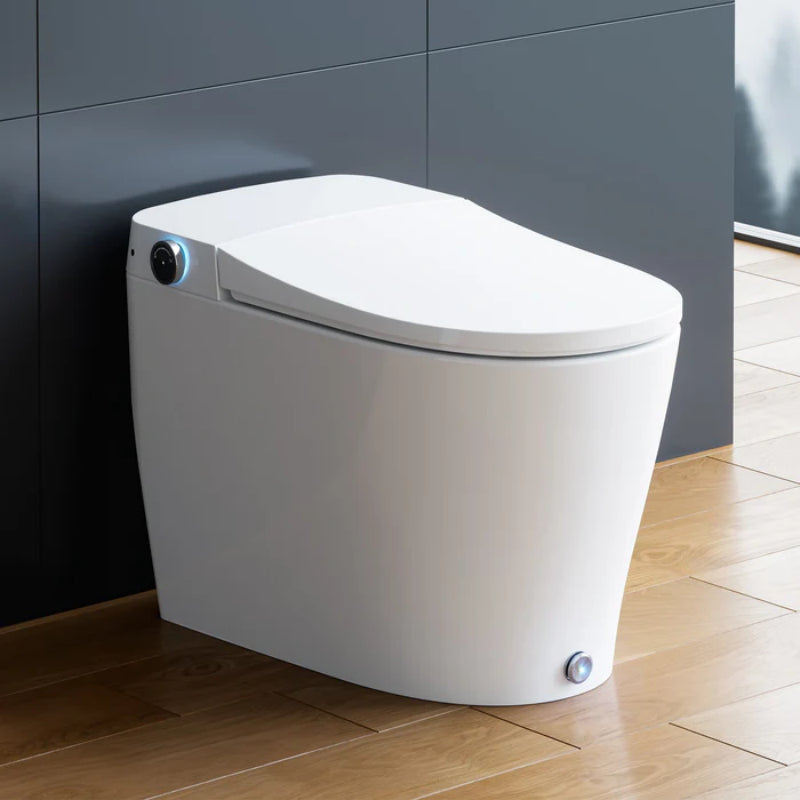
If you are shopping for a smart toilet or compact one-piece unit, this gets even more important. People searching how to measure for a new smart toilet purchase need to check rough-in, side clearance, front clearance, outlet location, and often power access if the unit requires it.
Some shoppers also look specifically for horow rough-in size compatibility when shopping horow toilet models for 12 inch rough in installation. The same rule applies as with any model line: rough-in alone is not enough. You must also verify overall depth, tank or rear body clearance, side clearances, supply line compatibility, and any extra electrical requirements if applicable.
Before You Buy checklist
Use this checklist for replacing an old toilet: what to measure and follow every step before you order anything to match your existing toilet layout perfectly and ensure proper flush performance.
-
Measure from finished wall to flange center or closet bolt center
-
Confirm whether your bathroom is really 12 inches, not “close to 12”
-
Check for baseboards, tile edges, or trim behind the toilet
-
Measure side clearance from toilet centerline
-
Measure front clearance to vanity, door, tub, or wall
-
Inspect flange height and condition
-
Check whether the floor is level enough for a stable base
-
Confirm shutoff valve and supply line location
-
Compare overall toilet projection, not just rough-in
-
If your rough-in is around 11 inches, do not guess
-
If your rough-in is 14 inches, decide whether rear gap will bother you
-
If your rough-in is 10 inches, do not buy a standard 12-inch model expecting it to “make it work”

FAQs
Is 12 inches the standard toilet rough-in size?
Yes. In many US homes, 12 inches is the standard toilet rough-in size.It’s the go-to dimension for most newly built modern residential bathrooms.Plumbing codes and toilet manufacturers all default to this common measurement.Older vintage homes were built with no strict standard, sizing varies a lot.Small bathrooms and compact layouts often adopt 10-inch smaller rough-in specs.Some spacious older properties even have a 14-inch rough-in for extra room.You can’t just assume standard size without taking actual wall measurements.Always check first instead of guessing to avoid buying an ill-fitted toilet.
How do I know if I need a 12 inch rough in toilet?
Measure from the finished wall behind the toilet to the center of the flange or closet bolts.Do not measure from baseboards, trim or exposed wall studs to avoid wrong numbers.If that distance lands right around 12 inches, stick with this size toilet.If your old 12-inch toilet fit perfectly before, you can safely stick to the same size.Be sure to check both bolt sides in case the old toilet was installed off-center.This measuring method is beginner-friendly and totally easy to follow at home.It only takes a tape measure and one minute to get an accurate rough-in reading.Correct measurement is the simplest way to guarantee a smooth toilet replacement.
Will a 12 inch rough in toilet fit an 11 inch space?
Sometimes, but not safely as a blind purchase without checking official specs.At 11 inches, fit completely relies on the tank shape and rear design of the toilet.Some slim tank models have minor tolerance that can squeeze into an 11-inch gap.Most standard toilets will press against the wall and fail to sit evenly on the flange.There’s no universal rule that lets all 12-inch toilets work for an 11-inch space.If you can’t confirm manufacturer clearance data, don’t take the risky guess.It’s smarter to treat an 11-inch measurement as not compatible for standard models.Forcing installation will cause wall contact, rocking seals and future leak issues.
What happens if I buy the wrong rough-in size?
The toilet may not fit, may hit the wall, may leave an unwanted gap, or may install poorly and leak later.A mismatched size often makes the tank press tight against the rear wall permanently.You’ll get an unsightly empty gap that collects dust, dirt and mop water easily.Improper installation loosens the toilet base and wears down the wax seal over time.Slow hidden leaks can damage bathroom floors and create unpleasant sewer odors.You’ll face return shipping fees, restocking charges and wasted waiting time.You may also need to pay extra labor for plumbers to fix the mismatched installation.All these troubles can be totally avoided with just a quick pre-purchase measurement.
Can I replace a 10-inch rough-in toilet with a 12-inch toilet?
Usually not without moving the flange or using a system specifically designed for that change.Standard 12-inch toilets have deeper rear depth that won’t suit a 10-inch tight space.Attempting a direct swap will cause wall collision and misaligned flange positioning.Relocating the flange requires breaking flooring and reworking home plumbing lines.This major renovation is costly and unnecessary for a simple toilet replacement job.In most regular existing bathrooms, stick to a matching 10-inch rough-in toilet model.No simple DIY tricks can make a standard 12-inch toilet work safely long-term, as verified by seasoned plumbing industry professionals. It’s always better to match your toilet size exactly to your actual rough-in measurement.
References


Leave a comment
This site is protected by hCaptcha and the hCaptcha Privacy Policy and Terms of Service apply.