
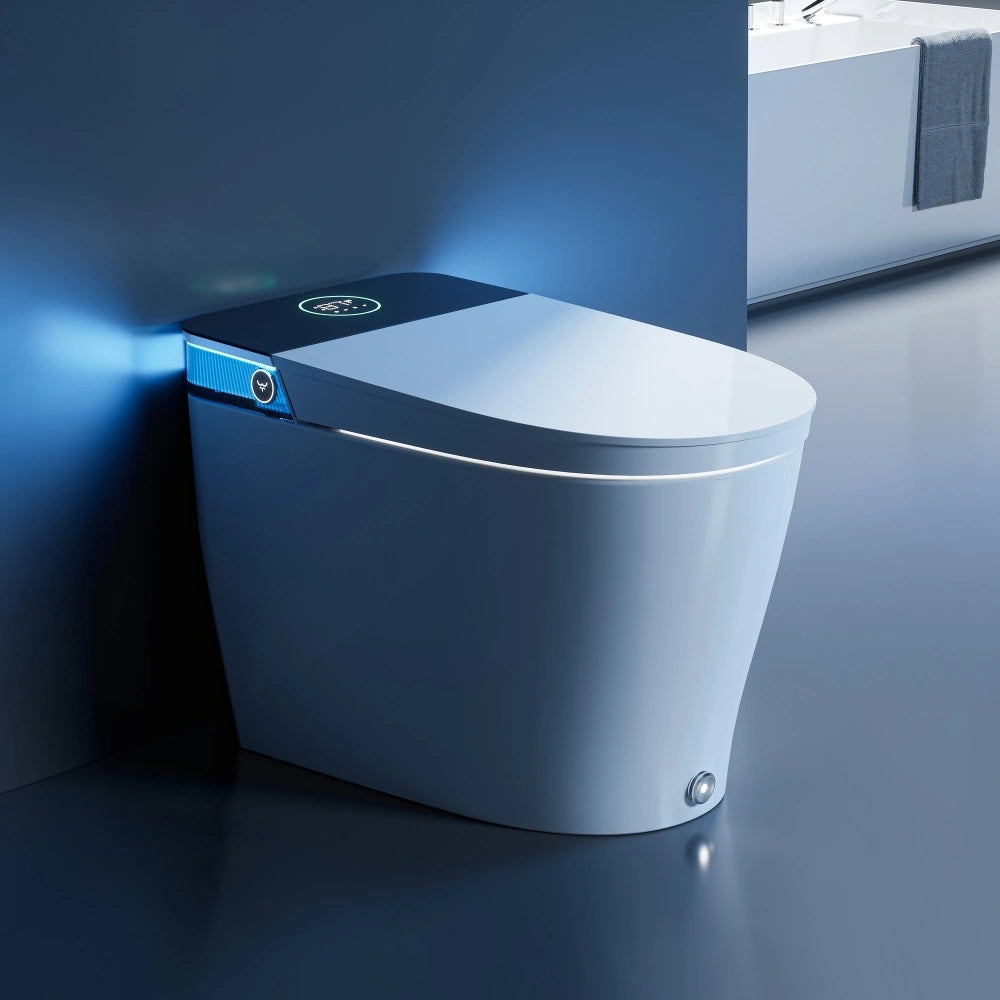
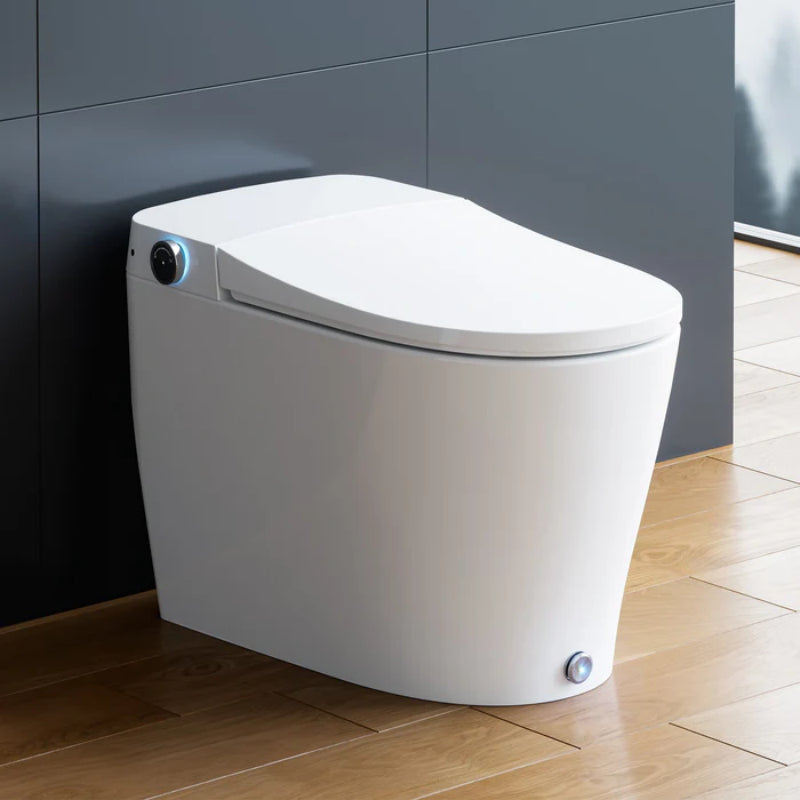
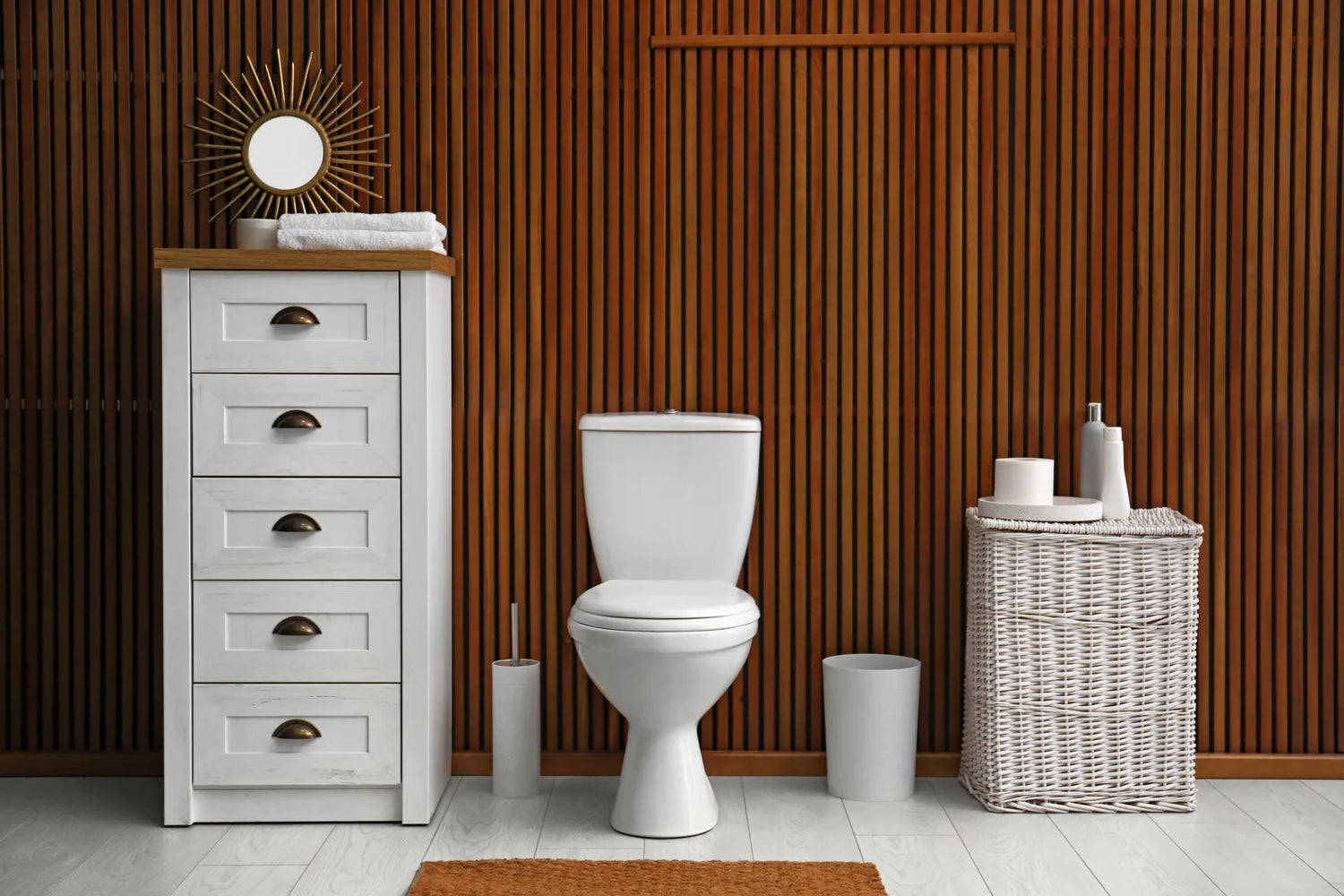
A 10 inch vs 12 inch rough in toilet only works when the toilet rough-in matches the plumbing rough-in in your floor. A 12-inch toilet usually will not fit a true 10-inch rough-in, while a 10-inch toilet can often fit a 12-inch rough-in but usually leaves an ugly and annoying gap behind the tank. If your measurement is close, old, tiled over, or in an older home, recheck before ordering because this is where people buy the wrong toilet.
Decision Snapshot: 10 inch vs 12 inch rough in toilet
This section is designed to eliminate ambiguity when measurements fall close to standard sizing.
If your home has a true 10-inch rough-in, buy a 10-inch toilet. That is most common in older homes, some small bathrooms, and some tight powder rooms where the drain was set close to the wall.
If your home has a true 12-inch rough-in, use a 12-inch toilet. That is the standard toilet rough in size in most modern homes and standard remodels, according to the International Plumbing Code (IPC).
Avoid guessing based on the age of the toilet, the size of the room, or what the store stocks. This is where most people get it wrong. A toilet can look compact and still be a 12-inch rough-in model.
The most common failure points are simple:
-
measuring from the baseboard instead of the finished wall
-
assuming all toilets are 12-inch
-
rough-in measurements can vary depending on construction age
-
always verify before purchasing replacement units
-
-
trying to force a 12-inch toilet onto a 10-inch rough-in
-
forgetting to check tank clearance, shutoff valve location, side space, and door swing
If your bathroom is small, the rough-in size alone does not decide fit. It only tells you where the waste outlet sits. You still have to check the full toilet depth, tank shape, side clearances, and what happens when the door opens.
Gray-zone rule: 11.25–11.75 inches handling logic
When rough-in measurement falls between 11.25 and 11.75 inches, do not classify it as either standard size.
Instead:
-
Ignore nominal labels like “10-inch” or “12-inch” as primary guidance
-
Use only manufacturer spec drawings for final compatibility check
-
Apply the 3-point validation method:
-
Wall-to-bolt center alignment
-
Tank-to-wall clearance margin
-
Base footprint depth fit
-
If any dimension fails spec-drawing compatibility → treat as non-fit regardless of marketing category
Who should match size exactly
Before choosing a toilet size, it is important to understand one key principle: the rough-in measurement is not meant to “optimize space,” but to match the fixed drain position. Once you identify whether your setup is truly 10-inch, 12-inch, or somewhere in between, the right choice becomes much more straightforward.
True 10-inch rough-ins
A true 10-inch rough-in needs a 10-inch rough-in toilet unless you are planning real plumbing work. This is the clean answer.
People ask when to choose a 10 inch rough in toilet. The answer is not “when you want a smaller toilet.” The answer is: choose it when the flange center is about 10 inches from the finished wall and you want the toilet to sit correctly without moving the drain.
This is especially common with:
-
older houses
-
small half baths
-
remodels where walls were furred out
-
bathrooms where cast-iron or joist placement limited where the drain could go
A 10 inch rough in toilet for old house installation is often the right answer because the plumbing was set for it decades ago. Older homes are where rough-ins surprise people most.
True 12-inch rough-ins
A true 12-inch rough-in needs a 12-inch toilet in most normal replacements.
This is the standard layout in many homes, and it is why people ask what is the standard toilet rough in size. In most US homes, 12 inches is standard. It is easier to shop for, gives you more model choices, and usually fits standard remodel plans better.
This is also the answer to when to choose a 12 inch rough in toilet: choose it when your measured rough-in is 12 inches and you do not want a tank gap or install compromises.
Older homes hide surprises
Older homes often have one of these problems:
-
plaster and trim distort the apparent wall line
-
tile was added after the drain was set
-
the flange is not exactly centered
-
the rough-in is 10.5, 11.25, 11.5, or some other awkward number
-
the wall behind the toilet is not perfectly straight
This is where 10 inch vs 12 inch rough in toilet differences matter in real life. On paper, it sounds like only 2 inches. In the field, that 2 inches decides whether the tank hits the wall, whether the bolts line up, and whether the toilet rocks or seals badly.
Small baths need more than rough-in
In a small bathroom, a 10-inch toilet can help only if the plumbing is already 10-inch or the toilet’s full dimensions solve a layout problem. Do not assume a 10-inch rough-in toilet automatically creates useful room in front. Some compact bowls save space; some do not.
If your main issue is knee room, vanity clearance, or door swing, compare the toilet’s full projection from the wall, not just rough-in size.
What breaks when the size is wrong
Size mismatches show up quickly once you move from measurement to installation. What seems like a small difference on paper can turn into alignment issues, sealing risks, or everyday usability problems after the toilet is in place.
Looking at each mismatch scenario makes it clear where things fail completely and where they simply become inconvenient over time.
12-inch on 10-inch
This is the hard fail.
People often ask: can a 12 inch rough in toilet fit a 10 inch rough in? In a true 10-inch setup, usually no. The toilet is designed so the outlet and tank position work with a 12-inch drain placement. On a 10-inch rough-in, the toilet often hits the wall or fails to align with the flange correctly.
What happens then?
-
the bowl outlet does not sit over the flange as intended
-
the tank may hit the wall before the bowl is seated
-
the mounting bolts may not line up well with the base
-
the wax ring can be compressed wrong or not seal at all
-
the toilet may wobble or never tighten down properly
10-inch on 12-inch
This usually fits, but it is rarely ideal.
People ask: can a 10 inch rough in toilet fit a 12 inch rough in? Usually yes, physically. But the toilet sits farther from the wall, leaving roughly 2 inches of visible gap behind the tank, sometimes more depending on model shape and real measurement.
That gap causes real annoyances:
-
dust and grime collect behind the tank
-
cleaning becomes harder
-
the install looks unfinished
-
the shutoff valve may feel farther away
-
a toilet paper holder on the rear wall becomes less convenient
-
supply lines may need to span a longer distance
This is not a leak by itself, but it is the kind of thing people regret after a few weeks.

Odd rough-ins
The worst measurements are the “almost standard” ones:
-
11.25 inches
-
11.5 inches
-
11.75 inches
-
13 inches
-
15 inches
These are where buyers make expensive assumptions. A toilet may look like it should fit, but the tank shape, bolt slot position, and base geometry may say otherwise.
If your setup looks like this, do not rely on rough-in size alone. Check the manufacturer spec drawing for:
-
distance from finished wall to bolt center
-
back of tank to wall clearance
-
bowl outlet location
-
footprint dimensions
Rear-wall access issues
Even when the toilet “fits,” bad sizing can make daily use worse. A larger than needed rear gap can make the shutoff valve awkward to reach. A too-tight fit can trap the valve behind the tank so badly that turning water off becomes a knuckle-scraping job.
This becomes a problem when:
-
the shutoff is centered close behind the bowl
-
the supply line exits high on the wall
-
a bidet T-valve adds more hardware
-
the toilet paper holder is mounted low on the rear side wall
How to measure rough-in correctly
Accurate measurement is what separates a smooth installation from a costly mistake. Small errors—especially from measuring the wrong reference points—can shift your rough-in reading enough to lead you toward the wrong toilet size.
The steps below focus on how to get a reliable number and how to interpret borderline measurements so you can make a confident, spec-based decision.
Start at finished wall
This is the key rule in how to measure toilet rough in correctly: measure from the finished wall, not from the baseboard and not from the stud.
If there is base trim, ignore it. Measure as if the trim was not there. In many bathrooms, baseboard can steal about 1/2 to 3/4 inch from the reading and push a 12-inch rough-in into a false 11.25-inch reading.
Measure to bolt center
The standard toilet rough in measurement from wall to flange bolts is from the finished wall to the center of the closet bolts that hold the toilet down. Those bolts usually sit at the centerline of the drain opening.
If the old toilet is still installed, you can often measure from the wall to the center of one closet bolt cap. That gives you a good working number.

Remove the toilet if needed
If the reading is close, remove the old toilet and confirm from the wall to the center of the flange opening. This is the most reliable method.
This is usually where installation fails: people take one quick tape measure reading with the toilet still in place, around the tank, around trim, and around a crooked wall, then order the wrong size.
If your bathroom has:
-
thick tile added after the original build
-
plaster walls
-
uneven baseboards
-
an old cast-iron flange
-
a toilet that was never square to the wall
then take the extra step and pull the toilet before ordering.
What if it measures 11.5 inches?
This is the gray zone that causes a lot of confusion.
If your rough-in is about 11.5 inches, many 12-inch toilets may still fit, but not all. Some tanks are shaped to leave a little room behind them, and some sit very tight. A half-inch can be enough to matter.
Practical rule:
-
11.5 inches or more: many 12-inch toilets can work, but check the spec sheet
-
11.25 inches or less: risk goes up fast
-
10.5 to 11 inches: usually better to treat as a 10-inch situation unless specs clearly say otherwise
If you are close, make a cardboard mock-up using the manufacturer’s rough dimensions. That simple step can save a return and a wax-ring mess.
Step-by-step pass/fail rule
A measurement of 11.5 inches sits in a tolerance zone where guessing leads to installation failure. Use this pass/fail logic based on spec drawings:
Step 1 — Check wall-to-bolt center in spec drawing
-
If the toilet is rated for 12-inch rough-in only → Reject model immediately
-
If the model explicitly lists 11–12 inch adjustable tolerance → proceed to Step 2
Step 2 — Check tank-to-wall clearance requirement
-
If spec drawing requires ≥1.0 inch clearance and your space is tight (<0.5 inch buffer) → reject
-
If clearance is 0.5–1.0 inch range with tolerance design → proceed to Step 3
Step 3 — Check base footprint depth
-
If base extends beyond available floor depth from bolt line → reject
-
If footprint fits within measured usable depth with ≥10–15 mm buffer → proceed
Final decision rule
-
If all three conditions pass → proceed with installation
-
If any single condition fails → treat as non-compatible regardless of nominal rough-in label
Why spec drawings matter more than tape measurements
Rough-in measurement is only meaningful when it is checked against the manufacturer’s spec drawing, not just a tape measurement on the floor. Most installation mistakes happen when users assume “close enough” is acceptable without verifying three critical dimensions.
The correct comparison should always be made against:
-
Wall-to-bolt center distance (true rough-in reference)
-
Tank-to-wall clearance requirement (rear interference risk)
-
Base footprint depth from bolt line forward (floor space fit)
Any model should only be considered compatible if all three values align with your measured space, not just the nominal rough-in number.
Fit summary
Before buying, confirm all of this:
Stage 1 — Flange and bolt alignment check
-
Confirm bolt center matches measured rough-in within acceptable tolerance
-
Verify flange is not offset beyond adjustment range
-
If mismatch exists → stop evaluation immediately
Stage 2 — Room clearance verification
-
Check tank-to-wall clearance using spec drawing minimum requirement
-
Ensure lid opening does not contact wall or adjacent fixtures
-
If clearance fails → model is not installable in current layout
Stage 3 — Service access evaluation
-
Confirm there is access for future tank maintenance
-
Ensure shutoff valve remains reachable after placement
-
Verify no obstruction blocks flush mechanism access
Stage 4 — Long-term stability check
-
Base footprint fully supported on flat floor surface
-
No rocking when pressure applied at edges
-
Weight distribution aligned with flange centerline

Will this fit the whole bathroom
Fit is not just about matching the rough-in—it’s about how the entire toilet interacts with the room. Clearance behind, beside, and in front of the toilet all affect comfort, usability, and maintenance.
The following checks focus on real-world spacing issues that often get overlooked until after installation.
Tank clearance matters
People often ask how much space is needed behind a toilet tank. In practice, you want enough rear space so the tank does not press into the wall and you can still remove the lid, reach the bolts if needed, and access the shutoff valve.
Some toilets are designed to sit very close to the wall. That looks nice, but it can create service headaches if the valve is directly behind the tank.
A toilet that technically fits the rough-in may still be a poor choice if:
-
the tank lid cannot lift off cleanly
-
the shutoff valve gets buried
-
the supply hose kinks
-
wall texture or trim touches the tank
Side clearance fails often
Side clearance is where remodels get caught. The rough-in can be perfect and the toilet still be wrong because it crowds a vanity or tub.
General code-based planning often expects at least 15 inches from toilet centerline to a side wall or fixture. In real life, less than that feels cramped fast.
A wider tank or elongated bowl can create problems even if rough-in is correct.
Door swing issues
A 10-inch rough-in toilet is sometimes chosen to save room in front of the bowl. That can help, but only if the full toilet projection is shorter and the door or vanity actually benefits from the gained space.
Some homeowners expect two extra inches from a 10-inch rough-in model and find out the toilet bowl shape gives much of that back.
If the door already barely clears the bowl, mock up the new toilet footprint on the floor before you buy.
Small bathroom reality
For best 10 inch rough in toilets for small bathrooms, the real target is not rough-in alone. You want:
-
a true 10-inch match
-
short wall projection
-
enough front space to sit comfortably
-
enough side room to clean and use it
For best 12 inch rough in toilets for standard bathroom remodels, the advantage is simpler fit in standard layouts and more model availability. But standard still does not mean universal.
If your bathroom is very tight, the right question is not “10-inch or 12-inch?” It is “Which exact toilet footprint works with my drain, wall, valve, vanity, and door?”
Retrofit costs and hidden work
Changing a toilet size can involve more than a simple swap, especially when the rough-in does not match. What starts as a small adjustment can quickly turn into floor work, pipe modifications, or added installation complexity.
The sections below outline where quick fixes are realistic and where the project shifts into full plumbing work with higher cost and risk.

Offset flanges are limited
If the rough-in is wrong by a little, some installers look at offset flanges. They can help in specific cases, but they are not magic.
Offset flanges may work for minor changes, but they can reduce drain opening efficiency, complicate alignment, and create more labor than buyers expect.
This works only if:
-
the floor can be opened safely
-
the drain path allows the shift
-
local code allows the fitting
-
the change needed is minor
This does not work well if:
-
the existing flange is damaged
-
the pipe is cast iron and brittle
-
the needed move is large
-
joists block the direction of offset
Cast iron means more risk
In older homes, cast-iron drains change the conversation. A rough-in mistake that would be a simple fix with modern PVC can become a bigger labor job.
A wrong toilet choice in an old house can trigger:
-
flange repair
-
lead bend or cast-iron work
-
floor opening
-
subfloor replacement
-
extra labor to adapt old pipe sizes
This is why what to consider before buying a 10 inch rough in toilet or what to consider before buying a 12 inch rough in toilet should include pipe type and house age, not just dimensions.
Floor damage changes fit
Sometimes the old toilet comes off and reveals:
-
rotted subfloor
-
a flange sitting too low
-
a flange sitting above finished floor too much
-
cracked tile around the flange
-
an out-of-level floor
At that point, your rough-in may still be correct, but the toilet can rock, the wax ring may not seat well, and the finished position may shift slightly.
Misfit installs often start with a simple assumption: “If the bolts line up, I’m good.” You are not always good.
Longer supply lines add problems
When a 10-inch toilet is installed on a 12-inch rough-in, the rear gap may mean the old supply line is now short or awkwardly angled. People often solve this with a longer hose.
That can work, but it adds:
-
more visible loop behind the bowl
-
more chance of rubbing or kinking
-
one more thing to look sloppy
-
more points for future seepage if fittings are stressed
It is not a major disaster, but it is one more sign the toilet is not really matched to the room.
Minor correction scenarios (low-impact adjustments)
Retrofitting should be divided into minor correction scenarios and full plumbing intervention scenarios, based on structural impact.
Proceed only if ALL conditions are met:
-
Offset flange adjustment required is ≤ 1 inch
-
Existing drain line remains untouched
-
Floor reinforcement is not needed
-
Toilet footprint still clears surrounding fixtures after adjustment
This type of adjustment is typically manageable without opening the floor.
Full plumbing relocation required (stop conditions)
Treat the installation as plumbing relocation work if ANY of the following occur:
-
Offset required is > 1 inch or exceeds flange adjustment range
-
Cast-iron drain line must be cut, moved, or replaced
-
Floor opening is required to reposition waste pipe
-
Structural alignment forces toilet to shift laterally beyond base footprint tolerance
-
Multiple fixtures share the same constrained drain path
In these cases, attempting “simple offset fixes” increases leak risk and long-term instability.
When the spec fits poorly
Even when the rough-in measurement checks out, real-world performance can still fall short due to clearance, floor conditions, and fixture layout. A toilet that “fits” on paper may create maintenance issues or reduce comfort once installed.
The following scenarios highlight where spec compliance alone is not enough and why overall fit needs a closer look.
Tight rear gap
A perfect rough-in match can still perform badly if the tank sits too close to the wall for service.
This becomes annoying when:
-
your shutoff valve is behind the bowl
-
your fill valve needs replacement later
-
you install a bidet seat with extra plumbing
-
the tank bolts are hard to reach
A toilet that hugs the wall too tightly may look neat on day one and become a service headache on day 400.
Uneven floors cause rocking
This is common in old bathrooms. If the floor slopes or the tile is uneven, a toilet may rock slightly even with the right rough-in.
That movement stresses:
-
closet bolts
-
wax ring or seal
-
tank-to-bowl connections
-
caulk line around the base
Over time, movement is what causes many callback leaks and loose toilets. The rough-in may be correct, but the install still fails because the floor prep was ignored.
Layout can reduce comfort
In small bathrooms, a 10-inch rough-in toilet can tuck the fixture closer to the wall, but that does not always improve comfort. A compact bowl can reduce knee room for some users depending on where the door, vanity, and body position fall.
This is one reason rough-in size should never be treated as a comfort spec.
Bidet fit in 10-inch spaces
People also ask about a compact bidet toilet for 10 inch rough in. This can work, but it adds more checks.
A bidet toilet or bidet seat in a tight 10-inch setup needs:
-
enough rear space for hoses and fittings
-
an accessible shutoff valve
-
a nearby electrical outlet if powered
-
enough room to remove and service the seat
If the tank or bowl sits too close to the wall, the bidet hardware can be the first thing that gets crowded out.
Long-term risks after installation
Problems caused by a poor fit don’t always show up on day one. Many issues develop gradually as the toilet is used, cleaned, and serviced over time.
The points below focus on how small mismatches turn into ongoing maintenance annoyances and long-term reliability risks.
Gaps collect dirt
A 10-inch toilet on a 12-inch rough-in leaves a rear gap that becomes a dust shelf. Hair, lint, and bathroom grime gather there. Cleaning behind the tank is awkward, and many people just stop trying.
That is not a plumbing failure, but it becomes an ownership annoyance fast.
Misfit installs loosen faster
When the toilet does not sit naturally where it was designed to sit, weight distribution and mounting stress can feel off. In busy homes, that can show up as:
-
bolts needing re-tightening
-
slight movement at the base
-
recurring caulk cracks
-
seal stress over time
Wax seal stress rises
When alignment is imperfect, the wax ring or waxless seal has less margin. It may still hold at first, but movement, uneven compression, or a slight mis-seat can shorten its life.
This is often what fails first over time:
-
the toilet starts to rock
-
the base caulk line cracks
-
faint odor appears
-
moisture shows near the base after flushing
Access remains annoying
A toilet that “just barely fit” usually stays annoying. You will notice it when:
-
replacing a fill valve
-
shutting water off in a hurry
-
cleaning behind the tank
-
adding a bidet attachment
-
removing the tank lid
That is why 10 inch vs 12 inch rough in toilet for proper fit is not just a buying detail. It affects every repair after install too.
How to decide in your home
If you want the simplest rule, use this:
Buy a 10-inch toilet when your measured rough-in is a true 10 inches, especially in an older home or tight bath where moving plumbing would cost more than buying the right toilet.
Buy a 12-inch toilet when your measured rough-in is a true 12 inches and your bathroom layout is standard.
Do not buy a 12-inch model hoping it will squeeze into a true 10-inch setup. That usually fails.
Do not buy a 10-inch model for a 12-inch rough-in unless you accept the rear gap and the service annoyances that come with it.
If your house is old, your floor is uneven, your rough-in is odd, or your bathroom is very tight, treat this as a fit project, not a simple toilet swap.
Before You Buy
Use this checklist before you order:
-
Measure from the finished wall, not the baseboard.
-
Measure to the center of the closet bolts.
-
If your reading is close or odd, pull the toilet and confirm at the flange.
-
If the measurement is a true 10 inches, buy a 10-inch rough-in toilet.
-
If the measurement is a true 12 inches, buy a 12-inch rough-in toilet.
-
If it is around 11.5 inches, check the exact spec sheet before ordering.
-
Check the toilet’s full depth from wall, not rough-in alone.
-
Check side clearance to vanity, tub, or wall.
-
Check door swing with the new toilet footprint.
-
Check shutoff valve location so the tank will not block it.
-
Check supply line reach and routing.
-
Check floor level and flange condition before final install.
-
If the home has old cast iron, assume mistakes cost more.
-
If adding a bidet seat or bidet toilet, check outlet location and rear hose space.
-
If your bathroom is very small, mock up the new toilet on the floor with cardboard.
FAQs
1. How do I know if I have a 10 or 12 inch rough in?
To check your measuring toilet rough in, you only need a tape measure and a simple reference point. Measure from the finished wall (not the baseboard) straight to the center of the toilet floor bolts. If the distance is close to 10 inches or 12 inches, you’re basically comparing a 10 inch vs 12 inch rough in toilet setup, which is the most common sizing decision in residential bathrooms.
2. Can I replace a 12 inch with a 10 inch toilet?
Swapping between sizes isn’t a direct fit because a 10-inch unit is designed for a shorter drain distance than a standard toilet rough in size. If you try to install it anyway, the toilet may sit too far from the wall and look misaligned. In most cases, matching the original measurement is the safest approach unless you’re doing a full plumbing adjustment.
3. What happens if I buy the wrong rough in?
Choosing the wrong size can lead to visible gaps, poor alignment, or even installation failure. This becomes especially frustrating when dealing with installing toilet in old house situations where plumbing positions are fixed. You may end up needing adapters or even professional rework, which increases cost and complexity.
4. Does HOROW make 10 inch rough in toilets?
Yes, the brand does offer compact models designed for tighter bathroom layouts, including options that fit smaller spacing requirements. Some users specifically look for HOROW small rough-in models because they combine modern flushing performance with space-saving installation flexibility.
5. What is the best HOROW toilet for a 10-inch rough-in?
The best choice depends on comfort and features, but many buyers prefer compact designs that support a compact 10" rough in bidet setup or integrated wash functions. These models are designed to maximize efficiency in smaller bathrooms while still maintaining strong flushing and easy cleaning performance.
6. Why do older US homes have 10-inch rough-ins?
Older housing often used smaller bathroom footprints, which naturally led to tighter plumbing layouts. That’s why you still see many best 10 inch rough in toilets used in renovation projects today. Over time, construction standards shifted toward more flexible spacing, but older properties kept their original configuration due to structural limitations.
References



Leave a comment
This site is protected by hCaptcha and the hCaptcha Privacy Policy and Terms of Service apply.