
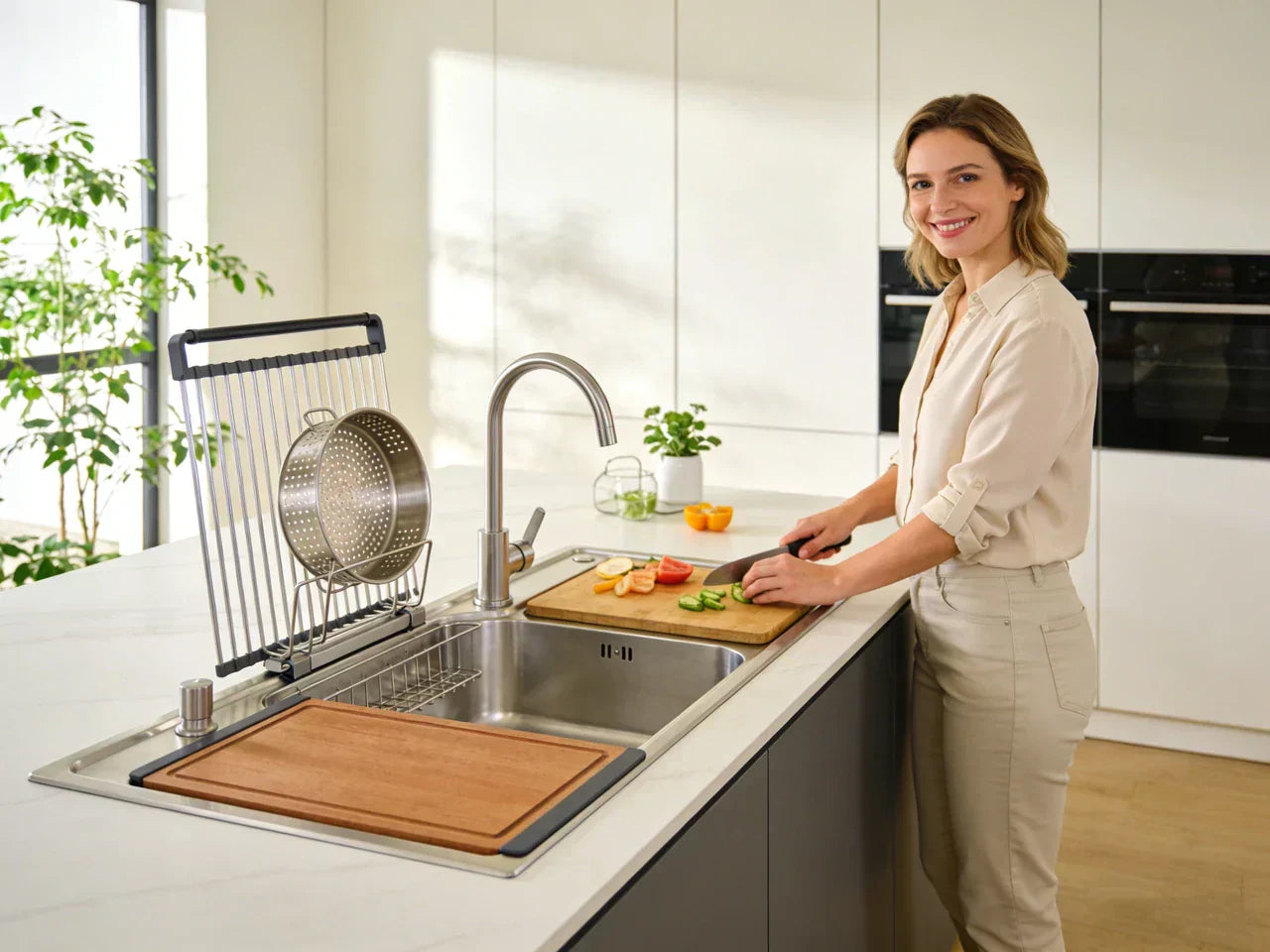
A workstation kitchen sink is a sink with built-in ledges (an integrated rail) that let accessories slide across the sink—usually a cutting board, colander, and drying racks. The goal is simple: do more food prep and cleanup directly over the sink, so you use less counter space and make fewer trips around the kitchen.
In real homes, a workstation sink can feel like adding a small prep station without remodeling. It can also feel like you paid extra for accessories you stop using after a month. This guide is meant to help you make the first decision with confidence: Is a workstation sink right for your kitchen—and and if yes, which type should you buy?
Who a workstation kitchen sink is for (and who should skip it) — Decision Snapshot
Is a workstation kitchen sink right for your workflow? Use this snapshot to instantly see if its advantages match your cooking habits—or or if a standard sink is the smarter choice for your kitchen.
Best fit
A workstation kitchen sink is usually worth it if you match two of these:
-
You cook most nights and do real meal prep (chopping, rinsing, draining pasta, washing produce).
-
Your kitchen has limited counter space, or your main prep area is already crowded (coffee gear, air fryer, kids’ stuff).
-
You like a “chef’s kitchen sink” workflow: rinse → cut → scrape into bowl → rinse again, all in one spot.
-
You want to keep mess contained (peels, drips, meat packaging) and clean up faster.
Skip it if
A workstation sink is often the wrong buy if any of these are true:
-
Your budget is tight and you’d rather put money into a better faucet, disposal, or countertop.
-
You want a simple sink with no parts to store, wash, or move.
-
You rarely prep at the sink (you chop on the island and only use the sink for handwashing and dishes).
-
You hate “stuff” sitting around. Even when accessories are stored in the sink, they still need a home.
Rule of thumb (simple and honest)
Choose a workstation sink only if you’ll use 2+ accessories weekly (like a cutting board and colander, or a drying rack and prep bowl).
If you won’t, a standard stainless steel kitchen sink often feels better day to day—and costs less.
The real trade-offs: will an integrated ledge sink improve your workflow?
Choosing the right workstation kitchen sink isn't just about features—it's about whether it fits your real kitchen habits. An integrated ledge sink promises to transform your kitchen workflow by letting you handle food prep and cleanup directly over the sink. But does that promise hold up in your daily routine? Let's break down the real gains and compromises to see if this sink with cutting board and sliding accessories will truly streamline your meal prep or just become extra clutter.
The “prep and cleanup in one place” benefit (why people love it)
A true integrated ledge sink lets you:
-
Slide a sink with cutting board over the bowl and chop without dripping on the counter.
-
Slide the board back and drop scraps straight into a trash bowl or compost bin (or scrape into the sink).
-
Rinse is produced in a colander that sits on the ledge, so water drains into the sink.
-
Use a drying rack across the sink for air-drying cups and utensils without taking up counter space.
This is the big win: less mess on the counter. In smaller kitchens, that alone can change how the room feels.
What I’ve seen in practice: people who cook a lot start using the workstation parts like “default settings.” The colander lives on the ledge during dinner prep, and the rack comes out after. It becomes a rhythm.
Counter space vs. sink capacity: what you gain and what you lose
Here’s the trade you can’t ignore:
-
When accessories sit across the sink, you gain a work surface.
-
But you lose open sink space for big items.

If you often wash sheet pans, roasting pans, or a large stockpot, a workstation setup can feel cramped when the cutting board is in place. Yes, you can slide it back—but in the middle of a busy cook, that can feel like one more thing to manage.
A good mental test:
If you had a board over the sink right now, would it speed you up—or would it block the way you load dishes and rinse pans?
Single bowl vs. double bowl: which feels faster in daily use?
Most workstation kitchen sinks are single bowl because the ledge system needs a wide opening.
-
Single bowl: faster for big cookware, flexible for washing, better fit for over-sink accessories.
-
Double bowl: better if you always want a dedicated “wash side” and “rinse side,” or if two people work at once and like separate zones.
In many households, a single bowl workstation sink works well because the accessories create “zones” when you need them. But if you’re the type who fills one side with soapy water every day, a double bowl may still feel more natural.
Is a sink with cutting board worth it if you already have plenty of counter space?
Sometimes not. If you have a large island and you already prep there, the cutting board may become a rarely used accessory.
Where it still can be worth it (even with good counter space):
-
You want to keep raw-meat trimming and rinsing contained over the sink.
-
You like scraping chopped food straight into a pot in the sink (less mess).
-
You want a drying rack over the sink to keep counters clear.
So the deciding point isn’t just counter space. It’s whether you want your sink to be a workstation or just a basin.
Cost reality: what you’ll spend beyond the sink (and where buyers get surprised)
The upfront price of a stainless steel workstation kitchen sink is just the beginning. The true cost of owning a best workstation sink includes the included accessories, potential installation changes, and long-term upkeep. Whether you're eyeing a Ruvati workstation sink or another brand, understanding the full financial picture—from 16 gauge stainless steel single bowl options to plumbing adjustments for an offset drain—will prevent sticker shock and ensure your investment in a kitchen workstation sink is sound.
Price tiers: budget to premium (what typically changes)
Workstation sinks cost more than a standard sink because you’re paying for:
-
The ledge system (integrated rails)
-
A larger, heavier build
-
A set of built-in accessories
-
Often thicker stainless steel and better sound control
In general, what changes as you pay more:
-
Steel thickness (often 16 gauge vs 18 gauge)
-
Better accessory fit (less wobble, better sliding)
-
More complete accessory set (board, colander, rack, bottom grid, strainer basket)
-
Finish consistency and warranty support
Included accessories vs. “sold separately”
This is where shoppers get burned. One sink may look cheaper, but arrives with only a basic rack. Another comes with a full kit.
Common kitchen sink with accessories items:
-
Cutting board (wood or composite)
-
Colander / drain tray
-
Roll-up or rigid drying rack
-
Bottom grid (protects the sink floor)
-
Drain basket / strainer
If your goal is the “workstation” workflow, make sure your sink comes with the pieces you’ll really use. Otherwise, you’re buying the sink and rebuilding the accessory set later.
Installation + retrofit costs (what changes a quote fast)
A workstation sink can trigger extra labor because it’s often:
-
Larger than your old sink
-
Heavier (especially farmhouse/apron front or fireclay)
-
Deeper, which can affect plumbing height and disposal fit
Common add-ons:
-
Countertop cut changes (especially if you’re upsizing)
-
Drain/disposal alignment changes (common with offset drain designs)
-
New faucet, air gap, soap dispenser holes (or changes to what you already have)
-
Cabinet reinforcement (more common with fireclay and farmhouse sinks)
Visual: total cost table (workstation vs. standard sink)
Prices vary a lot by area, but this range is realistic for many homeowners.
| Cost item | Standard stainless steel kitchen sink | Workstation kitchen sink |
| Sink | $150–$500 | $350–$1,200+ |
| Accessories (rack, board, colander, grids) | $0–$150 | $0–$400 (if not included) |
| Faucet (if upgrading) | $150–$400 | $150–$400 |
| Installation labor | $200–$600 | $300–$900 |
| Countertop modifications (if needed) | $0–$400+ | $0–$600+ |
| Plumbing changes (drain/disposal/lines) | $0–$250 | $0–$400 |
The key point is: a “good deal” workstation sink can become expensive if it doesn’t include the accessories that make it useful.
Fit and sizing: will it actually work in your cabinet and kitchen design?
A workstation sink can revolutionize your kitchen tasks, but only if it fits. Sizing goes beyond just the bowl—you must consider your cabinet's inner width, the sink depth for comfort, and how built-in accessories that slide will function in your space. An undermount workstation might require countertop modifications, while a drop-in model could be simpler. This section will help you measure correctly and choose a sink for your kitchen that maximizes functionality without installation headaches.
-
A schematic/situational image. A middle-aged man (Caucasian, possibly portraying a craftsman or a serious DIY homeowner) is kneeling in front of an open base cabinet, using a tape measure to check the interior width. The box of a new workstation sink is on the floor beside him. Include soft measurement annotation lines in the image to highlight key dimensions.

Measure-first checklist: cabinet width, cutout, bowl depth, and base size
Before you buy, you want four numbers:
-
Base cabinet width (inside dimension is what matters)
-
Existing sink cutout size (if you’re not replacing countertops)
-
Desired bowl depth
-
Plumbing/disposal space available under the bowl
Typical planning guidelines (not rules, but common):
-
A 27" sink often needs a 30" base cabinet
-
A 30–33" sink often needs a 33" base cabinet
-
A 36" sink often needs a 36" base cabinet
-
A 42–45"+ sink often needs a 45" base cabinet (and the kitchen to match)
Workstation sinks also need room for ledges and accessories to slide. If your sink is tight to a wall on one side, check if accessories will bump a backsplash, window trim, or side panel.
What happens if the offset drain doesn’t line up with your existing plumbing or disposal?
Many workstation sinks use an offset drain (drain placed toward the back or side). This is often good because:
-
It frees up usable space in the bowl
-
It gives more room under the sink for storage
But it can create a retrofit issue: your existing plumbing might be centered, and your disposal might sit in a spot that now conflicts with a trap arm or a drawer.
What usually happens in real installs:
-
A plumber repositions the trap arm or adjusts fittings to meet the new drain location.
-
Some disposals can be rotated to aim for the discharge where you need it.
-
In tighter cabinets, you may lose a bit of storage clearance.
This isn’t a reason to avoid an offset drain. It’s a reason to expect a small plumbing change if you’re swapping sinks without a full remodel.
Choosing length and depth: who regrets going too large/deep?
Common workstation sink lengths run from about 27" up to 45"+, with bowl depths often 9–10 inches.
Bigger isn’t always better.
People who regret “too large” usually have one of these problems:
-
The sink dominates the counter run, leaving less landing space next to it.
-
The accessories cover so much of the opening that the sink feels “busy.”
-
The sink is so wide that reaching the faucet controls or cleaning the corners feels annoying.
People who regret “too deep” often say:
-
It hurts their backs to reach down because of heavy pans.
-
Shorter family members struggle (or kids can’t help).
A practical approach:
-
If you’re tall and cook a lot, a deeper bowl can feel great.
-
If multiple people use the sink daily, comfort matters more than maximum depth.
Kitchen design match: modern kitchen undermount vs. drop-in swaps; farmhouse/apron front constraints
Workstation sinks come in several shapes:
-
Undermount workstation: clean look, easy to wipe crumbs into the sink, usually needs stone or solid-surface counters.
-
Drop-in: easier in some retrofit cases, works with more countertop types, but the rim can catch grime.
-
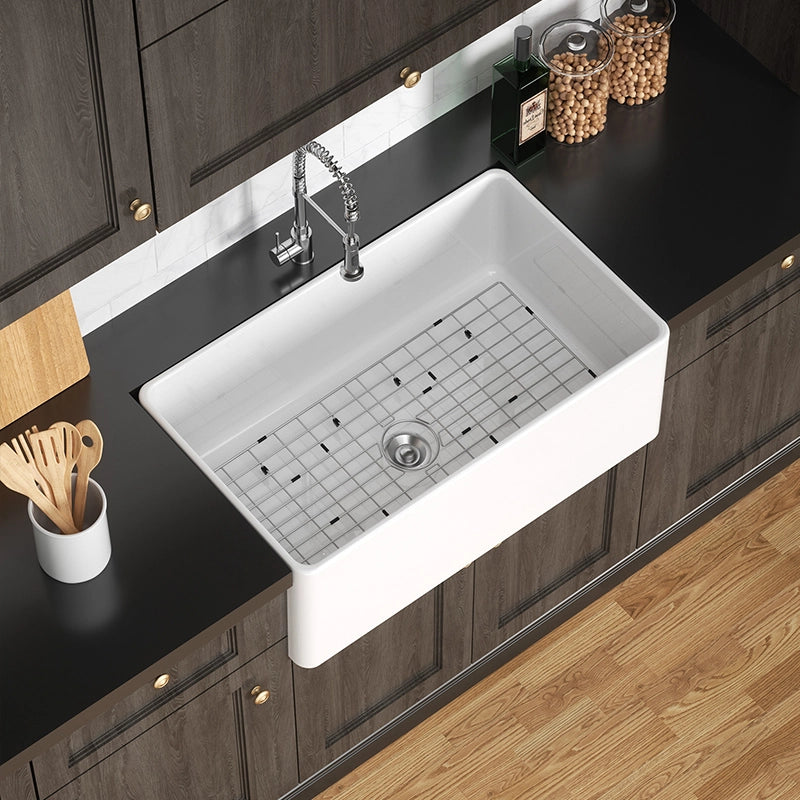
Farmhouse/apron front workstation: great look, but often needs cabinet changes and careful measuring.
If you’re trying to avoid countertop work, a drop-in can be the safer path. If you’re already doing new counters, undermount is often the easiest to live with.
Material and build choices that decide durability, noise, and daily feel
The material of your workstation sink is a crucial decision that affects everything from sound to longevity. A 16 gauge stainless steel single bowl offers durability and a classic chef's kitchen sink feel, while granite composite provides a quieter, low-maintenance alternative. For a timeless farmhouse look, fireclay sinks are beautiful but demand more support. We’ll compare the pros and cons so you can choose the best workstation kitchen material that matches your kitchen design and lifestyle.

Stainless steel workstation kitchen sink: 16 gauge vs 18 gauge
A stainless steel workstation kitchen sink is the most common for a reason: it’s tough, lighter than fireclay, and forgiving.
-
16 gauge stainless steel (thicker): resists dents better, usually feels more solid, often quieter.
-
18 gauge stainless steel (thinner): still fine for many homes, but more likely to “oil-can” (flex) and dent if you drop heavy cookware.
If you want one simple buying rule: choose 16 gauge stainless steel single bowl if you cook a lot and want the sink to feel solid for years.
Also look for:
-
Sound-deadening pads/coating on the outside
-
A bottom grid (helps protect the sink and reduces noise)
Fireclay sinks and workstation farmhouse options: weight, chip risk, and support requirements
Fireclay farmhouse sinks are popular because they look classic and clean up well.
Trade-offs you should plan for:
-
They are heavy and may need added cabinet support.
-
They can chip if you drop cast iron or slam cookware against the front edge.
-
Replacing one later is more involved because of the way they fit cabinets.
If you love the farmhouse look and you’re already modifying cabinetry, fireclay can be a good long-term choice. If this is a quick upgrade, stainless steel is usually simpler.
Granite composite: stain resistance, noise, and upkeep
Granite composite sinks are often quieter than stainless and can hide water spots better.
What to know:
-
They can be very resistant to scratches.
-
Some colors can show light mineral buildup or “haze” if water is hard.
-
Very hot pans can be risky depending on the manufacturer’s limits (always check).
If you hate the “stainless steel sink streaks” look and want a matte finish, composite can be a strong option—especially if you’re willing to keep up with basic cleaning.
Finish and corners: what looks good vs. what cleans easily
Two details matter more than most people expect:
-
Corner radius: Tight corners look modern, but they collect grime and require more scrubbing. Slightly rounded corners clean faster.
-
Finish: Brushed finishes hide scratches better than mirror-like finishes. Dark finishes can show mineral deposits depending on water.
If you want the sink to look “the same” five years from now, prioritize easy-clean geometry over the sharpest look.
Mounting, faucet, and accessory ecosystem: avoid compatibility mistakes
Your workstation sink is part of a larger system. Choosing between an undermount stainless steel install and a drop-in style affects both aesthetics and cleaning. Your faucet needs sufficient reach to work with a wide single bowl, and accessories like cutting boards must slide smoothly on the integrated ledges. This section guides you through avoiding common pitfalls, ensuring your kitchen sink with accessories works harmoniously to upgrade your kitchen experience.
Undermount workstation vs drop-in: cleaning ease and retrofit reality
Undermount stainless steel workstation sinks are popular because you can wipe crumbs straight into the sink and the counter looks clean.
But undermounting is not always the easy choice:
-
It typically needs stone or solid-surface counters (or the right wood setup).
-
It’s harder as a DIY install than a drop-in swap.
-
If your counter cutout needs resizing, you’ll likely hire it out.
Drop-in workstation sinks can be easier when:
-
You have laminate counters
-
You want minimal disruption
-
You’re replacing a similar-size sink
There’s no “right” answer. The safer answer is the one that matches your countertop type and your tolerance for extra work.
Faucet and sprayer clearance: pull-down reach and accessory interference
A workstation sink encourages you to prep over the bowl—so the faucet matters more.
Common issues:
-
A short pull-down hose doesn’t reach both ends of a large single bowl.
-
A low-arc faucet can bump into tall accessories or get in the way of sliding racks.
-
Side sprayers and soap dispensers may compete for deck space in some drop-in models.
What to aim for:
-
A pull-down faucet with good reach and an easy dock
-
Enough vertical clearance for filling tall pots (if you do that often)
If you’re buying a wide sink (36"+), don’t assume your old faucet will “feel fine.” It might, but it’s worth checking reach first.
Accessory standardization: rails/ledge sizing and replacement costs
Workstation accessories are not fully standardized. Even if two sinks look similar online, their ledge width and accessory fit can differ.
That matters because:
-
You may want an extra cutting board, a deeper colander, or replacement racks later.
-
If the system is unique, replacements can be pricey or hard to match.
Before buying, check:
-
Can you buy replacement accessories in the same sizes?
-
Are common accessories available (extra racks, alternate boards)?
-
Are the accessories dishwasher-safe (where relevant)?
Will built-in accessories that slide become clutter in a busy kitchen?
This is the most common “day two” concern, especially with kids or multiple cooks.
A workstation sink works best when:
-
One person is doing prep while another cleans
-
Or when you’re doing a steady flow of tasks in one zone
It can feel slower when:
-
Someone sets the cutting board across the sink and forgets it there
-
Another person needs to dump a pot or rinse their hands
-
The sink becomes a traffic jam
A simple way to predict this:
If your sink area is already a bottleneck (dishwasher door, trash pull-out, main walkway), be cautious. The accessories add function, but they also add “stuff” that can block movement.
Maintenance and long-term ownership: what changes after the honeymoon phase
Owning a stainless steel workstation means adapting to a new cleaning rhythm. While the sink itself is straightforward, the built-in ledges, drying racks, and cutting board require consistent care to stay sanitary and functional. Whether you have a stainless steel kitchen sink or a composite model, a simple routine is key. This section outlines practical, realistic steps to keep your kitchen workstation looking and performing its best for years, turning it from a novel purchase into a lasting asset for your modern kitchen.
Are workstation sinks harder to keep clean?
Not automatically. The sink bowl cleans like any other. What adds time is:
-
Cleaning food debris out of the ledge corners
-
Washing and drying accessories
-
Keeping the cutting board sanitary
If you already wipe your sink daily, the difference is small. If you tend to leave dishes overnight, the accessories can become one more thing to work around.
Cleaning routines by material (simple and realistic)
Stainless steel sink
-
Expect water spots and streaks, especially with hard water.
-
A quick rinse and wipe keeps it looking good.
-
Incorporating water-efficient habits during cleanup is also key. For practical tips on reducing water use in the kitchen, the EPA’s WaterSense program is an excellent resource.
-
Gentle cleaners work best; harsh abrasives can dull the finish.
Fireclay
-
Usually it is easy to wipe clean.
-
Metal marks can happen; they often clean off with the right cleaner, but it’s still a thing you’ll notice.
Also, don’t ignore the drain area. Food bits trapped under a basket strainer can smell faster than you expect.
Accessory longevity: boards, racks, and colanders
A workstation sink often comes with a board and metal racks. They last longer
if you treat them like tools, not decor.
Wood cutting board: oil it sometimes; don’t leave it soaking; let it dry fully. For best practices on cutting board care and food safety (like preventing cross-contamination), it’s wise to consult the USDA’s guidelines for cutting boards.
Metal drying racks/colander: check welds and corners; rinse and dry if your water is harsh.
Bottom grid: great protection, but it can trap grime underneath if you never lift it.
If you don’t want accessory maintenance, choose a simpler setup (or buy only the one accessory you’ll truly use).
Risk management: scratches, dents, rust spots, and grids
-
Stainless will scratch. That’s normal. A brushed finish hides it better.
-
Thin steel dents more easily (this is where gauge matters).
-
Rust “spots” are often surface contamination (for example from a steel wool pad). Avoid harsh scrubbers and rinse cleaners well.
-
Bottom grids help, but lift them weekly to clean underneath.
Visual: 5-year ownership checklist (simple routine)
You don’t need to baby a sink. You just need a rhythm.
| Timing | What to do | Why it matters |
| Daily (30–60 seconds) | Rinse and wipe the bowl and ledges | Prevents buildup and smell |
| Weekly (5 minutes) | Lift grid/rack, clean underneath; clean drain basket | Stops trapped grime |
| Monthly | Check colander/rack corners; remove mineral buildup | Keeps accessories sliding cleanly |
| Every 2–3 months | Oil wood cutting board (if wood) | Prevents cracking and odors |
| Twice a year | Check plumbing connections and disposal mounting | Catches slow leaks early |
| As needed | Replace worn board or rack | Keeps the “workstation” useful |
Can you add workstation accessories to a regular sink?
Yes, sometimes—and it can be a smart “test run.”
Options include:
-
Over-the-sink cutting boards sized to your sink opening
-
Roll-up drying racks
-
Clip-on colanders or drain baskets
The limits:
-
They won’t slide on integrated ledges as smoothly.
-
Fit can be awkward if your sink has a wide rim or unusual shape.
-
You may lose stability compared to a true workstation sink.
If you’re unsure you’ll use the accessories, buying a roll-up rack and a sink-sized board first is a low-risk way to learn your habits before committing to a full workstation replacement.
How to choose the right workstation sink type (fast decision path)
If you want the workstation idea, narrow it down with three decisions:
-
Mounting: undermount if you have solid-surface/stone and want easy wipe-in cleanup; drop-in if you want an easier swap.
-
Material: 16 gauge stainless steel for durability and simple ownership; composite for quieter and less streaking; fireclay if you want farmhouse style and accept weight/support needs.
-
Bowl layout: single bowl for maximum workstation function; double bowl if you strongly prefer fixed wash/rinse zones.
After that, focus on fit: cabinet size, bowl depth comfort, drain placement, and accessory set.
Before You Buy (checklist)
-
Measure your base cabinet inside width and confirm the sink’s minimum cabinet size.
-
Confirm whether you want undermount or drop-in based on your countertop type.
-
Decide single bowl vs double bowl based on your daily dish and cookware habits.
-
Check bowl depth for comfort (especially if shorter users will use the sink).
-
Look at the offset drain location and consider whether plumbing/disposal changes are likely.
-
Verify which included accessories you’re actually getting (board, colander, drying rack, grid, drain basket).
-
Confirm you can buy replacement accessories later in the right sizes.
-
If choosing stainless: favor 16 gauge if you want better dent resistance and a more solid feel.
FAQs
1. Do workstation sinks save counter space?
Absolutely, yes—but only if you actually use the over-sink accessories that come with it. That's the whole point of an integrated ledge sink. Think of it like this: when you slide that cutting board across the sink, you're essentially creating a temporary prep island right above the bowl. Same goes for the drying racks—instead of a bulky rack hogging half your counter space, your dishes dry directly over the drain. For smaller kitchens or crowded countertops, this can be a total game-changer. You're containing the mess of food prep and keeping your landing zones clear. But if those accessories just live in the cabinet, you’re not gaining any real space; you’re just paying for features you don’t use. So, space-saving magic happens through daily use, not just through purchase.
2. Are workstation sinks harder to keep clean?
The sink bowl itself? No harder than any other stainless steel sink. You’ll still just rinse and wipe it down. What adds a tiny bit of extra work is the “workstation” part of it. Those built-in ledges and rails can trap little food bits in the corners, so a quick wipe-down there is a good idea. Also, you’ll be washing the accessories themselves—like giving the colander a rinse and making sure the drying racks are free of gunk. If you go for an undermount workstation sink, cleanup is a breeze because you can sweep crumbs right off the counter into the bowl. The key is establishing a simple routine: a daily wipe of the ledge and bowl, and a weekly check under any bottom grid. It’s not “harder,” just a bit more specific.
3. What materials are best for a workstation kitchen sink?
For most people, a 16 gauge stainless steel single bowl is the go-to champion. It’s tough, relatively lightweight, forgiving if you drop a pan, and the brushed finish hides scratches and water spots well. It’s the workhorse choice for a busy chef's kitchen sink. If you want something quieter and that shows fewer streaks, granite composite is a fantastic option—just be mindful of potential mineral buildup if you have hard water. If your heart is set on a classic look, a farmhouse sink in fireclay is beautiful and durable, but be prepared for its heavyweight and the need for extra cabinet support. Ultimately, stainless steel workstation kitchen sinks offer the best balance of durability, ease of installation, and workflow friendliness for most homes.
4. Can I use workstation accessories with a regular kitchen sink?
You sure can, and it’s a great way to test the workstation concept without a full remodel. You can buy over-the-sink cutting boards, clip-on colanders, and roll-up drying racks designed to fit standard sinks. They won't slide as smoothly as on a true integrated ledge, and the fit might be less secure, but the core function is there. It lets you see if you enjoy the “prep and cleanup directly over the sink” workflow. If you find yourself constantly using these add-ons and wishing they were more stable and built-in, that’s your sign to upgrade to a true workstation kitchen sink like a Ruvati workstation sink or another brand with custom accessories.
5. Is a single bowl or double bowl better for a workstation sink?
Hands down, a single bowl is the winner for most workstation setups. Here’s why: those built-in accessories that slide—like a large board or a full-size rack—need one wide, uninterrupted opening to span across. A double bowl split gets in the way of that seamless function. A deep, wide single bowl gives you the flexibility to wash big sheet pans and host your cutting board when you need it. The accessories themselves create temporary zones for washing, rinsing, or prepping. That said, if your brain is hardwired for a dedicated wash side and rinse side, and you rarely use large accessories, a double bowl might still feel right for you. But for maximizing the functionality of your kitchen sink as a true kitchen workstation, single bowl is the way most manufacturers design them and how most users prefer them.
References


Leave a comment
This site is protected by hCaptcha and the hCaptcha Privacy Policy and Terms of Service apply.