
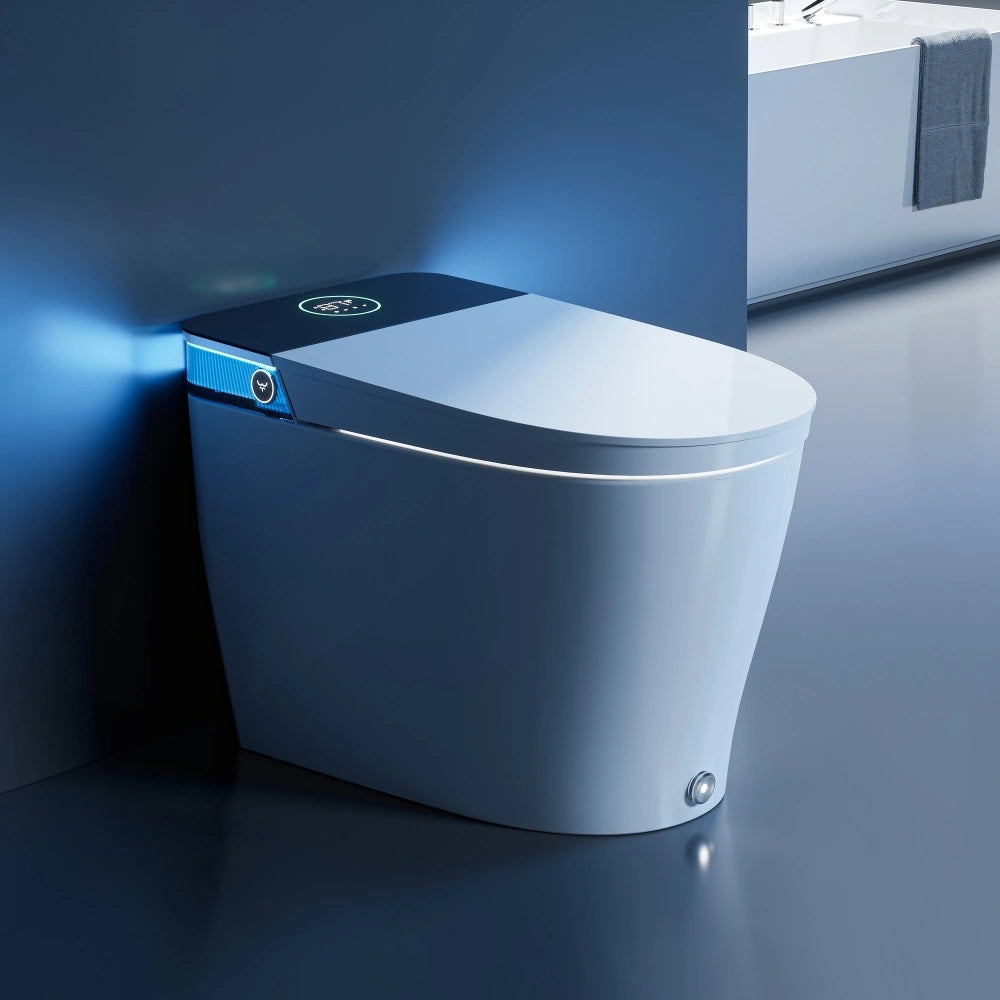
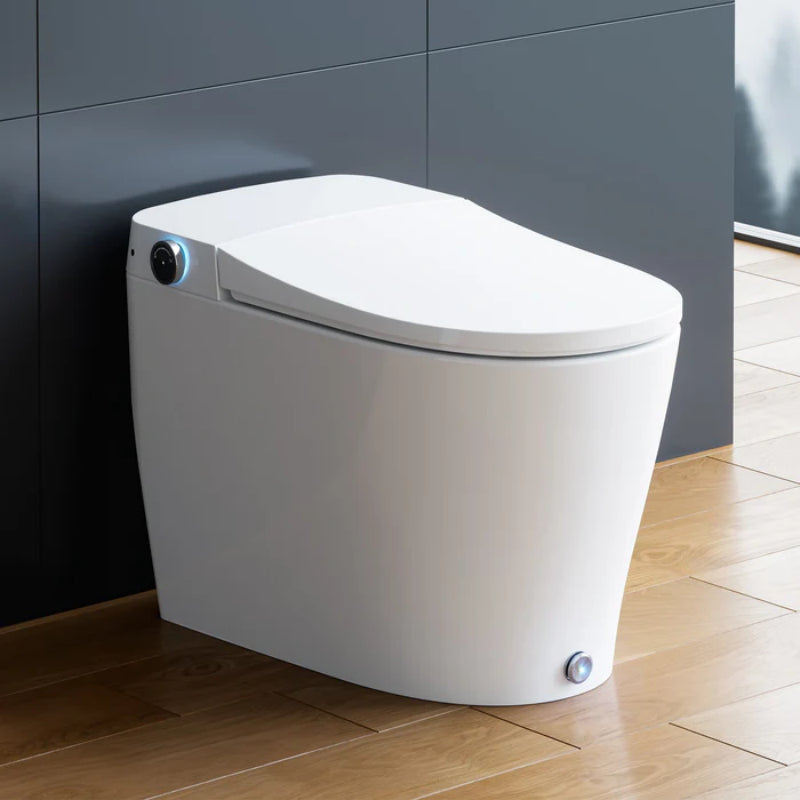
If you are shopping for the best smart toilet for California, the first choice is not brand. It is type.
Most homeowners do better when they choose between:
-
a fully smart toilet for a remodel or major bathroom upgrade
-
a bidet seat on a high-efficiency toilet for lower cost and easier replacement
That choice matters more than almost any feature list.
California buyers also have one extra layer to think about: water rules, rebate eligibility, and drought-aware use. A smart toilet can be a good fit here, but only if you buy the right flush standard and avoid paying for features that do not help in daily life.
Here’s the practical version: if your goal is comfort plus water savings, you want a model that is California-compliant, low-flow, and easy to service locally. For homeowners seeking WaterSense toilets California programs recognize, these models deliver verified efficiency while adjustable water pressure and seat warmers enhance user comfort without sacrificing performance. If your goal is mostly luxury, you can spend a lot and still end up with something harder to maintain, harder to install, and not much better at saving water.
Decision Snapshot
Here’s the quick rule of thumb.
For most California buyers, a high-efficiency toilet paired with a bidet seat is the default recommended choice over a fully integrated smart toilet.
Choose an integrated smart toilet if you are remodeling your primary bathroom and plan to stay in the home for many years; choose a high-efficiency toilet plus bidet seat if you want lower upfront cost, simpler servicing, and easier future replacement.
Choose one-piece smart toilets for full upgrades
Pick an integrated one-piece smart toilet if you are:
-
remodeling
-
replacing flooring or electrical nearby
-
upgrading a primary bath you plan to keep for years
-
willing to pay more up front for a cleaner look and built-in bidet features
This is usually the best fit for homeowners who want the full package: bidet wash, heated seat, warm air, auto flush, night light, and a tankless or concealed design.
It makes the most sense when the bathroom is already being worked on. In that setting, adding an outlet, checking water pressure, and confirming rough-in size is much easier.
Choose bidet seats if plumbing is fine
If your current toilet already works well, a bidet seat often makes more sense than a full smart toilet.
This is the better choice if you:
-
want lower cost
-
want easier future replacement
-
care about water savings but do not need a built-in unit
-
live in a home where repairs need to stay simple
For many California homes, a high-efficiency toilet plus an electric bidet seat is the practical sweet spot. You can still get comfort and reduced toilet paper use without committing to a complex all-in-one fixture.
Skip luxury models if rebates matter most
If your main goal is water savings, utility rebates, or California water restrictions, skip the most feature-heavy models.
The key point is simple: rebates usually follow efficiency standards, not luxury features. Heated seats and auto lids do not make a toilet more rebate-friendly. WaterSense certification and low flush volume do.
So if you are trying to find the best smart toilet for California water restrictions, start with compliance and water use first. Then decide how much comfort tech you actually want.
Smart toilet or bidet seat?
An integrated smart toilet is not the right choice for every home. First, check this list of disqualifiers. If any of these apply to you, stop shopping for integrated units and consider a high-efficiency toilet with a bidet seat instead:
-
No nearby GFCI outlet: Adding one can turn a simple install into a major project.
-
Hard water risk: If your home has mineral-heavy water without a whole-house softener, an integrated unit’s internal valves and spray nozzles are much more expensive to service or replace than a seat’s.
-
Uncertain parts/service availability: If the brand or model lacks a clear U.S.-based parts supply chain, an integrated unit can become unrepairable.
-
Working, efficient toilet already in place: If your current toilet is already California-compliant and functions well, you’re adding huge cost and waste by replacing the entire fixture.
If none of these disqualifiers apply, then consider whether an integrated unit or a seat setup is the better path.
Choose smart toilets for remodels
A full smart toilet works best when:
-
the bathroom is already under construction
-
you can add or move an outlet
-
you want a modern one-piece look
-
you are replacing an old toilet anyway
In remodels, integrated models feel worth it because the install friction is lower. Your contractor can deal with spacing, shutoff placement, outlet location, and floor condition before the toilet goes in.
This is also where a California-compliant smart toilet with bidet and low-flow flush can be a strong long-term choice. You get one fixture that meets efficiency standards and delivers the wash features many homeowners want, including adjustable water pressure, seat warmers, and an air dryer—technology designed to conserve water while maximizing daily comfort.
Choose bidet seats for lower budgets
If your budget is tighter, a bidet seat usually wins.
Why? Because it separates the two jobs:
-
the toilet handles flushing and water efficiency
-
the seat handles cleaning comfort
That means if one part fails later, you do not replace everything.
For many homes, this setup beats an integrated smart toilet on value. You can pair a best WaterSense smart toilet for California homes approach with a standard high-efficiency toilet and then add the seat you want. It is often easier to repair, easier to upgrade, and easier to keep within budget.
Is a bidet seat smarter in rentals?
In most rentals, yes.
If you rent in California, a bidet seat is usually the smarter move because:
-
You can remove it later
-
You avoid changing the entire fixture
-
Landlord approval is more likely
-
You do not sink too much money into a bathroom you do not own
A full smart toilet can be hard to justify in a rental unless the owner is paying for it.

Which flush standard fits California?
If you want the best smart toilet for California, the flush standard is not a minor detail. It shapes legality, water savings, and sometimes performance.
For most households, 1.28 gpf is the safer default choice because it balances water efficiency with reliable single-flush performance. Choose 1.28 gpf unless you are certain your household’s usage patterns and plumbing can handle the higher repeat-flush risk that sometimes comes with 1.0 gpf models.
1.0 gpf saves more water
For pure water conservation, 1.0 gallons per flush is the stronger choice.
That matters in drought-prone areas and for households trying to cut water use over time. If your main concern is finding the best eco-friendly smart toilet for drought-prone California areas, start here.
Compared with older toilets that used 1.6 gallons per flush or more, a 1.0 gpf model can save a meaningful amount of water each year. In a busy household, those savings add up.
Tankless smart toilets often use very low flush volumes and can be part of the ultra-high-efficiency smart toilet for California rebates conversation, but only if they meet the required certification and local program rules.
1.28 gpf reduces repeat flushing risk
This is where buyers need to be honest about real use.
A 1.28 gpf vs 1.0 gpf smart toilet for California is not just a math question. It is also a performance question.
In many homes, 1.28 gpf is the safer middle ground because it still qualifies as high efficiency while reducing the chance of repeat flushing. If a 1.0 gpf toilet sometimes needs a second flush, the water savings gap shrinks fast.
The deciding factor should be repeat-flush risk. Choose 1.0 gpf only if the model has independently verified, strong performance testing that shows it clears a full bowl in a single flush on your type of drain system. Otherwise, choose 1.28 gpf to avoid the water-wasting cycle of double-flushing.
So who should choose 1.28 gpf?
-
larger households
-
homes with frequent guest use
-
buyers more worried about clog risk than shaving the last bit of water use
-
anyone replacing a toilet in an older drain setup that already struggles
Choose WaterSense when rebates matter
If rebates matter, WaterSense matters.
WaterSense is an EPA program that marks toilets that meet efficiency and performance standards. In many areas, this is the easiest shortcut for finding products more likely to fit local rebate programs.
That is why many buyers looking for smart toilets that qualify for California water-saving rebates should start with WaterSense-certified options first, then check local utility rules. Some utilities are strict about model lists, and some rebates apply more often to toilets than to integrated electric smart units.
If your utility offers money back, the rebate may narrow your choices quickly. In that case, the “best” option is often the one that qualifies, performs well, and can be serviced nearby.
Are smart toilets allowed in California?
Yes, smart toilets are allowed in California, as long as they meet the applicable water-efficiency rules and product standards.
California has strict plumbing efficiency rules. For toilets sold and installed in the state, the usual benchmark is 1.28 gallons per flush or less for high-efficiency toilets, with some models going down to 1.0 gpf. For 2026 shopping, homeowners should still expect California-compliant toilets to stay in that low-flow range.
So if you are asking, are smart toilets allowed under California water-efficiency rules, the answer is yes. What matters is whether the specific model is certified for sale and installation in California and whether it fits any local rebate requirements.

TOTO, Kohler, or value brands?
You asked for real guidance without marketing noise, so here it is plainly: in this category, the right choice is usually less about prestige and more about parts support, flushing reliability, and install quality.
Because brand names are off the table here, it helps to think of three buyer types.
Reject cheap integrated units if you prioritize reliable U.S. parts supply and want to minimize long-term service callbacks.
Choose premium brands like TOTO and Kohler if you want strong local parts and service support and lower callback risk from complex electronic and plumbing failures.
Choose value-brand integrated units only for guest or rental baths where minimal upfront cost matters more than long-term parts availability and reduced callback risk.
When contractor favorites win
In real homes, contractor favorites often beat showroom favorites.
Why? Because installers remember what causes callbacks:
-
weak flushes
-
finicky sensors
-
hidden leaks
-
hard-to-source valves
-
awkward rough-in fit
That matters more than glossy feature lists. If your installer says one model line is easier to service and less likely to clog, pay attention. In many cases, that kind of practical reliability matters more than premium styling.
What real homes make easier or harder?
A smart toilet can look simple online and become complicated the minute you measure the room.
Do not buy an integrated smart toilet if:
-
Bathroom is small and tight on clearance: Many integrated units have a longer projection from the wall than a standard toilet + seat. If your space is tight, measure bowl projection, lid clearance, and swing room carefully—a compact toilet with a seat may be the only way to make the layout work.
-
Access for install or service is limited: If the shutoff valve is hard to reach, the space behind the toilet is narrow, or the toilet is in a tight corner where removing a one-piece unit later would be a major ordeal, choose a two-piece system. A plumber can replace a seat or the toilet base separately; an integrated unit requires full fixture removal for most repairs.
-
Rough-in is unusual or non-standard: If your rough-in is 10 inches or 14 inches, finding an integrated smart toilet that fits perfectly can be a challenge. It’s much easier to find a standard toilet in your rough-in size and add a bidet seat.
-
Toilet serves a shared or guest bath: In a bath used by multiple people or guests, a simpler system with straightforward manual flush and basic controls is almost always the better choice. An integrated unit’s automatic features, remote controls, and user presets can confuse visitors and create annoyance for frequent users.
Smart toilet in small bathrooms?
Small bathrooms make every inch count.
In tight spaces, check:
-
bowl projection from the wall
-
lid clearance
-
swing room in front of the toilet
-
side access to controls
-
outlet placement
A compact integrated unit can work well, but some are longer than expected. In very small baths, a standard compact toilet plus bidet seat can actually fit better than an all-in-one unit.
Comfort height or lower seat?
Comfort height feels better for many adults, especially older homeowners or anyone with knee pain. But lower seat heights may feel better for children and some shorter adults.
This is one of those details that sounds minor until you live with it every day.
If this toilet will go in a primary bath used by older adults, comfort height is often the safer choice. If it is a kids’ bath, standard height may be easier.
Shared baths need simplicity
Shared bathrooms often need fewer features, not more.
If multiple people use the same toilet, ask:
-
Will everyone understand the controls?
-
Do you need user presets?
-
Will automatic lid opening annoy light sleepers?
-
Will guests know how to flush manually?
A high-efficiency smart toilet with heated seat and California compliance sounds great on paper. In a shared hallway bath, the better choice may be a simpler setup that anyone can use without instruction.
Wall-hung or floor-mount
Wall-hung toilets can save visual space and make floor cleaning easier. They can be a strong option in modern remodels. But they are not always the practical choice.
They often require:
-
more wall work
-
precise framing
-
careful carrier installation
-
easier access planning for future service
For most existing California homes, floor-mount units are easier and cheaper to install. Wall-hung is usually best when the bathroom is being fully rebuilt.

What ownership annoyances change the decision?
This is where smart toilet vs bidet seat for saving water in California becomes a practical ownership question. A bidet seat setup is often easier to replace in pieces. A full smart toilet may look cleaner but can be more expensive when one component fails.
| Factor | Integrated Smart Toilet | High-Efficiency Toilet + Bidet Seat |
| Hard water upkeep | Internal nozzles and valves are prone to mineral buildup and costly to service | Bidet seat components are simpler to clean, descale, and replace at lower cost |
| Auto-feature annoyance | More built-in auto functions mean higher risk of sensor glitches and unwanted activation | Fewer fixed automatic features; easier to disable or replace only the seat if annoyed |
| Parts/service asymmetry | Full fixture requires complete removal for most repairs; parts availability directly determines repairability | Separate toilet and seat allow independent servicing; wider parts availability and lower replacement risk |
Parts can decide everything
Replacement parts are a hidden dealbreaker.
Before buying, check:
-
can local plumbers service it?
-
are parts sold in the U.S.?
-
how long is support promised?
-
can you buy a replacement remote?
-
what happens if the wash wand or valve fails?
A cheap unit is not cheap if one failed part forces a full replacement.
What do rebates and operating costs change?
Price matters, but so does the shape of the price.
Higher cost, lower water use
A smart toilet costs more than a standard high-efficiency toilet. There is no way around that.
But California buyers should think in layers:
-
purchase price
-
install cost
-
outlet work if needed
-
water savings over time
-
possible rebate
-
maintenance and part costs
If you are choosing between a low-flow smart toilet and a standard toilet, the water savings can help justify the premium. If you are choosing between two smart toilets, the one with lower water use may not be the better value if its maintenance cost is much higher.
Rebate models pay back faster
A model eligible for a local rebate can become the better buy, even if the sticker price is higher.
This is especially true when you are shopping for an ultra-high-efficiency smart toilet for California rebates or trying to find smart toilets that qualify for California water-saving rebates.
But always check the current rules. Some California rebates are handled by city water departments or regional utilities, and they may require:
-
approved model lists
-
proof of purchase
-
old toilet replacement
-
WaterSense certification
-
installation within service area
That means a slightly less flashy model may be the smarter financial move if it qualifies and the luxury one does not.
Cheap models cost more later
This is one of the most common mistakes.
A low-priced integrated smart toilet can look like a bargain until:
-
the flush weakens
-
the remote fails
-
the seat cracks
-
the bidet function becomes inconsistent
-
there is no service network
In short, the cheapest option is often the riskiest in a product category that mixes plumbing and electronics.

When is a smart toilet the wrong choice?
Sometimes the best decision is to step back.
Skip if outages are common
If power outages are common in your area, be careful with highly electronic units.
Many smart toilets still allow manual flushing, but not always with full feature access. If outages are frequent and you want something worry-free, a high-efficiency toilet with a non-electric or simpler electric bidet seat may be safer.
Skip if installing access is hard
If the shutoff valve is awkward, the outlet is far away, the rough-in is unusual, or the space behind the toilet is tight, a full smart toilet can become a frustrating install.
This is where a lot of homeowners underestimate the project. The toilet itself may fit, but the power cord, water hose, access panels, or side controls may not fit comfortably.
Skip features you will not use
A common mistake is paying for every feature because the bathroom is being upgraded.
Be honest. Will you use:
-
automatic lid
-
deodorizer
-
ambient lighting
-
app control
-
custom presets for many users
If not, skip them. Focus on the features that change daily comfort: wash quality, seat warmth, flush reliability, and easy cleaning.
What happens if you choose wrong?
Usually, one of three things happens:
-
you overpay for features you ignore
-
you get a low-flow model that needs extra flushing in your plumbing setup
-
you buy a complex unit that becomes hard to service
That is why the best first decision is still type, not model name.
If you want the simplest route to a good outcome in California, here it is:
-
choose a WaterSense, California-compliant toilet
-
decide whether you truly need an integrated unit
-
lean toward 1.28 gpf if you want a safer performance balance
-
lean toward 1.0 gpf if water savings is the top priority and performance testing is strong
-
check rebate rules before you buy, not after
That is usually enough to avoid most mistakes.
Before You Buy
Use this checklist before you order anything:
-
Confirm the toilet is legal for sale and install in California
-
Check whether it is WaterSense certified if rebates matter
-
Decide between full smart toilet and bidet seat on a high-efficiency toilet
-
Measure rough-in, side clearance, front clearance, and outlet location
-
Choose 1.0 gpf for maximum savings or 1.28 gpf for a safer flush balance
-
Check local utility rebate rules before purchase
-
Ask how easy parts and service are in your area
-
Think about hard water, outages, and who will use the toilet every day
FAQs
1. What is the best toilet for California water laws?
When searching for the best smart toilet for California, the top choice is a California-compliant, low-flow model that is ideally WaterSense certified. For most homes, that means 1.28 gpf or less, with 1.0 gpf models offering maximum water savings if performance testing confirms strong single-flush reliability. Beyond flush rate, the right fit also depends on whether you need a full integrated unit or a high-efficiency bidet California compliance setup, as that choice often impacts long-term maintenance costs and rebate eligibility more than the flush volume alone.
2. How many GPF is legal in California in 2026?
For most residential toilet shopping, California buyers should look for toilets at 1.28 gallons per flush or less, as this aligns with both state efficiency rules and typical WaterSense toilets Californiaprogram requirements. Many efficient models now use 1.0 gpf and still meet state certification when properly tested for waste removal. The key is verifying that the specific model is approved for sale in California, especially when comparing 1.28 GPF vs 1.0 GPF toilets, as the lower flush volume may require stronger drain performance to avoid repeat flushing in older plumbing setups.
3. Can I get a rebate for a smart toilet in California?
Sometimes, yes—rebate availability depends on your local water utility or city program, with many focusing on low-flow bidet rebates CA that prioritize WaterSense-certified high-efficiency toilets over luxury-feature models. Some programs may not include every integrated smart toilet, so checking the approved model list before purchase is essential. Even when shopping for the best smart toilet for California, a simpler WaterSense-certified unit with a lower flush rating is more likely to qualify for rebates than a feature-heavy model that lacks certification or exceeds the utility's efficiency threshold.
4. Are tankless toilets better for water conservation?
They can be, but not automatically—what matters is the actual flush rating and certification, not just the tankless design. A tankless smart toilet with a low flush volume can save water, but only if it performs well without repeat flushing, which is a key consideration for saving water in Los Angeles bath upgrades where every gallon counts. Models like the HOROW ultra-high efficiency line demonstrate that tankless designs can deliver precise low-flow performance, but real-world water savings depend on whether the stated gpf rating is achieved consistently across different waste loads and drain conditions in your home.
5. How much water can a dual-flush bidet setup save?
A dual-flush setup can reduce water use significantly if your household uses the lower flush correctly most of the time, making it a strong choice for eco-friendly toilets in water-conscious homes. Savings depend on your old toilet, your new flush volumes, and whether users avoid unnecessary full flushes—factors that directly affect low-flow bidet rebates CA eligibility in many utility programs. For a typical household replacing an older 1.6 gpf or 3.5 gpf toilet, switching to a dual-flush model with a 1.0 gpf or 0.8 gpf liquid-waste setting can cut toilet water consumption by 30 to 50 percent, though those savings shrink quickly if the lower-flush option requires repeat activations to clear the bowl.
References


Leave a comment
This site is protected by hCaptcha and the hCaptcha Privacy Policy and Terms of Service apply.